As detailed in the devastating oratorio Watershed: The Death of Dr Duncan, Londoner Dr George Ian Ogilvie Duncan was brutally beaten, tossed in Adelaide’s Torrens River broken-bodied and left to drown, all for the ‘crime’ of seeking pleasure in the arms of other men.
This was only six weeks after he took up a job as a lecturer in law at the University of Adelaide in 1972. His horrific murder – allegedly at the hands of three vice squad officers who were promptly sacked by the service, though later acquitted of the charges in court – shook the city.
The queer community campaigned hard and even the broader populace felt that a terrible injustice had occurred and had been deliberately covered up. Repeated calls for a royal commission were rebuffed. The case and its aftermath led to Premier Don Dunstan’s government decriminalising homosexuality in 1975, as the first Australian state to do so.
There is countless evidence of police brutality against LGBTQIA+ people across this country, both historically and to this day. In this way, Duncan is and always shall be a queer hero, one of many reasons there are loud voices within the queer community, including my own, who say there should be no place for the police at Pride.
That he had to pay with his life is a tragedy of the sort opera deals in regularly. And yet it still feels astonishing that a story of queer persecution, allegedly at the hands of the police, could be upheld by the operatic form, a cultural pillar of the establishment.
Watershed review – quick links
Christos Tsiolkas and Neil Armfield take on the world of opera
There’s real power, then, in Watershed, with a punchy libretto by Loaded author Christos Tsiolkas and fellow queer writer Alana Valentine, music by celebrated composer Joseph Twist, and supple stewardship by Holding the Man director Neil Armfield, a community hero himself.
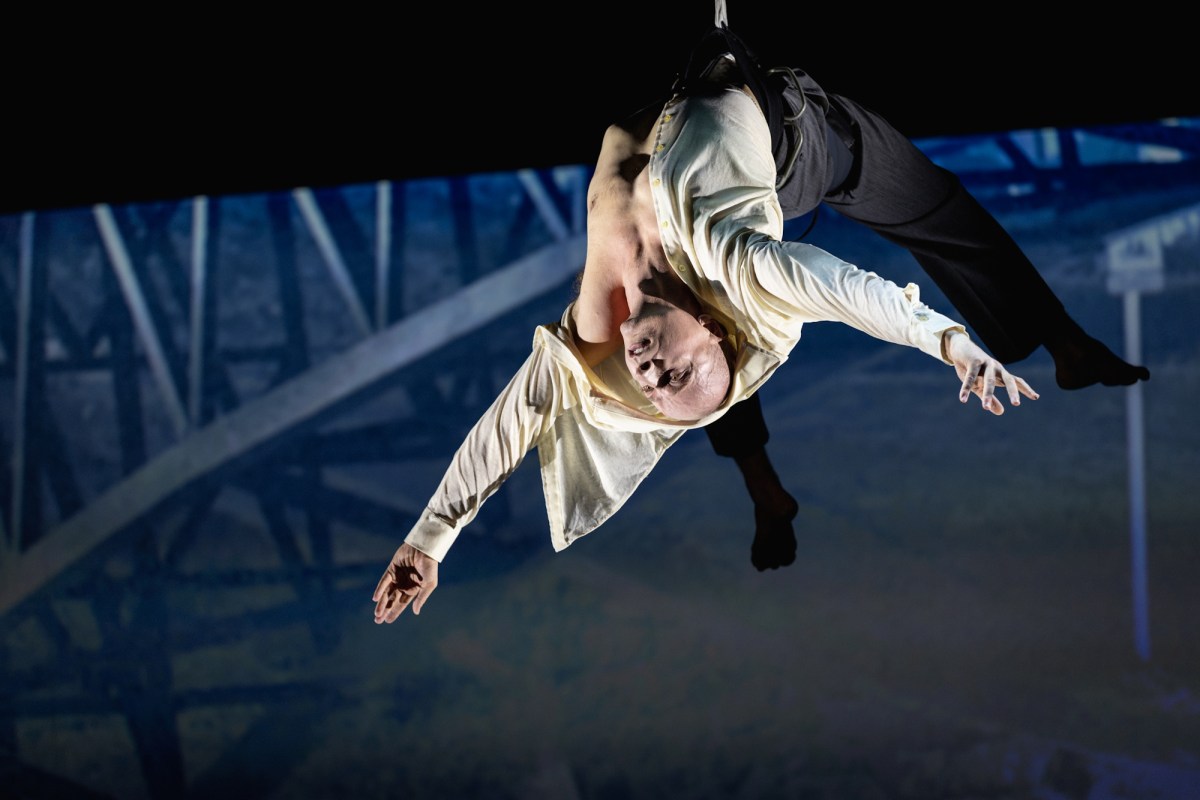
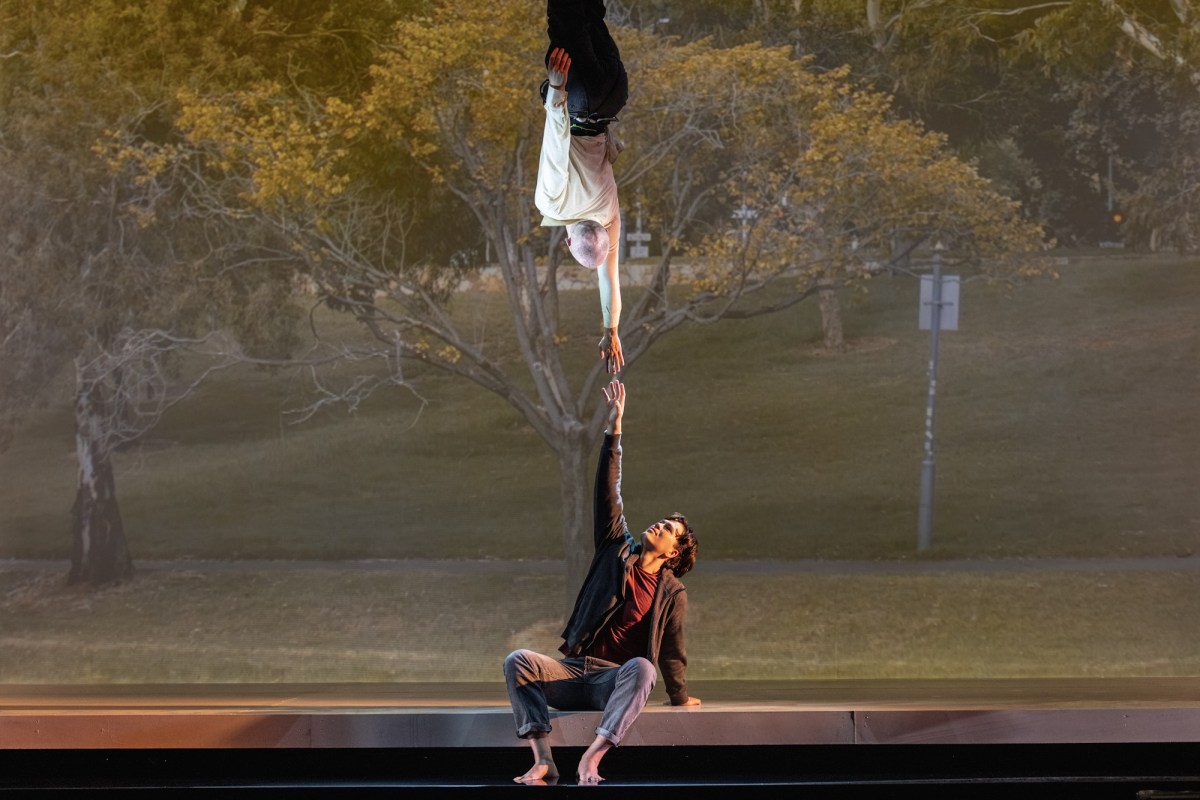
Watershed opens with an almost angelic representation of Duncan, as performed by aerialist Sebastian Geilings in an unbuttoned silk shirt and grey pants, dangling by a thread over the stage. The river is projected behind him, with Sean Bacon’s grainy video art, almost like security camera footage, projected onto a cinema-like screen at the rear of the stage.
Alongside the screen, set designer Ailsa Paterson also represents the flow of the river through a moat of shallow water at the stage’s edge. In the pit below, Orchestra Victoria hold Twist’s soaring score aloft, led by conductor Brett Weymark and bolstered by sonorous thrumming introduced by skilful sound designer Jim Atkins.
Returning Duncan’s voice
Geilings remains silent – as Duncan was said to be when he was consumed by the murky eddies of the Torrens – but others take up his voice, most notably Opera South Australia tenor Mark Oates. His tender but tenacious performance spans the role of Duncan and the bisexual Dunstan (who was not out during his term in office, for obvious reasons) and is delivered in honeyed tones embedded with grit.
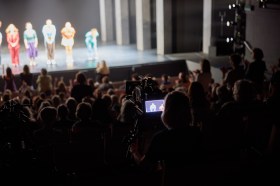
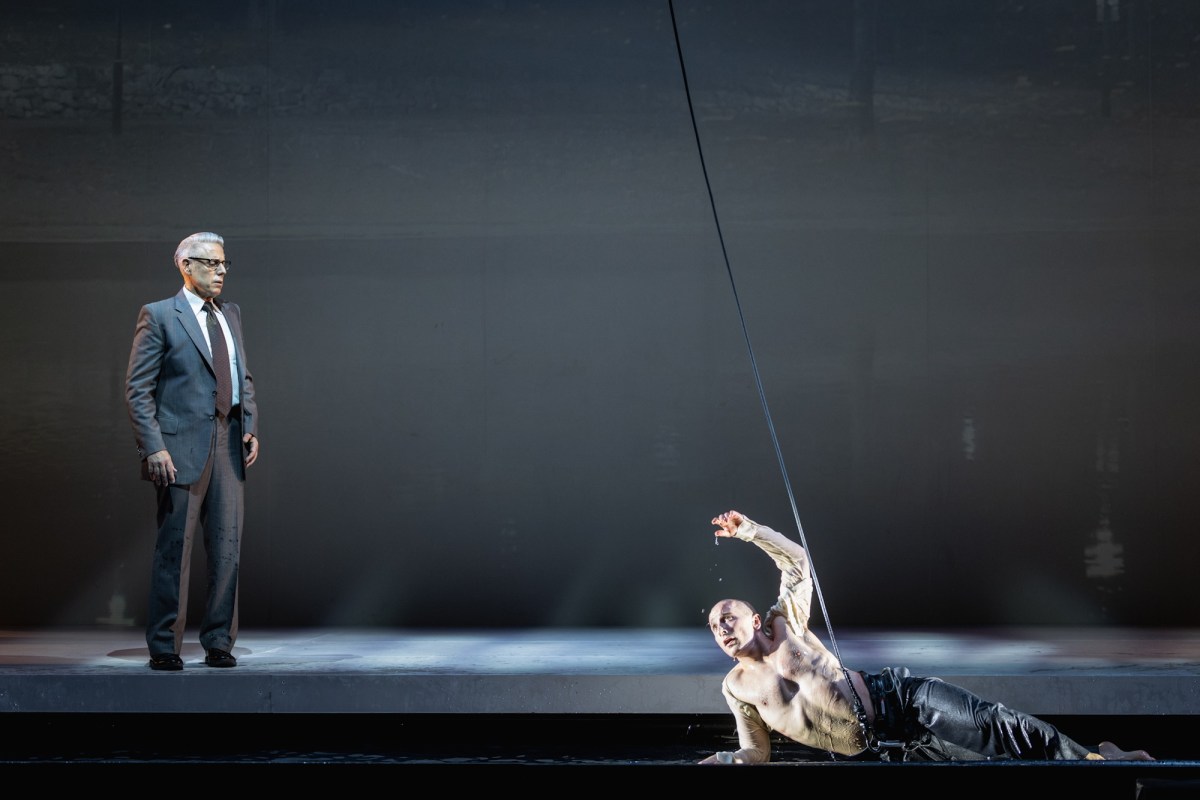
Paterson also designed the costumes, dressing the cast in a variety of grey suits and silk shirts that allow the voices to speak for themselves. Duncan and Dunstan are also championed by various members of the Opera Australia chorus, who play leering bigots, aggro cops, outspoken mums and quietly spoken men who did not feel able to stand tall in a time when they were openly reviled, or far worse.
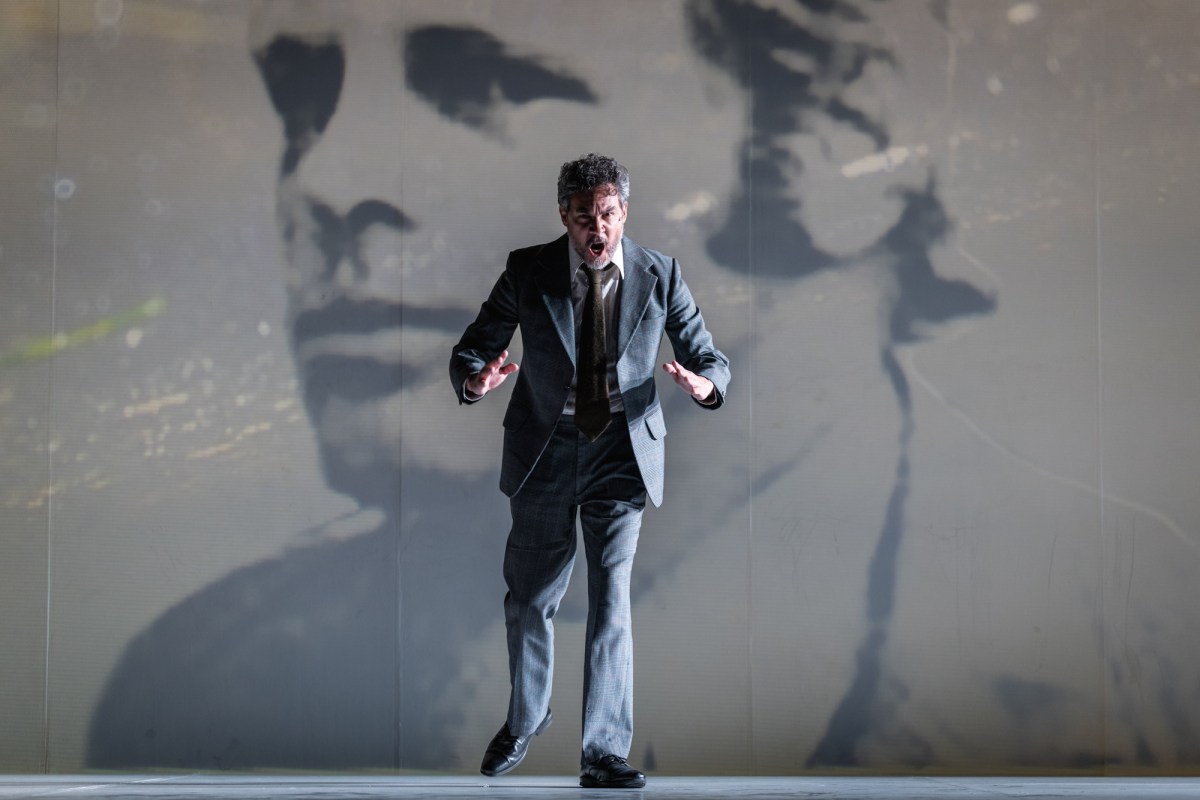
Rumbling bass Pelham Andrews, in a sharp grey suit, leans into the alleged villainy of the cops, though also the conflicted nature of one of the three men who changed his statement and was roundly rejected by the force. He also plays fiery lawyers, having a field day with the chance to peacock while mocking gay men.
Queer history on the opera stage
Tsiolkas has a reputation for unflinching depictions of queer sex and its messy mechanics. It’s hardly surprising his and Valentine’s spunky lyrics freely deploy the word ‘cum’ and rhyme ‘whore’ with ‘abhor’, weaponising homophobic phrases like ‘teaching the poofters to swim’ and giving enough rope to the bigots to hang themselves.
Watershed steadfastly refuses the idea that men having sex with other men in a public park after dark is ‘dirty’. That anyone could harangue, let alone murder, men for doing so in a time when there were few other options, or for refusing to abandon what became a sacred ritual of sorts, is obscene.
And so it’s truly beautiful that, like much of Tsiolkas’ writing, the opening moments of Watershed bring an unbending beauty to these midnight assignations, creating haunting poetry in honour of too many dead.
If Blake Appelqvist’s largely spoken-word narration – as the Lost Boy to Duncan’s sacrifice, meeting in a toilet block – was a little soft on opening night, it’s a minor niggle in a largely stellar production of an important piece.
Oates and Pelham bring the import in a haunting work that glows like the moon through clustering clouds, thanks to Nigel Levings’ delicately drawn lighting design. With the chorus, and the arc of history behind them, however, and our queer communities under attack once more, the weight of Watershed is undeniable. An eternal elegy for Duncan, it flows like tears.