He helped bring Yoda and Jabba the Hutt to life, wrangled Audrey the killer pot plant in Little Shop of Horrors and has worked with the Muppets, but if he’d listened to his dad, celebrated puppeteer David Barclay might never have brought such sparkle to our lives.
Barclay’s visiting Melbourne ahead of ACMI’s new blockbuster exhibition Lifelike, which celebrates the art of puppetry in cinema with an astonishing array of Pinnochios (plural), Kaiju, Chucky and Sesame Street chuckles.
The Brit tells me he first fell in love with the physical artform through his parents Ann and Michael’ performing arts company, Pex Puppets. ‘I learned how to sculpt them, mould-making, casting and carving wood when I was a kid,’ he recalls of his unique education.
Adoring sci-fi spectacles like Charlton Heston-led Planet of the Apes in 1968, Barclay put these skills to work in creating his own short film versions. ‘I was basically doing cosplay before anyone called it that,’ he says. ‘Using the knowledge that I’d learnt from my dad, I’d sculpt the ape’s faces and make wigs and costumes.’
Barclay stood out at school. ‘I was considered weird by all my friends, though a few of them joined in and loved it,’ he says.
Lifelike at ACMI – quick links
The school of Star Wars
As his love of cinema grew during his teenage years, Barclay was determined to bring his puppetry skills to the silver screen, spying a way forward through the stars.
It was while he was holding down a summer job at London’s iconic toy store Hamleys that Star Wars lead Mark Hamill dropped in.
‘He bought some puppets, mentioning that he’d love a custom Darth Vader string puppet made,’ Barclay recalls. ‘When I said, “I could do that for you,” he commissioned me, inviting me along to Elstree Studios to deliver it.’
Hamill introduced the then 19-year-old Barclay to Stuart Freeborn. A cinema legend, he had worked on Stanley Kubrick’s 2001: A Space Odyssey and Dr. Strangelove or: How I Learned to Stop Worrying and Love the Bomb. Freeborn was commissioned by George Lucas to bring his galactic vision for Star Wars to life.
‘Stuart was a hero of mine, probably Britain’s greatest makeup artist,’ Barclay says. ‘He said to me, “We might be in touch in next week or so,” and I just thought it was a nice way of getting me out of the workshop because he was very busy. But actually, a week later, I got a call, and I became one of the team building Yoda for The Empire Strikes Back.’
His dad had to concede that all those hours shooting amateur Planet of the Apes flicks on Cinefilm weren’t wasted.
‘I remember it was coming up to my big school exams and I wasn’t revising, and my dad said to me, “Oh, David, you will never get anywhere making those bloody ape movies.”
‘After I got onto Empire and into the movie industry, he said, “I’m so glad you didn’t listen to a bloody word I said.”’
Labyrinths and crystals
Barclay is highly aware of how unlikely his origin story reads. ‘It doesn’t sound believable, but it truly was [real],’ he says. ‘If I hadn’t gone to Hamleys, my life would have been totally different.’
An understatement, given it’s also where he met his wife of 47 years. Barclay’s induction into movie-making worked out for his dad, too, with Barclay able to employ him on Robert Zemeckis’ 1988 comic masterpiece, Who Framed Roger Rabbit.
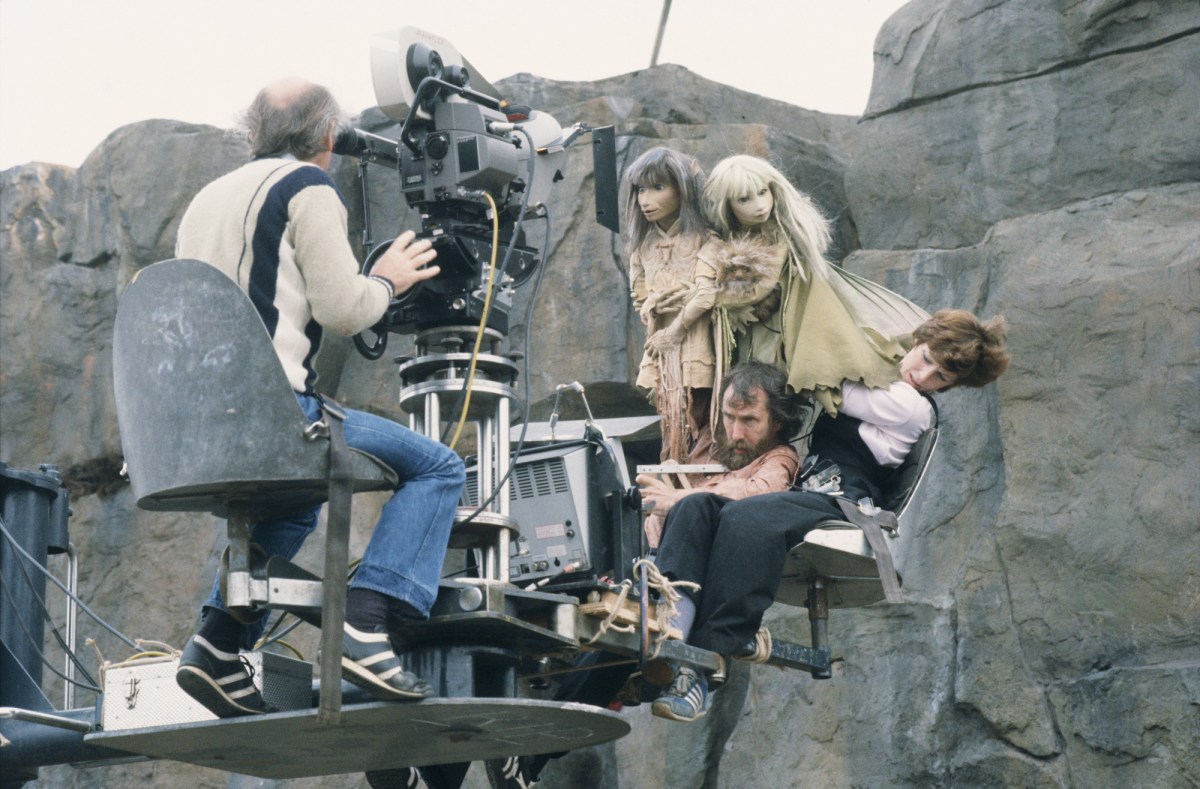
But it was his collaboration with Muppet-maker and Labyrinth director Jim Henson, and Henson’s The Dark Crystal co-director Frank Oz, that felt most incredible to Barclay.
‘Jim was really passionate, and he would have loved to see this exhibition,’ Barclay says of Lifelike and its shrine to the practical effects passion of puppeteers.
‘It broke his heart when middle-aged white men gave Labyrinth terrible reviews, when the film’s not for middle-aged white men,’ he adds. ‘But that was the way it was, and it didn’t do well at the box office. Jim was so far ahead of his time, and the world wasn’t quite ready for it.’
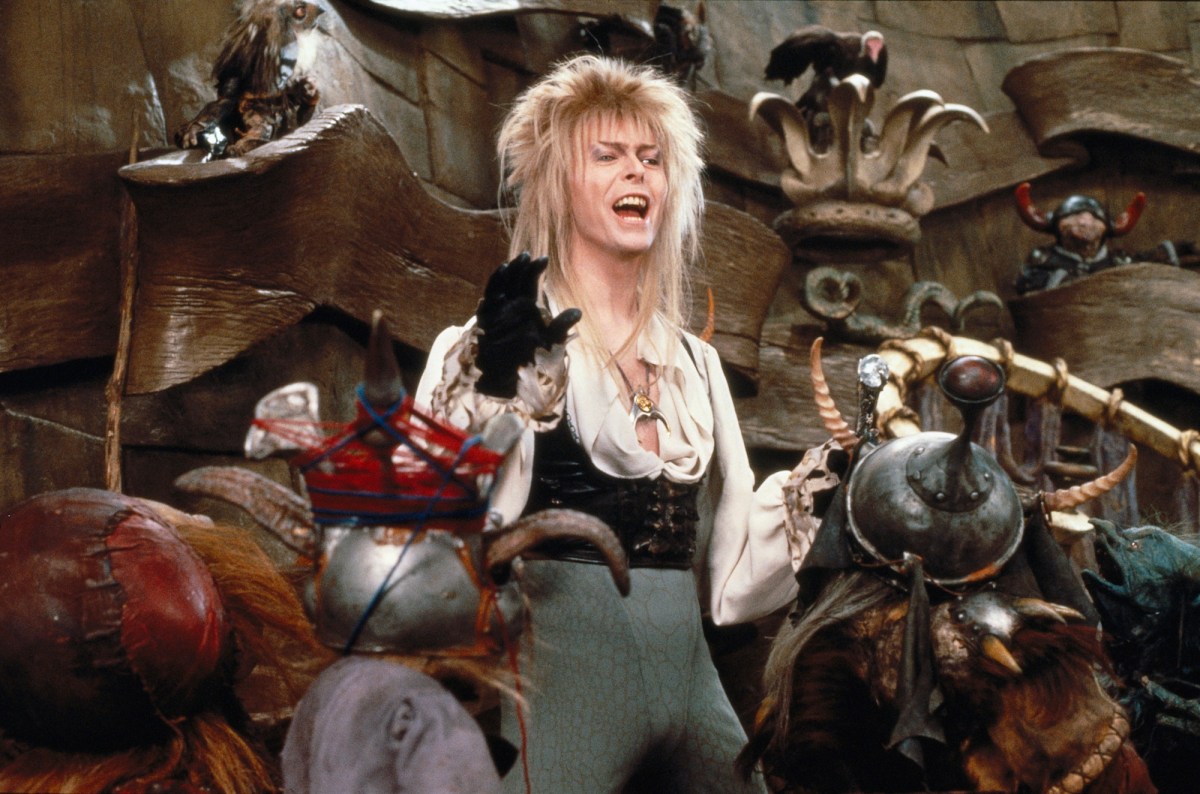
The work of The Jim Henson Company is now on show in Make, Believe, Magic in Brisbane, while the Jennifer Connelly and David Bowie-led fantasy Labyrinth has gone on to become one of the most adored movies. That success thrills Barclay. Again, the film was a family affair.
‘Toby Froud, who played the baby Toby from Labyrinth, then goes on to run the puppeteering for The Dark Crystal: Age of Resistance in 2019, working alongside his dad, Brian,’ Barclay says. ‘That blew my mind.’
Barclay says nobody did it better than Henson and Oz. ‘They were magical,’ he says. ‘The best double act in the world, easily in the same league as Laurel and Hardy and Abbott and Costello. They just happened to have puppets on their arms.’
Believing is seeing
Given how much joy these puppets have brought children – and adults, with this writer emotionally overwhelmed while wandering around Lifelike – it’s hardly surprising the work casts a spell over all who come into direct contact with it. A puppeteer must believe in the magic to make it truly work, Barclay insists.
‘It all depends on the performance,’ Barclay says. ‘As a puppeteer, you try and pull this energy out of your body, up through your arm and through the puppet’s face, so you’re getting this humanity coming out of the puppet. It’s not you just playing around, it’s being true to the character, and then [the audience] see that truth.’
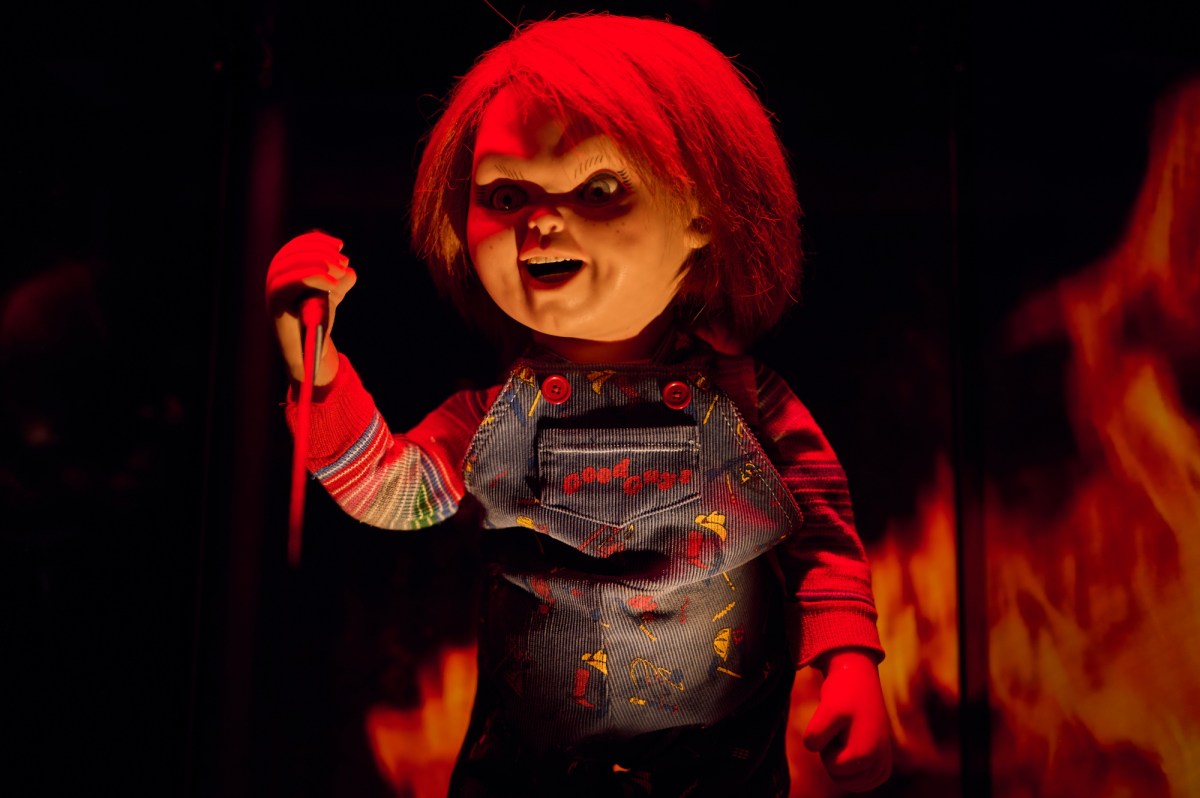
Alongside Barclay’s work, Lifelike also moves from monsters like Anabelle, creeping in the exhibition’s nightmare room, to the wholesome heart of Ernie.
Part of the wonder of the exhibition is that you can try your hand at puppeteering too. You can snap and swish the weaponised prehensile tail of a Facehugger from Alien, or video yourself bringing a Muppet-like character to life.
Australians will be particularly happy that local heroes like Aggro are in the mix, as are The Ferals, with Melbourne-born sculptor Ron Mueck working on Labyrinth as the creator, performer and vocal artist behind that film’s big hairy lug, Ludo.
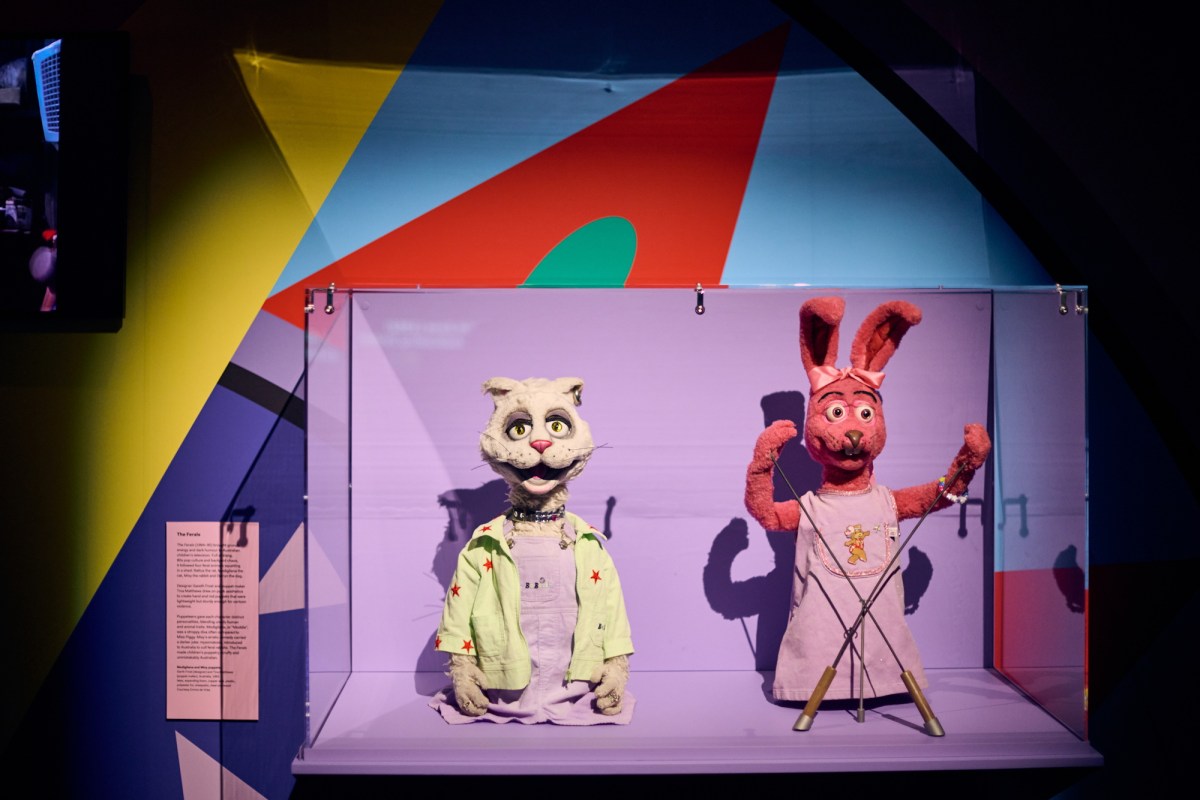
Lifelike curator Juliette Hanson admits she’s a child of the 80s. ‘I watched my VHS tape of Labyrinth so many times that it began to wear out, with bits that were all fuzzy, so it was amazing to find out Ron was behind that,’ she says. ‘We have some of Ron’s original design drawings for Ludo.’
But puppets have been a part of cinematic history from long before films like Labyrinth and Star Wars. Lifelike’s multiple video exhibits include a clip of Ladislas Starevich’s 1912 short The Cameraman’s Revenge, in which he stop-animated dried insects.
‘Puppets allow so much more freedom as part of the magical world of illusion,’ Hanson says. ‘So when you get puppets in the movies, there’s no limitation in terms of what you can create.’
Magic in the ordinary
Magic is a word that keeps popping up. ‘Puppetry can hold all of these things, because it is supernatural,’ Hanson insists of these objects that hold so much life, like a Golem. Or a Gollum, even.
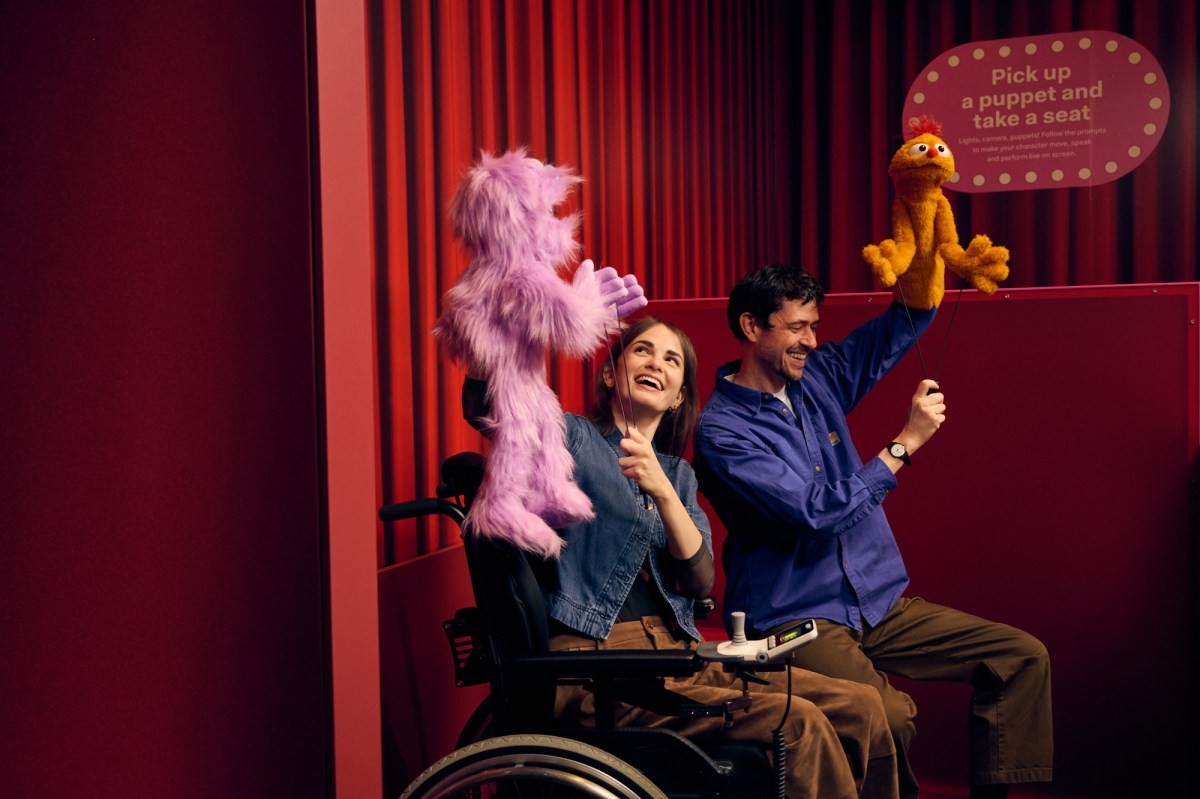
Hanson adds, ‘We even go as far as investigating digital puppetry [in Lifelike], which is still governed by human performance through motion capture, like Andy Serkis in The Lord of the Rings.’
While it’s the tactile nature of puppetry that shines brightest in Lifelike, the exhibition also traces the collaboration between puppetry and computers, which reached its never bested-peak with Steven Speilberg’s Jurassic Park, blending some of the biggest puppets ever deployed in cinema with special effects wizardry.
‘They can work in perfect harmony,’ Hanson says. ‘But there has been a bit of a swing back to the physical craft, and this exhibition celebrates that more than anything else. There’s something about physical puppets. People recognise when something is really there.’
Hanson notes that both the crew and the guests on The Muppet Show talk to the puppets, not their puppeteers. Often, it’s their imperfections that make them perfect, such as in Charlie Kaufman and Duke Johnson bruised-hearted Animolisa, whose ruffled puppets also feature in Lifelike.
‘They made that so naturalistic, every movement that they do,’ Hanson says. ‘Michael [voiced by David Thewlis] is designed to be hunched over, and they designed an individual piece of hair because Lisa [Jennifer Jason Leigh] keeps moving it to hide her scar. All these little details are fantastic.’
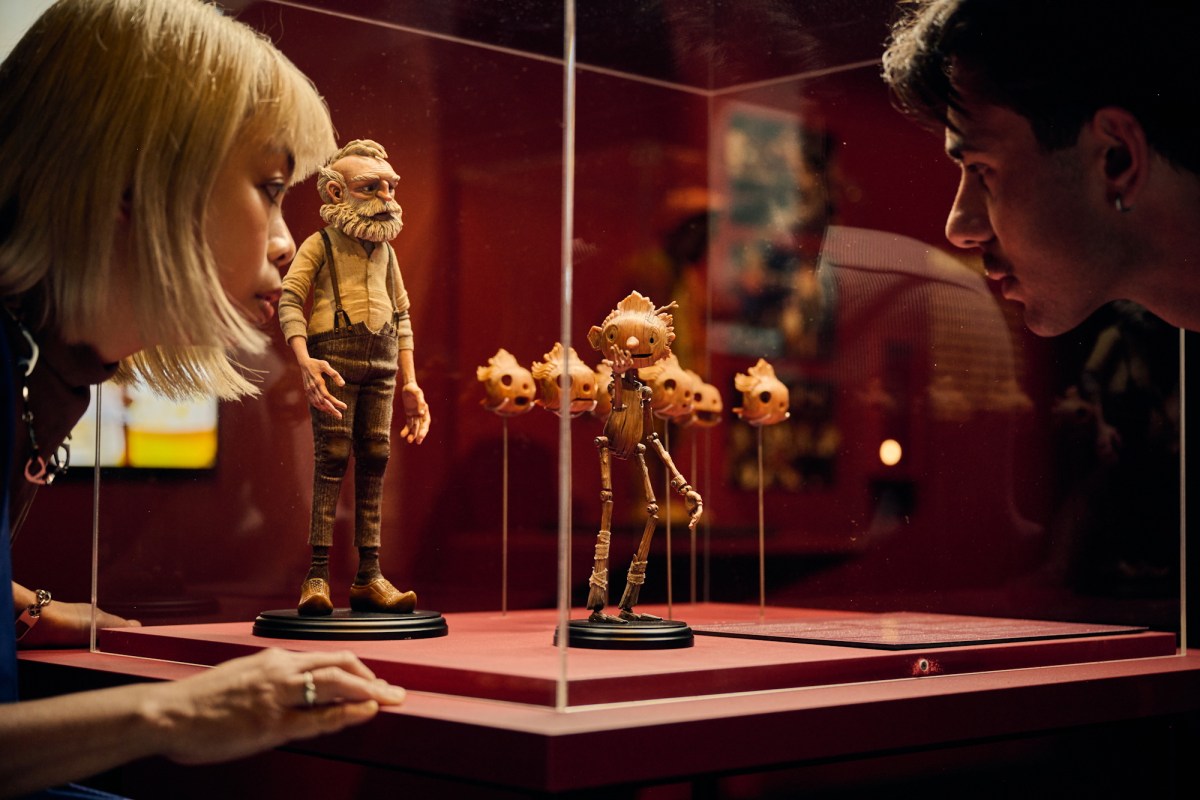
As Pan’s Labyrinth and Pinocchio director Guillermo del Toro says, ‘When you animate the ordinary, you make something extraordinary.’
Hanson couldn’t agree more. ‘We are highly attuned to recognise whether something is alive or not, so when we watch puppets, we subconsciously perceive the rhythm of their breath, how alert and responsive they are, and if we can sense thoughts and decisions being made behind eyes that sparkle in just the right way.’
Or Barclay, there is no better way he could have lived his life in cinema than accompanied by puppets. ‘Most people think I’m insane, but I had the perfect excuse,’ he says. ‘My mum and dad did it, so I thought it was a completely sensible career path. And it’s been truly delightful.’
Lifelike continues at ACMI in Melbourne until 18 April 2027.
Discover more screen, games & arts news and reviews on ScreenHub and ArtsHub. Sign up for our free ArtsHub and ScreenHub newsletters.