Verdi’s monumental Messa da Requiem was a huge success when it premiered in 1874, bringing together many elements of the composer’s operatic writing in a darkly liturgical text alongside a thrilling and passionate score. It was written for a large orchestra, with double choir and four dramatic vocalists, initially sung by principals from his recent Aida cast.
Performances of this work are a massive undertaking, which makes Requiem seemingly a perfect choice to formally open the new Glasshouse Theatre at Queensland Performing Arts Centre. Local companies and artists have been brought together to realise the work, which incorporates visuals, staging, movement and dance – an unusual if not unwelcome addition.
Messa da Requiem review – quick links
A sombre visual narrative
Originally conceived and created by renowned choreographer Christian Spuck for Zurich Ballet, this production was subsequently staged as the centrepiece of the Adelaide Festival in 2023. Now Queensland Ballet is presenting it in Brisbane, joining with Queensland Symphony Orchestra, Brisbane Chorale and Canticum Chamber Choir, along with a double cast of operatic soloists.
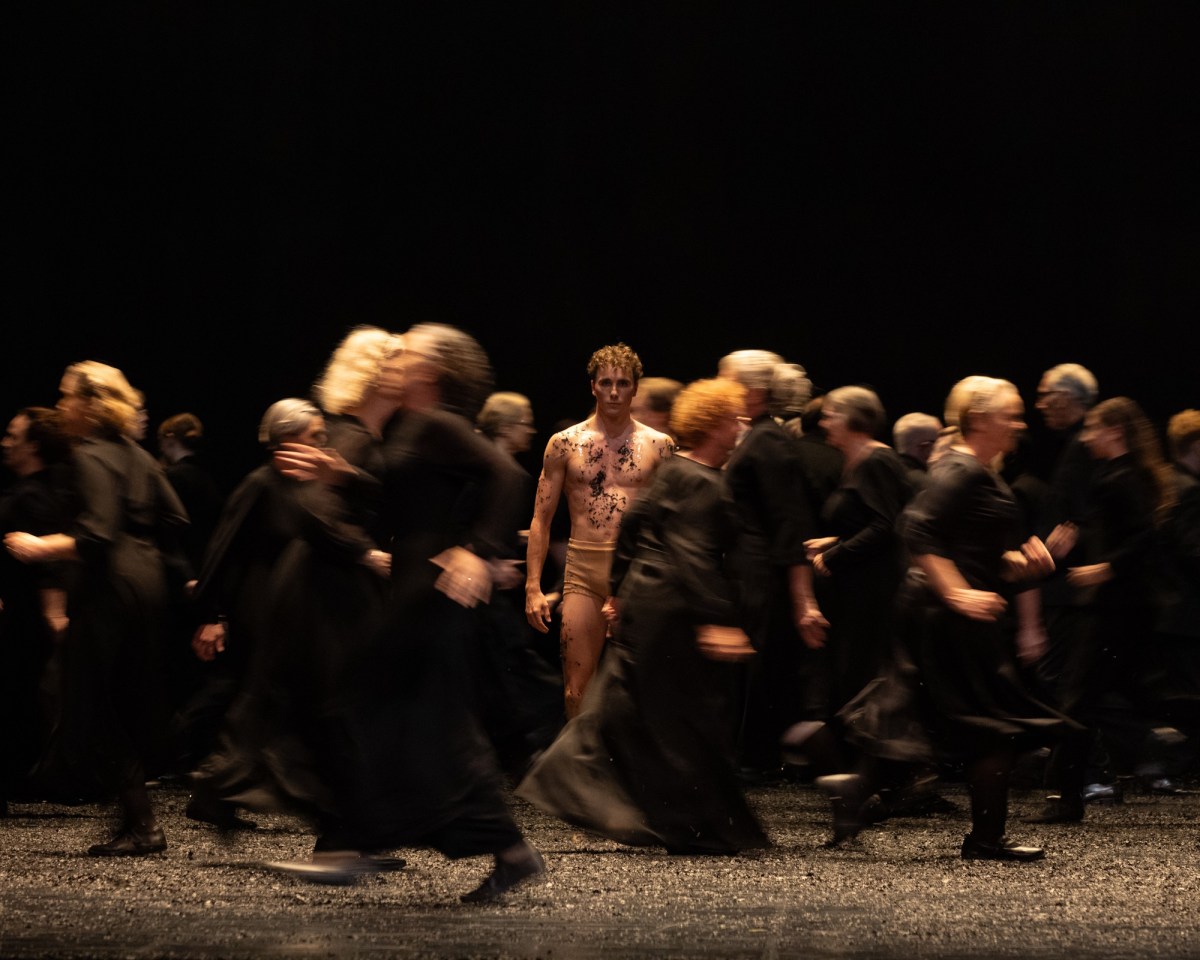
Spuck’s production and imagery is designed to provide a visual narrative for dancers and singers, enhancing the emotional impact of Verdi’s music. Seeing the work as expressing our basic humanity, Spuck’s aim is an existential exploration questioning the meaning of life and death.
It’s a sobering re-examination of Verdi’s work. A narrative based around a funeral mass with an overwhelmingly bleak vision clearly does not lend itself to bright and colourful staging, though there are moments of lightness as expressed in Spuck’s own poetic vision.
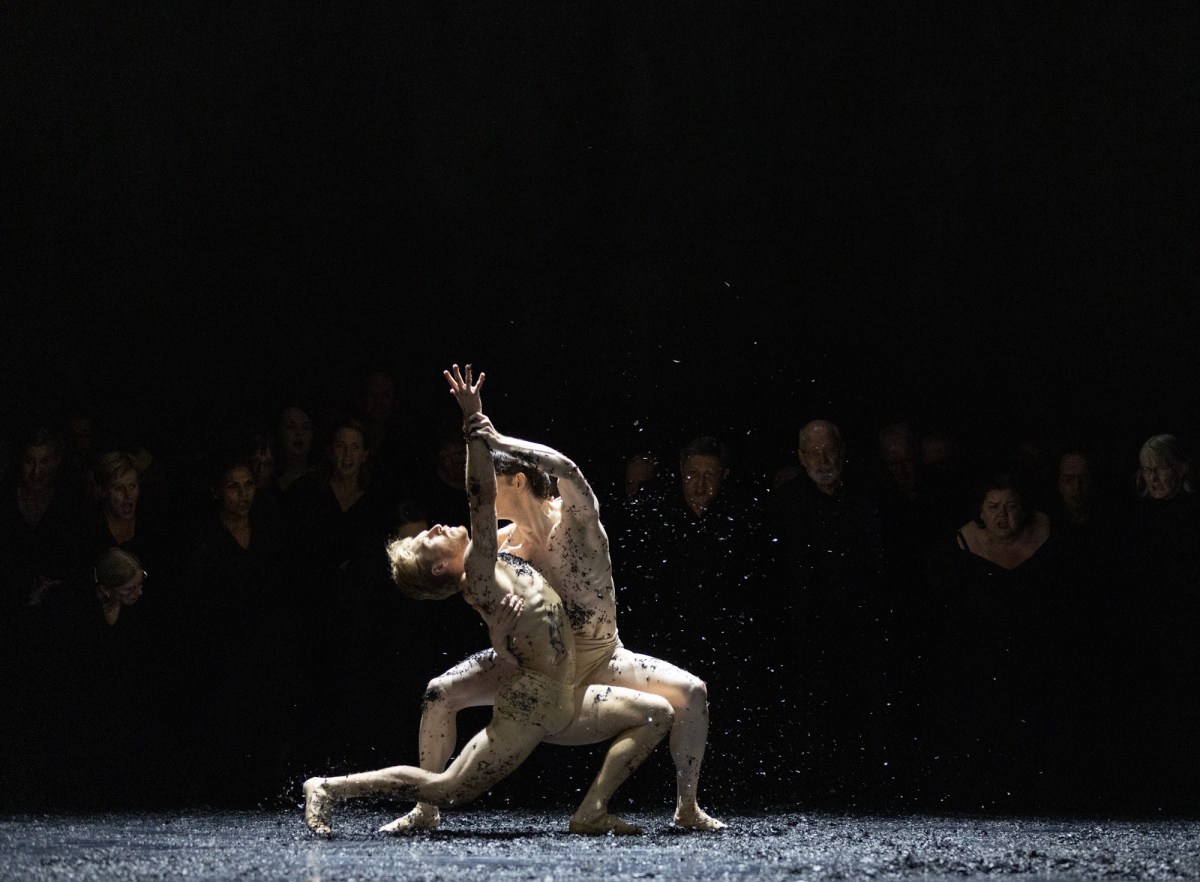
The simple setting, with dark grey brooding walls enclosing a large stage area, combines with drab black costuming for the singers and dancers alike. Though some colour is introduced later for the dancers, it is overly oppressive.
This may have been intentional but it is not inspiring to watch for 90 minutes. The lighting is equally sombre and kept at a constant low level. Despite a lack of colour, Spuck creates some stunning visual stage pictures that aptly utilise the whole cast.
Movement and imagery in Messa da Requiem
The frenetic dancing and writhing in the Dies irae sees performers banding together, appearing to become a moving tidal wave or the prow of a ship or a vast ocean-dwelling creature. The relation of this imagery to the narrative, however, is less clear.
Other elements prove to be merely a distraction. A bright light operates on stage highlighting one dance couple during the Recordare which feels intrusive. The choir scribbles chalked messages on the back wall, though their purpose is unclear. Some anachronistic additions, such as modern office tables and chairs, are used as props. The black frocked dancers, displaying their white backs to the audience during the Ingemisco, appear to have no reference point.
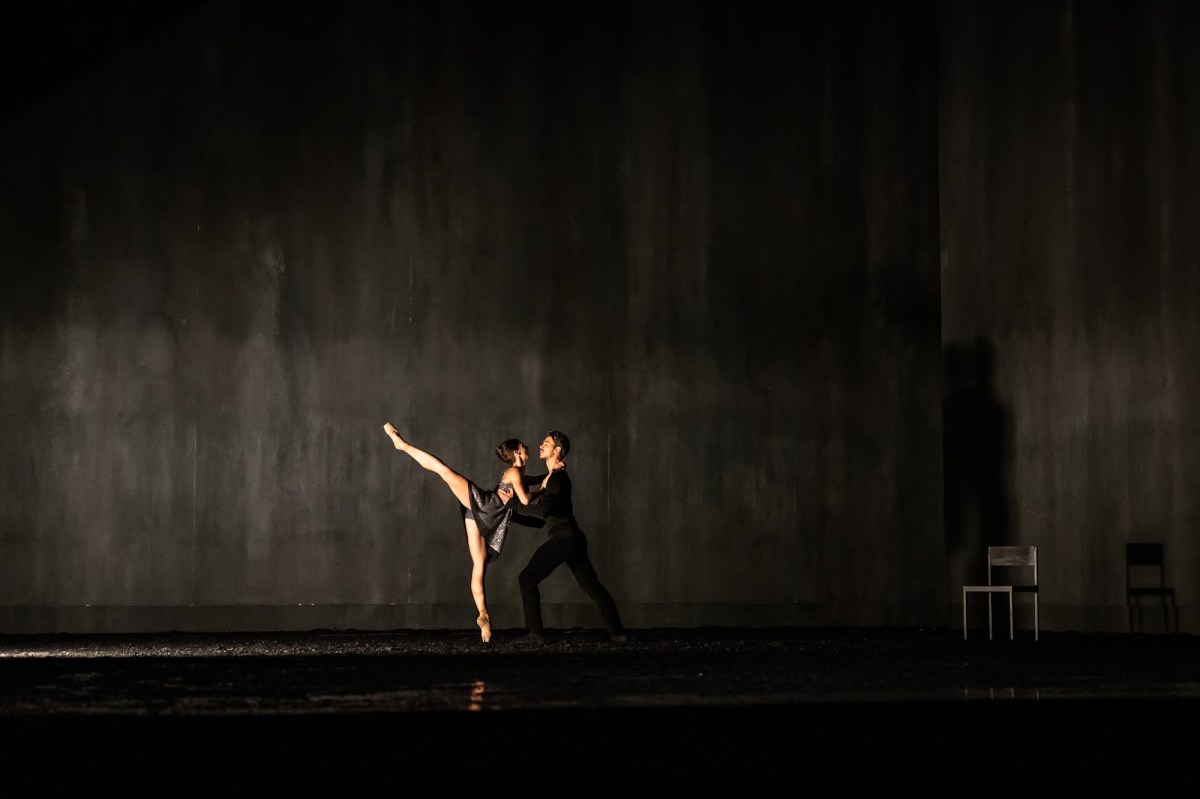
The 50 dancers of Queensland Ballet are universally splendid, with technical prowess in abundance and well-delivered precision in their often ultra-fast moves across the stage. Spuck’s choreography is classical in feel, with many beautiful pas de deux and pas de trois combined with numerous powerful lifts.
Highlights include a stunning opening Requiem aeternam with a synchronised lone dancer moving across the back wall; a delightful pas de deux with complex intertwined arm and hand movements; and a stunning visual ending.
At the performance I attended, athletic, muscular sequences by the male corps de ballet and the more stylised, ethereal work of female dancers were both warmly received.
A demanding work
Verdi wrote some of his best music in the Requiem, from the glorious whispered pianissimo of the Requiem aeternam through the ferocious Dies irae and the near perfect lyricism of the Lacrimosa and Agnus Dei.
Under Simon Hewett’s controlled and strong baton, the QSO play exceptionally well, with Hewett bringing out the many musical colours of the score with vibrancy and panache. His cueing of the singers and choir is first-rate.
It is disappointing that the timpani and brass – required for the powerful and sonorous impact of the Dies irae – are somewhat muted and lack sufficient orchestral power. Similarly, placed high on a balcony above the stage, the trumpets that open the Tuba mirum are thin, losing the full impact of Verdi’s music.
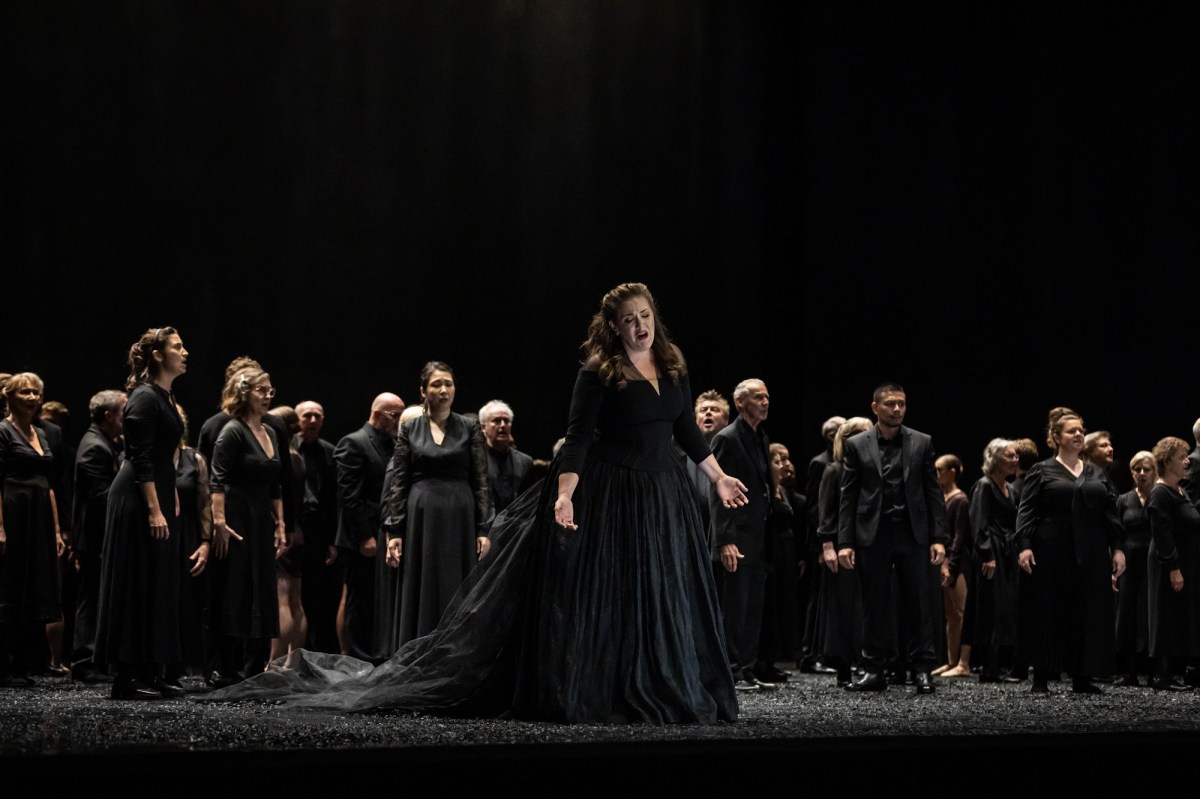
On Messa da Requiem‘s opening night, the four soloists – Naomi Johns, Cassandra Seidermann, Kyle Stegall and Jeremy Kleeman – presented well vocally, both individually and together. While they do not possess the huge voices that Verdi’s score requires, each sings strongly with passion and excellent intonation.
Much of the narrative is dependent on their communication with the audience and mostly they sing front and centre so they can be heard from the large stage. They are splendid in two acapella sections of the score, with beautiful phrasing and delivery.
Being used physically on stage as much as an opera chorus, the 110 voices of the Brisbane Chorale and Canticum Chamber Choir offer a strong overall body of sound, though there is a distinct lack of darker male voices. With an abundance of female voices, it’s difficult to distinguish the separate vocal sections. Nevertheless, the choirs work hard singing in Latin without scores, while also moving seamlessly around the stage.
Ultimately, this is a mixed production of Messa da Requiem, and the dance and visual elements do not always enhance or embellish the score. Musically, it holds up quite well, even if the singing is at times underpowered and there are too few orchestral players to give a truly visceral interpretation. First-rate dancing and some sublime choreographic moments with fluid movements make it worth viewing. One wonders, though, if the dance element is superfluous to a perfect score, where the music is clearly of prime importance.