Mary Queen of Scots has become something of a mythic figure in the popular imagination, a symbol of feminine agency and of power, principles and heroism. The truth, it seems, is rather less dignified. Even so, from being anointed Queen at six days old, to losing her head in a public spectacle at just 44, this was no ordinary life.
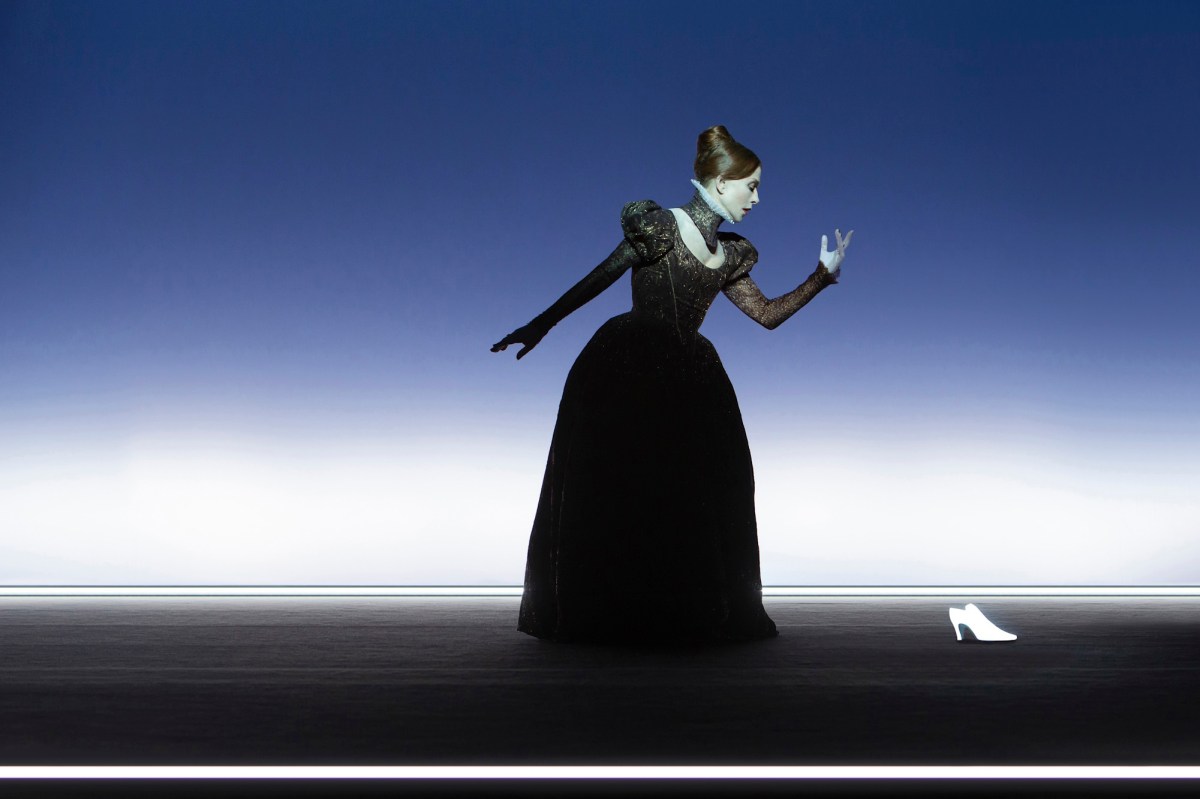
Mary Said What She Said is an intense 90-minute monologue set on the eve of her execution. Isabelle Huppert is absolutely hypnotic as the frantic Queen, ranting and raving, screaming her lines at the audience as she paces maniacally across the stage. But for the first 20 minutes, she barely moves at all, appearing as if a statue, a silhouette framed by intense light from the back of the stage. The words fly from her mouth, as tortured in their delivery as her constrained body is in holding its pose.
Mary Said What She Said review – quick links
An extraordinary and overwhelming monologue
Much of the script is spoken by Huppert, live on stage, but other sections are played from recordings giving the performance a rather disjointed quality. The excellent soundtrack by composer Ludovico Einaudi is also pre-recorded; it would have been superb to have it played live from the pit.
Written by Darryl Pickney and directed by the legendary theatrical innovator Robert Wilson, who also did the lighting and set design, Mary Said What She Said is a three-part monologue in 86 paragraphs. The words are delivered in French at such a break-neck speed that any meaningful comprehension is challenging for the audience.
These are the thoughts, feelings, doubts, and desires of an extraordinary woman facing her certain death, but we have no time to consider the words before the script has raced on.
The ‘four Marys’ are prominent in her thoughts, the four ladies-in-waiting, each named Mary, who served throughout her life. There are also many reminiscences about English and French royalty and aristocrats, and her three husbands, along with observations about loyalty and treachery. The English surtitles can barely keep pace with the words, making it almost impossible to follow the dialogue and appreciate the drama at the same time.
ArtsHub: Browse all Adelaide Festival 2026 reviews
Conjuring the feeling of Mary’s last moments
The music envelops the audience in its own world, creating an orchestral soundscape that both complements and confronts the words. There are other, seemingly random, voices in the soundtrack – an American male voice, out of place surely in 16th century Scotland, and a baby’s chattering – that echo around the auditorium.
As the audience takes its seats, they see a pre-show video loop, projected onto the Festival Theatre stage curtains, of a small terrier chasing its tail like a dog possessed, accompanied by end-of-the-pier organ music. Its relevance to the show is not explained, although apparently Mary Queen of Scots owned many such dogs and hid one under her skirts at her execution. The carnival-style music felt completely at odds with the studiously avant-garde aesthetic of the production.
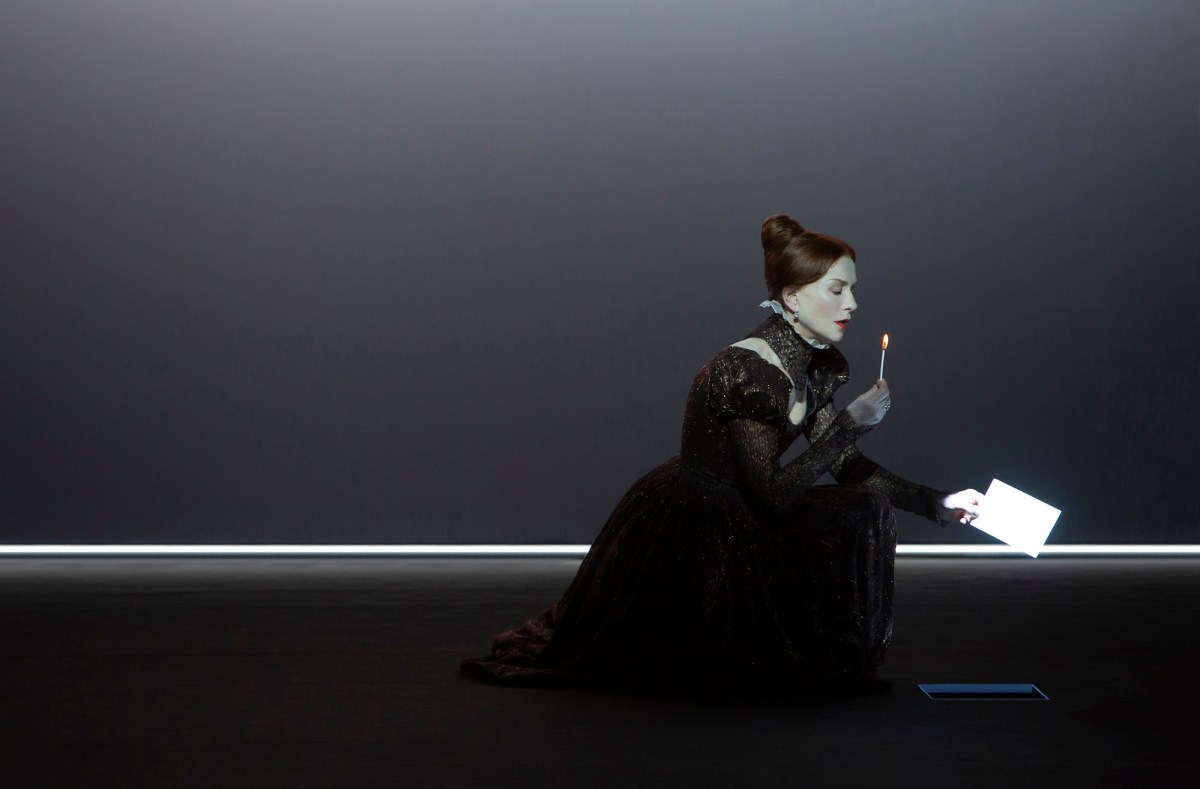
First produced by Theatre de la Ville in Paris in 2019, Wilson, Pickney, and Huppert have presented Mary Said What She Said to audiences around the world. Wilson died last year, aged 83, but this is still quintessentially his work, a piece of endurance art just as much as it is a theatrical performance.
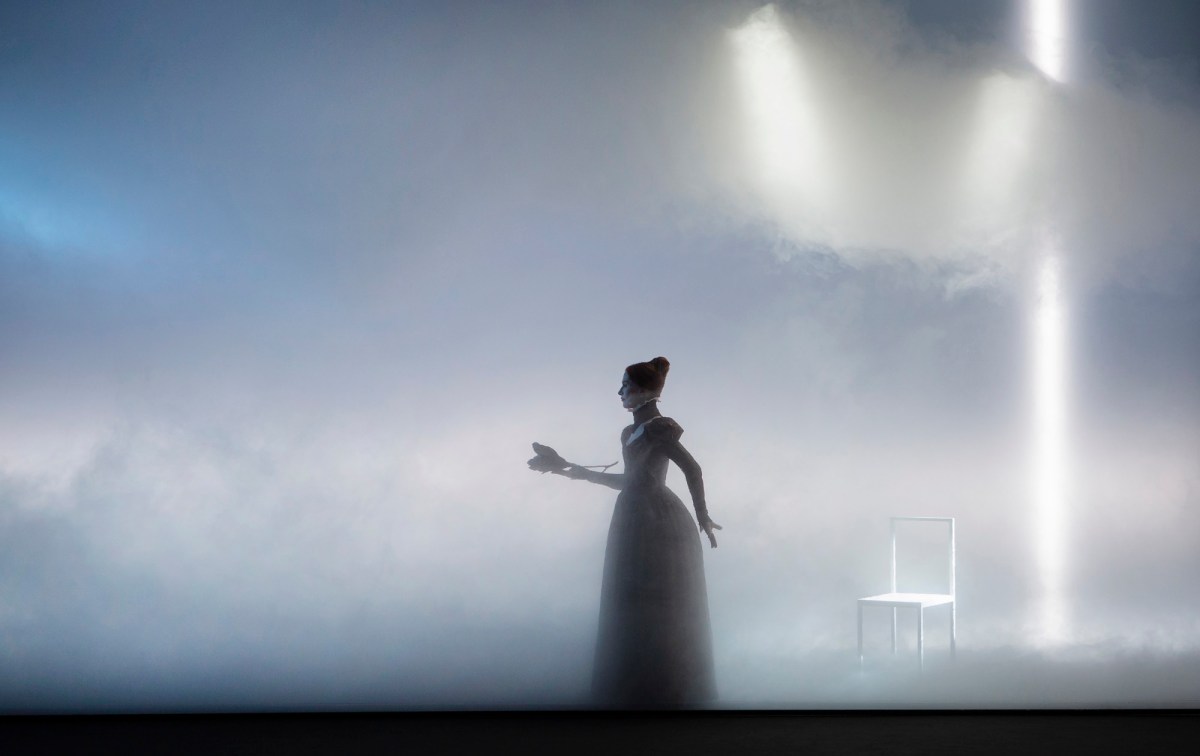
Wilson and Huppert had worked on previous productions together and the deep artistic connection between them is apparent. Every tiny gesture, every nuance, is Wilson’s but brought to life with absolute precision by Huppert. The lighting, the sound and the smoke-filled finale are all part of Wilson’s uncompromising artistic vision. It is startling and mesmerising even if it is, at times, incomprehensible.
Mary Said What She Said is a world-class example of avant-garde theatre, embodying the best of stage-craft and performance art. It may not be accessible, or easily understood, or follow a conventional theatrical style, but it is most certainly an event to remember.