Cut Chilli, written by the Sri Lankan Tamil Australian playwright Chenturan Aran, is a pacy, funny and thought-provoking 110 minute one-act play that packs a lot of dramatic and thematic punch, about belonging, identity, family and race in contemporary Australia.
(A caveat on this review: technical difficulties delayed the start of the performance I saw at Northcote Town Hall in Melbourne, and a screen that was normally used to project video in the play wasn’t working. Thee makeshift solution to use the theatre’s black stage curtains instead meant that the English subtitles for the voiceover on the video projection were unreadable. From where I was sitting in the front row, the video – which opened the play and periodically appeared between scenes – was also quite difficult to see. For that reason, I can’t talk to the value of that video content in the realisation of the show.)
The story is about twentysomething Jamie (played by Indra Liyanaarachchi), who was adopted as a baby in Sri Lanka by a white couple from Australia, and who grew up in Perth. Now a young man, he’s moved to Melbourne and is dating Zahra (Anna Kaleeda) – a progressive intellectual activist of Lebanese heritage.
The play opens at an Indian ‘fusion’ restaurant in Melbourne, staffed by a white middle-aged waiter (played by Ben Grant) who has seated Jamie and Zahra outside in the cold as he ‘namastes’ and tucks blankets around them. Zahra, who sees the world through a prism of critical theory, suggests that they’ve been placed there because of Jamie’s colour, as a sort of ‘brown mannequin in the window’, to lend the place credibility – an idea that hadn’t occurred to Jamie.
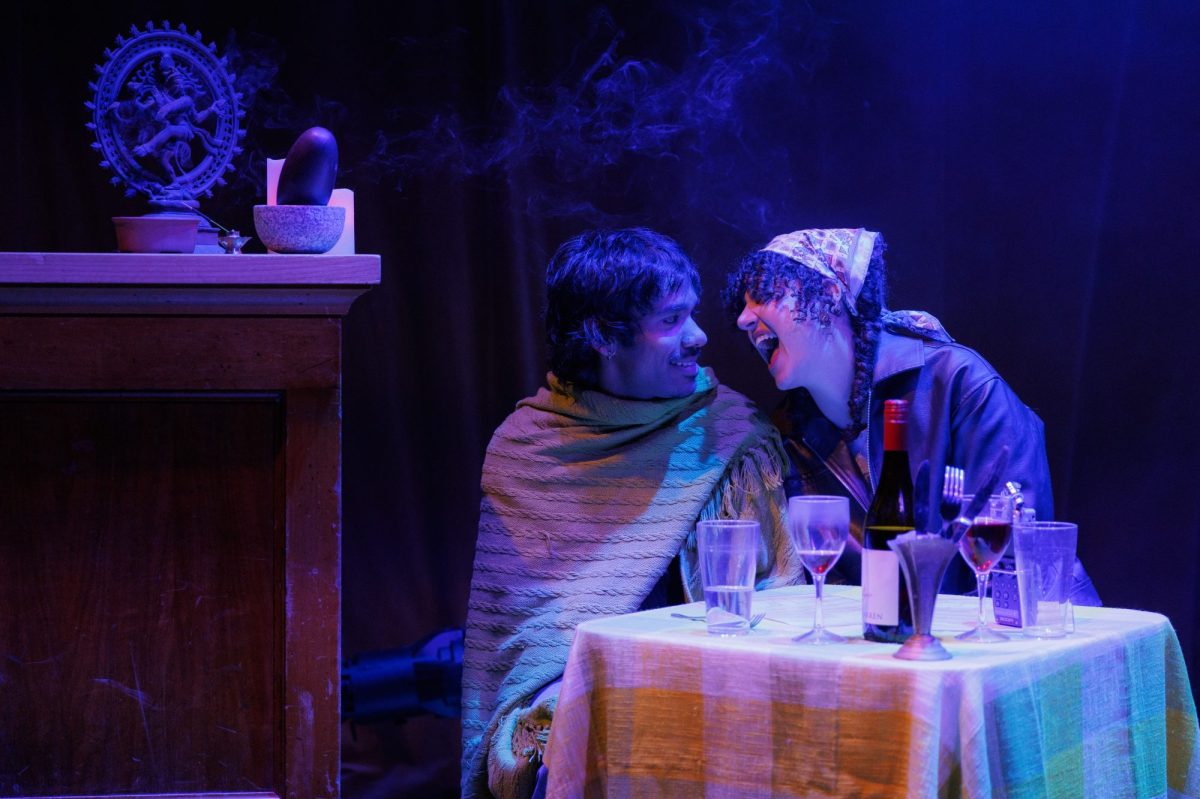
Zahra’s perspective cracks open Jamie’s world with ideas about critical race theory, privilege and the impacts of colonisation on his thinking, inspiring him to learn more about his Sri Lankan heritage and find his birth mother.
Zahra tells Jamie that adoption in Sri Lanka has historically been rife with exploitation and unethical practices, as women have been paid to give up their children – a practice that occurred in reality through the 1960s and up until the 80s, until countries started to ban it and Sri Lankan law made it illegal.
This scene sets up the conditions for the remainder of the play, which takes place in Jamie’s adoptive parents’ home, as Jamie returns to Perth with Zahra to visit his family and learn where he came from.
Cut Chilli – quick links
Cut Chilli: inner-city woke lefties
Kaleeda as Zahra is the essence of what right wing pundits like to call the inner-city woke leftie. With a laser-focused Gen Z stare, she speaks directly, thinks critically, and has unshackled herself from the traditionally feminised need to smile to make other people feel comfortable.
She’s decided to make a podcast called ‘decolonising my boyfriend’ and has lit a fire in the happy-go-lucky Jamie, setting him at odds with his hippy-ish, wasp-ish, and to use a euphemism, ‘well-meaning’ white adoptive parents, who – for parents of their generation living in a major city who have travelled and adopted a kid from Sri Lanka – are incomprehensibly blind to the complexities of what it would be like for Jamie to be a child of colour growing up in a white neighbourhood.
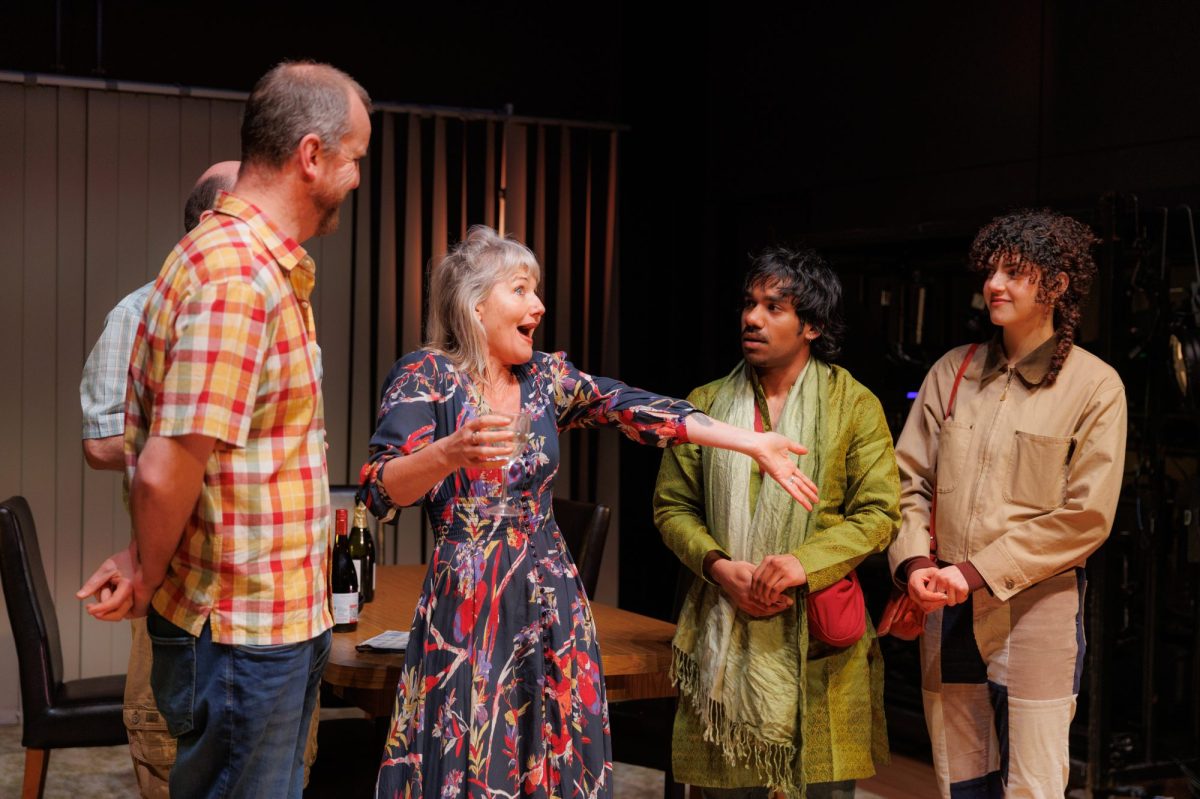
Katherine’s smiles and expansive, warm welcome to Zahra and Jamie starts to crack almost immediately, as Jamie arrives in a kurta wearing a long scarf – which is immediately pulled of his neck by his uncle Jeff, as the family laugh and comment insensitively on Jamie’s attire.
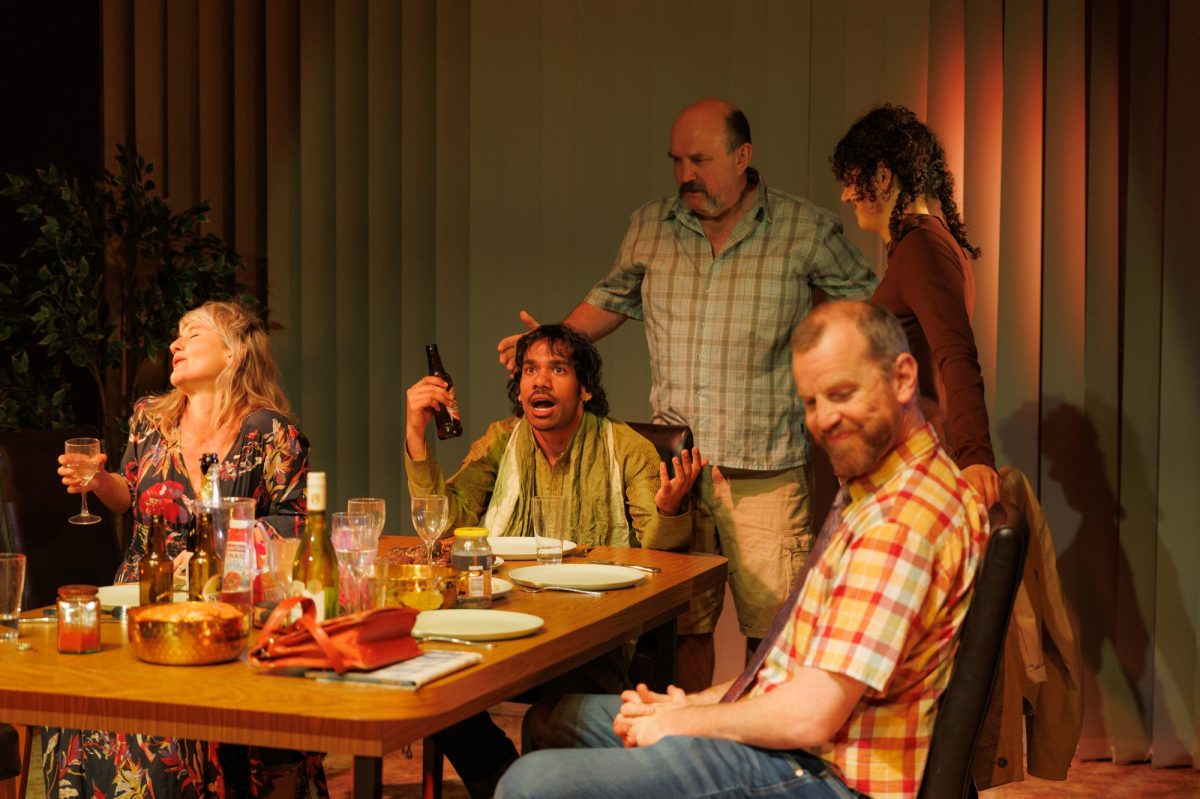
Jeff is a near caricature of the casually racist Australian – although Ben Grant’s performance is flawless, bringing in the cheeky larrikin charm that makes these sorts of men (a stereotype for a reason) get away with their bullshit among certain audiences. Jeff is the kind of guy that espouses phrases like ‘this world is too PC’.
Jamie’s father Lee (played by Soren Jenen) is focused on his upcoming political campaign. Though well-meaning, he’s a bit of an ignorant dope and has misread Zahra’s bandana in a Facebook photo as a hajib and has pegged her as Muslim – which he thinks will work well with voters. He’s a Gen X guy with a Boomer relationship to technology, constantly asking Google to ‘play this song’ or ‘play didgeridoo sounds’, as Zahra does an Acknowledgment of Country in place of the family’s pre-meal grace.
Cut Chilli: privilege-blind white feminism
Katherine (performed by the excellent Alexandra Sangster) is the epitome of a particular type of privilege-blind white feminism and is frustratingly spiky about any conversation touching on Jamie’s origin and birth parents, or about colour. She swans around, all smiles and motherly love and hostess-with-the-most-ess, but is put offside by Zahra’s influence on Jamie, and Jamie’s newfound interest in his origin story. She says at one point, without irony, ‘I don’t see colour’. It’s up to Jamie to tell her: ‘if I’m brown, you’re white.’
Jamie’s parents’ blindness to issues of race or colour – although hiding another secret that becomes the reveal of the play – seems to place Katherine and Lee a generation earlier, where it would seem more plausible for a couple to have raised a kid from Sri Lanka without having a clue about what cultural appropriation is, or any understanding of the importance of open communication in raising a healthy, emotionally stable adopted kid.
Having said that, it’s this conflict in communication that leads to the ultimate reveal about Jamie’s origins – a family secret that forces the audience to think about the imperfect human beings at the centre of this family drama, and the often messy, badly thought-out decisions that we can all make in the wake of trauma.
Cut Chilli: a word on the staging
The staging of Cut Chilli – although hindered by the tech issues – had both positive and negative impacts on the performance.
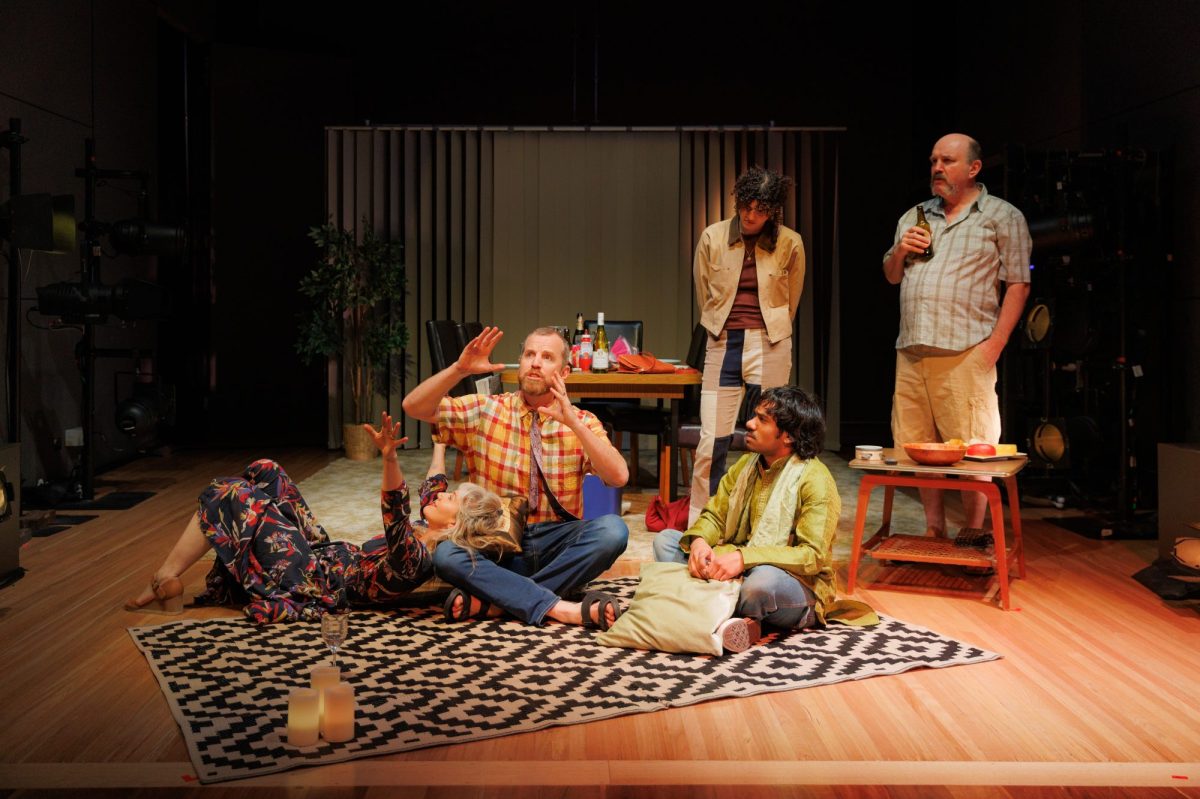
The dining room of Jamie’s family home is placed up one end of the Northcote Town Hall, contained within the existing proscenium arch.
One large seating bank is placed merely metres from the stage curtain, shortening the space and effectively cocooning the narrow stage and the dining table, creating a crucible-like atmosphere. A large diffuser light is placed over the dining room table, and visible side-stage lights give the set the look and feel of a soap opera television studio set – a feeling that’s reinforced by the quick-fire comic writing and the big personality characters of the play that both lean into and critique common character stereotypes of Australian society.
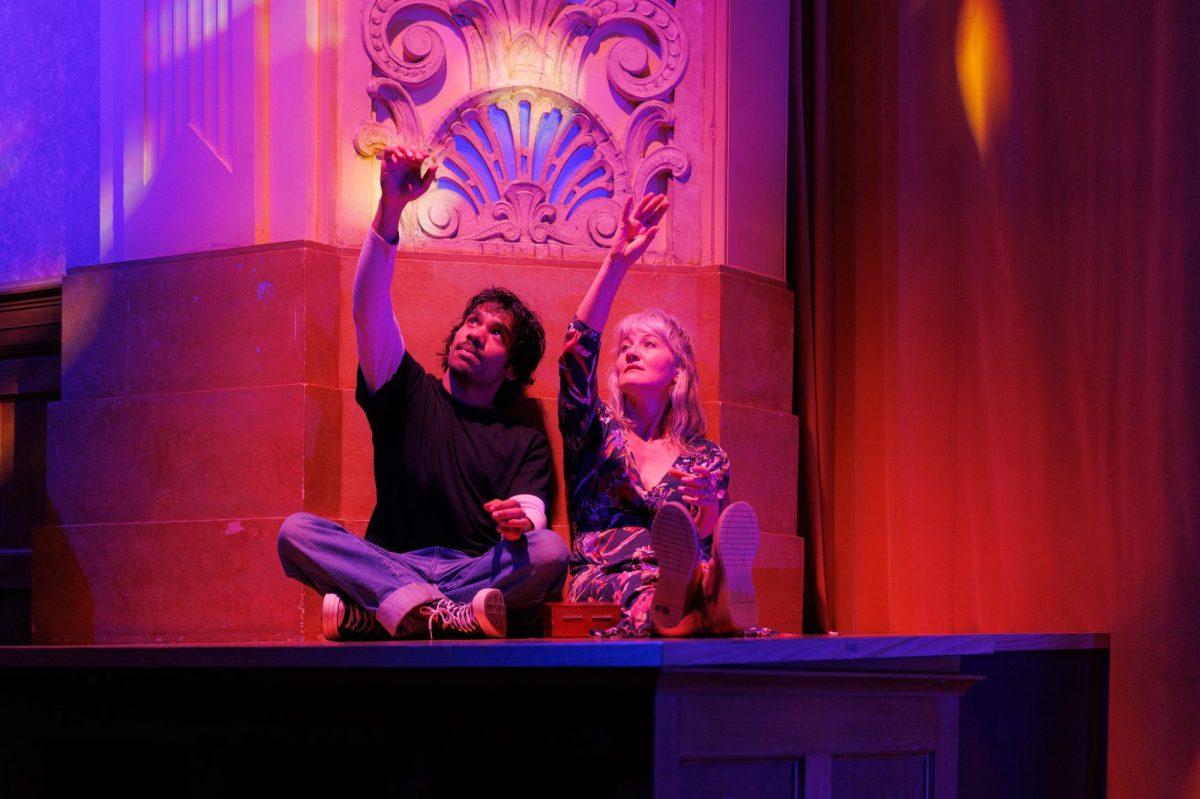
The stage placement also enables the architecture of the space to be employed as the outside of the house – the characters sitting on the elevated base of the stage pillars, leaning again the pillars as they smoke a joint together at the end of the play.
For an ensemble piece, such a small space limits the possibility of shifting positional dynamics between the characters. A number of times, the actors were forced to be placed in a horizontal line: an awkward, artificial necessity to be both seen and heard by the audience. Perhaps giving the actors more room to move would open up more possibilities to play with dramatic tension.
Cut Chilli: race and multiculturalism
Despite its challenges, Cut Chilli is an astute commentary on race and multiculturalism in contemporary Australia. It uses the twin powers of being funny and entertaining to neatly cut through this often difficult to articulate topic.
Aran’s characters are drawn from recognisable stereotypes (the waspish white couple blind to privilege, the woke leftie, the racist uncle, the macho Aussie males), but also cleverly pits these characters against each other in a way that reveals their humanity – made possible by the nuanced and believable performances of all the actors.
Sometimes the focus on being funny overshadows the play’s dramatic arc, as it feels like the mystery of Jamie’s heritage and Katherine’s dogged determination to keep the truth from Jamie is relied on for a touch too long to believably sustain the dramatic tension – and there isn’t enough meat on the bones of the conflicts between any of other characters to pull focus and craft a more dramatically satisfying interwoven ensemble narrative.
Without having gained the value of the video work that appears between scenes in the play, I can say that the play without it is still cohesive. Maybe removing it entirely may speed up the action of the play. The ghost of Jamie’s lost heritage and story are already well-infused within the play’s narrative, and there is power in the unsaid, and the imagined – as the scene at the end as Katherine and Jamie connect through shared, imagined story proves.
Aran is an exciting emerging writer that has a lot to say about contemporary race relations in Australia, in a time that demands serious national self-reflection – and Cut Chilli is an exciting, accomplished play that has the comedic cut-through to land with audiences.