
If ever a novel was crying out to be filmed, LIT, the debut thriller from award-winning Auckland-based short fiction author Anna Woods is such a book.
But not for the reasons you may think.
Yes, you’ll find echoes of smash hit predecessors such as Gone Girl, Girl on a Train, Little Fires Everywhere and The Woman in the Window – all of which transferred to the screen with varying degrees of success. You’ll detect those traces in some of the themes, but mostly in the degree of tension, subterfuge and untrustworthiness that Woods manages to maintain pretty much from page one.
But that’s not all that suggests a cinematic treatment may be beneficial.
LIT by Anna Woods review – quick links
A patchwork plot
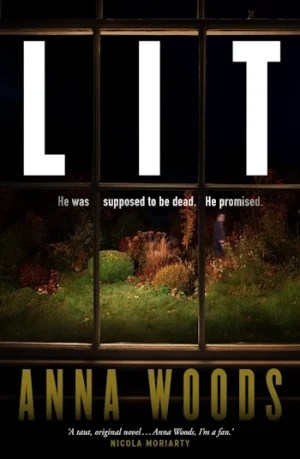
LIT is the name of the architectural practice started by three friends – Gin (Virginia), our unreliable (or is she?) narrator, Clary (Clarissa), her beautiful and wealthy girlfriend, and Billy, Clary’s ex, who left the practice and disappeared seemingly into thin air some time before the events of the novel.
LIT, the studio, is also an acronym of their names (Billy) Lovelace, (Gin) Ishak and (Clary) Taylor. So the title tells us from the get-go that these are our three protagonists and this will be a story about the eternal triangle… in one way or another.
At the novel’s outset, Gin and Clary are living together, running the practice and trying to land a big government contract, though all is on shaky ground. Clary has clearly been traumatised, and it appears to have something to do with Billy’s disappearance.
Gin, while spending much of her time trying to protect and help her partner heal, is also struggling with personal and professional debt. She’s desperately trying to keep the practice solvent, while fobbing off the ever-circling debt collectors. Consequently, her attentions are fractured and she’s perhaps not treating those who care for her as well as she might.
As events unfold, almost inevitably, what transpires is a spider’s web of lies, obfuscations, fraudulent activities and betrayal. But which of the main characters is the Machiavellian master or mistress mind behind it all. Or is it one of the peripherals? April the indefatigable investigative journalist? Tama, Gin’s friend… without benefits? Or does the intrigue go back generations to Clary’s affluent forefolk and beyond?
How much of the underhand undertakings are wrapped up in the work and how much are due to the emotional entanglements?
Teasing out her tale, Woods successfully traverses the thriller minefield and manages to keep the reader turning the pages – without throwing in so many twists and turns that said reader gets completely bamboozled or weary of all the shenanigans. But she does skate quite near to the mark at times.
ArtsHub: More new Australian books
Delineated dialogue – Kiwi style
Style wise, Woods uses the bold device of eschewing quotation marks to delineate speech. Purists may struggle with this, but once the precedent is set, she is able to make it clear when someone is speaking, who is speaking and what exactly it is they’re saying, at least 90 percent of the time.
Woods’ literary experience thus far has been in short fiction, including being shortlisted for the Commonwealth Short Story Prize, and she certainly has a way with words. Her descriptive powers in LIT are singular and intriguing (‘My heart was froggish’) if perhaps sometimes a little florid (‘a chunk of moonlight cut through the gap in the curtains, turning the landslip of her hair iridescent’) and occasionally downright curious (‘numbed by the glow of alcohol, as though I’d swallowed the moon’).
That taut narrative thrust is sufficient to pull the reader through any such flourishes, however, and keep the reader gripped. But, here’s where that recommendation for a screen adaptation comes in.
The way the characters are written and the relationships are presented is perhaps a little too weighted in one direction. What I’m trying to say as delicately as I can, is that the real villain of the piece is fairly apparent throughout. A screenplay adaptation with intelligent casting and fabulous acting would make such a difference.
There are, of course, some actors we inherently trust and so the opportunity for casting against type and playing with the audience’s expectations and emotions is huge.