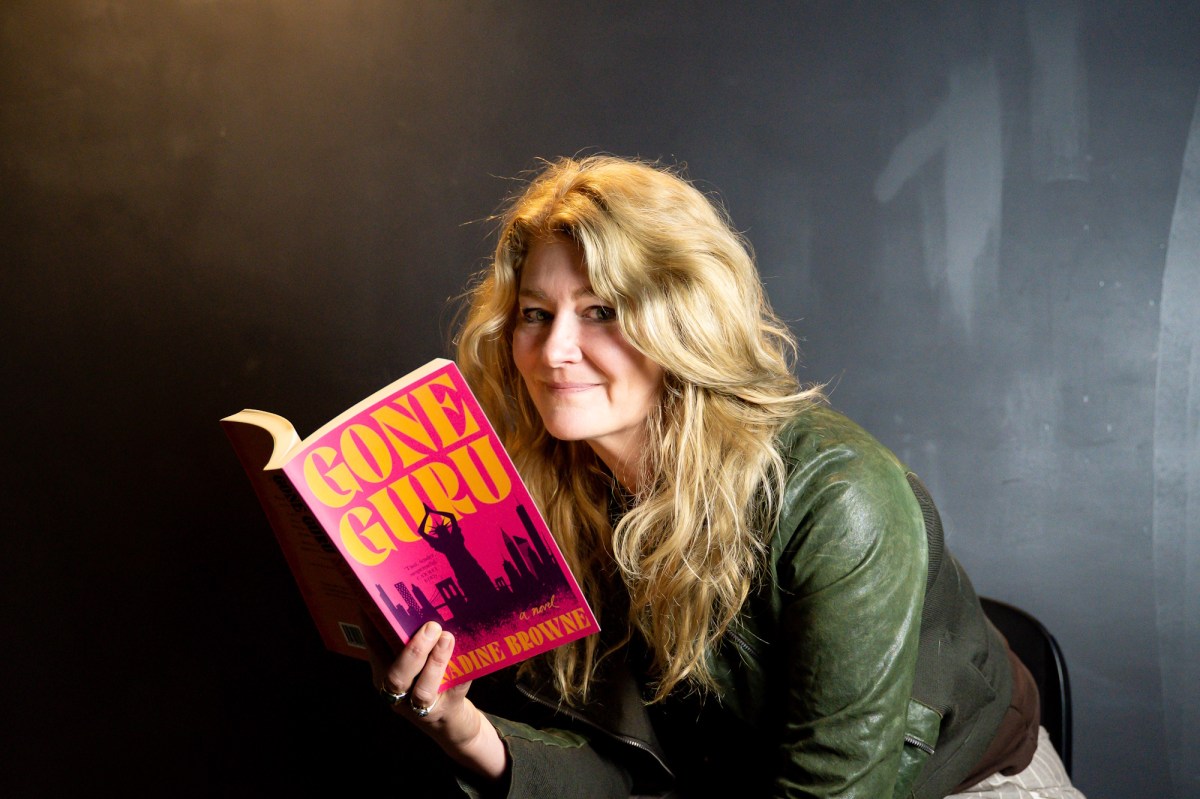
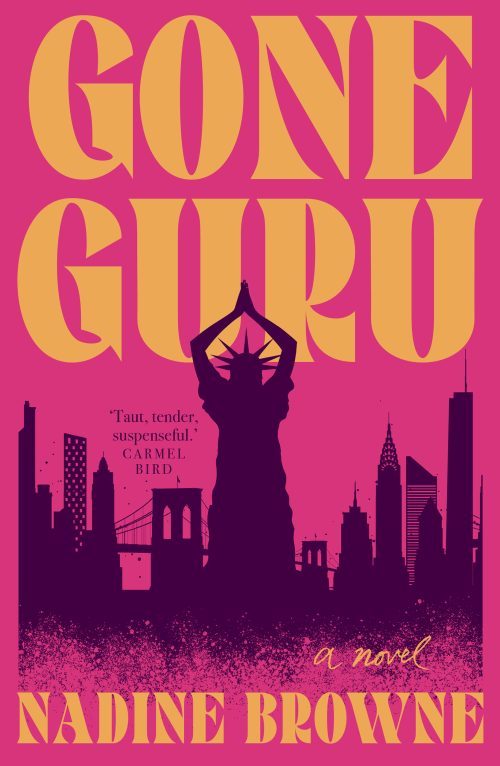
What do you do with rejection? It’s a question every creative has to deal with sooner or later. In Nadine Browne‘s novel Gone Guru, the aspiring writer Noni Barlow is studying in New York City when one of her teachers, the literary giant Joyce Carol Oates, cuts her down to size. That withering moment sets Barlow searching for a new and great story idea, and when her flatmate goes missing it almost seems to good to be true.
If you’re thinking Browne has laid a bit of a hint in naming her main character Noni Barlow, you’d be right. The Western Australian writer has followed a similar path, winning a prestigious scholarship to study at New York University and yes, even being on the receiving end of one of Joyce Carol Oates’ famous putdowns.
But for Browne, the experience led to a different kind of mystery: if she was no longer writing a memoir, how could she bring her fascination with identity to the page?
Nadine Browne interview – quick links
‘Noni Barlow is broke, jet-lagged and alone in New York with nothing but a dream and a manuscript. When her idol Joyce Carol Oates tells her that Born Again memoirs are so “last year”, Noni’s big break starts to feel like a big mistake.’
Tell me about the decision to write a book about the pressures of being an emerging writer – and to write in Joyce Carol Oates, one of your own teachers?
Nadine Browne: I didn’t set out to write an ’emerging writer’ novel, I feel like I’ve been an emerging writer for 20 years. But in New York everyone was constantly talking about voice: ‘What’s your voice? Have you found your voice? Tell me about the voice?’ Basically, I was experimenting with a lot of points of view and tired of trying to be someone I wasn’t.
I went to New York with a memoir about growing up in a fundamentalist Christian community in rural Western Australia, and I basically had a problem, which in New York circles was probably along the lines of: ‘You’re not famous enough to write a memoir’.
When Oates called my manuscript a ‘dead baby’ and told me to work on something else, I was upset at first. But I kept coming back to what a great metaphor it was – for identity, for ambition, for being told your personal material isn’t viable.
I felt like it deserved to be in the book exactly as it happened, not softened or fictionalised. There’s something in the specificity of a real, towering literary figure delivering that verdict that a fictional teacher couldn’t capture. It’s funnier and more devastating because it’s the Joyce Carol Oates and the narrator idolises her.
I still don’t know if she knows about her depiction in this book, I’ve sent her 17 emails and she hasn’t replied. Maybe I’ll send her a tweet!
Gone Guru is a cosy mystery novel that starts with the disappearance of Noni’s flatmate, who she’s only just met. When she discovers he’s an influencer-guru with a massive online following (and equally large trust fund), she starts wondering if this might be ‘the story’ to save her writing career. What drew you to this world, and to the mystery genre?
NB: The real starting point wasn’t genre, it was pure panic! Upon my arrival in New York, had a full-blown panic attack in the first week. A friend told me to try meditation, not exactly textbook crisis advice, but it actually worked.
I started living inside all these meditation talks and non-dualism podcasts just to get some sleep and calm my anxiety. I really felt like I didn’t belong in the workshops and the craft classes in the beginning, all my insecurity came to the fore.
I thought I’m not going to survive my own head here. So I became obsessed with teachers like Adyashanti, especially him, he’s great! The guru world came directly from my own coping mechanism, not research. All those mediation apps, audio books … really saved me from losing it, and in the novel, a similar thing happens for Noni.
The missing person element came from something equally unglamorous. I came home one day and realised I hadn’t seen my flatmate since I’d moved in. I started wondering: is this a normal New York occurrence? Are we just very busy ships in the night? Is he dead? I wrote a short story about it, and that was the beginning of the novel.
Once I put those two things together, a narrator obsessed with teachings on identity and non-attachment, investigating the disappearance of someone who’d apparently mastered both, I thought, ‘Well, maybe this is the frame I need for my memoir,’ so I threw it all in together and ended up with Gone Guru.
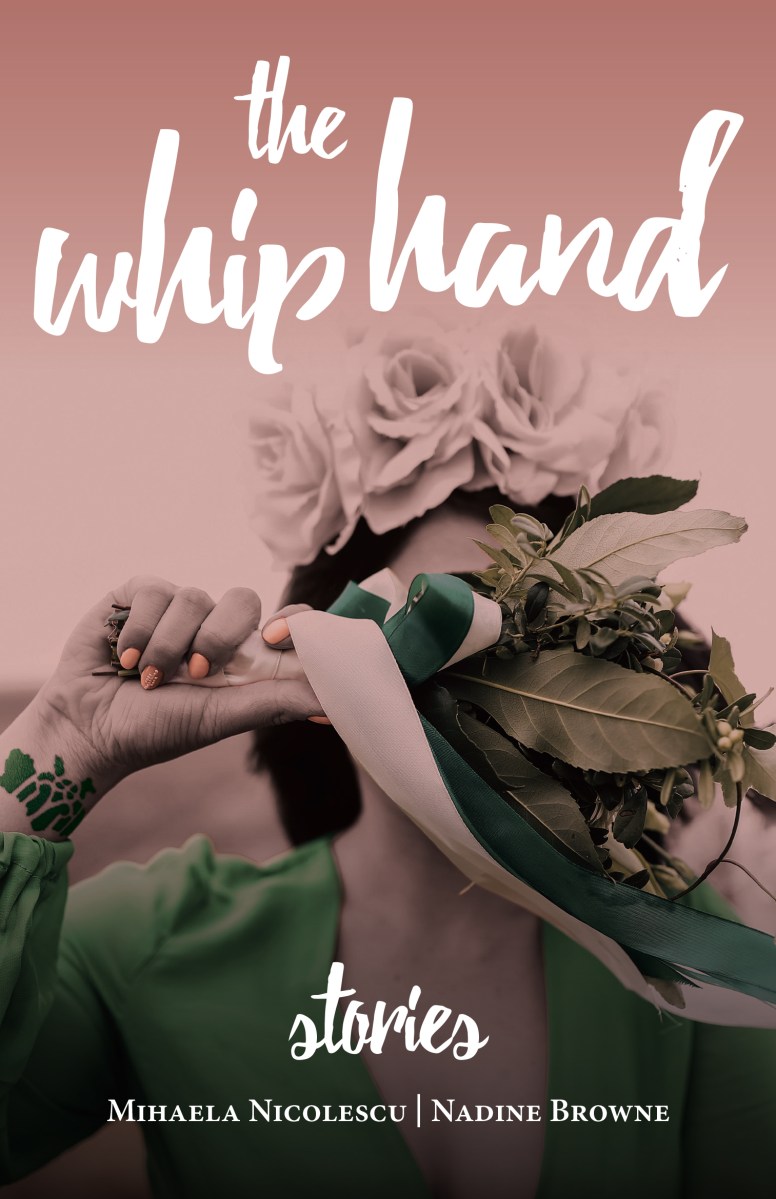
Your debut was the short story collection The Whip Hand, and you’re also known as a poet and essayist. How do you find the jump between mediums? Is there a natural home, or starting point, that you find you return to?
NB: For me, all writing is about shedding layers – conditioning, identity, beliefs, behavioral patterns, its all the same to me. Its about stripping away the lies to get back to something really human and meaningful.
I have written many unpublished novels over the last 20 years – its not easy to publish a book – and if I could have given up, I would have long ago. I’ve tried to therapise it away, meditate it into submission (my need to write) and I’ve tried throwing myself at so many other things, but I always come back to writing.
It definitely sounds like you’ve had some fun with the character of Noni Barlow in Gone Guru and how she sees her situation. (Arts education has often been described as a pyramid scheme!) Firstly, how did you come to study and live in NYC? What’s that experience been like, and how has it been different to the pathways or opportunities you see in Australia?
NB: Getting the MFA [at New York University] felt huge, and receiving a full scholarship felt unbelievable. I applied on a whim, a kind of last ditch attempt (one of many) at being able to keep writing.
My application was one of the funniest, most self depreciating things I’d ever written. Zadie Smith saw it and liked it – she is a long-time comedy [and] satire fan – and I don’t think she would have ‘got’ my humor if she wasn’t British herself. The Americans certainly didn’t get it.
Then I got to New York and realised the scholarship was almost beside the point, because the real currency wasn’t money, it was a kind of cultural fluency I hadn’t grown up with and couldn’t fake. I didn’t come from an intellectual background or an artistic family, I hadn’t had a well-rounded education, I didn’t even have a nice middle class job!
At the time, I’d been working with at-risk youth, who could barely read a text message, let alone a book. And suddenly I was in this rarified environment with people looking to be challenged by art and books. It was an incredible culture shock. I mean, I felt a huge divide at times, and that gap is what the book is really about. But at the same time, I had always been a voracious reader, and I loved nothing more than being expected to read two or three books a week in the program – really, I aspired to be part of it all.
It’s funny thinking back now, because I was aware of the ‘MFA vs the real world’ arguments back then (I’m sure I read Marian Palaia’s piece in LitHub) and the idea, particularly in the US, that arts education as a pyramid scheme. I mean, the argument is whether MFA programs foster elitist, homogenised literature, or offer an accelerated path to craft that self-taught writers must spend a decade replicating on their own.
The American literary world has in many ways organised itself around the MFA programs; they’re what gatekeepers like editors and agents often consider when reading from the slush pile, what you need to get a teaching job in academia, what can give you time to work on your craft.
In America the mythology is so total that people believe getting into the right room is the same as deserving to be there, and getting published, and sometimes it does. I definitely got a lot from the program. I also watched it operate as a very effective class filter while pretending not to.
Australia doesn’t really have that infrastructure. There are fewer pathways and less funding, but it also means the gatekeeping is slightly less codified, less easy to mistake for meritocracy.
And speaking of skewering the industry, is there anyone you’re hoping doesn’t read Gone Guru? (Or maybe they should?)
NB: I’d like all those agents that rejected it to read it feel regret! Just kidding. It’s really for anyone who doesn’t fit in, anyone who felt like an imposter, anyone who has tried to create their own family, and anyone who has taken a harebrained risk and failed!