Whose truth is real? Dirt playwright Angus Cameron knows that twisting stories thrive in the gaps between tiny scraps of possibility. It’s why Luke, his latest reckoning with murky Russian politics, by way of regional Victoria, has such snake-like bite.
Playing at Red Stitch Actors’ Theatre in Melbourne, Luke is ably steered by West Gate director Iain Sinclair, with dramaturgy by Iphigenia in Splott’s Gary Abrahams, and begins with the unsettling feeling that we’ve been tipped down the rabbit hole into a dark fairytale.
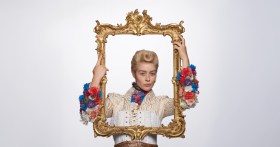
French composer Camille Saint-Saëns’ creepy orchestral poem Danse Macabre spins on a scratchy record player as a man in a tattered white dress shrieks indecorously, racing around a stuffily furnished lounge room.
As played by the brilliant Dion Mills, he is Damon, a snootily self-aggrandising English professor at a rural college who lords it over his petty fiefdom. In his head, he is Robin Williams’ John Keating in Dead Poets Society, except that he’s also not.
Damon is in character as the ill-fated Empress Alexandra, telling her equally doomed daughter, Anastasia, here played by a terrifying porcelain doll, ‘I promise to keep you safe, if it’s the last thing I do.’
It’s a promise she/he cannot keep.
Red Stitch’s Luke review – quick links
Screamed in vain
The real Grand Duchess Anastasia was 29 days into her 17th year when she was brutally murdered, alongside the rest of her family, the ruling Romanovs of the former Russian Empire, by the overthrowing Bolshevik forces in July 1918.
This truth is incontrovertible. And yet, doubt, hope and deliberate mythmaking persist to this day, suggesting that, contrary to DNA evidence, Anastasia somehow escaped this fate.
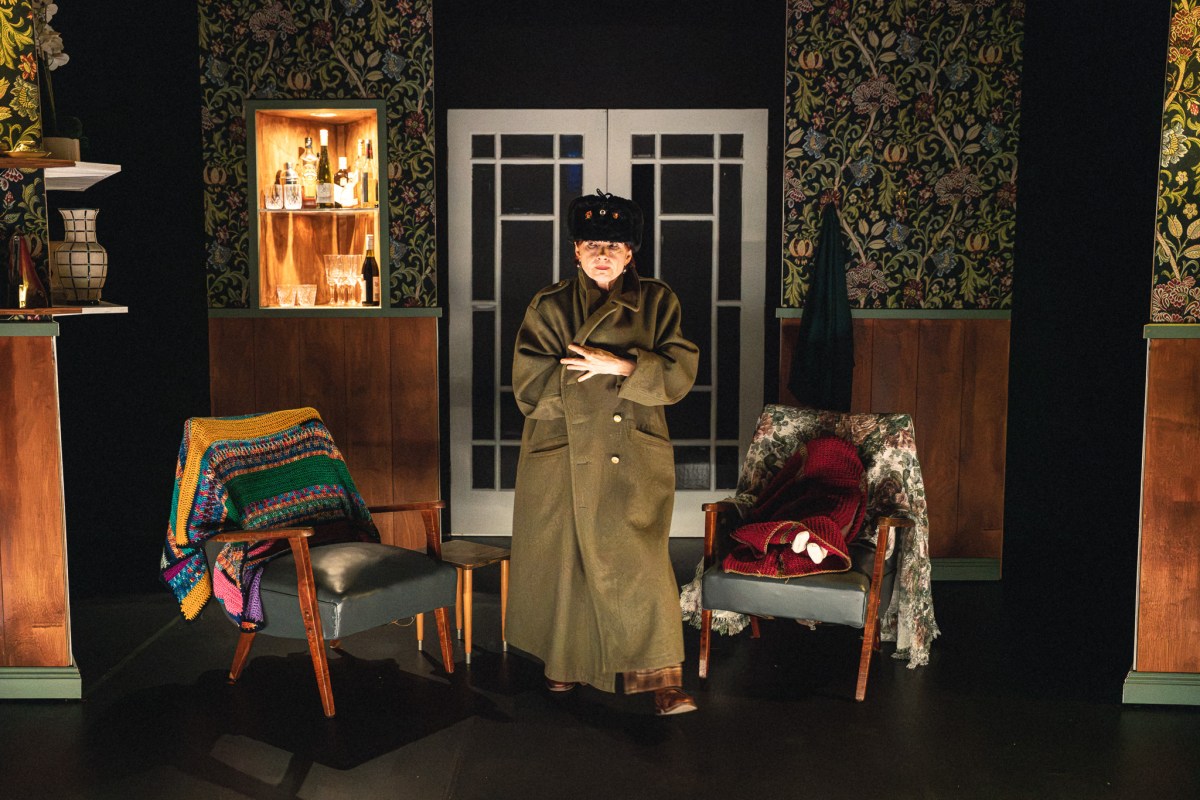
Russian-born actor Olga Makeeva, swaddled in a great green army overcoat, stands in for the Bolsheviks. Except that she is actually Olena, Damon’s fellow professor, and this is her house, magnificently realised by set and costume designer Nathan Burmeister.
It’s an intriguing opening that places us in two times at once – 1918, and modern day Australia, during the false hope of the Kevin 07 era. We’re already on the backfoot, as Damon and Olena’s boisterous debate over the romanticism of revolution and its bloody reality underlines that history is not so much told by the victors as it is recast by anyone with an ulterior motive, whatever side (or not) they may be on.
Vodka and war
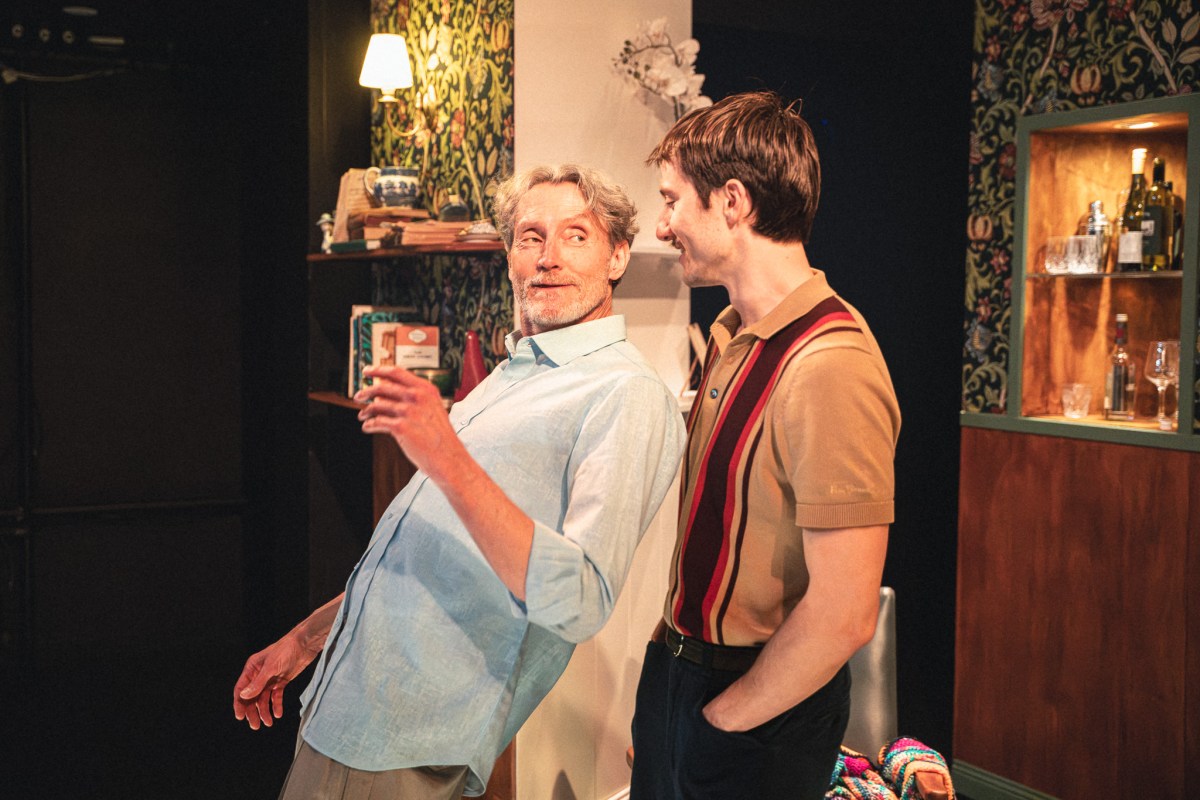
It’s into this parlour, arranged around four pivoting pillars bearing wood panelling, emerald flocked wallpaper and bookshelves, that William Lonsdale’s Chris wanders. He’s technically a colleague – the college’s rowing coach – but at two years older than Anastasia, he’s still a teenager: an adoring and adored former student of Damon’s.
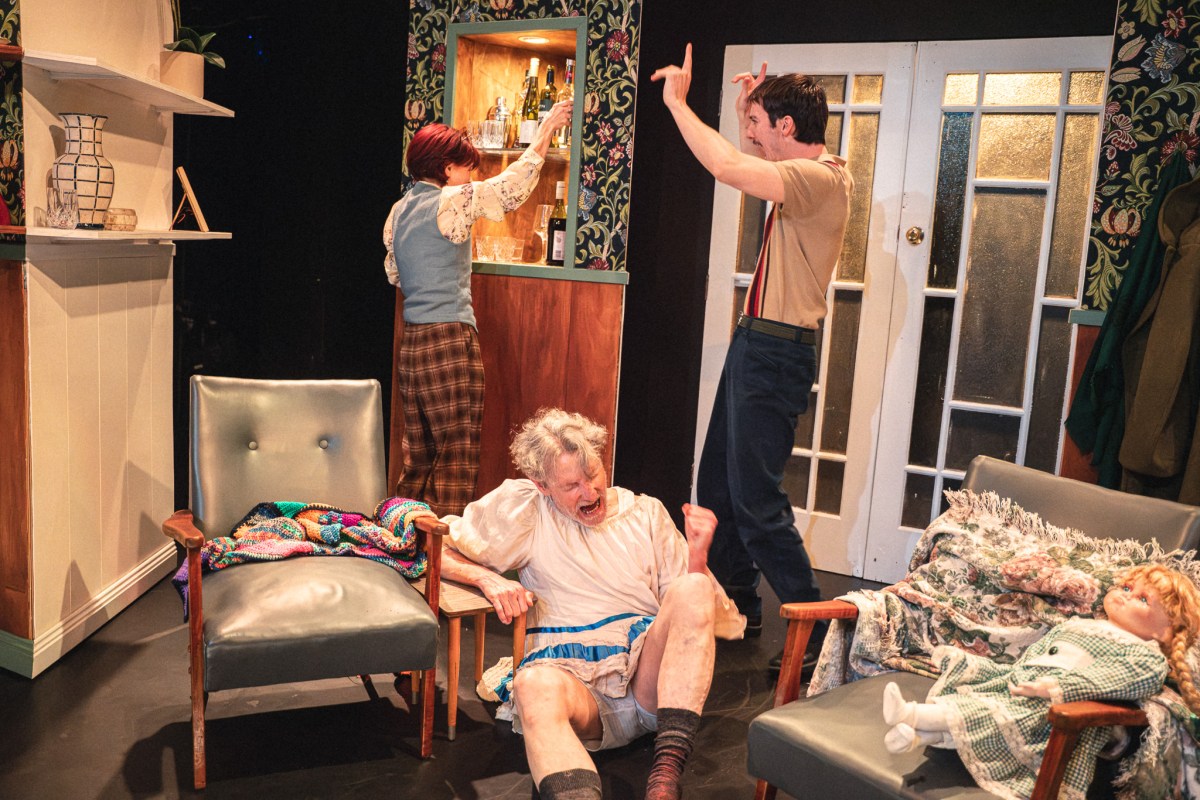
As Olga fetches the good vodka, the men’s stolen time, dancing arm in arm, makes us nervy about the true nature of their relationship, and when that might have begun.
That niggling concern is blown wide open when Damon, ever pompous, cites the pederastically structured societies of ancient Greece and Rome as an argument for why classrooms should embrace the erotic. He also pushes boundaries on the age of consent, noting the line moves depending on where in the world you are.
Whatever their past, Chris is aghast. Olena insists that Damon’s provocations are all part of their shared games. Lonsdale, at first timidly flushed, then red-faced with disgust, is particularly good at conveying Chris’ alarmed confusion.
But what is the truth of Luke? The title refers to another young man, still a student, who is rumoured to be leaving school because of an incident with a staff member. Chris accuses Damon, and suddenly their cosy little corner is fought like the Russian Revolution.
Breaking the wall
If Luke stayed in this charged space, it would be a fascinating chamber piece. But Cameron’s play is bigger than that.
As Chris storms out, those pillars turn, with Olena’s cluttered home now stripped back to stark white walls. It’s 2017, and Chris has returned as the celebrated author of Luke, a creative non-fiction memoir dealing with the fallout of whatever happened between these first two chapters of what is a tantalising triptych.
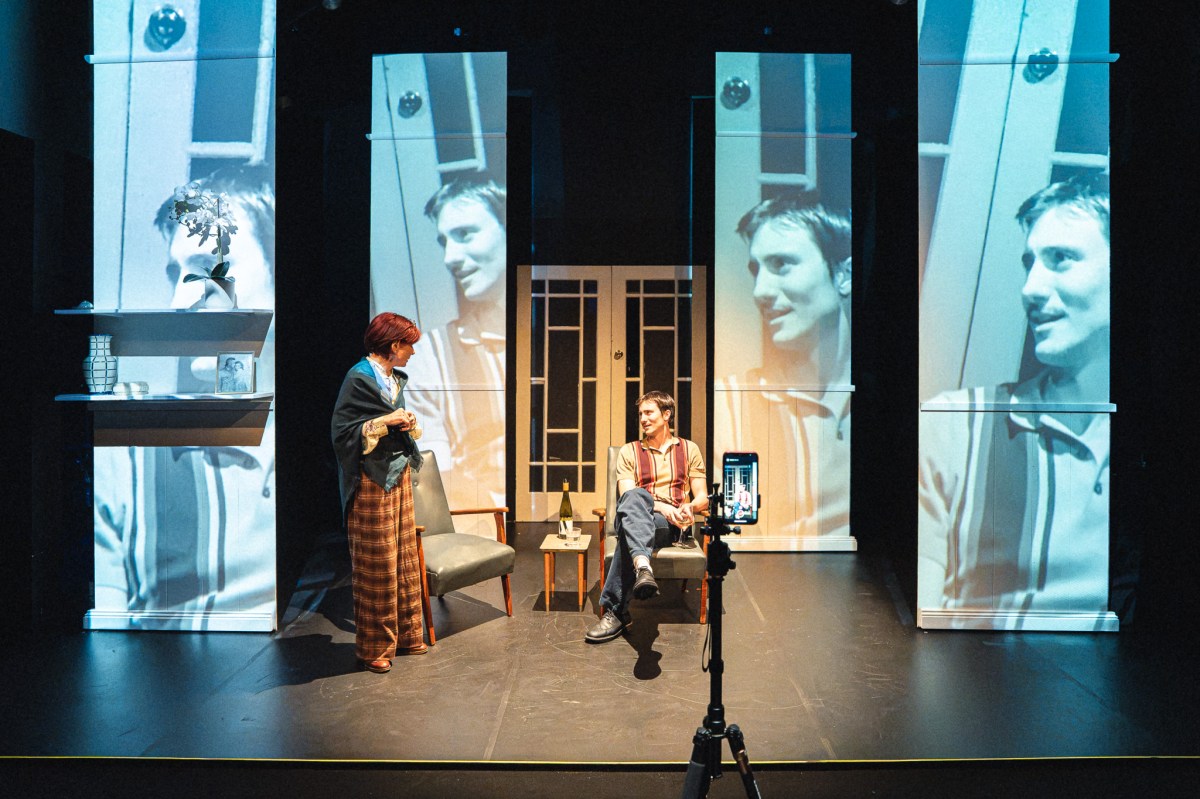
Breaking the fourth wall, Chris, who has just spoken to the college’s new LGBTQIA+ group, strides into the audience to set up his iPhone on a tripod, recording a suspicious and stone-cold glowering Olena. He wants to pin down her recollections of 2007, with Damon having left the college in disgrace.
But Chris is as full of himself now as Damon once was. With Olena’s bond of trust broken, she questions his motives. Why return to this story now? Is she complicit in covering up for Damon, or is Chris manipulating the truth to milk more mileage for his story, having failed to write anything since? And is his co-opting of Luke’s story also non-consensual?
Beaten back ceaselessly
As Olena, Makeeva is a marvel in full flight, with Luke at its strongest when she turns the interrogation back onto Chris. Niklas Pajanti’s lighting design highlights the pale pillars as projections offer close-ups of the actors’ faces. Ethan Hunter’s sound design teeters into increasingly maudlin territory as old wounds open.
There’s one final shift, this time into the near future of 2027 as those pillars revolve again, breaking the spell of Burmeister’s set by revealing their hollow shells, a symbol of where these three wind up.
Sinclair once again brings a tight focus on character, with Mills, Makeeva and Lonsdale all suitably slippery in this deliberately challenging new Australian work commissioned from Cameron via Red Stitch’s INK program.
Cameron borrows an immortal line from F Scott Fitzgerald’s The Great Gatsby, another story with an unreliable narrator, acknowledging that the pull of the past is hard to escape. History is bendable, so much so that it’s not always easy to tell where violence begins or ends. But the consequences are real, nonetheless.