In the wake of Korea’s devastating civil war of the 1950s, the country was split in half, separated by the Demilitarised Zone. The conflict left millions dead and thousands of children orphaned. While an internationally coordinated humanitarian effort rehomed many of those poor kids, the process didn’t stop.
Twisting into something much darker, countless babies were forcibly removed from their mothers for decades, with terrible echoes of the Magdalene laundries in Ireland and the Stolen Generations here. Exposing this monstrous corruption, a third iteration of South Korea’s Truth and Reconciliation Commission was opened this year.
Star of stage and screen Michelle Lim Davidson is one of roughly 3500 Korean children sent to Australia, growing up in an adoptive family in Newcastle. Known for The Newsreader and recently appearing in Melbourne Theatre Company’s A Streetcar Named Desire, she was the only Asian kid in school, never feeling at home in her skin.
But when she eventually reconnected with her Korean family, after an exhaustive and exhausting search, Davidson wound up feeling just as disconnected from her Korean-ness – a discombobulating experience that informs her semi-autobiographical play Koreaboo.
Koreaboo review – quick links
Freezing and thawing
Now on at Melbourne’s Malthouse Theatre, the deeply affecting Koreaboo was written by Davidson, and she also stars as Hannah, a girl from Newcastle by way of Seoul who’s not entirely unlike herself.
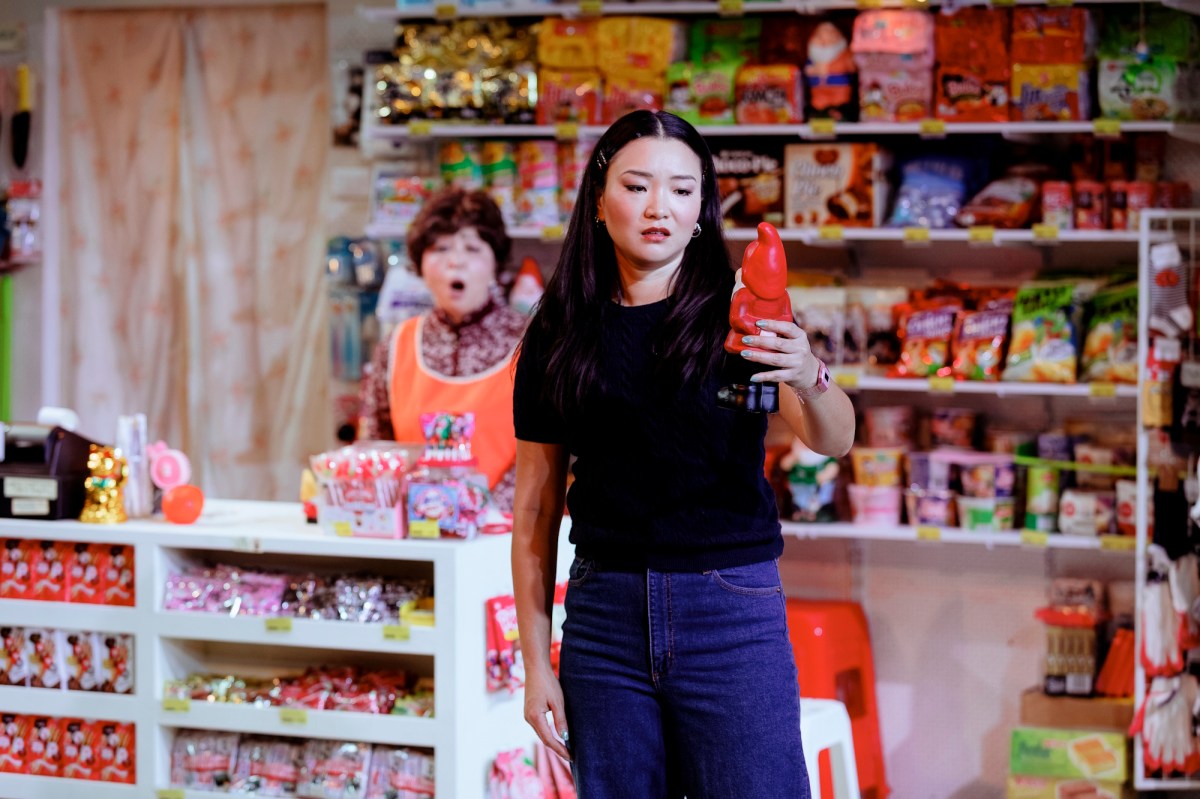
We first meet Hannah awkwardly rambling in a mix of English, anxiety and Google Translate-garbled Korean, as she wheels her suitcase into a 7/11-bright convenience ‘mart’ in the sprawling South Korean capital. Sporting jeans and a blazer, despite the stifling summer, her attire further emphasises Hannah’s flustered, candid but cautious demeanour. It’s a smart choice by costume and set designer Mel Page.
Hannah’s more optimistic brand of unease is relaxed compared to the reception she receives from Umma, her biological mother played by chef and actor Heather Jeong, who isn’t overly thrilled by the reappearance of her painful past. Stiffly recoiling from the promise of a hug, Umma exudes a powerful force shield of personal space and self-preservation, her expression moving between frustration and fear.
The history that stands between them isn’t revealed in a hurry, with Davidson teasing out the specifics that have left mother and daughter as strangers. For now, Hannah’s fresh out of a breakup back in Sydney and hoping to recentre herself in Seoul over the summer. Umma would rather Hannah head to a hotel and then take the first train out of town to a beach resort where the fish is good.
ArtsHub: Australian theatre in 2027 – everything to look forward to
We know Hannah’s dad is no longer with us, but again Koreaboo is coy about the details, keeping its cards close. Instead, roughly the first third of the play sits in their communal discomfort. Hannah’s doing her utmost to break the ice, while Umma frostily refreezes it. The drinks fridge that keeps fritzing with blinking lights and steamy billows matches this push-and-pull duel.
Division and dance
Davidson’s canny writing, ably realised by Game. Set. Match. director Jessica Arthur, is fantastically performed by her and Jeong, revealing so much about who they are as they dance around one another, avoiding difficult history.
Hannah can’t let go of her need for close comfort, and begs to know if Umma thinks of her on her birthday. Umma clearly doesn’t mean to be mean but she cannot let Hannah back in. Or anyone, barring customers and delivery drivers. While she confesses that it’s ‘fake news’ that the mart is open 24/7, her life is almost entirely dedicated to work, barring five hours of sleep nightly.
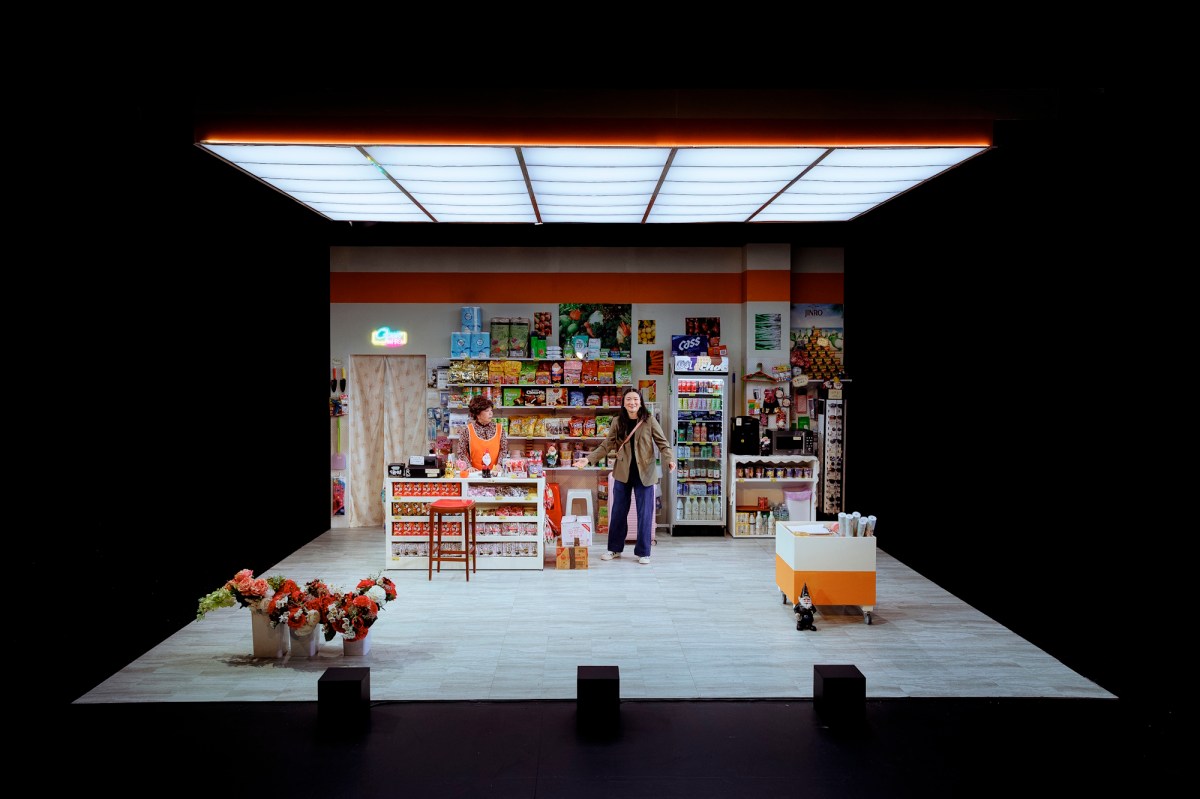
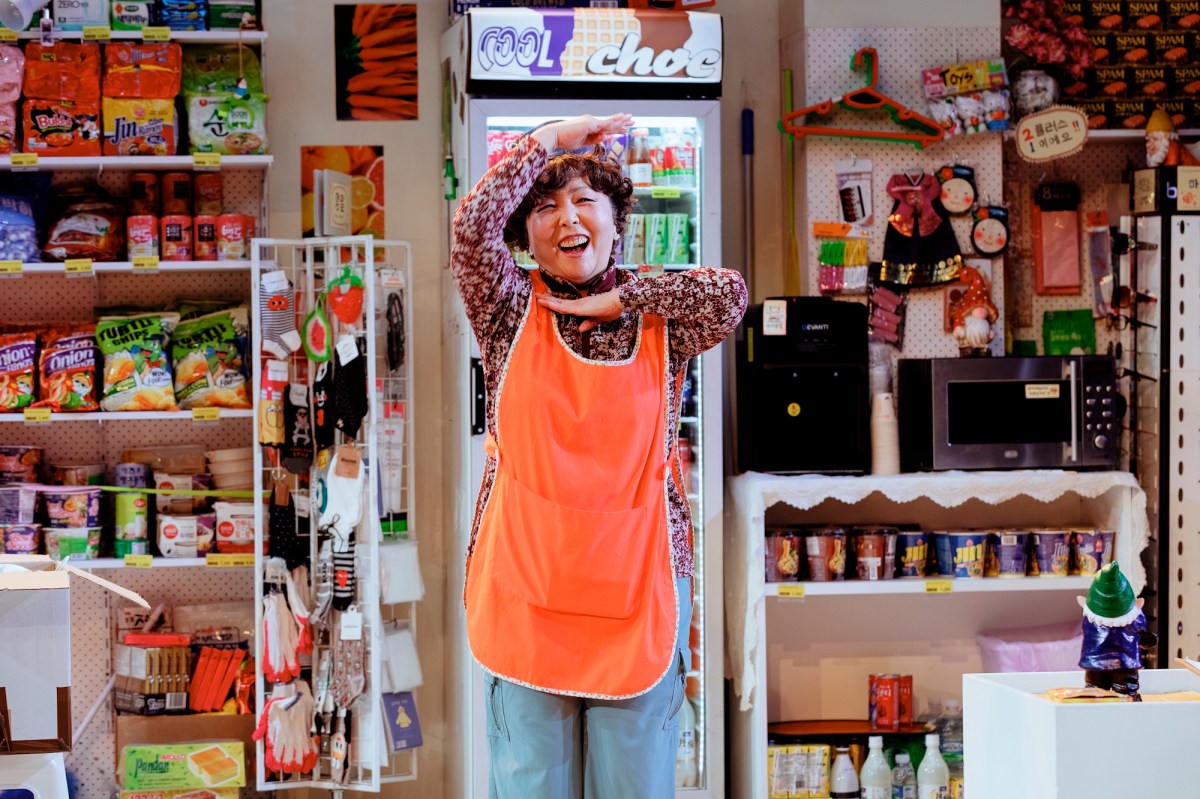
Page’s stark yet cluttered-with-stuff mart design provides the perfect pressure cooker, with Hannah’s pursuit of Umma’s affections radiating as much heat as the microwaved ramyeon noodles the latter appears to subsist on.
ArtsHub: Adelaide Writers’ Week announces author Min Jin Lee for 2027 festival
Umma’s only diversions are an unexplained fascination with the garden gnomes sprinkled around the shelves and nightly binge-watching of old Sex and the City episodes (Carrie is annoying but wise) or a variety show called Star Power.
It’s this later indulgence, and their shared fascination with K-Pop lyrics and smooth moves, that begins to thaw things between them, as maternal instincts of the stage mum variety kick in, with Umma thrusting Hannah into the Star Power competition as a distraction from the bigger stuff.
Happy ending and then?
As the Star Power subplot kicks in, lighting designer Kate Baldwin plays with the mood creating a disco dance floor, but on the ceiling, bringing colour and shade to the mart’s bright white stage. It’s in this iridescent glare that Umma and Hannah begin to find common ground.
As Hannah says, ‘Everyone thinks that finding each other is the happy ending, but nobody tells you how to live afterwards.’
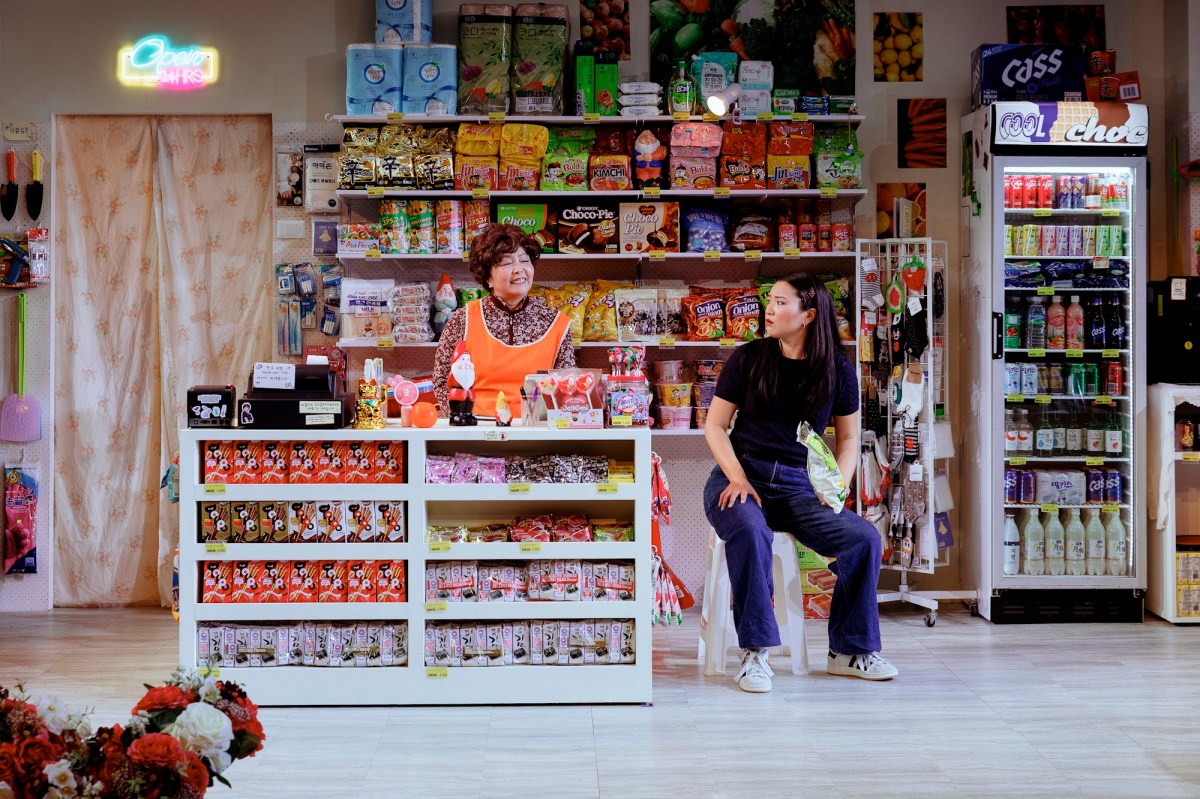
There are no easy answers to be found in the deep intergenerational wound shared by so many Koreans, and many more worldwide. Davidson’s deceptively light and frothy writing, her bittersweet comedy, gets this. As does Arthur’s subtly shifting direction of the pair, with Wiradjuri/Gamilaroi composer and sound designer Brendon Boney’s nimble work following their well-delineated lead.
By the time Koreaboo K-Pops us into its more melancholic, yet undeniably hopeful, generous finale, you’ll feel like the distance between Umma and Hannah, if not healed, is certainly lessening. Jeong, in the thornier role, never feels cruel. We gather that her jibes about Hannah’s weight, fashion choices and lack of Korean cultural connection are learned behaviours pressed upon her by her own imperious mother, the woman who built this mart as a badge of self-made success.
Again, earlier generations silently pass on their burdens. Umma carries a well of loneliness deep inside her that’s not easily drawn from. Davidson, ever an effervescent presence, allows us delicate glimpses into the hurt Hannah similarly carries, even as she insists on building wobbly bridges.
Together, they put on one heck of a show, K-Pop TV train wreck or not.