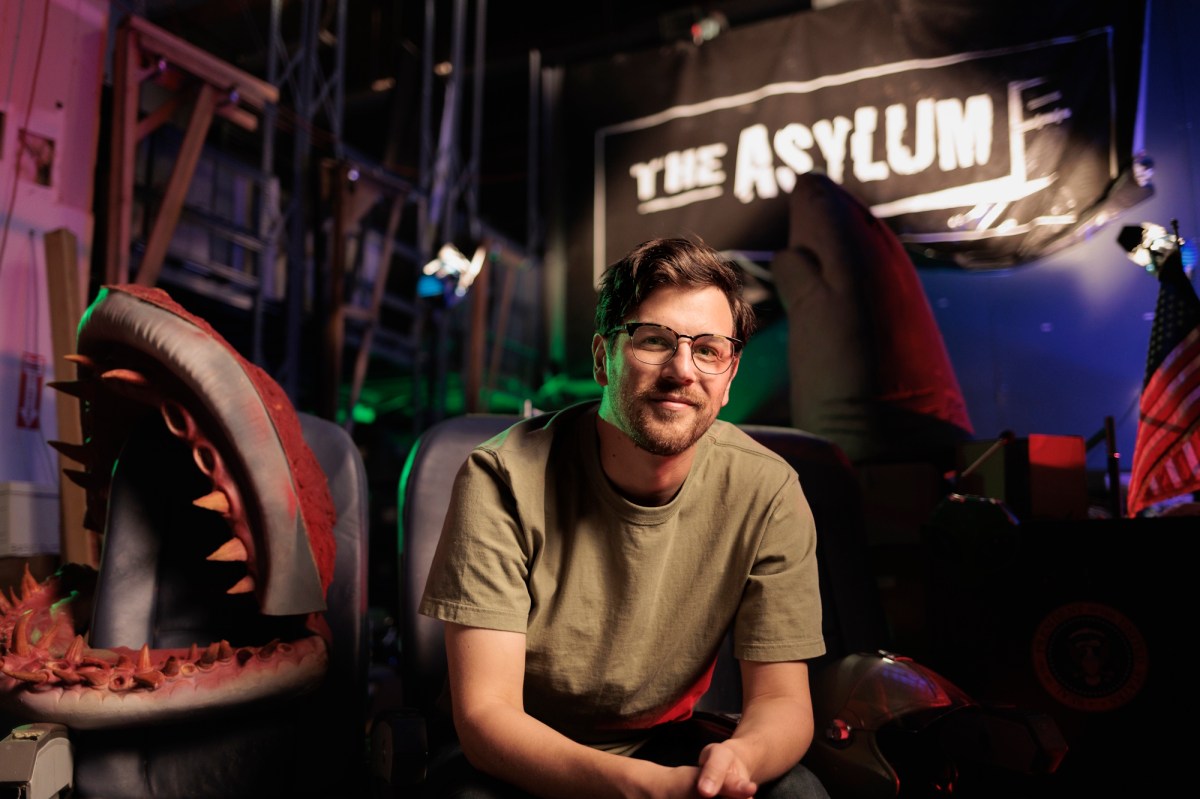
The tale of how Adelaide filmmaker Anthony Frith came to direct his first feature is so surprising yet simple that it was bound to find its way to the screen itself. That was always his plan.
Frith’s ingenious move: just asking. But when he cold-emailed independent US film studio The Asylum, angling to helm one of the company’s cut-price takes on well-known blockbusters, aka mockbusters, he proposed making two movies not one.
With the first, he’d direct whatever the company – responsible for the Sharknado franchise, and also Age of Hobbits, Snakes on a Train, The Da Vinci Treasure, Transmorphers, Titanic II and other such blatant knockoffs – would let him.
For the second, he’d document the process of crafting that movie – in this case, the dinosaur flick The Land That Time Forgot, a remake of The Asylum’s own 2009 remake of a 1974 Edgar Rice Burroughs adaptation – in a mere six days.
‘I think both ideas came at the same time,’ Frith tells ScreenHub. ‘I was like “I should make an Asylum film and make a documentary about it. Great.” Then I reached out to The Asylum and pitched myself as a filmmaker – “I’d like to make a film for you” – and they’re like, “Yeah, sure, whatever”.’
When he also mentioned the idea that would become the documentary Mockbuster, ‘they got really excited,’ Frith says. ‘It was just a silly idea at the time that happened for some fortunate reason.’
Anthony Frith on Mockbuster – quick links
Doubling down on a dream
If you’ve dreamed of making your first feature since childhood, and you’re taking a chance on contacting an American studio completely out of the blue to score your big break, then you might as well be ambitious, right? ‘Exactly,’ Frith says with a laugh.
Making Mockbuster at the same time as The Land That Time Forgot was also a way of giving the chaos another silver lining, beyond Frith getting to realise the feature-filmmaking goal he’d been obsessed with since he was a teenager – and saying that there was chaos is putting it mildly.
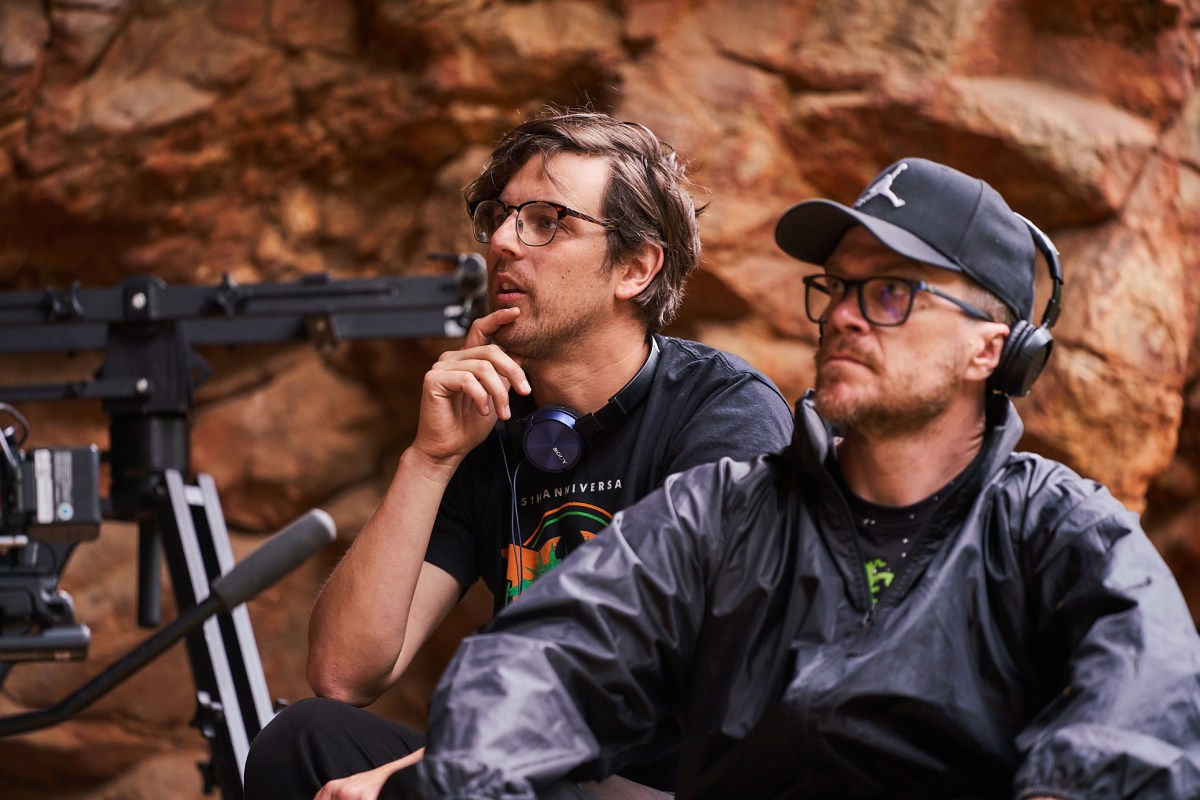
It’s no wonder that to him, ‘they’re both the same thing in my head. It’s the same movie as two movies, which is weird, but they coalesced so specifically that it’s hard to separate them.’
Production was always going to be hectic. That’s the fast-paced, profit-first Asylum model, which resembles both a low-budget, tightly engineered filmmaking assembly line and, at least from watching the loving but clear-eyed Mockbuster, also sabotaging the brakes on a runaway train even as it still manages to stick to its tracks.
Think: stringent oversight both from the US producer flown in when Frith couldn’t find a local who thought it was even feasible, and also from The Asylum’s California-based masterminds, who know exactly what they wanted, and what they didn’t.
Then there’s the late script that kept being changed moments before scenes were shot, lengthy approvals just as cameras were meant to start rolling, last-minute location swaps and the discovery of small details, like an upside-down Russian flag stitched onto costumes, that had been wrong for days. Tempers predictably flared on set, and more than once, as Mockbuster captures.
When chaos is also a gift
During the two-movies-at-once shoot, Frith found himself with a unique quandary and learning opportunity, one that only grew the worse things got.
‘The worse that The Land That Time Forgot went in my head, the better the documentary would be,’ he says. ‘So you had to embrace that side of it – embrace the fact that “Oh, this is going to be shit,” “Oh, we’ve got to shoot all this in six hours now,” and whatever else, and just accept that.’
‘If I made my life too easy, then I think the documentary would have suffered – but The Land That Time Forgot, I also had to make it to a standard, too, for The Asylum. So it’s trying to balance those two things.’
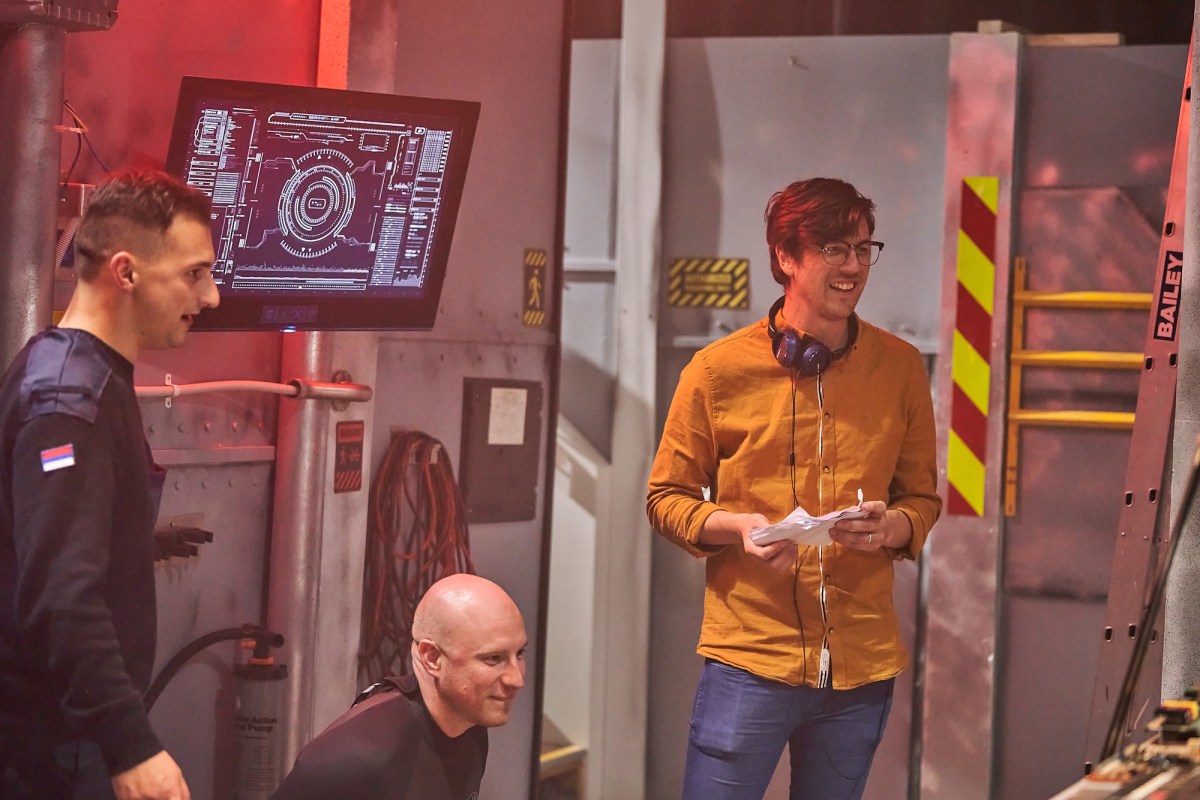
Striking the right unflinching but comic, earnest and affectionate tone for Mockbuster amid all that mayhem was another challenge. ‘It’s so easy to just be like “Check out these idiots, look at the crap they’re making” but that’s not what I wanted to do,’ Frith says.
Appreciating that he should also be enjoying the frenzied experience took time as well, as Mockbuster viewers witness, but Frith is now grateful for it.
‘Obviously I think Mockbuster will make more of a wave than The Land That Time Forgot will, but The Land That Time Forgot still means something in that now I’ve got a credit directing a feature, a scripted feature,’ he says.
‘I had my cake and ate it too. I was greedy and it paid off.’
A proud fan
Thanks to Mockbuster, Frith hopes that audiences will also see The Land That Time Forgot and its fellow Asylum movies in a different light. As a viewer, he was already an aficionado going in – ‘I genuinely love The Asylum, I’ve been a fan of their work for years,’ he says – but revelling in their movies in all of their entertainingly absurd glory isn’t the same as understanding the behind-the-scenes reality.
‘I like to think that people who watch Mockbuster can then appreciate The Land That Time Forgot for what it is, more so than just for the story behind it, because there’s a story behind it for being the way it is, Frith says.
‘And I’m proud of it, don’t get me wrong. I think it’s hilarious. I’ve got copies of it on my shelf in the lounge room, proudly displayed.’
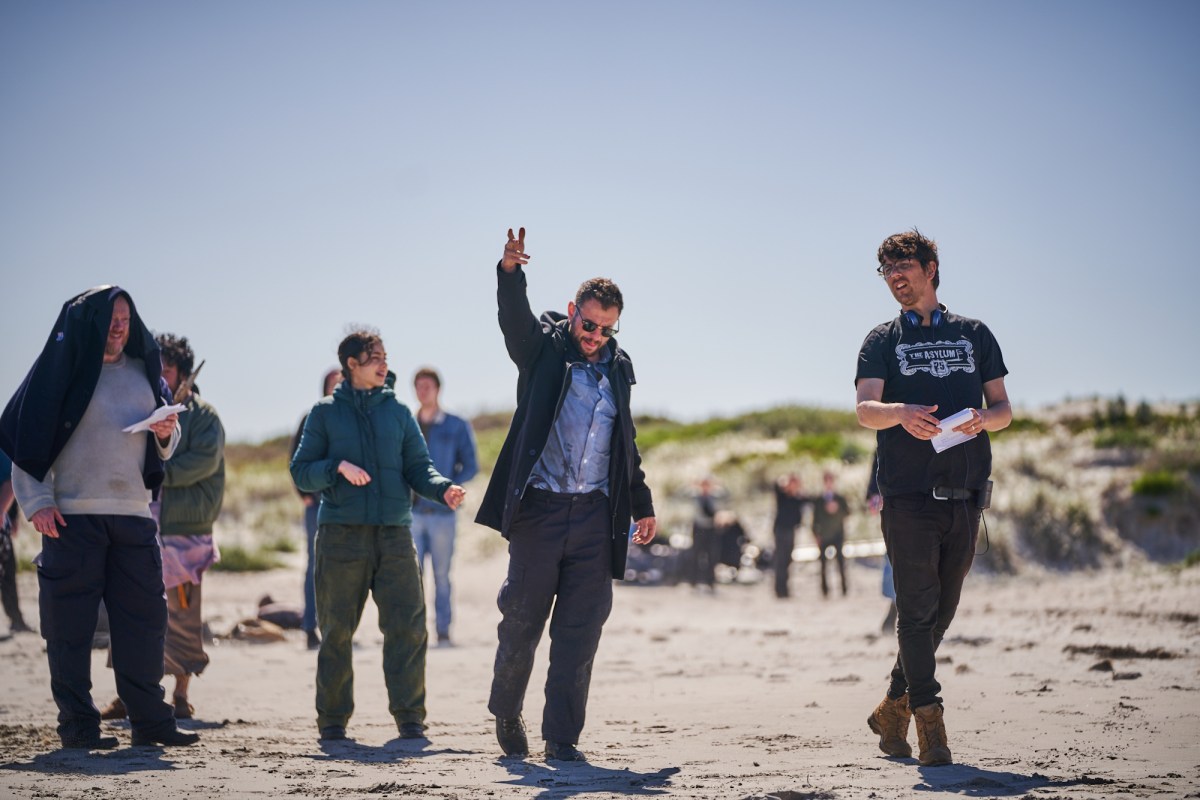
Frith is also thrilled that his journey with The Land That Time Forgot and Mockbuster saw him add to a genre he’s long been fond of and inspired by: filmmaking documentaries.
‘I’ve seen most of them. Burden of Dreams, American Movie, Lost in La Mancha are movies that I’ve been watching since I was at film school and just loved,’ he says, ‘and I love the fact that you get that full access to it.’
He continues, ‘Really, filmmaking is tough, and kind of boring and laborious, and so unsexy. And almost uninteresting in a way. And I just felt like it was important to show that, especially in a model that’s kind of cynical at its base, that is like “This is not about art. It’s about making as much money from these films as possible”.’
In chronicling The Land That Time Forgot’s rollercoaster ride, then, ‘it was interesting to see the perspective of it being difficult in that context, of it being a factory,’ he says.
Putting the mockbuster model in context
‘There hasn’t been a real look into how these films are made, and the trials and tribulations that go into making them, which then reflects the quality of which they come out,’ Frith observes.
‘Because it’s so easy to dismiss an Asylum film and say, “That’s shit, it’s crap, it doesn’t work at all”. But until you know the full story of how it’s made, you can’t really appreciate the fact that it even got made.’
ScreenHub: Aussie doco Mockbuster gets Q&A cinema tour
He believes he isn’t the first to ask to share The Asylum’s world with viewers beyond their gleefully over-the-top features. Just like ‘they just kind of say yes to everyone’ who puts their hand up to direct one of their movies, he thinks ‘they’ve said yes to a few documentaries before, but nothing really eventuated’.
‘In their head, it’s like, “Oh, if nothing eventuates, so what – but if something does, then great”,’ Frith says. ‘I think they just were interested in having a film made in Australia, and fingers crossed that something else would come out of it, too.’
Frith mightn’t have turned The Land That Time Forgot into a masterpiece, despite starting out with a sincere desire to make it the best movie that he could – to flout The Asylum model, initially, before gleaning that the studio’s system is designed to make that impossible – but Mockbuster does succeed, and delightfully, where others have failed.
‘From chatting with the guys and the people that work there, I think once people get on the ground there, they realise that it’s just a business and they function no differently than a larger studio, just with much less money making very specific types of films,’ he says.
‘And I feel like people just couldn’t work out what it was that was interesting about The Asylum.’
Everyone starts somewhere
Something that will always be fascinating and worth celebrating is the fact that The Asylum provides a path for first-time filmmakers. ‘They can take that risk, because their films always do make a profit, because they know how to make them for a profit,’ says Frith.
Among Mockbuster’s interviewees – which include the studio’s frequent star Eric Roberts and, when Frith is searching for outside advice before embarking upon The Land That Time Forgot, Talk to Me’s Danny Philippou – it’s a now Emmy-winning, The Mindy Project– and Minx-directing Asylum graduate who perhaps offers the best take on that chance.
‘I think Rachel said it in the documentary, Rachel Lee Goldenberg – who worked at The Asylum, she made a half-dozen films for them – she said that, “You’ve got a credit now, and that’s more than most people can say”. Which I think is true,’ Frith says.
‘And nothing’s eventuated from it yet, but it’s still rolling out, and I think there’s something important to the fact that that’s something I can actually put on my CV now and talk to people about – that I made this feature film.’
‘That hopefully sets me apart from other people, or makes everyone think I’m an idiot because I made this stupid movie – but we’ll see.’
A similar route paid off for the likes of Martin Scorsese, James Cameron and Francis Ford Coppola, when they all started their career under low-budget director and producer Roger Corman, which gives Frith hope.
For other aspiring directors, Frith’s own story is already proving inspirational. ‘I know for a fact a few people have reached out to The Asylum,’ he says. ‘I’ve had some messages on Instagram asking for their email addresses. It’s happened already.’
Learning by jumping in the deep end
Frith’s Asylum adventure has helped him recognise that ‘it’s just amazing to get to live your dream, even if it’s not the dream that you wanted,’ he says – and even if ‘sometimes you’ve just got to lower your goals a bit to achieve them.’
‘I don’t think there’s anything wrong with that. Totally, follow that crazy dream and make that Asylum movie.’
He hasn’t heard whether any of the fledgling filmmakers attempting to take cues from Mockbuster have had any luck with The Asylum so far (‘no one’s followed me up yet’, he says) but he can already see how The Land That Time Forgot has helped others.
‘When we were shooting The Land of Time Forgot in Adelaide, there were quite a few crew who were ready to step up into the roles they wanted to do, but they weren’t able to – because when a Netflix show shoots here or something huge like that, they’ll hire all the people that are already in those roles,’ Frith says.
‘So there were a few people that got to shoot B-cam or assist or something like that, and then after The Land That Time Forgot, they had that credit, and then they could take that to these larger shows and get the roles that they wanted on them.’
‘It’s like film school, basically. And I think there’s something that’s special about being in the deep end, because you have to learn quickly.’
‘Realistically, that’s probably the hardest production most of us will ever make.’