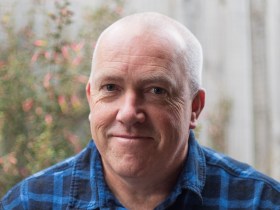

Psychotherapist Andrew Sloan’s new book – Why Things Feel F*cked: Your Practical Guide to Getting Unstuck – aims for practical solutions to the modern version of an age-old sense of doom
Hi Andrew! Are things really fucked? As per your book title – Why Things Feel F*cked – it feels like they are, I mean, just look at everything – but haven’t humans always felt like this? Aren’t we just primed to see the era we’re living in as the End of Days? Did people in the Middle Ages have it better than us?
As we look back through history, I reckon people would have always said, ‘Oh wow, things feel absolutely f*cked’. I am thinking about the villagers facing down Genghis Khan’s fierce warriors, the people surrounded by the depths of the black plague who lost over 30% of their family and close friends, or the time when the world stumbled out of a second world war in tatters. The truth is, where chaos, complexity, and change live (the building blocks of our universe), so too does this feeling that things feel f*cked.
My book isn’t called Why things feel more f*cked than ever or Why things ARE f*cked. It is Why things feel f*cked, right now, and in many ways, the answer is found in our shared human history. Why Things Feel F*cked starts with me laying out the history of the foundations of ‘f*ck’ and how we all stumbled into this mess. In many ways, the f*ck we are in now is a consolidation of all the difficulty, pain and hardships that have gone before us. But have we been given the tools to know how to move through it?
The biggest shift from history to now is that chaos, complexity and change today come wrapped in a kind of digitised bubble wrap. So, as we face incredibly high levels of chaos in 2025, this comes with a certain kind of acceleration that hasn’t existed before in the same way.
We find ourselves consuming content instantaneously from across the globe when we have neural networks in our brains and bodies only equipped for about 100km worth of crisis. We have digital systems that are hacking into the reward centres of our brains, telling us happiness is simple when in fact it’s a little more complicated than that. We are staring down a kaleidoscope of our Artificial Intelligence futures, and are not sure if we should feel doom or hopefulness for a boom!
So yes, we are not exceptional; there have been plenty of feelings of f*ck in history, but right now we have no idea where our version of f*ck goes next.
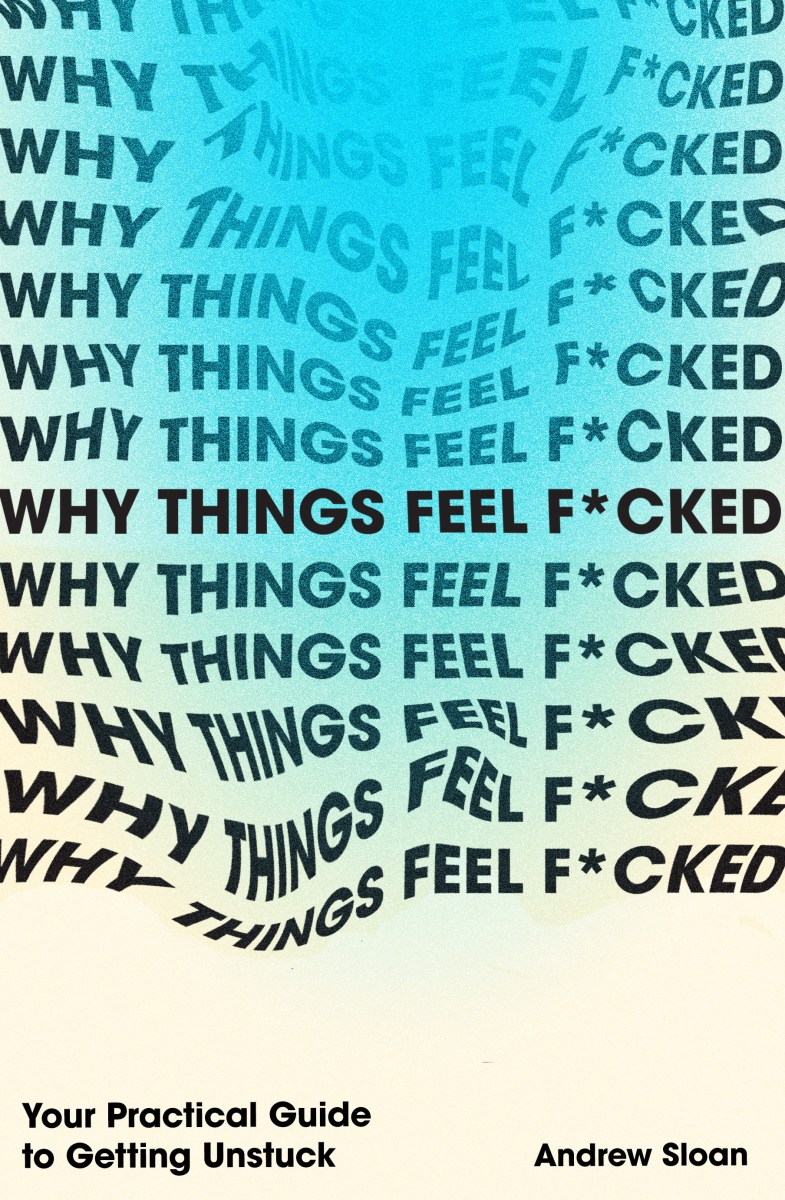
How will your book help us? How does it differ from the average self-help book? (And do you even think of it as self-help?)
I have become frustrated with self-help books throughout the years. At the risk of oversimplifying things, self-help books seem to either be too dense and inaccessible or too light and thin on the types of details that help people to practically make shifts in their lives. Why Things Feel F*cked was designed to be accessible but practically valuable to how people lead themselves through chaos and in a world that is probably still not fit for human consumption.
We chart a course through the systems that disconnect us, navigate the consequences of that on our nervous system – the operating system of our lives – and then methodically step through what self-leadership looks like practically. We explore three key roles of self-leadership:
- The Self Explorer: Knowing ourselves from the inside out
- The Choice Maker: Making great choices
- The Co-Creator: Activating creative collaborations with the people around us
We end the book by exploring how to build systems of connection and belonging in our lives and in our communities – which is the only true antidote to feeling less f*cked.
I think I am OK to uncomfortably accept the genre of self-help for my book. Why Things Feel F*cked is a book completely grounded in the emerging theory of self-leadership, after all. The discomfort in claiming it as a self-help book might be my worry that it will be perceived through a lens of some of the self-help books before it. Here’s hoping the practical roadmap back to ourselves and each other is valuable enough to help someone grow themselves in a world stubborn enough not to change.
In your experience as a psychotherapist, what’s your one, fairly easy to implement fix or tip that would make a marked improvement to most people’s lives?
The one thing I would encourage everyone to relearn is how to breathe. When we look at all the neuroscience of calm and connection, what we find is that the structures that operate around conscious breathing are one of the most accessible things we can do to ground and regulate our nervous systems.
When we have a regulated nervous system, all the interconnected systems – like the full breadth of logic and emotions in our brains, our capacity to safely connect with other humans, and our ability to restore and regenerate our bodies – kick off.
Nervous system regulation is complex; the good news is I have laid out a map to help us decode this complexity in Why Things Feel F*cked.
But let’s look at a simple first step. When we activate breath that moves our belly to massage a nerve called the Vagus nerve, we are stimulating our capacity to feel safe, connected, and even curious. Better yet, when we elongate our exhale, we help our nervous system feel safe, which opens up space in our nervous system to feel calm, connected, and compassionate with ourselves and each other.
Is it true that perfection is the enemy of good enough? If so, how does that play out in our interactions with the world/ each other/ ourselves, and what can we do to make things better?
The pursuit of perfection is deeply rooted in why things feel so f*cked for so many people right now. The idea that perfection even exists is inbuilt in many of the systems that are disconnecting us from ourselves and each other. We can see this driving us inside of jobs we hate to pay for the perfect house, with the perfect car, for the perfect life. We are stuck in a productivity trap where we work so hard that the other facets of our lives take a back seat – it just so happens the things we drop are often the things that make a life of meaning and purpose, our human relationships.
When you ask me about perfection, I start to think about the many efforts we make to perfect our human bodies. The types and styles of human bodies we are presented on a daily basis in the media and our social media feeds bombard us in very unconscious ways. We then end up aspiring to look like a certain type of person. Damagingly, our internal voices then take this information and run with it, and we start criticising ourselves, generating internal feelings of disgust, or worse, project these ideals and expectations on other people in our lives. Not meeting these standards or expectations can really annihilate us and unplug us from safe relationships with ourselves and the people around us.
Evolving through a culture saturated with perfectionism at its core is a very hard thing for us to do, but step by step, one small change at a time, we can transform ourselves. Just because it’s hard doesn’t mean it’s impossible.
Here are three key steps:
- First, we need to regulate our nervous systems. Yeah, we have all heard this recently, but truly, why? Well, perfectionism activates our nervous system into neural territories that activate our flight and fight instincts. This unfortunately closes down the parts of our brains that open us up to new experiences, creative choices and the plasticity we need in our brains to change and evolve. So, finding our own unique pathway to a more regulated nervous system is a key foundation.
- Next, we need to use this additional capacity to orientate ourselves to dial up our conscious awareness of our inner dialogue and the myriad of thoughts, feelings, and emotions in our bodies. This can help us to decode not only what we are experiencing and why, but what we need on the road ahead.
- Then we can make better choices. For example, we can adjust the content we consume. We can get clear on our ideal body, car, house and career that is fit for purpose, aligned to what our core needs are versus what we have been convinced to desire by others. We can centre ourselves and make abundant and creative choices for our futures. We are well informed by who we wish to be.
What have you learnt from writing this book that you couldn’t have expected when you started writing it?
In Chapter 9 of my book I write: ‘Writing a book should come with a warning label: “Don’t start unless you are truly ready to live the book you are writing”.’
When I first started the process of writing my book, I thought I had already lived the book I was writing; after all, this was why I was bold enough to start. I was proud to sit down and write a book that was a synthesis of my personal and professional experiences from the last decade of my life.
The thing that surprised me the most was that in concentrating so much of my energy to decode and clarify this decade of experience, I would end up living it out again. As I wrote, I can’t begin to tell you the types of synchronous experiences that emerged. Every new chapter about my past experiences, key relationships or my own version of creating belonging and connection in my life would activate a real-world experience that nearly perfectly matched the content I was refining in the book.
I write about the end of my 13-year relationship in the book. Our separation just started as the book was coming together, and eight weeks ago, we finalised our separation. As I flicked through the pages refining and editing the dirty draft, we realised, ‘This isn’t the relationship either of us want’. Because my ex-partner and I are the people we are, we then went about separating from each other with the key principles of the book as our centre. It turns out I needed my own practical guide to getting unstuck. We have separated but are still connected, in our own version of powerful but free.