On a recent interstate tour with his company, Gravity & Other Myths’ Artistic Director Darcy Grant found himself somewhat reluctantly involved in a special public space performance, the kind of activation event that if he’d had the choice, he probably wouldn’t have signed up for.
Initially describing it as a lower-tier priority among the other activities his company had been commissioned to present in the city, he says after witnessing the audience’s response to the public space performance – which took place in the food court of a popular shopping mall – he became convinced that more arts companies could be presenting more works like this in spaces outside of the theatre.
‘I instantly realised that this is the audience that I’d been trying to work out how to get into the theatre,’ Grant tells ArtsHub.
‘Like many in the sector, I have been worried [about] the rising cost of living and a general slide away from live performance towards other forms. I know it’s something that needs to be addressed, but before that performance in the shopping mall, I didn’t know how,’ he continues.
‘That event challenged me in a really great way to perform for people with no preconceived notions of how to respond to live performance. It also made me think more about how to present work in spaces where people already congregate, and how to design work specifically for that place and that audience.
‘Essentially, it got me thinking about … other spaces where people already are that I haven’t thought of, and what great things we could do there.’
Grant is far from the only one who knows the power of live performance in public space. Some artists have been working this way for decades, and, like Grant, they can also see why the Australian performing arts sector needs more of these works, especially as barriers continue to impede audiences’ capacity to attend live theatre.
Performing in public space – quick links
What two decades of street-style work has shown these artists
Artists Lee Wilson and Mirabelle Wouters have been the driving forces behind multidisciplinary performance-based company Branch Nebula since 1999. As the pair readily admit, much of their creative fuel comes from their daily experiences at ‘skating and BMX comps, protest marches, vogue balls, book clubs, crochet circles, punk gigs, dance parties and shopping malls’.
As artists with diverse interests, as well as grassroots engagement in their communities, their more than 20 year practice as independent artists has also required them to be very resourceful to survive through different government arts funding cycles, as well as shifts in audience behaviour.
For the company’s Co-Director Lee Wilson – who, interestingly, sees a lot less site-specific work, and less independent work in general, being produced in Australia now than 20 years ago – staging performance projects outside of conventional theatre spaces remains vitally important to encouraging new patterns of engagement and participation in so-called ‘non-arts’ audiences.
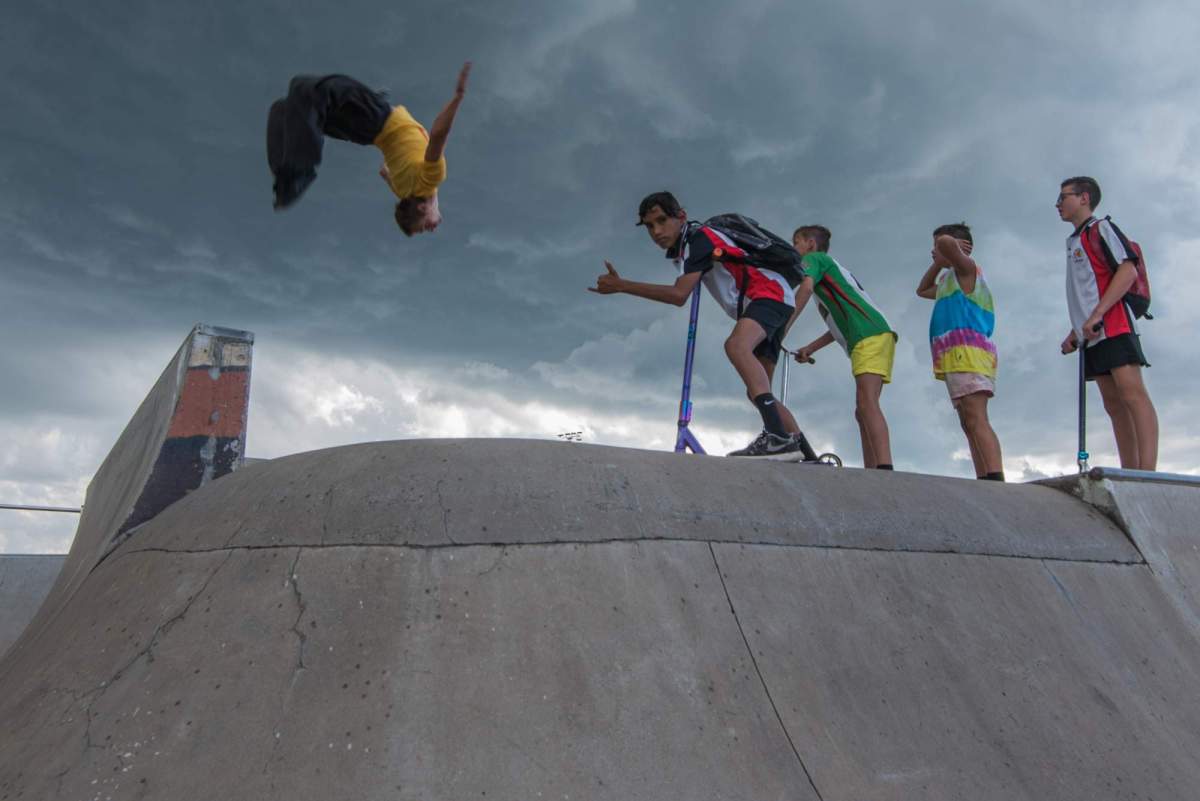
Wilson explains how Branch Nebula got started in what he describes as street-style performance in 2004, when the company was making a performance work with parkour artists, BMXers, dancers, skateboarders and a b-boy.
‘At that time we were drawn to street-style performance because it’s often promoted as sport, whereas we were interested in it as artform. Many street-style artists engage in multiple artforms – photography, videography, graff, to name only a few. We wanted to counter the notion of sport with this work and highlight its creativity.’
Those early conceptual explorations led Branch Nebula to develop what became the company’s Helpmann award winning project Snake Sessions – a work that premiered in 2016 and which has toured to 13 regional skate parks and regional communities since then.
ArtsHub: Can regional performers build careers without moving to the big city?
The piece sees Branch Nebula dancers interacting with skate park enthusiasts in different regional towns over a period of a week, where they hang out with locals before presenting an improvised performance outcome involving Branch Nebula street-style artists and skate park users for the whole community to see.
‘What projects like Snake Sessions continue to show us is how exciting it is when you take work to where people are, and to people who may not be expecting it,’ Wilson says.
‘I also think because there have been fewer experimental works being presented in Australia over the past decade or so, audiences’ knowledge about performance is shrinking, and there is a narrowing of people’s perceptions about what arts experiences look like.
‘But if you are making work that is more responsive to a community or a place, it can reach people in very powerful ways that broaden people’s awareness of what it means to engage with art.
‘As someone who grew up in East Arnhem Land, I think I’m especially aware of that impact, because I experienced that power as a young person seeing performances on Country in remote Australia,’ he says.
New habits of arts engagement through public space performance
Like Branch Nebula, Western Australia-based choreographic development centre STRUT Dance is highly attuned to the power of public space outcomes of experimental new performance work.
Most recently, STRUT’S presentation of French choreographer Boris Charmatz’s work CERCLES at the 2026 Perth Festival electrified a Perth CBD outdoor shopping mall space, engaging a record number of performers and audiences.
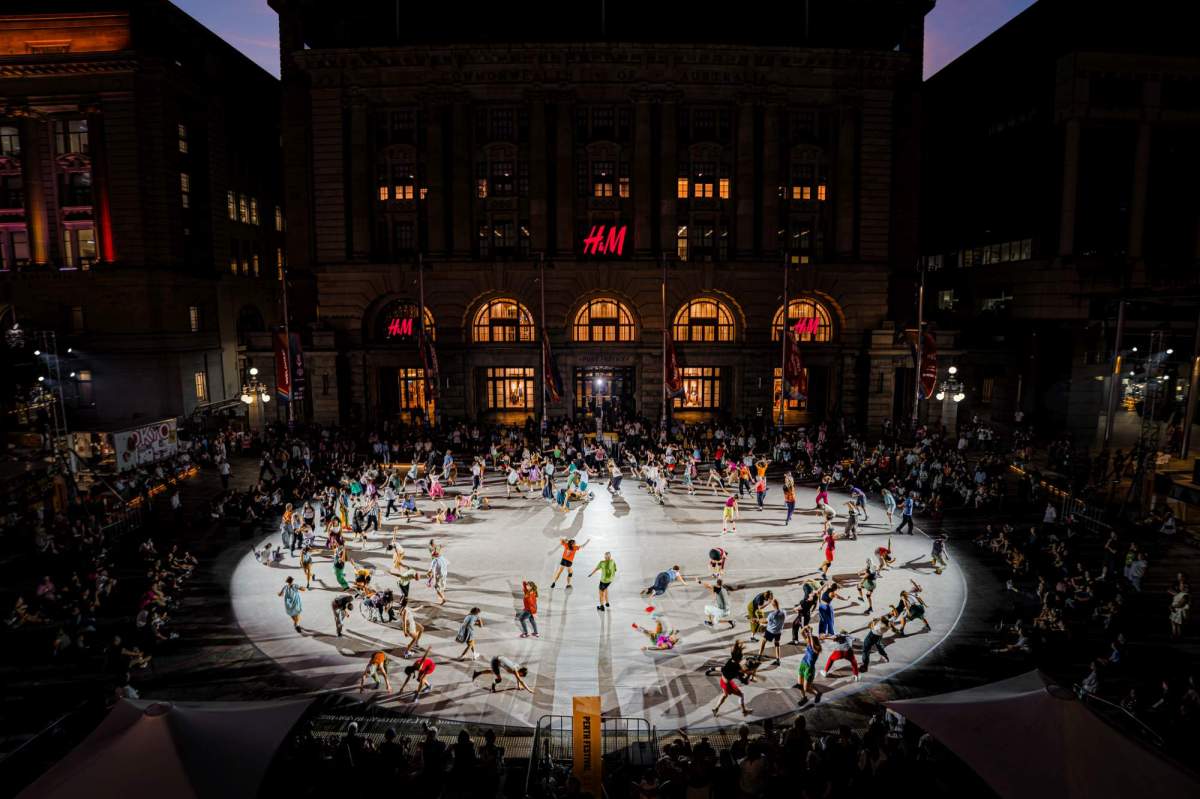
As STRUT’s Co-Director James O’Hara explains, the success of CERCLES was in many ways the result of years of work by the organisation to build audiences for this style of site-specific work, and although this larger-scale project was the organisation’s most significant (and expensive) co-production to date, its outcomes continue to pay off and have encouraged STRUT to continue presenting dance projects in public spaces.
‘I think it’s essential for us to create access to the arts for people who are generally curious, but maybe don’t have those habits of going to the theatre, or who don’t have the means,’ O’Hara tells ArtsHub.
‘We’ve found the kind of people we get to connect with through our public performances are there because they’ve either passed by, stopped and lingered to engage with the work, or they’ve come because they’ve seen it advertised through non-typical dance channels, and seen it as something that is accessible to them.
‘But further to that, what’s been wonderful is to see how, after a project like CERCLES, some of those attendees have started engaging in other aspects of our program – like our public contemporary dance classes which have grown hugely since CERCLES.
‘I’ve also seen some CERCLES participants attending our other seasons of dance this year, which has been another nice surprise.’
Evidently, STRUT’s large upfront investment in its public square style projects continues to give back to the organisation by increasing and diversifying its core audience.
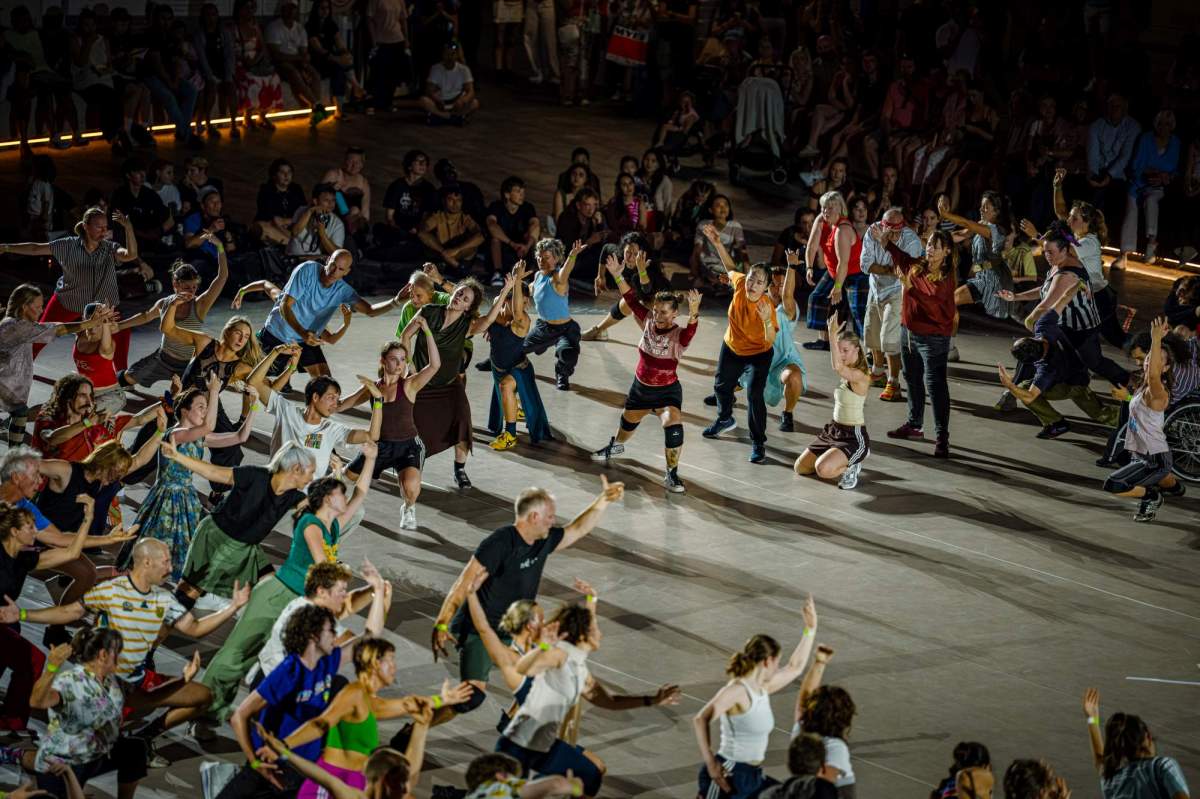
When asked whether these outcomes could have been achieved if STRUT had made an equivalent dollar investment in an in-theatre season, O’Hara’s response is unequivocal.
‘In short, no,’ he says. ‘Presenting work in non-theatre spaces is so fundamental for us to connect with new audiences that we’re doing it again in November with a work called Mudh by Sonya Stephen, which is an outdoor, community-engaged project in parkland in the City of Stirling [in Perth], where we anticipate 75% of the audience will not have attended a STRUT show before, or seen contemporary dance in a theatre before.’
Another magic ingredient to public space performance: make it free
While companies like Branch Nebula and STRUT have kicked impressive goals with their street-style public shows, both companies have also benefited from presenting their public space performances as completely free arts events.
‘That’s not to say ticketed public space performances can’t be successful, because they can be,’ Wilson comments.
‘Some of Bleach Festival’s programming and The Farm’s works in public spaces are ticketed shows, and they do well. But for us, having total support from a presenting partner who can keep it open access makes a huge difference to how people engage with it.
‘So, I actually think that at a time when everyone is feeling like [they] can’t take risks [because of tough market conditions], presenters should be being supported to take more so-called risks on this kind of work because there’s so much value there for the community.’
As an artist with extensive experience working in Europe, O’Hara also see the huge value of open access free live performance, but for slightly different reasons.
‘In Australia, we are not typically a culture that pays for our arts fuel like people do in Europe,’ O’Hara tells ArtsHub.
‘For most people in Australia, there are different [financial] priorities. But I think especially now, during a cost of living crisis, we need to find more ways to make these arts experience more accessible, and ideally, free.’
ArtsHub: What really motivates philanthropists to give?
At STRUT, that means seeking extra government and philanthropic support to fund these projects. So far, the organisation has found its philanthropic donors have been very receptive to supporting free art experiences in public space, because of the projects’ high impact and high visibility.
As O’Hara explains, ‘On the whole, our donors have been very enthusiastic and encouraging of our directions towards public space projects because they want their support to have high public value impact.
‘So, it’s been that philanthropic support – alongside the growth we’ve seen in our public contemporary dance classes and the increase in engagement we’ve seen in other areas of our performance program as a result of projects like CERCLES – that have been big motivators for us to continue developing these kinds of works.’