
OzAsia’s final festival opens next week, and after 20 years of annual programming supported by Adelaide Festival Centre, it has a lot to be proud of.
Since 2007 OzAsia has been showcasing theatre, dance, music, literature and artist conversations by Asian and Asian-Australian artists, and in doing so, it has created a platform where artists can be seen on the mainstage – sometimes with debut work that has not received support from other venues or festivals.
But according to Adelaide Festival Centre’s CEO Kate Gould, it is now time to transition away from OzAsia’s festival model, to instead embed Asian arts within the centre’s arts calendar.
As Gould told SA’s InDaily in August, the Adelaide Festival Centre has concluded that, ‘having a dedicated OzAsia Festival that’s about Asian arts doesn’t really represent the fact that Asian voices also want to see a year-round presence at the centre’.
ArtsHub: OzAsia Festival to end after 20 years, in a huge blow for artists
While being ‘committed to festivals’, Gould said there is now a need ‘to be reactive to what audiences are seeking’ and ‘in regards to getting the big-name artists to Adelaide, [the venue is] changing the way [it’s] approaching the programming of those artists’.
But how do the creatives, some of whom have had sustained engagement with OzAsia over many years, feel about this logic?
Asian arts at Adelaide Festival Centre – quick links
Concern over Festival State losing its most prominent Asian arts festival
For many, the loss of OzAsia feels like yet another unsettling sign of an environment where adequate support for diverse and ambitious arts programming is fast diminishing.
As former Executive Director at Adelaide Festival, now Board Chair of Contemporary Asian Australian Performance Elaine Chia tells ArtsHub, OzAsia’s strong public profile built over many years, and its location in Australia’s ‘Festival State’ are just two reasons its demise raises concerns about the future of Asian Australian arts programming.
‘OzAsia created something that year-round programming cannot easily replicate,’ Chia says.
‘It brought artists, audiences and communities together at scale and gave Asian Australian works a visibility and prominence that mattered, and there is power in that concentration.
‘South Australia understands this perhaps better than anywhere, which is why it is known as the Festival State.’
Similarly, Chinese-Australian composer and performer Mindy Meng Wang – an artist with a long association with OzAsia, including premiering the work Opera for The Dead (co-created with Monica Lim) at OzAsia 2025 – feels the loss of the festival puts its many years of investment in audience development and Asia Pacific artistic collaboration at great risk.
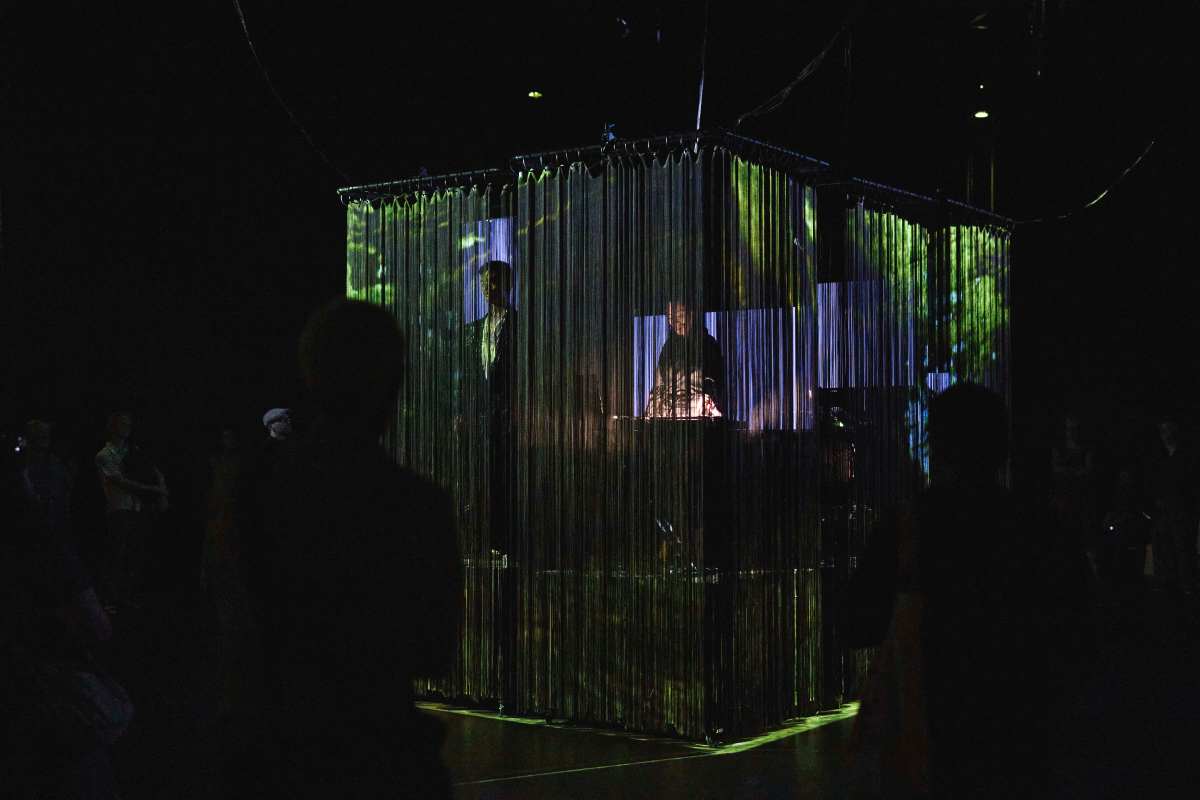
As Wang tells ArtsHub, ‘OzAsia Festival is incredibly important because, although it is based in Adelaide, it is really the only major annual contemporary arts festival in Australia dedicated specifically to engagement with Asia.
‘For Asian Australian artists, it has become an important anchor.
‘[It’s] a place where we can connect with each other, but also with artists and communities across the Asia Pacific region – including countries like Indonesia, Singapore and China among others across the region.’
As Wang notes, ‘Once that kind of cultural infrastructure disappears, it is not easy to rebuild’.
Can anything replace the ‘high-time’ for Asian arts created by OzAsia?
In terms of what might come next for Asian arts programming in place of OzAsia, several other Asian Australian artists ArtsHub spoke to for this story also expressed unease, like Wang, at Adelaide Festival Centre’s decision to transition OzAsia into year-round Adelaide Festival Centre programming.
Yet as Wang points out, now is the time to start conversations around how both a festival platform like OzAsia and year-round Asian arts programming might be able to coexist.
As Wang comments, ‘If a festival is facing difficulties, I think we should first explore whether it can be restructured, refinanced, or brought into partnership with another festival or arts organisation, rather than losing it altogether.
‘I also absolutely think Adelaide Festival Centre should have Asian and Asian Australian work in its year-round programming. In fact, I think that should already be happening,’ she continues.
‘Asian Australians are part of the fabric of contemporary Australia, so our work shouldn’t only appear during a particular festival or be treated as something separate from the mainstream arts program.
‘But I don’t think year-round programming can replace what OzAsia Festival represents.’
ArtsHub: Ai Weiwei brings the politics of war to the MCA’s harbourside lawn
For Wang, like others ArtsHub heard from for this story, OzAsia ‘is not simply a collection of Asian shows presented at the same time’.
‘There is a sense of visibility and collective identity that comes from gathering around a festival, and I don’t think presenting a few more Asian-related works throughout the year can provide exactly the same thing,’ she says.
‘So rather than asking whether we should have OzAsia or year-round Asian programming, I think we should be asking how we can have both?’

Time to embrace intercultural (rather than cultural) festivals?
While there are clearly some consensus feelings among Asian Australian artists around maintaining a dedicated annual festival to spotlight their work, others have a slightly different view.
For Melbourne/Naarm-based actor, dancer and choreographer Annalouise Paul, who is of Indian-Sephardi (as well as Russian-Askenazi) heritage, an important thread in conversations around culturally-specific Australian arts festivals should be as much about audiences as they are about artists.
As Paul tells ArtsHub, ‘The real question for me is how can we, the artists, shape the next [manifestation of the OzAsia] festival in dialogue with local community and curators alike?’
Paul recalls how years ago, when she was leading the (now devolved) artist-led advocacy body for multicultural arts in New South Wales, Groundswell Arts NSW, she received advice from another well-established Asian Australian artist who told her they thought she was ‘leading the way’ with her approach to the presentation of intercultural performance.
‘They said, “This is what’s next. It’s about all-cultures, moving beyond just one cultural group”,’ Paul says.
‘Of course, all artists want platforms for their work,’ she adds. ‘But to progress in our thinking and to grow as a sector, I’m more interested in what the community wants, and ultimately challenging if it is even useful to pigeonhole artists into racial boxes anymore.’
As an intercultural dance theatre-maker, Paul is also interested in programming that moves beyond identity politics and speaks to a wider audience that, as she describes ‘wants to see good art, while also being challenged, excited and exposed to thought-provoking ideas’.
ArtsHub: Artists from the Asia Pacific stand out at international theatre festival
At the same time, she wonders aloud about whether the Australian and audiences are there yet.
As she summarises her thinking on what she sees as an interesting question with no straightforward answer, she asks, ‘Are we ready for an all-embracing, Australian intercultural festival?’
For Jay Emmanuel, an Indian-born, Perth-based performer and theatre-maker as well as the Founder and Director of Encounter Theatre, the answer to Paul’s question is indeed tricky, but also incredibly timely.
As Emmanuel points out, part of artists’ grief around OzAsia’s cancellation is that, although billed as an Asian arts festival, it was also facilitating important intercultural dialogue and exchange.
‘What OzAsia has achieved isn’t just about cultural performance,’ Emmanuel tells ArtsHub.
‘Its program supported a whole spectrum of work and that included fostering and holding space for intercultural dialogue and intercultural performance.’
Emmanuel believes the festival’s cancellation is a huge blow for the Australian arts community in presenting real impediments to the growth and development of intercultural artistic exchange.
‘How are these intercultural works going to find each other and speak to each other now?’ he asks.
‘OzAsia’s cancellation is really taking us back to conversations about what major festivals remain. It’s a sad reality that fewer and fewer of these festivals exist now. So, where will that energy [to support more intercultural performance] sit? Where will it go?
‘Without platforms like OzAsia that energy goes away, and that is a great loss to the wider sector and artists’ development,’ he concludes.
Selected ArtsHub articles on OzAsia from the archives
- OzAsia 2018: The art of displacement: how OzAsia Festival celebrates contemporary practice
- OzAsia 2021: Asian Australian talents in the spotlight: sneak peek at OzAsia 2021
- OzAsia 2022: Theatre review: SNAP
- OzAsia 2023: Getting the balance right in a festival of Asian Australian cultures
- OzAsia 2023: Dance review: Infinitely Closer
- OzAsia 2023: Performance Review: Paradise or the Impermanence of Ice Cream
- OzAsia 2024: Artistic Producer shares what to look out for in this year’s program