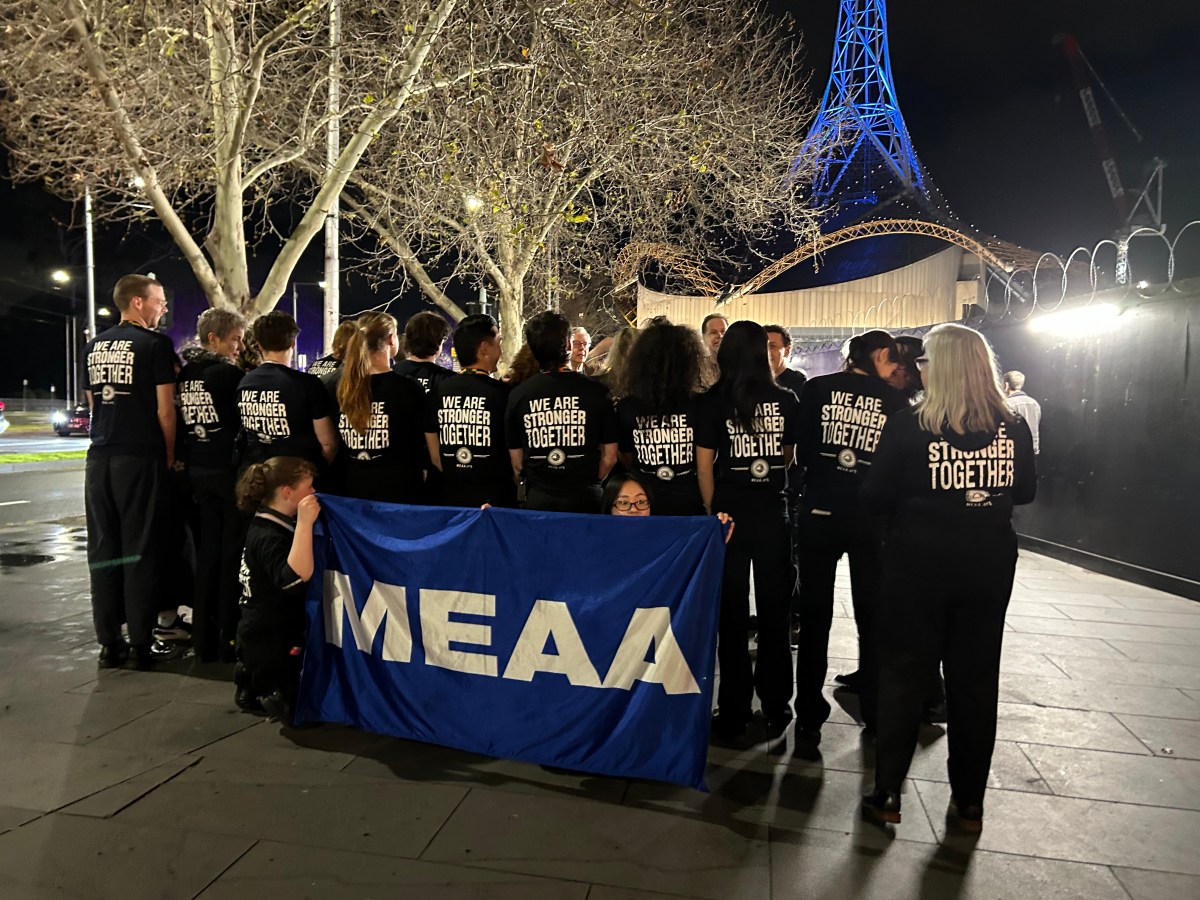
Arts Centre Melbourne workers have secured a 13% pay increase over three years following a campaign that included unprecedented strike action at the major performing arts venue.
Union members have voted overwhelmingly to accept a new enterprise agreement, delivering a 5% pay increase in the first year, followed by 4% increases in each of the following two years.
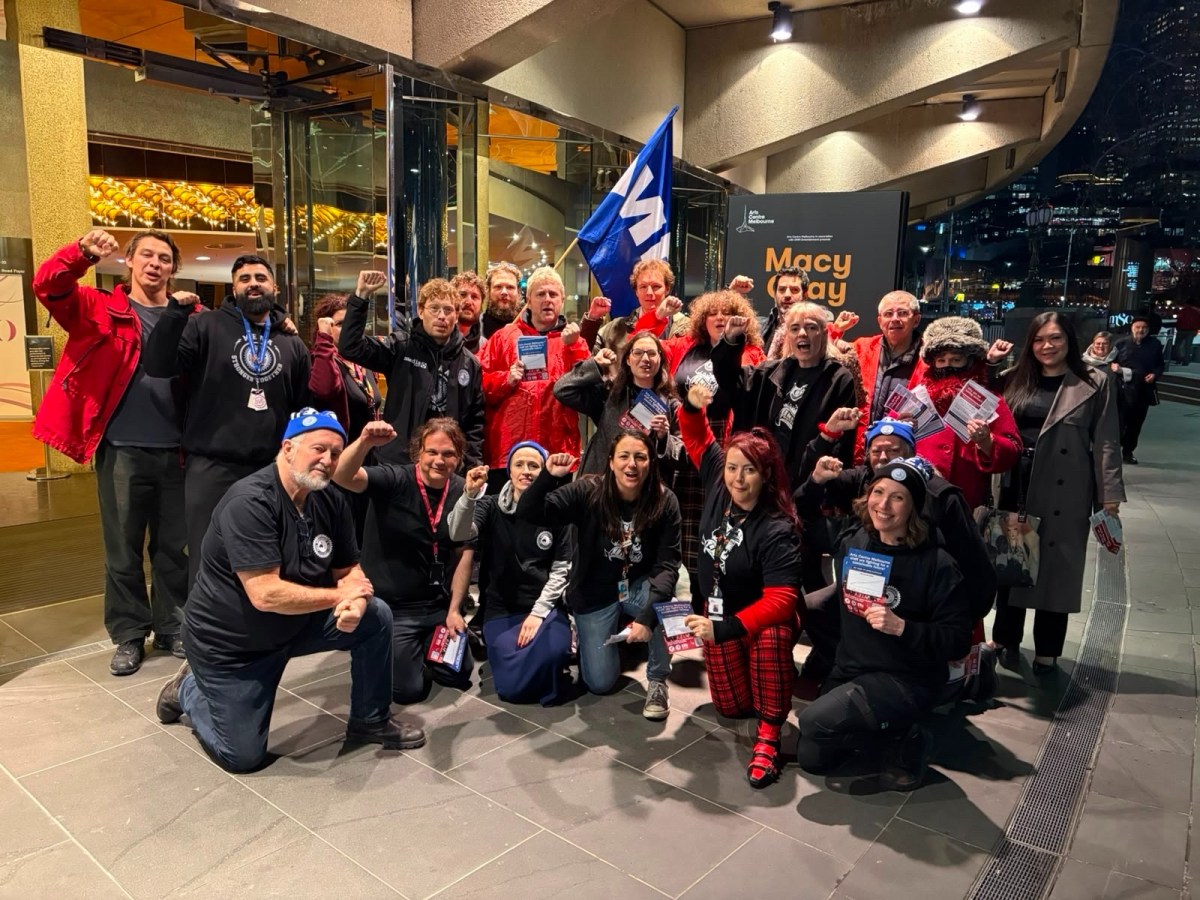
The recent strike action disrupted three major shows at ACM, including a concert by legendary soul singer Macy Gray, with the Grammy Award winner being forced to postpone the first date of her current Australian tour.
Arts Centre workers win pay rise – quick links
Pay rise jumps from 3% to 13%
The agreement also includes a one-off payment of $4350 pro rata and improved leave entitlements, including no qualifying period for parental leave and the introduction of reproductive health, disability support and gender affirmation leave.
The deal follows months of enterprise bargaining and two 24-hour stop-work actions by members of the Media, Entertainment & Arts Alliance, the Community and Public Sector Union and the Electrical Trades Union.
The original dispute centred on the gap between the 3% annual increase initially offered by ACM and the 7% increase sought by unions.
As ArtsHub previously reported, workers argued that wages had fallen significantly behind inflation since 2022, with almost 40% of the roughly 900-person workforce on the lowest pay band.
The dispute eventually escalated to protected industrial action. As ArtsHub reported, taking protected industrial action in Australia requires workers to navigate a tightly regulated process connected to enterprise bargaining.
What the workers won
The 13% wage increase is only part of the new agreement. In addition to the one-off payment of $4350 and improved leave entitlements, the deal also provides stronger job security provisions, enhanced fatigue management measures, protections around weekend and public holiday work, and a strengthened consultation process for major workplace changes.
There are also commitments around secure employment and affordable staff parking.
MEAA Acting Chief Executive Adam Portelli said negotiations relied on members working together to demand improvements in wages and conditions.
‘This is a big win for members who refused to accept that doing the job they love meant earning a wage that doesn’t keep up with the cost of living,’ said Portelli, in a press release shared today by the MEAA.
‘They sent a clear message that the people who bring arts and culture to life deserve fair pay and decent conditions.’
A potential benchmark for arts workers
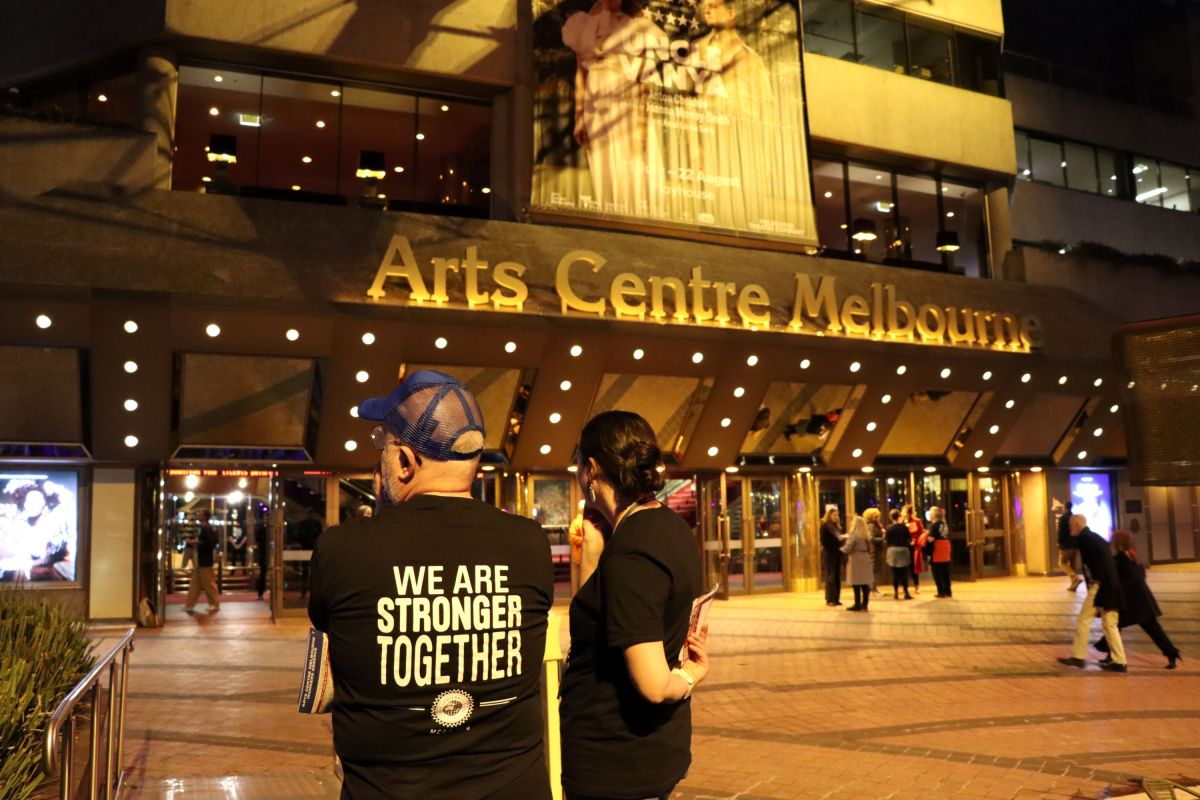
According to MEAA, the industrial action that just took place at ACM was the first time in decades that workers across areas including ushering, customer service, box office, food and beverage, technical and backstage roles had taken stop-work action.
Portelli said the agreement was ‘an important win not only for ACM workers, but for arts workers across Victoria,’ adding that ‘creative workers deserve to be valued for the work they do’.
The settlement does not automatically establish a new wage standard for the wider arts sector: enterprise agreements are negotiated according to individual workplaces and their funding and employment circumstances.
But it does provide a concrete example of workers securing a substantially better outcome than the offer initially placed on the bargaining table.
That could make the agreement a useful reference point for other arts workers entering wage negotiations, particularly in a sector where rising costs and funding pressures are frequently cited as constraints on pay.
For ACM workers, the question of whether collective action could shift the bargaining equation has now been answered.