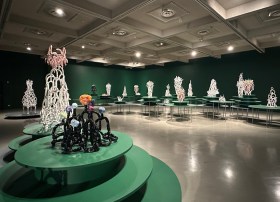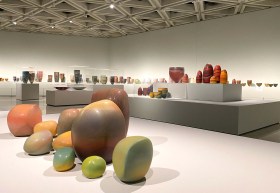
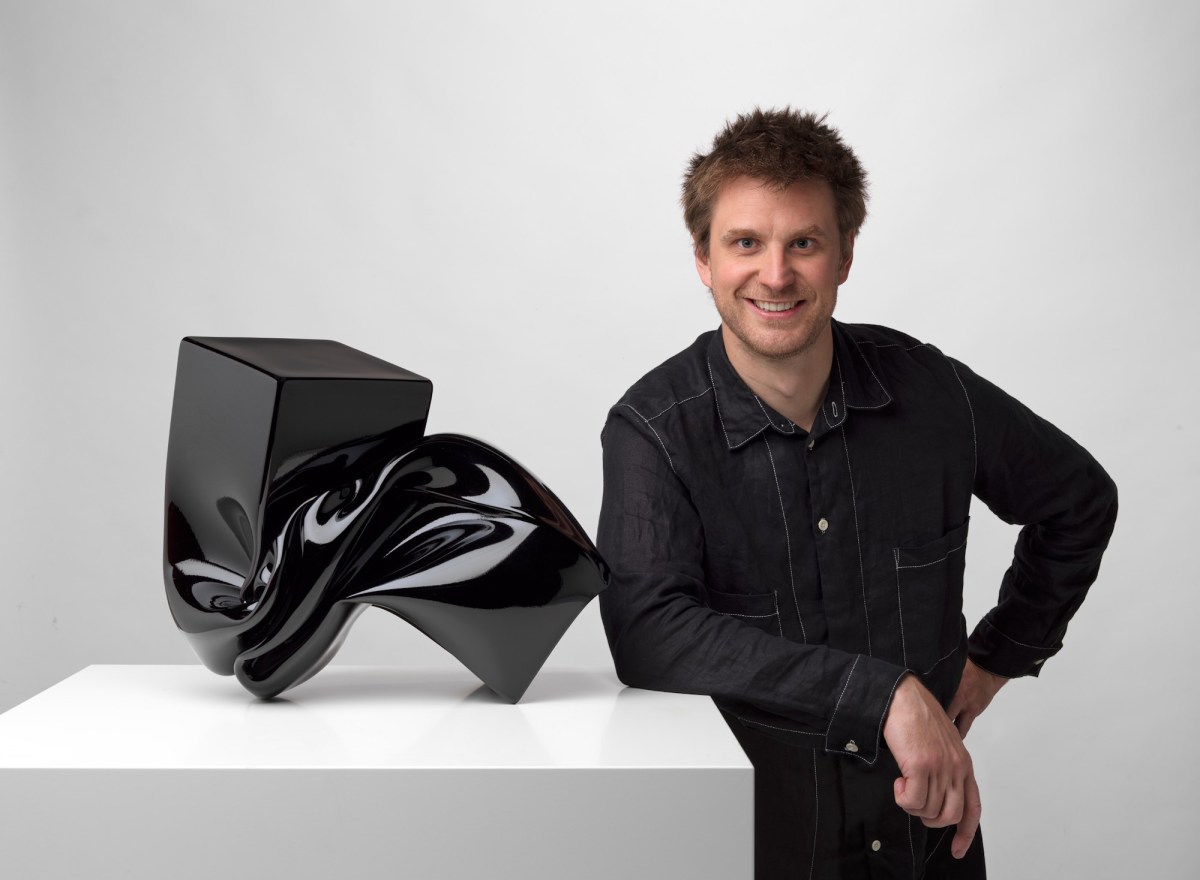
This week, the prestigious Loewe Craft Prize (pronounced lo-aye-veh) has announced its finalists for its 2026 edition, and two Australian glass artists have made the cut – Canberra-based glass kiln worker Kirstie Rea and Adelaide-based glass artist Liam Fleming.
It was the largest number of Australians to have applied in the prize’s history, some 111 makers across all mediums, putting them at the table with the top makers in their fields across the world.
Judging a craft prize – quick links
Australians on craft’s global stage
The Loewe Craft Prize was founded in 2016, conceived by Jonathan Anderson, the former Creative Director of the iconic Spanish fashion powerhouse.
The prize was established by the philanthropic arm of the brand, the Loewe Foundation, to highlight the continuing contribution of craft to the culture of our time – to take existing craft knowledge and make it relevant today.
Testament to that relevance was a record 5,509 applications globally from 133 countries for the 2026 prize. It has to be remembered that there are few craft prizes to promote this dialogue among peers and experts. And with only 3% of that pool originating from Oceania, to have two Australian artists among the 30 finalists was a great coup, and testament to our local talent.
It was also the first time that an Australian was part of the International Expert Panel. A specialist in international glass, Scott Chaseling was a finalist himself in the 2025 edition of the prize and returned to join nine other specialists to rigorously sift through the 5,509 applications.
Australian glass has done relative well in the prize’s history – Chaseling, Fleming and Rea join Mel Douglas (2022) and Jessica Loughlin (2020), with First Nations weaver Margaret Rarru Garrawurra (2025), ceramicist Prue Venables (2023) and jeweller Johannes Kuhnen (2023) also selected as finalists.
The rigor of a 12-person panel
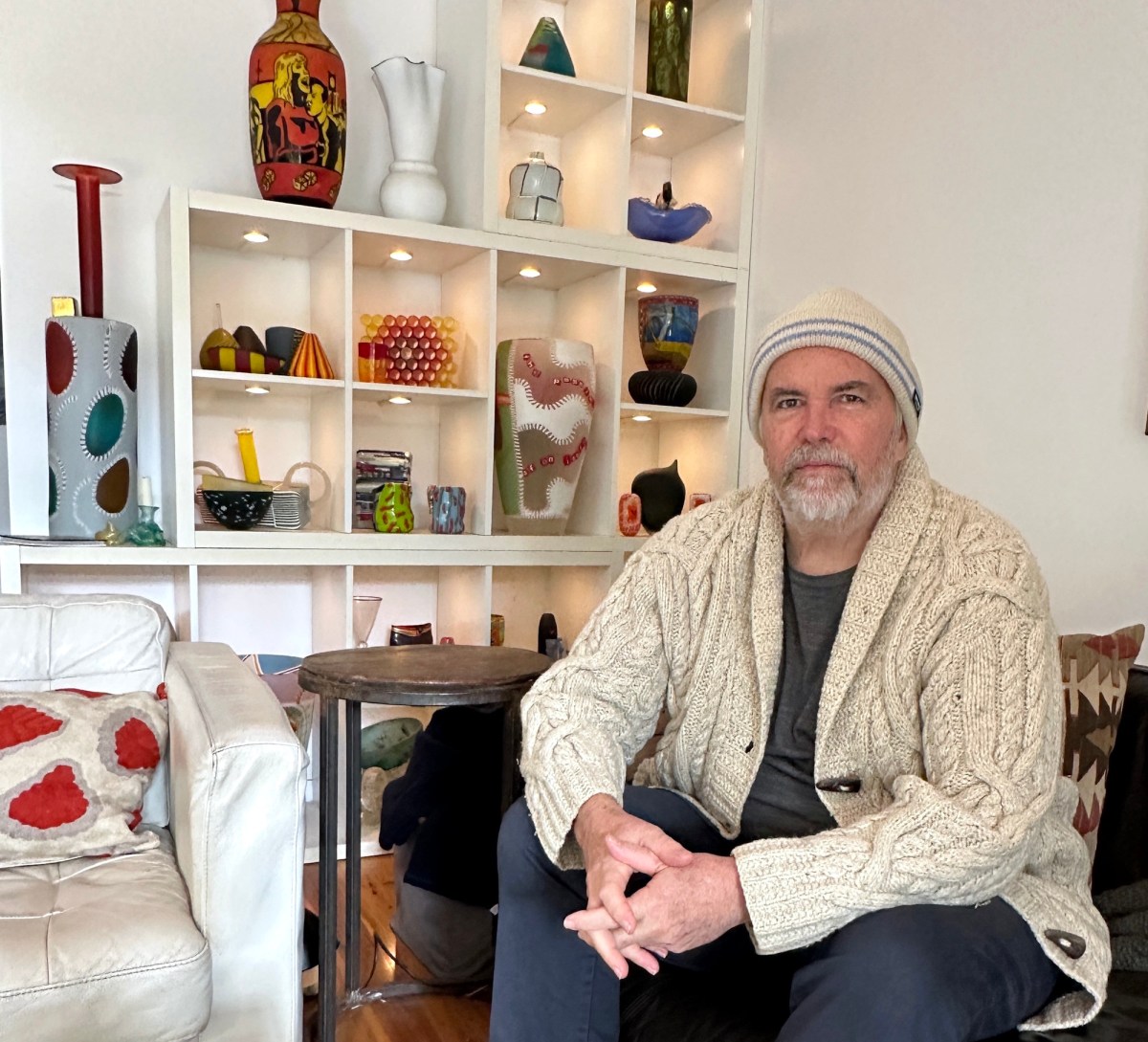
Aware of the optics of two glass artists being selected, Chaseling told ArtsHub, ‘I wish I could say I had a grand say in the selection, but all 30 pieces selected had to be voted in unanimously, so my vote was just one among 12.’
He continued: ‘I would have loved to have seen many more Australians in the exhibition as the quality was there, and the work stood up in robust conversations.’
Chaseling said the process involved each of the experts choosing a shortlist of 30 artists, which then became a pool for consideration by the panel. The panel deliberated for two days to arrive at their list. Each decision had to be unanimous.
That is a staggeringly, tight decision to arrive at with such a large group charged with coming together unanimously. Chaseling said he ‘was proud to see such a large group of submissions from Australia making that final discussion stage. The word is definitely getting out how important this prize is.’
Fleming – who has also been named a recipient of the Guildhouse Fellowship (2021) and finalist in the Ramsay Art Prize (2021), alongside undertaking residencies in America, Mexico and Italy – said of being selected: ‘It comes as a massive surprise considering how many fantastic entries there are. I’m truly over the moon.’
Rea – who presented a major retrospective of her work at Toyama Glass Art Museum, Japan (2022), and Australia World Craft Council Masters Award (2023) – said that being selected has thrown up many feelings. ‘I am so excited, and honoured to be selected and to have my work presented with the other finalists at the National Museum of Singapore in May. This is a group of artisans from around that world that I haven’t yet had the opportunity to meet and show alongside. It really opens up so many possibilities to share, Rea told ArtsHub.
‘It’s wonderful that Liam Fleming was also selected and for Australia to be represented strongly in the Prize,’ she added.
Across the 5,509 applicants, the age range was from 18 to 89, with one applicant in three aged between 30 and 39 years old. The most popular material submitted was ceramics (27%), followed by textiles, then jewellery, metal, wood and glass. Artworks in paper, leather, lacquer, enamelworks and bookbinding were also considered.
The winners will be selected by a separate jury comprising architects, designers, journalists, historians and museum curators. This will be done in May.
The Loewe Foundation believes that ‘the sum of these two perspectives, one specific and up close [the expert panel], the other from distinguished figures of differing artistic or creative fields, enriches and reinforces the process of choosing the final winner.’
Lessons learned from looking at 5,500 applications
A recommendation we regularly receive for art prizes is to get your photography right. Looking at such a broad spectrum of submissions from the global craft sector, Chaseling added that it is absolutely critical that you invest in having your piece photographed professionally.
He continued: ‘Don’t put in your second-best piece. This is a prize where you want to show off to the world, so make the best piece the one you submit.’
He recommended keeping track of what pieces you are submitting to which prizes, and putting them aside. Chaseling said that it was unfortunate that a couple of contending finalists were cut because they submitted work that was not available.
‘Being a part of the expert panel was a rewarding time, in that I was surrounded by like-minded people who advocated strongly for the highest respect for crafts. The process of cutting the selection of works to 30 was not as daunting as I had expected, due to the knowledge bank in that one room. It was an amazing journey of discussion – and finally – celebration at our shared outcome. It was truly wonderful.’
ArtsHub: 6 tips for entering an art prize
More than choosing your best work
Chaseling recognised that we can all feel a level of art prize burn out, and yet feel compelled to keep giving our work that opportunity to be seen. ‘It sometimes means that one work might be held over for another prize or that you’ve been really busy, so just submit a solid work you have in the studio. But you have to be really strategic [with] this calibre of prize in terms of what you submit,’ he told ArtsHub. ‘Knowing the work of many of the artists, internationally, I was often surprised by the works they had chosen.’
Chaseling continued: ‘The Loewe Craft Prize recognises not only skill, but also those who show an understanding of the materials history and applauds when boundaries are pushed.’
He said that while we might expect major works of scale for a prize and exhibition of this standard, his finalist work in 2025 is testament that size and style do not impact or influence the panel’s decision.
‘Big or small, grey or colourful, functional or nonfunctional, there are no borders other than good craft. Foremost, the Loewe Craft Prize celebrates an understanding of material, skill and design at its highest level,’ he added.
It was reflected also in the choice of Rea and Fleming, both top of their game but working unconventionally within craft vernacular.
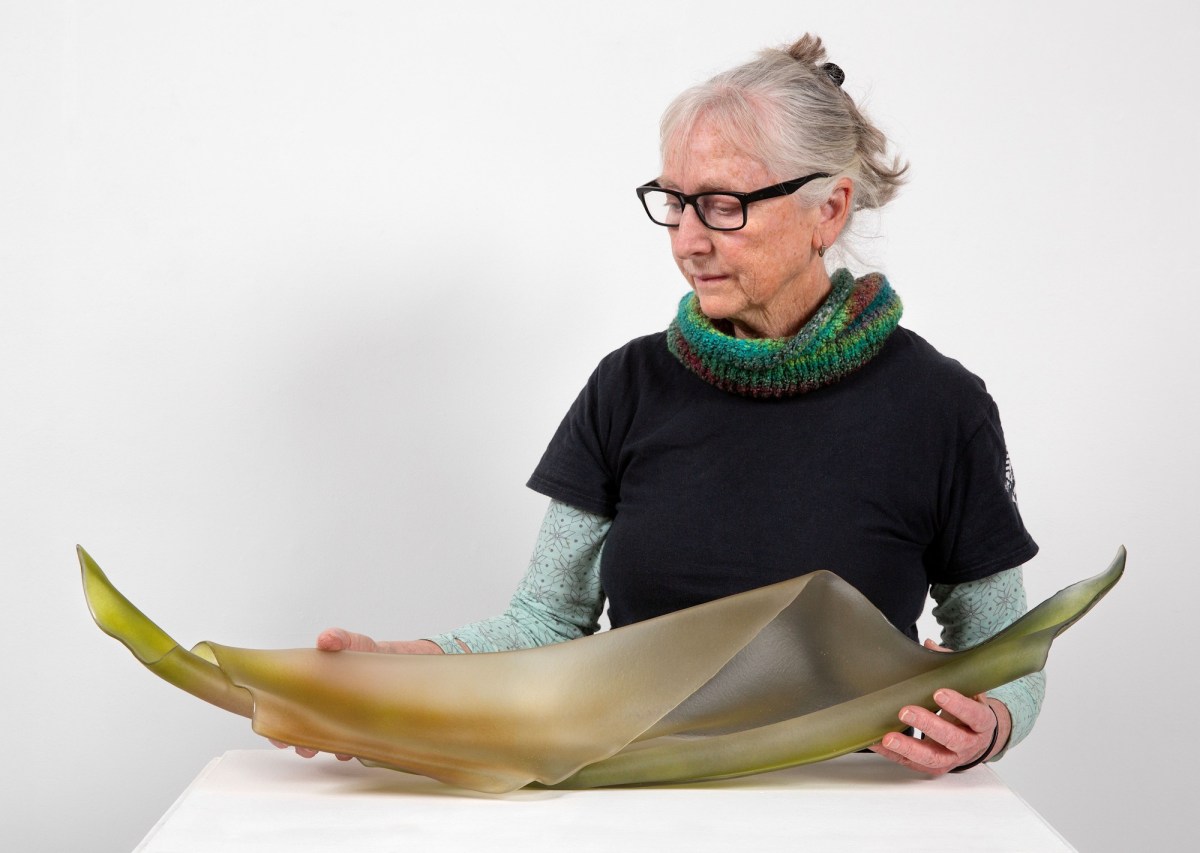
Rea told ArtsHub that her finalist work, Repose 2 (2024), ‘abstracts the awe and the surprise that is found in nature, things that delight and offer us a sense of wonder. The work also speaks of the possibilities of both the firm and fragile connections that we have to places.’
She added that the piece for her held hope in its stillness as an object.
Fleming said of his finalist work, Patterns of Pressure (2025): ‘This new work in complete opaque [glass] has been a slight shift in my making process, which felt fresh and exciting to me. So, I had to put it out there to show it was received. It still holds that underlying theme of dichotomy of control and expanding on my ways of sublimating craft.’
ArtsHub: Rethinking craft – 5 questions with craft platform Homo Faber
International lessons on running an art prize
And, in terms of how prizes are run in Australia, what can we learn from the Loewe Craft Prize? Chaseling said, ‘it is a hard comparison as the Loewe Foundation have deep pockets and no expense is spared. Right from the get-go, the professionalism shows: the handling and shipping of the works, the quality in the exhibition presentation, the treatment of the artists, the opening night, it just goes on.’
That process for Chaseling started with the selection process. ‘Each of the shortlisted artists were given an individual page on a private web portal. From there, I could research the artist and view the submitted piece, along with other works from the artist’s oeuvre. There were links to artists’ websites, which also proved a key part of accessing how the work submitted fit in with their making and career journey. This level of professionalism remained throughout the selection process to the final 30 pieces. It was super impressive.’
Chaseling said that the thing that most strongly came through the whole process was the affirmation that ‘craftspeople are professionals; this is our business and the makers and their work should be regarded with due respect’.
He concluded: ‘Through projects such as the Loewe Craft Prize, craft and the makers are being seen by a much wider audience. Previous editions were held in The Noguchi Museum [New York], Palais de Tokyo [Paris] and the Thyssen-Bornemisza Museum [Madrid]. The Loewe Foundation also spends much time and resources on disseminating and publicising the exhibition and craft works. It is fantastic that Australians are being taken seriously in this forum.’
Loewe 2025 International Expert Panel
The expert panel for this year’s prize included:
- Antonia Boström, former Director of Collections at the Victoria & Albert Museum, London
- Scott Chaseling, glass artist and Loewe Foundation Craft Prize 2025 Finalist
- Hyeyoung Cho, Chairwoman at the Korean Association of Art and Design
- Michelle Millar Fisher, Curator of Contemporary Decorative Arts at the Museum of Fine Arts, Boston
- Sara Flynn, ceramicist and Loewe Foundation Craft Prize 2017 Finalist
- Satoko Fujiwara, Loewe VP Leather Goods Merchandising and Buying Strategy
- Amy Greenspon, Loewe Art Advisor and independent curator
- Wolfgang Lösche, former Head of Exhibitions and Fairs at Chamber of Skilled Trades, Munich
- Nifemi Marcus-Bello, artist and designer and Loewe Foundation Craft Prize 2025 Finalist
- Ibrahim Mahama, mixed media artist
- Anatxu Zabalbeascoa, Architecture and Design Correspondent for El Pais
- Didi Ng Wing Yin, wood artist and Loewe Foundation Craft Prize 2025 Finalist
The 9th Loewe Foundation Craft Prize exhibition will be presented at the National Museum Singapore from 13 May to 14 June.
The writer shares a studio with Australian Loewe Expert Panelist Scott Chaseling.