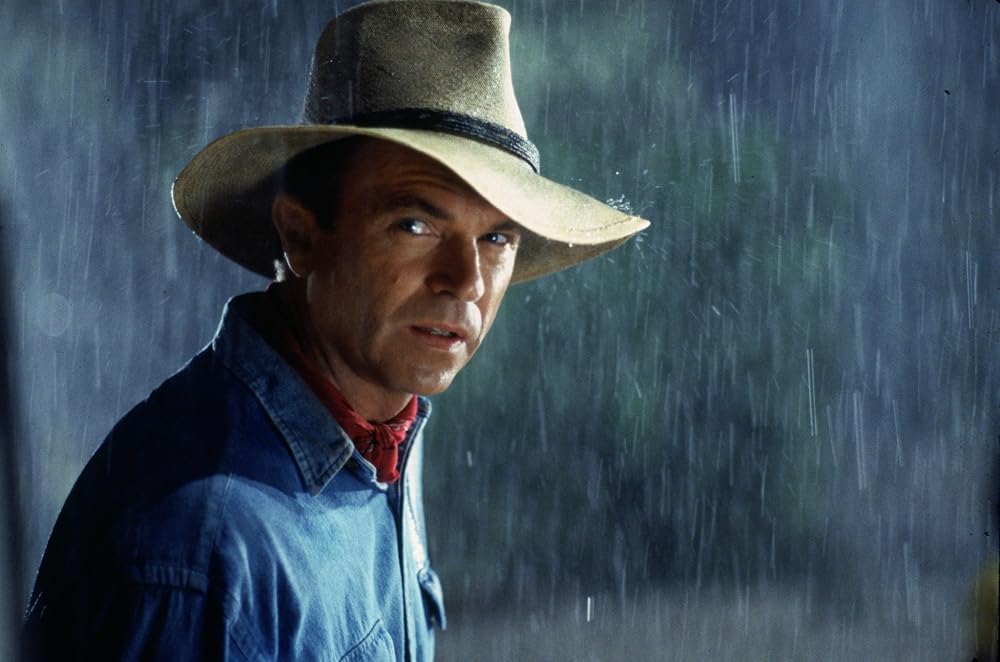
Think of the late and genuinely deserving of the adjective ‘great’ Sam Neill and I’m almost certain the first image that will come to you – an infinitesimal flicker before the stampeding dinosaurs of Jurassic Park, the eldritch horrors of Possession or the goofiness of Hunt for the Wilderpeople – is the glimmering hug of his exceedingly generous smile.
It was so abundantly warm that the world had to claim it as its own, especially during the cold, dark and frightening separation of lockdowns, where his video missives from his New Zealand animal farm of a vineyard, Two Paddocks, were a soothing balm.
Much will be made of adoring Australians borrowing their beloved Neill from their cousins across the ditch. But of course, like so many of us down here, he was born way up there – on 14 September 1947, in the Chinese year of the Pig, where the rivers Drumragh and Camowen flow into the Strule at Omagh, County Tyrone.
His father, Dermott, was a Kiwi stationed there while serving with the British Army in the Royal Irish Fusiliers, barely a quarter century after the partition of the island. His mother, Priscilla, was stoically English, giving birth to Neill, whose first name is actually Nigel (Nigel John Dermot Neill), on a kitchen table.
ArtsHub: Sam Neill, Jurassic Park star, dies at 78
By 1954, the family had moved to Aotearoa, eventually settling in Dunedin, though Neill would spend much of his younger years at boarding schools in Christchurch, reading JRR Tolkien’s The Lord of the Rings while listening to The Beatles. It’s here he adopted the name Sam, to fit in better in the playground, with Nigel deemed a punchable liability.
Much like those wandering rivers, we’re all a little bit of someone and somewhere else.
Vale Sam Neill – quick links
Eldritch horror
As I sat for a moment, teary-eyed on hearing the news of Neill’s passing and wondering when I first saw him on screen, a flurry of films flickered through my mind.
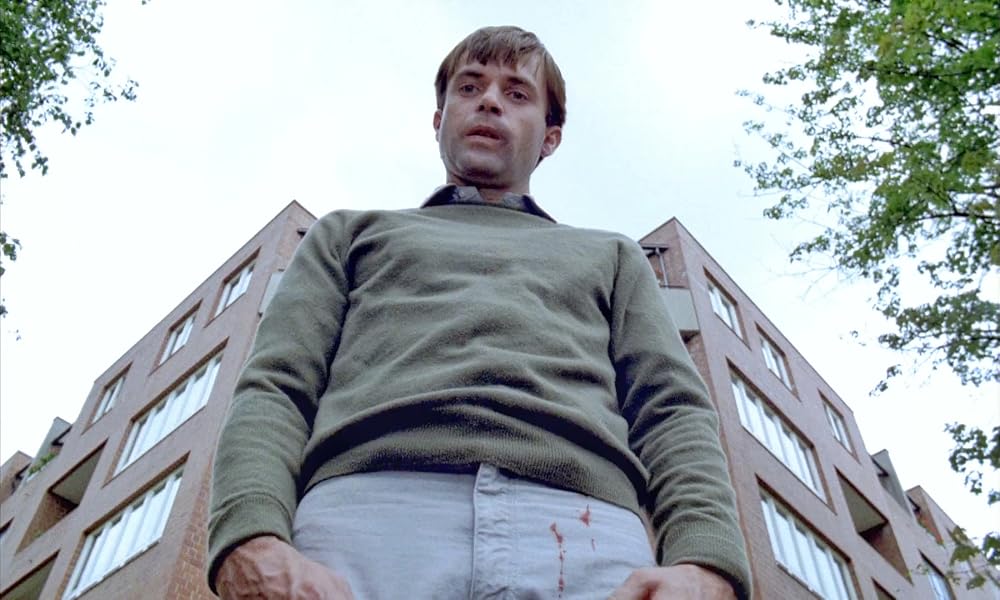
Did my riotous cousins show me Andrzej Żuławski’s fabulously brain-scarring shocker Possession (1981), in which something eldritch and awful came between his character, Mark, and his supernaturally disturbed wife Anna (Isabelle Adjani), when I was far too young?
Probably not. They tended to favour American horror.
I didn’t catch Neill’s brilliant breakthrough film, Roger Donaldson’s 1977 hit Sleeping Dogs, about a fascist force plunging Aotearoa into bloody civil war not unlike the Troubles, until quite recently, after winning it in a Cinemanaics raffle. The first feature shot by an entirely local crew on 35mm, it helped kickstart the New Zealand New Wave and took the country’s cinema to the world.
Sleeping Dogs also took Neill to Australia for the first time, on a publicity tour to Melbourne. But it was his first early-morning glimpse of gum trees against deep blue-shrouded mountains, out the window of a sleeper train to Sydney, that caused him to fall hard for his soon-to-be-adopted land.
Surely my first sighting was earlier than the reanimated wonder of Steven Spielberg’s epic Jurassic Park, where he’d battle marauding dinosaurs alongside Laura Dern and Jeff Goldblum? I was 15 by the time that great scaled beast stampeded the box office in 1993, spending my meagre pocket money on going to the cinema my parents were steadfastly uninterested in, hoovering up VHS tapes and scouring the paper for reruns on TV.
War drums
Television. Of course.
The first time I’d ever seen Sam Neill was on the small screen and I was watching The Sullivans with my mum. Then Australia’s most lavishly budgeted commercial show, it was set at the outbreak of the second world war, with Neill depicting the cad Ben Dawson, who tricked Kitty Sullivan into an affair after pretending he was single.
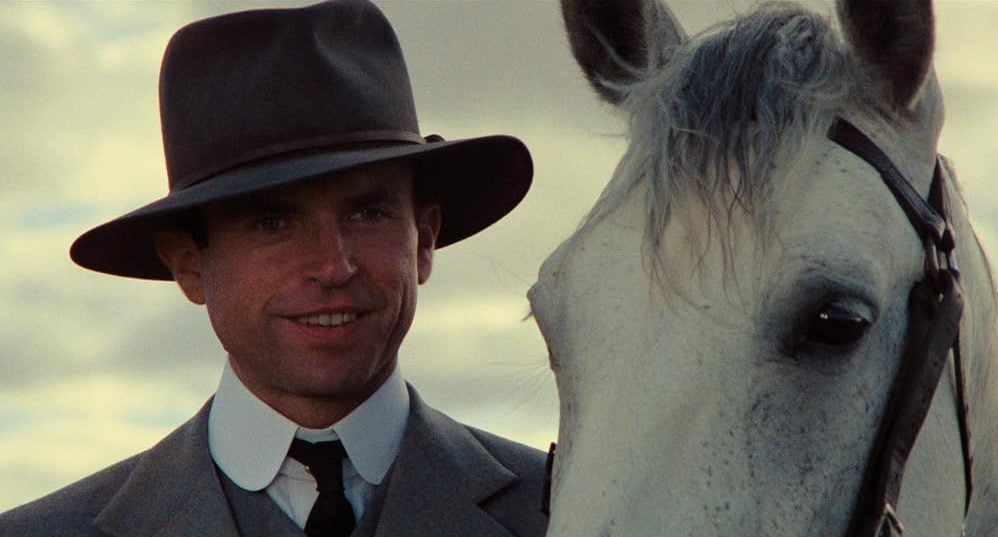
Equally popular in the UK, where it enjoyed many, many reruns, The Sullivans debuted in 1979, the same year as Neill’s actual first gig in Australia, as the dashing Harry to Judy Davis’s larrikin Sybylla in My Brilliant Career, directed by the inimitable Gillian Armstrong.
Neill recalled, in his gorgeous memoir, Did I Ever Tell You This?, that the set was a matriarchal marvel.
‘The script was written by a woman (Eleanor Witcombe) adapted from a novel written by a woman (Miles Franklin). Luciana (Arrighi)’s design was a wonder; she absolutely knew and understood the aesthetics of these people.
‘The cast was equally full of great women: Wendy Hughes, Patricia Kennedy, Julia Blake. I thought this preponderance of great women might be normal on Australian films. Sadly it was not to be. It should be.’
A true gent.
All at sea
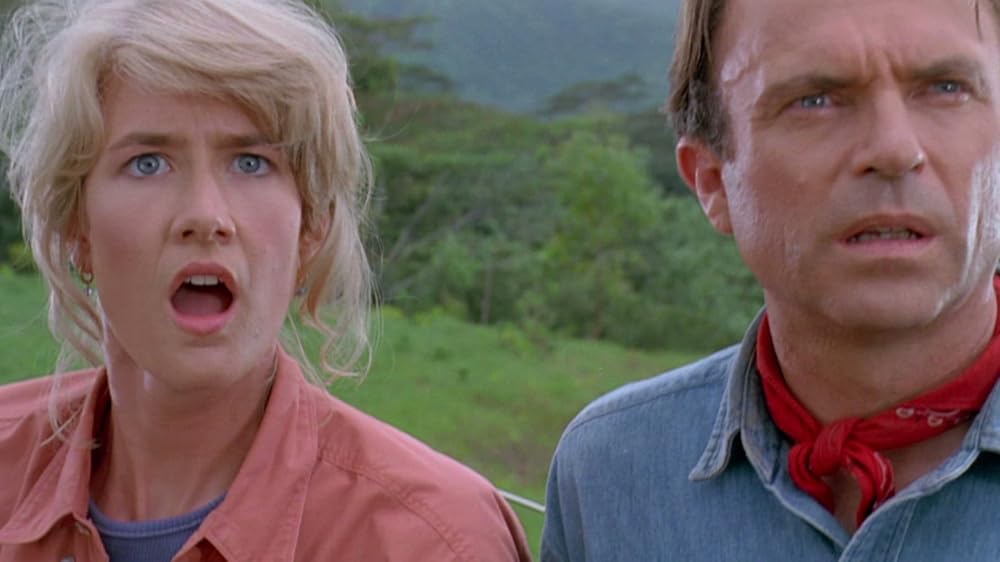
There are so many wonderful films in Neill’s storied 60-year career, with over 150 credits to his name. In Jurassic Park, against the swell of John Williams’ score, as the outwardly curmudgeonly but reluctantly kind-at-heart palaeontologist Dr Alan Grant first spies a Brachiosaurus, alongside Laura Dern’s equally dazzled Dr Ellie Sattler and Jeff Goldblum’s chaos theorist Dr Ian Malcolm, is the stuff of cinematic legend.
And yet, as with many such foundational tales, it almost wasn’t to be. Harrison Ford was Spielberg’s first choice. Hurricane Inki struck Hawaii with Category 4 force near the start of filming, destroying the sets, the crew’s hotel, and killing six souls.
They persisted. Jurassic Park lives on in eternity. As do the diabolical tentacles ensnaring Possession (1981), as nightmarish behind the scenes as it is indelibly on screen, driving both Neill and Adjani to their very limits and perhaps even beyond. However irresponsible Żuławski’s demanding direction, the terrifying results are dark magic wrought in silver.
Neill worked on too many marvellous stories to do proper justice here. In Dead Calm (1989), he and Nicole Kidman work wonders all at sea in Philip Noyce’s astonishing big screen adaptation of Charles Williams’ 1963 novel, playing a fraying couple deep in grief after losing a young son, yet forced to do battle with Billy Zane’s worst person to rescue.
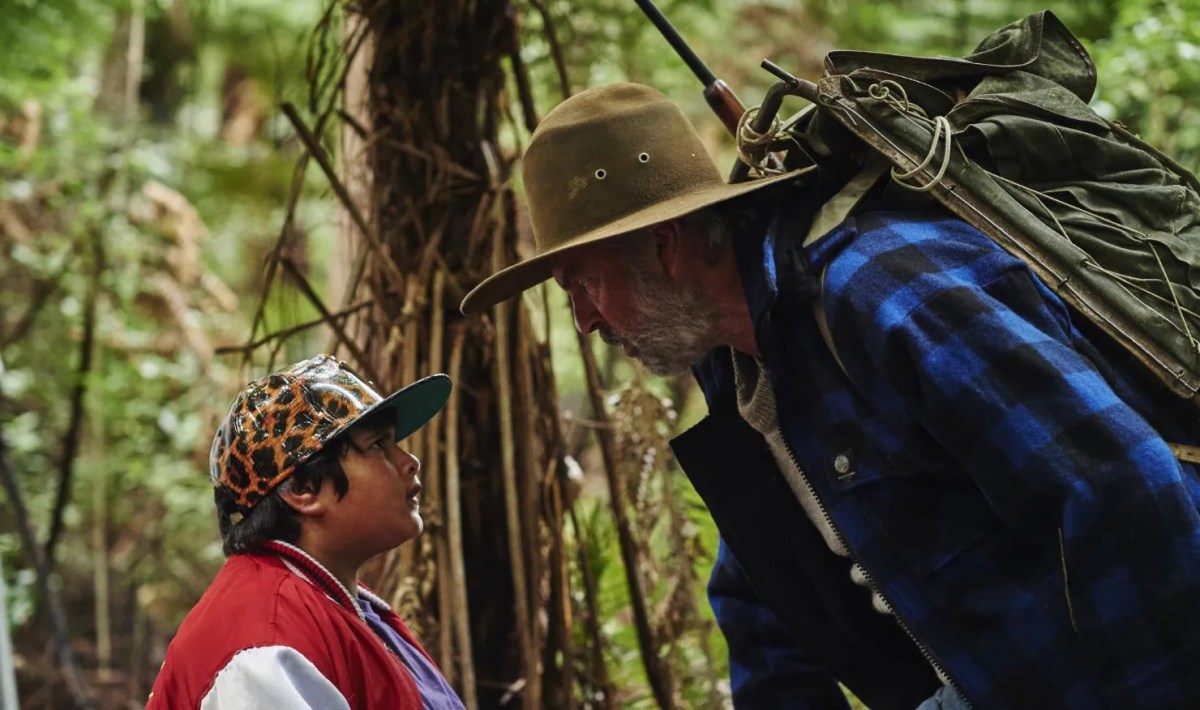
There’s the much-noted good bloke touch of insisting the Australian flag patch on his costume bear the Aboriginal golden sun, rather than the British Union Jack, in Paul Anderson’s under-appreciated, studio-shredded sci-fi ghost story Event Horizon (1997). There are delightfully wry comedies, including Rob Sitch’s outback treat, The Dish (2000) and Taika Waititi’s across the ditch-set, kooky, cute Hunt for the Wilderpeople (2016).
Neill was almost James Bond, losing out to Timothy Dalton. A raft of TV roles followed The Sullivans, including playing the ambitious Cardinal Thomas Wolsey on The Tudors, and the steely Brett Colby SC in The Twelve. He’s even voiced a profanity-spouting animatronic magpie in Dario Russo’s surreally satirical fairytale The Fox (2025).
One of the goodest guys in the business, adored by his colleagues and audiences alike, Neill’s also inhabited outright rotters, including the corrupt inspector Major Chester Campbell on Peaky Blinders, manipulatively cruel husband Alisdair Stewart in Jane Campion’s Oscar-winner, The Piano (1993), odious patriarch Lang in House of Hancock, and even the antichrist himself in Omen III: The Final Conflict (1981).
Cling on
How do you farewell a man so accomplished, no matter the egregious lack of Oscars, Globes or Cannes wreaths?
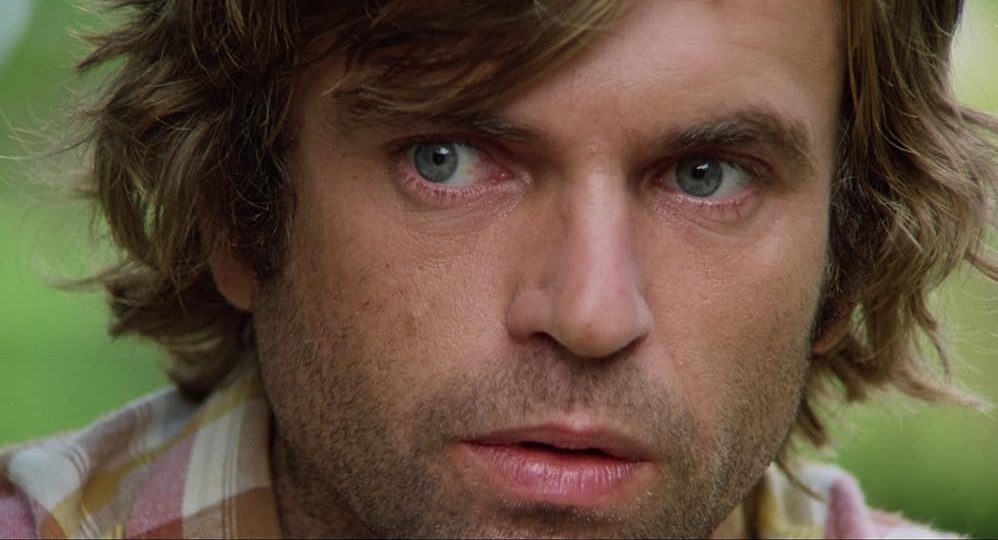
Sadly, I never scored the gift of interviewing Neill, though I was lucky enough to meet him in person. But from voraciously reading his own words in Did I Ever Tell You This?, I’m pretty sure he wouldn’t want us to take this awful loss too seriously.
Relaying various tales of unfortunately failed farewells, from his Uncle Ton’s ashes blowing back into the light plane flown by Neill’s cousin Mark somewhere over Aoraki Mount Cook, to his brother Michael’s bestie, Sebastain Black and his late wife Judy, having to be showered off and into the drains when an attempt to release their ashes at the beach literally stuck like clay to the assembled mourners.
Then there’s the possibly queer-coded story of his mum’s cousin, Edith Somerville, wanting her ashes to be laid to rest next to her novel-writing partner, Violet Ross. Only the cemetery at St Barrahane’s Church of Ireland, on a craggy clifftop overlooking Castlehaven Bay in West Cork, was too rocky, necessitating the use of IRA-sourced explosives to break ground. Spectacularly so. Rubble and her remains flew all over town.
You see, Neill’s own wise words are our greatest comfort:
‘Some people cling on, even after death. You just can’t shake them.’