
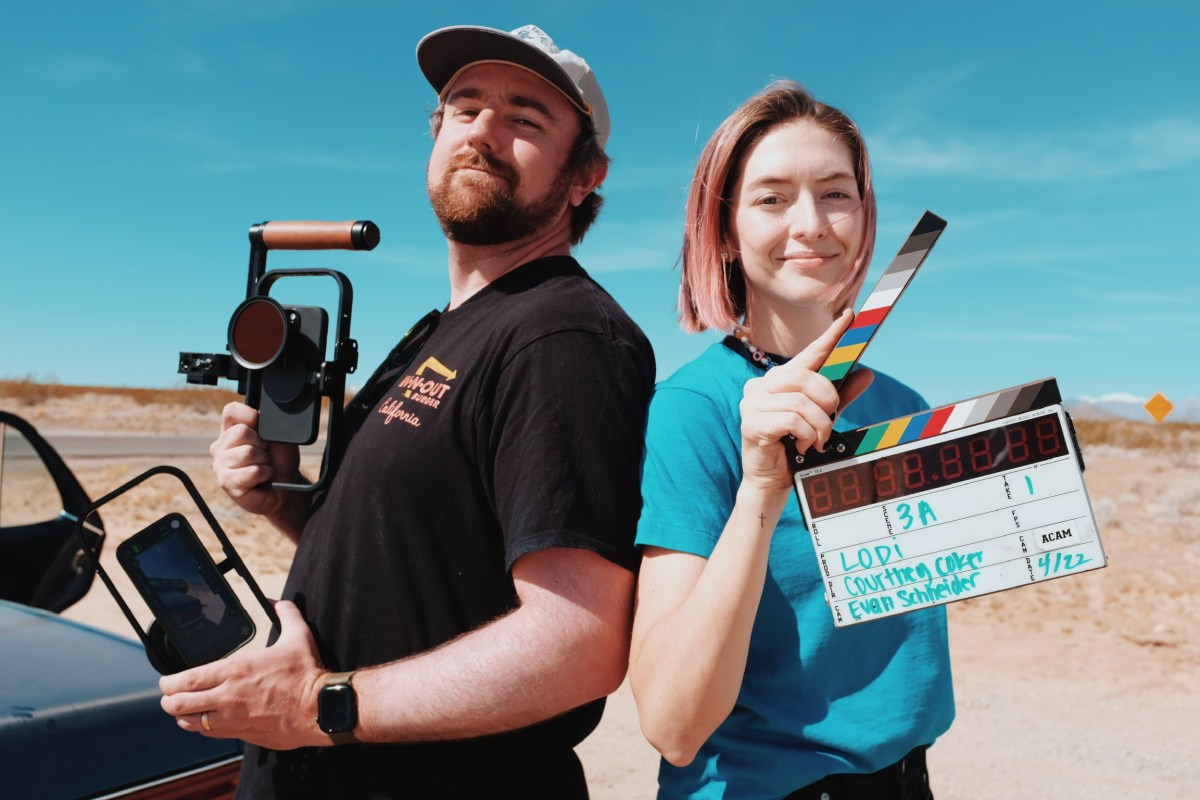
Presenting films shot entirely on the cameras we carry in our pockets, Australia’s SmartFone Flick Fest – more commonly known as SF3 – stages its award ceremony and finalist screenings at the 11th Annual Gala at the Sydney Opera House this weekend.
Co-founder Angela Blake was living in Los Angeles and completing her undergraduate degree in journalism when she first started thinking seriously about the filmmaking potential of smartphones.
She was filming a documentary on homeless war veterans when her DSLR camera overheated midway through a full day of interviews. With no time to reschedule, she finished the shoot on her iPhone 5.
During post-production editing, Blake was surprised to discover that the footage was indistinguishable. ‘I really couldn’t tell the difference,’ she recalls. ‘And so that planted the idea in my head.’
At the time, smartphone filmmaking was still fringe. Back in Australia, the idea continued to take shape while Blake was directing a play for Short+Sweet, a theatre festival showcasing 10-minute performances of new, original work from emerging artists.
It was here that Blake met actor Ali Crew, future co-founder of SF3. They felt Short+Sweet was amazing, Blake says, because ‘it gave everyone a chance’.
She adds: ‘Together, we thought, there’s nothing like that for filmmakers.’
SmartFone Flick Fest – quick links
Founding a filmmaking festival all about accessibility
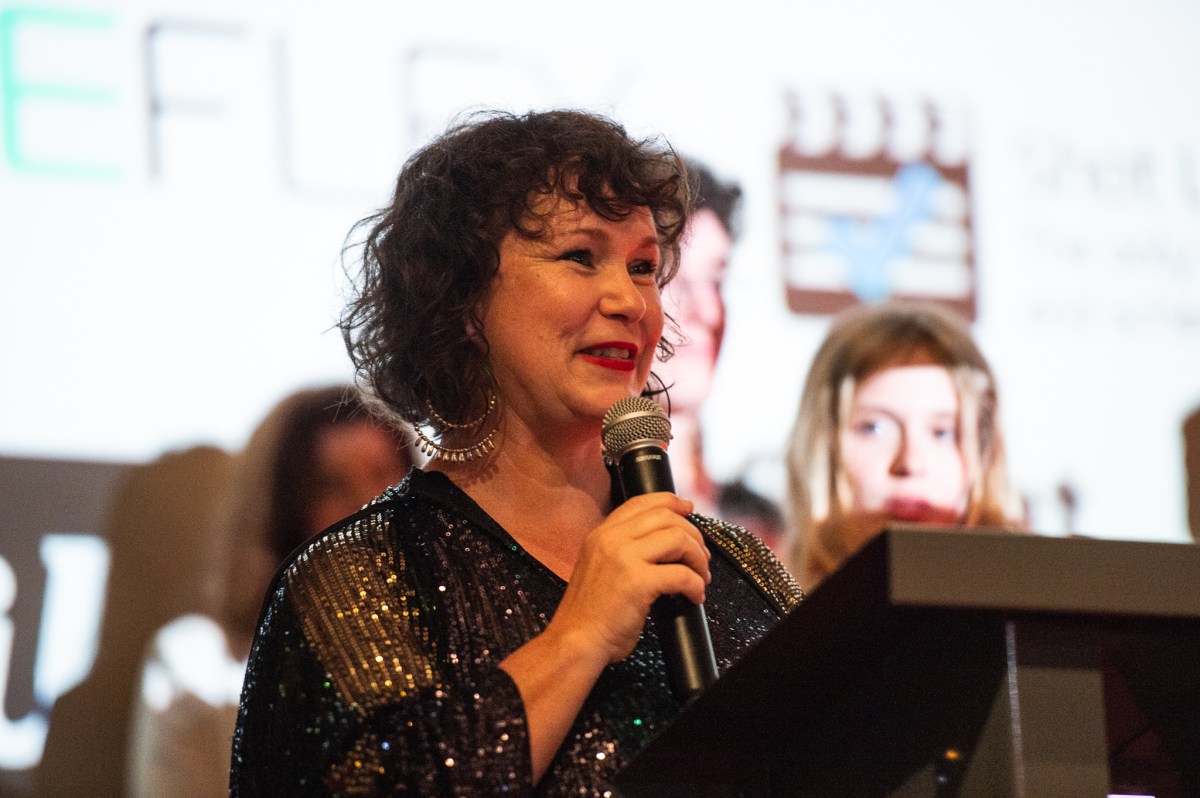
Blake and Crew began to envision a festival for filmmakers that championed accessibility. ‘The barrier to entry into film is so high,’ Blake explains, citing the cost of equipment and production as a major deterrent for aspiring creatives, both then and now. And as she says, ‘there’s no more accessible camera than a smartphone’.
The response was immediate. In its first year, SF3 received more than 550 entries.
‘We knew we were onto something,’ Blake laughs. ‘And of course, the smartphone technology has just grown so incredibly in our favour.’
Since then, the quality of films submitted to SF3 continues to rise, much to Blake’s excitement. Today, SF3 stands as one of the largest and most prestigious smartphone film festivals in the world, attracting seasoned professionals and newcomers alike.
’We have passed finalists that have won Oscars for best short film and then they’ve made their next film on an iPhone. It’s really amazing,’ Blake says with pride. ’But those first-time filmmakers, we don’t forget about them.’
In the festival’s popular SF3 Kids category, exclusive to creators under 18, this year’s gala features a finalist who is just 4 years old.
‘I’m a filmmaker and I didn’t make my first film until I was in my 20s. I’m so jealous of him,’ she jokes.
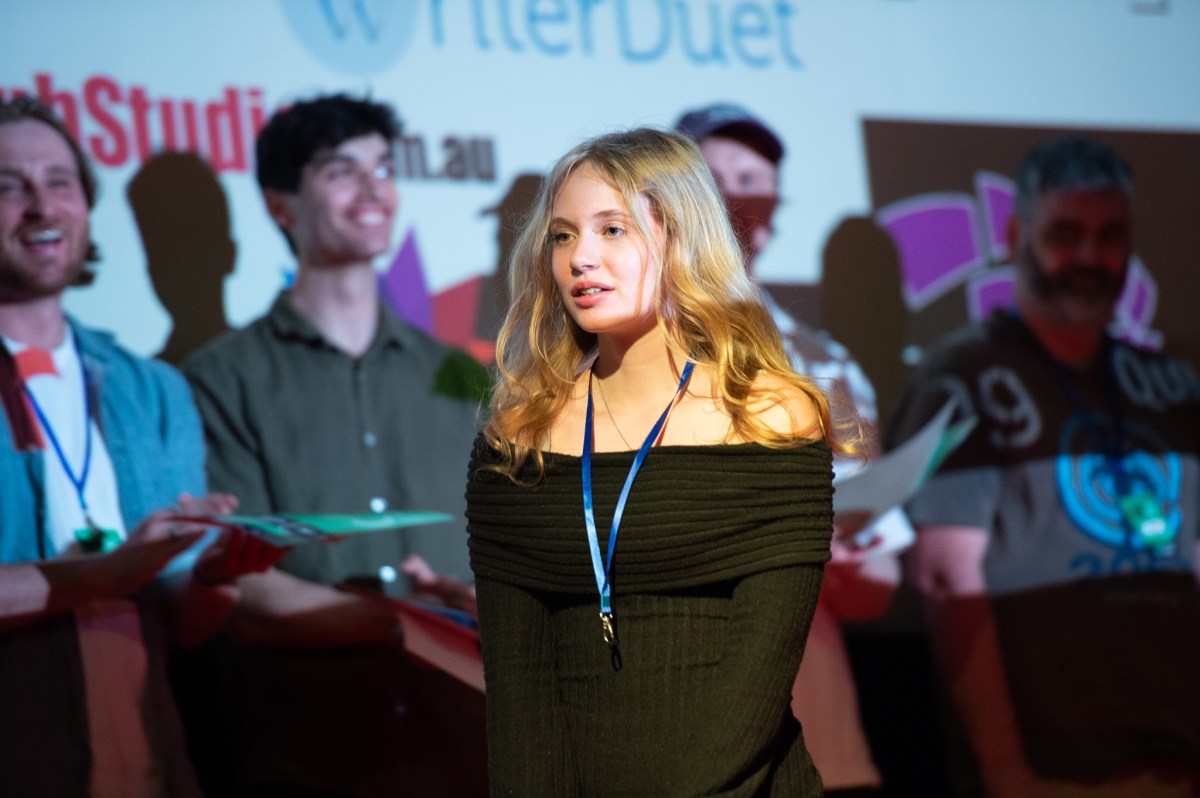
One of last year’s SF3 finalists, Charli Fletcher, made history when her supernatural horror short Don’t Ignore Me won Best Film. Fletcher was just 15 years old. This same project has now become the first phone-shot film nominated for an Australian Academy of Cinema and Television Arts award, and Charli is the youngest nominee in AACTA history.
Blake is passionate about spurring on emerging talent, and says SF3’s greatest success is helping to get Australian stories made.‘
Written by humans, powered by AI: SF3’s hybrid future
SF3 continues to prioritise innovation with the return of its Best AI Film Award for a second year. The category has seen a fourfold increase in submissions since its introduction. Blake acknowledges the controversy associated with AI in creative spaces but remains undeterred, saying AI is only getting bigger
’We’ve faced a lot of backlash already simply from doing smartphone filmmaking,’ Blake reflects. ‘SF3 has been at the forefront of innovative technology in filmmaking since our inception [and] if we don’t do an AI category, we’re going to get left behind.’
This year, SF3 Gala includes the work of an AI film finalist for the first time. Written, directed and starring Melburnian filmmaker Tez Frost, The 5-Minute Empire is a hybrid of live-action performance and AI-generated mise-en-scène.
Shot in a single afternoon, the film follows Frost travelling to Monaco, driving a Lamborghini, and flying in helicopters – scenarios that Blake argues would be impossible without the adoption of AI.
’He’s not taking any jobs from anyone because this film could simply not exist [without AI]. The only budget he would have had for production is his AI technology,’ Blake argues.
A screenwriter herself, Blake is firm that technology must serve original storytelling, not replace it. SF3’s AI Film category requires all films to be written by a human, even if AI is used in production.
A home for first-time filmmakers
Providing an accessible platform for emerging creators remains the heart of SF3. Blake is especially proud that this year’s gala sees six first-time filmmakers screening alongside 10 professionals.
‘Our red carpet is open for everybody,’ she says. ‘We just like good stories.’
One such first-time filmmaker is Nehir Hatipoglu, the writer, producer and leading lady of SUPERBOYFRIEND.
Centred on the elusive ideal of ‘the perfect partner,’ SUPERBOYFRIEND is a contemporary blend of horror and science fiction,.
Hatipoglu explains: ‘Being a single woman in my 20s dating, I always felt like if I could change this one thing about my partner, it’d be perfect. I would try and try and try to change and mold them [but] it would never work.’ Hatipoglu says.
’I needed to put this energy – all of this frustration – into a film [and] explore the idea of what would happen if you did create the perfect partner.’
That sense of urgency extended to the film’s production. Enabled by the accessibility of smartphone filmmaking, SUPERBOYFRIEND was made under tight budgetary constraints with a skeletal crew.
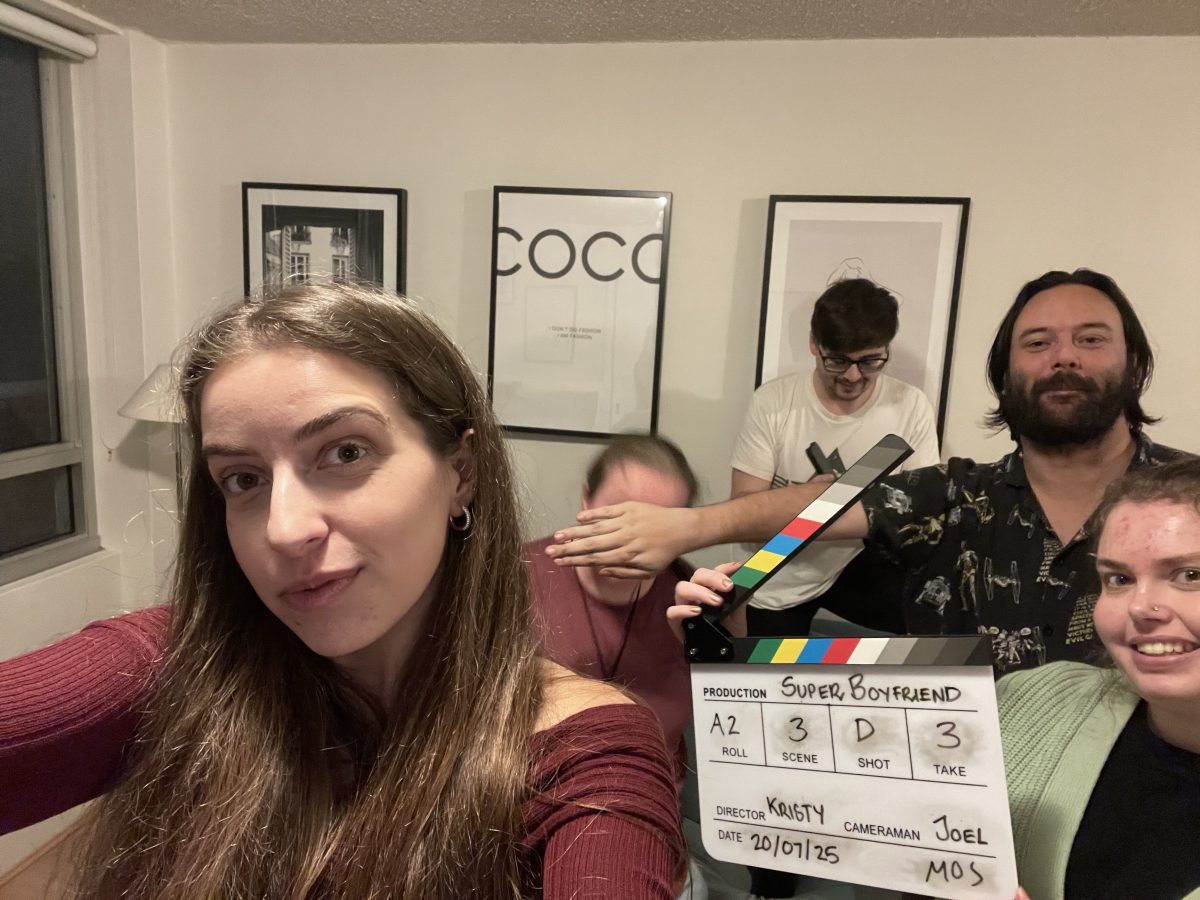
’We shot this film in my tiny studio apartment,’ Hatipoglu explains, adding that smartphone filming allowed for a nimbleness that traditional, larger-scale equipment simply wouldn’t permit. ’I can’t imagine bringing a dolly and gear and a whole film crew – we were cramped with five people in there.’
Filming on an iPhone also presented unexpected creative possibilities in post-production. Rather than chasing a polished Hollywood finish, the team leaned into a more stylised, retro aesthetic that was ideal for the material.
SUPERBOYFRIEND director Kristy McDonnell adds that the accessibility of smartphone filmmaking helped achieve the team’s creative vision, and points to the team’s use of Blackmagic – a free mobile app that provides professional control over ISO, shutter angle, white balance and focus – with a gimbal for stabilisation.
For McDonnell, but the experience opened her eyes to a broader shift taking place in the world of filmmaking. ’We’re going into a different, more digital industry,’ she says. ’Anyone can pick up a phone and just create anything, [whether that’s] a short film or even social media content.’
For Hatipoglu, the momentum continues, with her next screenplay, The Forefather, submitted to TropFest 2026, which again saw McDonnell join the production team
Together, the team behind SUPERBOYFRIEND emerge more committed than ever to pursuing careers in filmmaking – a trajectory that echoes Blake’s founding vision for SF3.
As Blake says, SF3 is all about ‘allowing access to tell stories with cameras that people already own, without waiting for money, without waiting for cameras, without waiting for somebody else – the gatekeepers – to say yes. It’s giving the power back to creators.’
The SF3 SmartFone Flick Fest Annual Gala Finalists Screening & Awards ceremony takes place at Sydney Opera House on 23 January, with the Kids Screening & Awards Ceremony on 24 January. The SF3 Mini & Feature Film Screening continues at Chauvel Cinemas in Paddington, Sydney on 25 January.
This article is published as part of ArtsHub’s Creative Journalism Fellowship, an initiative supported by the NSW Government through Create NSW.