When actors of the stature and composure of Cate Blanchett, Rosamund Pike and Cynthia Erivo lose their cool at errant theatre audience behaviour, it’s a big sign that standards are hitting an all-time low.
A recent string of stern statements and outbursts from high-profile actors reveal many theatre workers have had enough of bad theatre etiquette. From patrons waving phone screens in performers’ faces, to seeing audience members’ devices light up in their laps mid-show, things have gotten so bad they are now pleading for a great reset in standards.
Whether the declines in behaviour have happened incrementally over the past five years (can we blame the Covid break for wiping our memories of common theatre decency?) or whether this year marks a distressing tipping point into rock-bottom theatre-going degeneracy, it seems now is the time for a public service announcement to remind everyone of some basic theatre protocols that might help us out of this jam.
Based on the ArtsHub editorial team’s own knowledge and the expertise of some of the nations’ most experienced theatre workers, the following tips are designed to assist everyone out of these dark times.
Modern theatre etiquette explained – quick links
1. Read your ticket carefully – it’s more than a receipt of purchase
Despite its small size and inconsequential place in your email inbox or wallet, your theatre ticket is an important document that has as much relevance to your pre-show preparation as it does to your ability to enter the theatre and see the show on the night.
Your tickets’ pre-show details include:
- The venue’s address
- The show’s start time, which is when the show actually starts, not the theatre’s ‘doors open’ time like for some music gigs
- The show’s duration is sometimes listed too, including whether or not there is an interval
- Accessibility information and content warnings may also be listed, including any hazardous effects that may be part of the show
If you can’t see this info on your ticket, you can look it up on the show’s online booking page, because all the best theatre attendees read the fine print ahead of time and know exactly where to go and when.
2. Swot up on your seating allocation pre-show
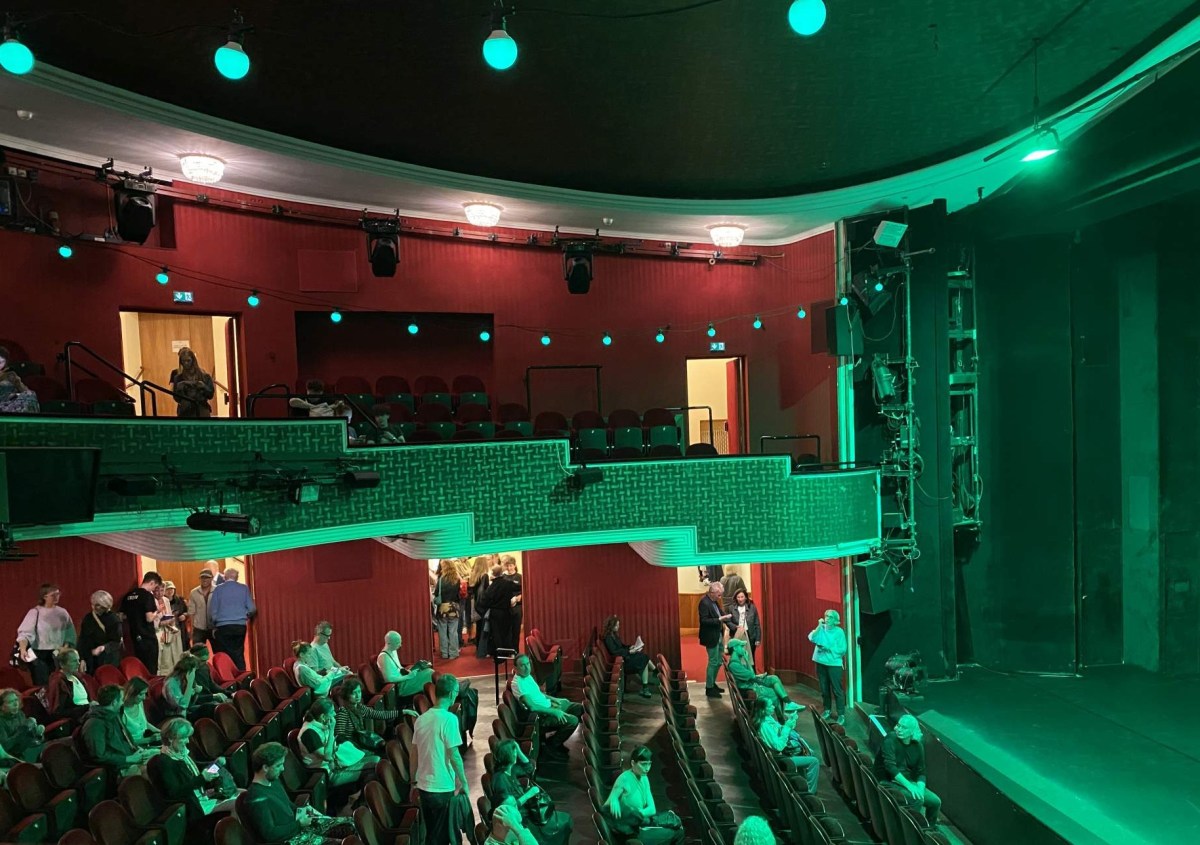
Whether you’ve splashed out on premium A class stall seats or snagged a spot in the dress circle, it’s up to you to mentally prepare for where you’ll be sitting and how that might affect your experience of the show.
This tip is especially important for those allocated ‘restricted viewing’ seats (which are often a little cheaper than full-price tickets). Several theatre ushers ArtsHub spoke to for this story mentioned that ill-prepared patrons with restricted view seats are among the hardest to handle at interval time, with their demands for seats with ’proper’ views, or requests for refunds because they can’t see enough of the action.
But like with any other purchase in life, follow the ‘buyer beware’ rule to avoid nasty surprises. It’s up to you to gather the facts about your seat before putting your money down.
3. Why not dress up? Smart always beats sloppy
Among the most talked-about issue for front of house staff right now is the troubling decline in dress standards at the theatre.
Numerous ushers ArtsHub spoke to have noticed a spike in tracksuit pants and flip-flop sightings at the theatre. This surge is leading them to worry about a ‘new normal’ for some theatre attendees.

That said, it’s important to be comfortable when you’re out at a show. Jeans and sneakers are totally acceptable. But there are some lines that shouldn’t be crossed, and wearing your couch trackies or gardening get-up to the theatre is just not OK.
4. There is no such thing as being fashionably late to the theatre
Always arrive at least 15 minutes prior to the show’s start time. This allows for some pre-show downtime and is also good manners.
As reported to ArtsHub by theatre staff around the country, there is nothing more frustrating for ushers than dealing with huge crowds who arrive on the dot of the show’s start time. This can lead to unhelpful delays and make the show’s start process harder than it needs to be for everyone.
It’s also worth noting that lockouts may apply to certain shows, making it doubly important to arrive on time.
5. The bell is your cue to take your seat
Believe it or not, some things are still better done by hand than by algorithm, and the high-pitched pre-show ring you might hear in the theatre foyer is one of those things. (These days most larger theatres use a ‘hit button’ alert system for this job, but you still might hear a hand-held bell if you’re lucky!)
This ringing or bell sound is your signal the show is about to start. You must therefore stop your scintillating foyer conversation and go immediately to your seat. (Please don’t go straight to the bathroom – you should have done that before now.)
6. Once seated, phones off and out of sight
This issue is undoubtedly the most serious one on the list of behavioural problems in theatres everywhere right now (and has been for some time).
Front of house staff across the globe are stumped as to how best to police the ‘phones off in the theatre’ rule without starting in-theatre audience punching matches (or as is more common, without disrupting other patrons’ experience of the show).
To help everyone out, please turn off your phone or set it to ‘flight mode’ as the first thing you do as you take your seat.
The general consensus is that the only time it’s OK to get out your phone or camera is during the cast’s curtain call at the end of the show. Unless you’ve been instructed not to, it’s usually fine to snap a photo or short video at this end-point of the performance as the cast and musicians (and sometimes the crew) are taking their bows.
ArtsHub: Little Shop of Horrors to tour Australia following sell-out Brisbane season
Also, it should go without saying that checking notifications on any wearable digital device (like a smartwatch) during the show is just as bad as pulling your phone out and checking it – so don’t do that either.
In fact, why not introduce a new in-theatre routine that goes:
Step 1: Sit down.
Step 2: Find your phone and switch it off or on silent.
Step 3: Pretend you don’t have your phone with you tonight (it’s at home or another safe place).
Step 4: Attune all your senses to the space you are in and the stage in front of you, because that’s where the real fun is tonight and you’ll never get to feel it in this same way again! As Opera Australia’s newly-appointed Head of Opera Amy Lane puts it, ‘When you’re an audience member, you’re taking part in the show experience actively, not passively, and everyone in the theatre is part of the one team. It’s important to uphold that pledge to each other.’
7. When the house lights go off, so does your conversation
Most people can recall a night at the theatre being compromised by a loud talker nearby. But don’t let that nuisance chatterer be you!
While pre-show chats in your seat while the house lights are still on are encouraged, when those lights go down, so should the volume of your conversation.
Once everyone’s in the darkness and the show begins, the only potentially permissible audible talk you might get away with is occasional tiny whispered exchanges with your date – because that’s part of the fun of the experience, when you can share it with someone – right?
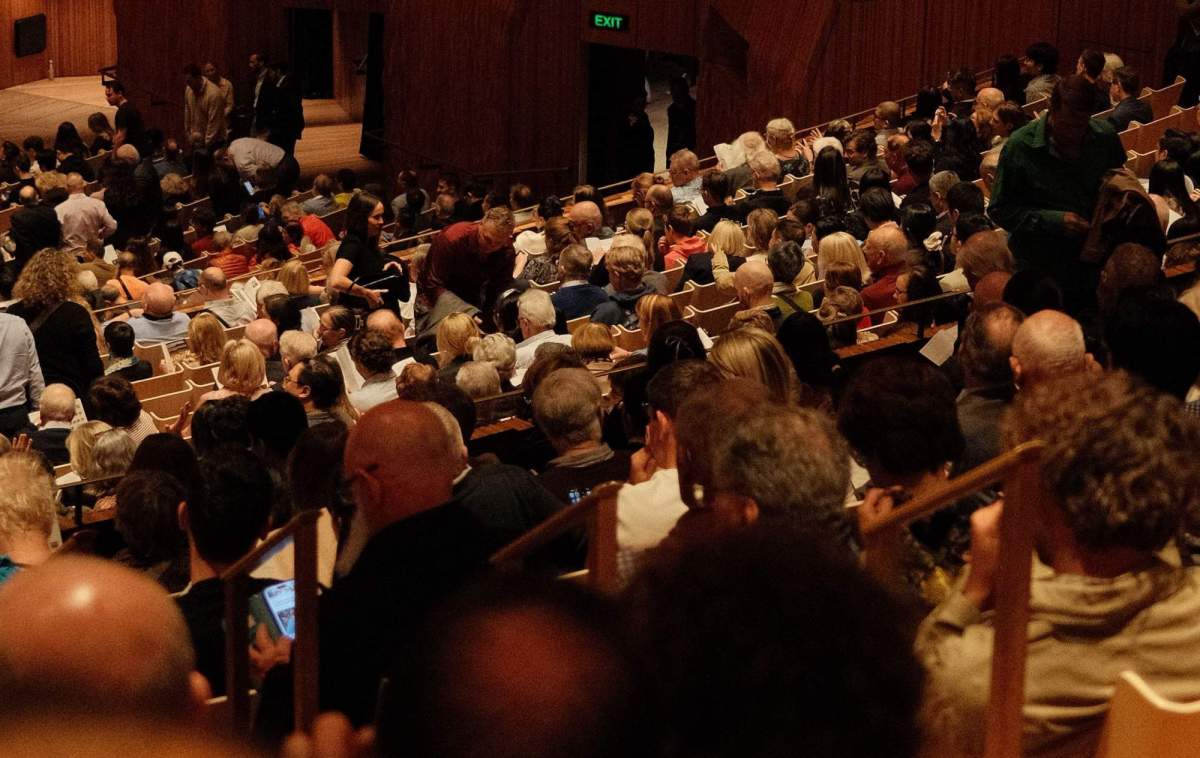
Also note that no talking also means no singing. Unless a performer is explicitly instructing the crowd to sing along or chant, or the whole room is on their feet belting out a tune because the moment calls for it, it’s polite to keep your singing voice quiet. If you’re particularly moved by a performance of one of your favourite songs, you can silently mouth along to the words and shed a tear, like an adult.
8. Tiny snacks are OK but your roast chicken stays home
This one seems like common sense, but you’d be surprised by the number of ushers who’ve seen the equivalent of three course meals (mostly from Maccas) brought in to a show.
To avoid ruining others’ enjoyment of the theatre’s aroma-free state, have your main meal before or after the show. Also limit mid-show snacks to candy-sized munchies that can be eaten discreetly.
Also, it’s fine to reach for a mint or a cough drop during a show, but any more disruptive rustling and crinkling of packets is inconsiderate.
Final note: for those whose appetite awakens during the show, if the performance has an interval, that’s a good time to carb-load if you need to. But still, be polite about eating in the foyer or in the theatre during a show break (always go for snack bars over hot roasts or spaghetti bolognese).
9. Know when to clap, cheer and stamp your feet
This final topic has expert opinion divided on exactly when and how to applaud ‘properly’ during and after a show. That said, everyone consulted for this article agrees that any feet stamping is done only at the end of a performance, during its curtain call and only after several rounds of clapping to show maximum appreciation for a totally standout show.
Due to divergent views on how to ‘clap correctly’, the best advice ArtsHub can offer here is for first-time attendees to the artforms listed below, where specific applause etiquette nuances might apply.
Symphony orchestras: These musical performances generally comprise works that contain several different movements within each piece. That means that while the players might appear to have finished a piece of music, it’s merely a pause between movements, and the custom is to hold your applause until the very end of each piece. For first-timers, until you become better attuned to the orchestral show flow, it’s a good idea to watch and wait for others to start clapping and then join in.
Circus: These acrobatic performances will likely feature spectacular physical feats or ‘tricks’, and when the artists complete these death-defying acts, it’s perfectly acceptable to give them claps and cheers once they stick their landings. Then again, you needn’t feel compelled to cheer every fabulous backflip on stage. It’s also fine to save your main appreciation for the show’s final bows.
Musical theatre and opera: A similar applause rhythm to circus can apply to a musical theatre or opera show where clapping and cheering and the end of some musical numbers is the norm. In fact, that’s one of the conveniences of these genres, in that mostly, its songs offer audiences clear pause points to clap and cheer throughout.
Ballet: Ballets can be trickier to read in terms of when to applaud dancers’ skills mid-show. As described by a seasoned theatre usher, ‘Audiences need to give dancers room to do their thing and save their big claps and cheers until the end of their scenes’ – implying that when a lot of cheering goes on after every amazing move, it can disrupt the arc of the show and its story.
ArtsHub: Eddie Perfect brings a new comedy to Malthouse
Also, a quick word on how to express yourself if you are not enjoying a show. Remember that mean-spirited and disruptive heckling is never cool, and if you’re really not feeling a performance, silence can often do the talking for you. (There’s a stark difference between a ‘polite applause’ and an enthusiastic standing ovation, for example.)
Furthermore, in advice that applies to the opposite end of the heckling scale, when a really famous or respected actor appears on stage for the first time, it’s not unusual for them to be met with a big cheer and applause (and that’s great). But for everyone’s sake, you should refrain from screaming at the top of your lungs every time your favourite star-studded celeb walks on.
As Gillian Anderson has recently found out, nightly disruptive behaviour from over-excited super-fans in the front row is a major workplace hazard for performers.
At the end of the day, and regardless of the style of live performance you’re attending, it’s up to you how you choose to express your delight or distaste for that show. If you’re loving a certain scene or a standout moment and you want the room to know – you can express that as you see fit. After all, it’s those impromptu responses to the art that fuel the fire of live performance (and that’s another huge part of its magic).
See you in the foyer!