
Griffith University’s 2025 Culture for Climate report identified that 98% of Australian theatre-makers are concerned about climate change, and 74% believe the sector has a responsibility to act. Yet almost four in five felt the sector placed only ‘little to medium importance’ on addressing climate change.
So what could practitioners be doing better?
Theatre’s environmental footprint – quick links
Current sustainability practices
At the moment, theatre companies undertake a range of sustainability practices, including reusing set pieces in different shows and ethically sourcing and constructing sets.
Victor Kalka is a Sydney-based independent director and designer with credits including Virginia Plain Theatre Company’s Grain in the Blood, Chef and The Pitchfork Disney who says he ‘enjoys the creative challenge of working sustainably’.

‘There are sheets of medium-density fibreboard that I bought in 2019,’ Kalka says, ‘that have been in almost all of the shows I’ve made since.’
Another example of sustainability principles in set design comes from Sydney’s Belvoir St Theatre. Its production of The Wrong Gods used recycled and reused timber to create swings and benches. The pieces were constructed without metal screws, with weaves made from unbleached, natural cotton.
Other theatre companies have joined sustainability communities. In 2025, touring service company Arts on Tour and the sustainability focused community initiative Theatre Green Book Australia created The Green Circle.
The Green Circle saw seven theatre companies commit to adopting environmentally sustainable practices, in line with the Theatre Green Book Australia framework. Through a series of meetings, workshops and discussions, members developed strategies to achieve the framework’s baseline sustainability standards.
Dr Grace Nye-Butler, Co-Director of Theatre Green Book Australia, said The Green Circle has already had a positive impact.
‘The Green Circle, our shared project with Arts on Tour, has really shown what’s possible when the Theatre Green Book Australia becomes part of everyday theatre-making,’ she said.
‘In 2025, artists and companies across Sydney and Melbourne embraced sustainability as an opportunity for collaboration and creativity, transforming it into a source of inspiration and innovation. The Green Book gives us a common language, but it’s projects like the Green Circle that help turn that language into real action and community momentum.’
Other groups go further, placing sustainability at the core of their work. For Izabella Louk, founder of Sydney’s Blinking Light Theatre Company, ‘sustainability is at the forefront of everything I do.’ Her company’s ethos sets out rules for the use of materials – from lobby signage to hand sanitiser bottles – and ensures that 90% of materials have had a previous life with the remaining 10% sourced sustainably and locally. The ethos also sets out that 90% of materials are ‘rehomed’ after a show.

Educational institutions are also taking action. The National Institute of Dramatic Art in Sydney has a dedicated Sustainability Manager, Imogen Ross. Ross works with the institute’s educators and practitioners to embed circular, low‑carbon and eco creative methods into contemporary performance training.
Despite these measures, more can be done.
Understanding the hidden harms
One step towards improving sustainability practices is for theatre practitioners to recognise the less conspicuous or visible ways that productions can cause environmental harm. Kalka and Ross both see issues with the use of unsustainably sourced materials in a production’s design build, without thought to their disposal.
On materials, Ross says that ‘materials with high embodied carbon, such as foams, virgin plastics and polyester fabrics are relied heavily on, are often used once and then discarded.’
She also notes that ‘energy use, particularly from older tungsten lighting rigs, can be another quiet culprit.’
On disposal, Kalka says that throwing away materials is ‘a logistical reality’ for companies that cannot store them. He argues this action undermines the responsible manner in which those materials were sourced.
Louk believes theatre’s environmental harm ‘extends well beyond what we see on the stage.’ She identifies travel to and from a theatre, choices of bank and ticketing platforms, and AI use as the arts sector’s ‘hidden environmental costs’.
‘It’s easy to equate our environmental harm with what we tangibly see on stage,’ she says. ‘But our habits and practices, where we keep our money, and the tools we use in the process all tell a story as well.’
‘A big part of the climate fight is understanding where our money is stored. Some banks, for example, invest their funds in materials and practices which are bad for the planet – so by storing our money with them, those actions are being supported.’
Touring a production also has hidden but substantial harms. Arts on Tour reports that the 18 tours they managed in 2024 produced 666 tonnes of carbon dioxide and other greenhouse gases. That figure considers not only emissions from flights and transport, but also discreet factors including accommodation, freight and food.
Taking action
Once environmental harms are understood, a further step for theatre-makers is to embed sustainability in their actions. Louk says that for Blinking Light, this becomes a group effort.
‘I tell everyone who works with Blinking Light that we are each other’s best resource, and to challenge ourselves to create sustainably together.’
Louk adds, ‘Recently we decided against using haze in a production, since the single-use nature of haze fluid doesn’t align with our values. What ultimately worked was a collaboration between our sound designer, composer, lighting designer and movement director to create a brooding and tense atmosphere. That was only possible by dismantling the hierarchy in the rehearsal room.’
Blinking Light has ‘stringent sustainability guidelines,’ Louk says, and holds sustainability training at the start of every production.
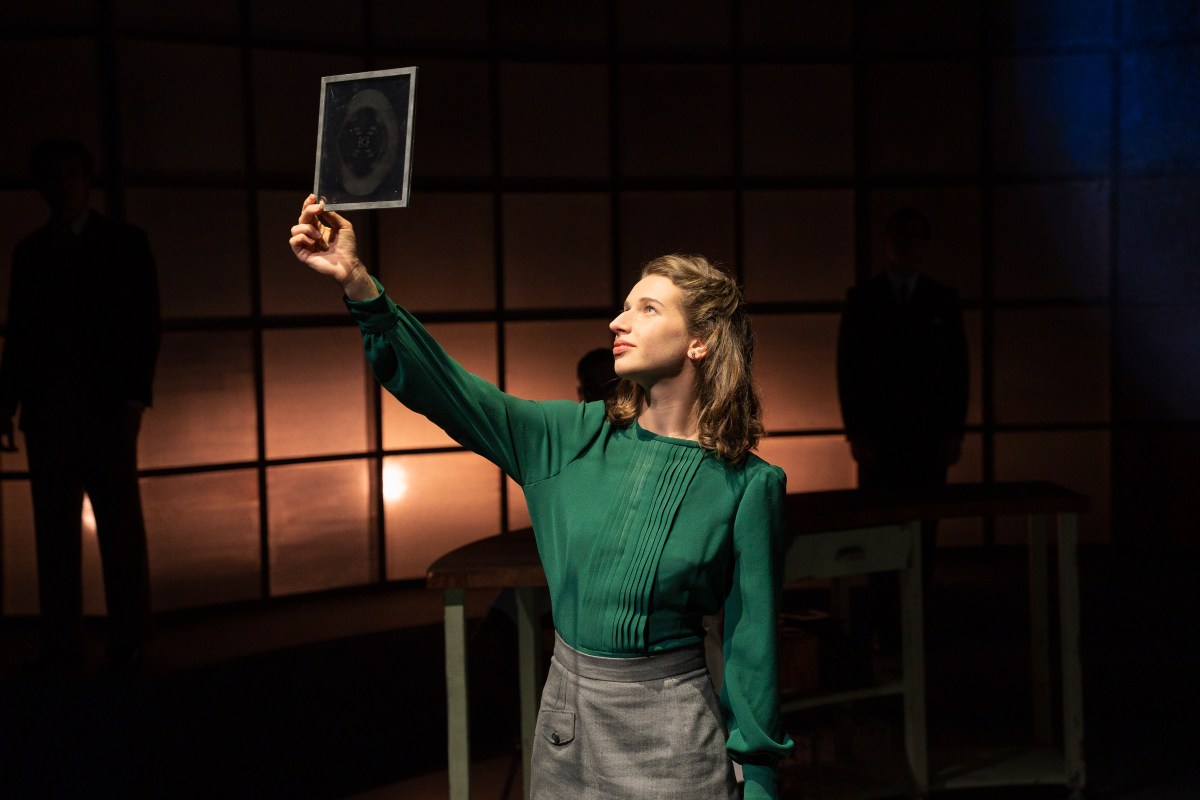
Ross says that at NIDA, ‘we are embedding sustainable thinking into design concepts and productions using methodologies like the Theatre Green Book, as well as ecoscenography –an approach to performance design that celebrates eco-creative responses to place, and prioritises the imaginative reuse of materials. Students explore circularity, eco-efficiencies and low-carbon alternatives, guided by real industry frameworks. It’s iterative, but it’s becoming a core part of how we teach and create.’
Kalka uses sustainability as a parameter for his design work. ‘To major organisation and established designers, I’d like to throw down the challenge to make sustainability part of a production’s brief,’ he said.
He also asked, ‘can we please stop decanting drinks into plastic cups to take in to the theatre?’
Some theatre-focused groups are already trying to embed environmentally conscious practices into their work. Bell Shakespeare, CPD Theatre Producers, Critical Stages and Monkey Baa Theatre Company have all committed to being carbon neutral by 2030. NIDA, which launched its Green Plan sustainability strategy in 2022, is on a path to achieving net zero by 2050, with long-term carbon reduction strategies happening across its main campus and operations.
Sustainability resources for theatre practitioners
A third step theatre practitioners can take is making the most of pre-existing sustainability resources.
The resource most cited by Kalka, Louk and Ross was the Theatre Green Book Australia – a practical guide to help theatre companies improve their environmental footprint. Arts on Tour is currently running a series of webinars about the framework. The Green Circle initiative, which helps theatre groups implement it, is currently calling for more participants.
There are further resources to assist more specialised practitioners. Arts on Tour’s Green Touring Toolkit is available for free, and can help theatre-makers and tour managers improve the sustainability of their travelling productions. Sustainable Theatre Australia’s Green Guides outline sustainability measures for production design, stage management, marketing and end-of-show procedures, and the Sustainable Entertainment Alliance’s Green Production Guide has toolkits for green catering, production office spaces, and writing about climate change.
Resource hubs from international organisations are also helpful. Ross points to sustainability hubs provided by the UK-based Julie’s Bicycle and US-based Broadway Green Alliance. She also notes that industry-specific ‘carbon calculators’ can help theatre companies calculate their emissions footprint. These are offered for free by Theatre Green Book Australia, Circulate ARUP and Julie’s Bicycle.
Finally, Creative Australia recently launched Creative Climate, a new body to help Australia’s arts and cultural sector tackle the climate crisis. Its tools and resources include access to First Nations-led initiatives, frameworks to integrate carbon reduction into programming, and links to sustainability-focused networks for activists, teachers and independent practitioners.
The financial and reputational impacts
If theatre-makers can successfully reduce their environmental damage, then their economic standing and branding improve.
Speaking as independent theatre-makers, Kalka and Louk say that productions that prioritise sustainability often come in under budget, which in turn increases overall profit margins. However, both note that it is a question of scale and resources. Louk factors in extra time when planning how a production will work sustainably.
Ross adds: ‘Short-term, sustainability requires upfront investment, but long-term, investment in peoples’ skills and energy efficiencies always saves money.’
All agree that acting sustainably is positive for a company’s image.
‘Audiences increasingly value environmental responsibility, and companies that demonstrate it build trust and alignment with contemporary values,’ Ross says.
What the future looks like
Theatre-makers are not to blame for the climate crisis but if they do not take action to address it, they will be accountable for its escalation. With sustainability resources freely available and the opportunity to make meaningful improvements, theatre practitioners can have a positive impact if they want to.
If practitioners do nothing, the future is bleak. Ross says the cost of creating theatre will rise as environmental impacts intensify, and climate change affects energy systems and supply chains. Kalka notes the increased cost of living brought about by the climate crisis could mean less money for theatre tickets.
Louk says doing nothing means neglecting one’s responsibilities, however, she also believes any step forward will be a good one.
‘We have a responsibility to the Indigenous land owners, to each other, and to future generations to safeguard this planet,’ she says. ‘And we have the knowledge, technology, and people power to divert this climate crisis. There is so much hope for our planet if we work in community.
‘You don’t have to do it perfectly. You just have to start trying. It may feel like a drop in the ocean, but if we all start respecting the planet in our work, think about the collective impact we can have.’
This article is published as part of ArtsHub’s Creative Journalism Fellowship, an initiative supported by the NSW Government through Create NSW.