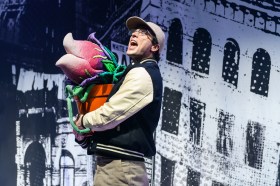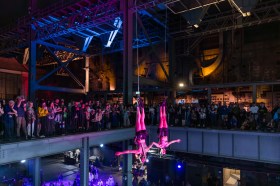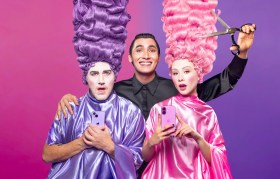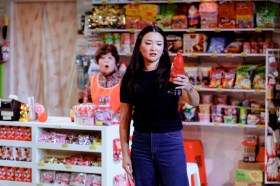

This year’s REMIX Summit (14 September) hosted by the WA Museum Boola Bardip and the Art Gallery of Western Australia (AGWA), explored the themes of culture, technology and entrepreneurship with a focus on the booming immersive entertainment market. Incorporating digital and hybrid physical environments, the growth and demand for immersive experiences has been dubbed “The Immersive Revolution”.
As Tullin explained, an outfit such as London-based Secret Cinema, which started from humble beginnings, was able to grow into an immersive giant after acquiring $10 million in crowd equity. Last year, Secret Cinema was acquired by TodayTix Group, a London-based entertainment company, for over an apparent $100 million. Other popular immersive entertainment behemoths have followed similar trajectories, using a variety of funding models, marketing and data research to expand their reach and popularity. This includes Meow Wolf, which provides Disney-on-acid experiences described by Fast Company as ‘immersive art installations that layer trippy visuals with cosmic storytelling,’ and Fever, which provides immersive exhibitions and interactive theatrical experiences, and is valued at upward of US$1.8 billion (AU$2.8 billion).