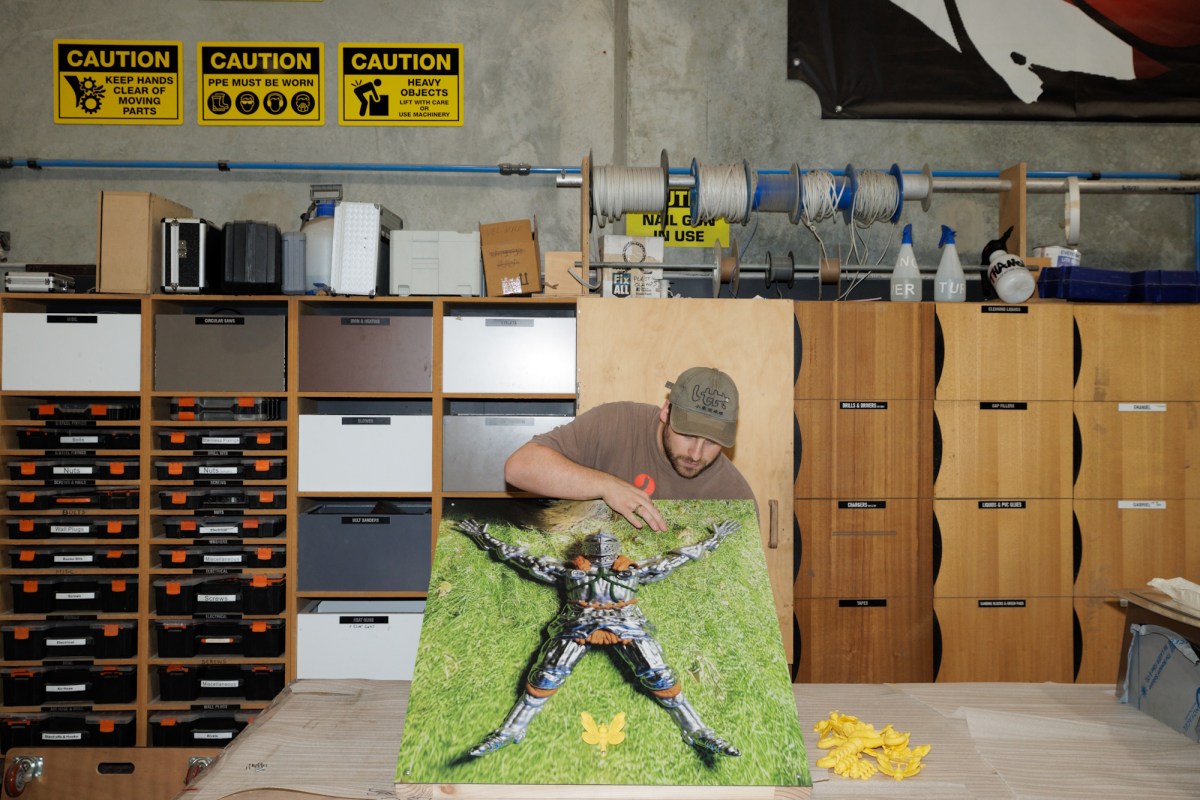
For six weeks, artist and designer Tim Meakins gave himself permission to fail in the best possible way, exploring new ideas, trying new approaches and trusting his instincts without having a fixed outcome in mind. As a mid-career artist, that freedom was a rare thing.
Meakins had received a six-week residency at Forrest Hall in Perth from the Minderoo Artist Fund and used this time to step outside his usual methods of working. His project, Laying Down and Looking Up, explores the tension between digital and physical making through painting, airbrushing, sculpture, moulding and drawing.
‘I had the opportunity to make, fail, test and experiment in an environment where that is the point,’ says Meakins. ‘It gave me the courage to try things I had never done before.’
Minderoo Artists Fund – quick links
A space for ‘complete focus’
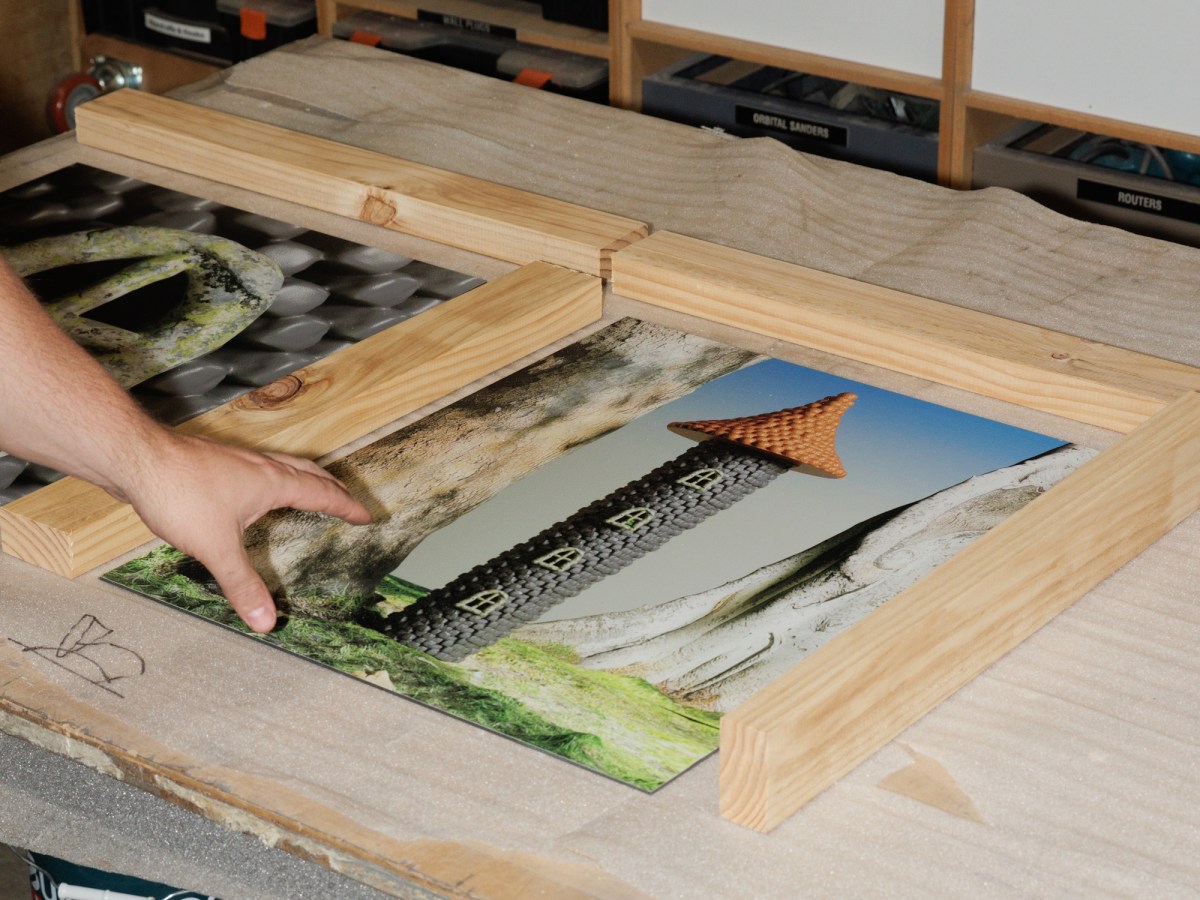
For Meakins, the result was an exhibition of 15 new pieces, linked by ideas that may feed into future works, while others are finished in their own ways. Perhaps more significantly, the Minderoo residency changed how he thought about his art practice.
‘It was probably the first time in my life that I really felt complete focus,’ he says. ‘My confidence was through the roof and I left feeling like I could push my practice further than I had before.’
For writer, performer and storyteller Andrea Gibbs, that freedom looked a little different. Winning a Minderoo Artist Fund grant gave her the opportunity to write The Way We Go About It, a new play about voluntary assisted dying, one of the most confronting subjects she has tackled to date.
‘I’ve really challenged myself with this piece,’ says Gibbs. ‘There are much easier things I could have written about!’
There are major medical, legal, political and ethical dimensions to VAD, but Gibbs takes a much more intimate perspective. At the centre of her play is Harvey, a 33-year-old primary school teacher who chooses voluntary assisted dying, and his mother, who desperately wants him to live.
‘It is a huge subject, but underneath all of that, it’s also deeply human,’ says Gibbs. ‘How do we choose to live when we know we’re going to die? What happens to the people who love us when our choice breaks their hearts?’
The $35,000 Minderoo grant enabled Gibbs to undertake extensive research on VAD, including attending an international conference and speaking with doctors, nurses, researchers and families who have actually lived through it. This research changed her thinking about the how she could investigate the subject in her play.
From research to practice
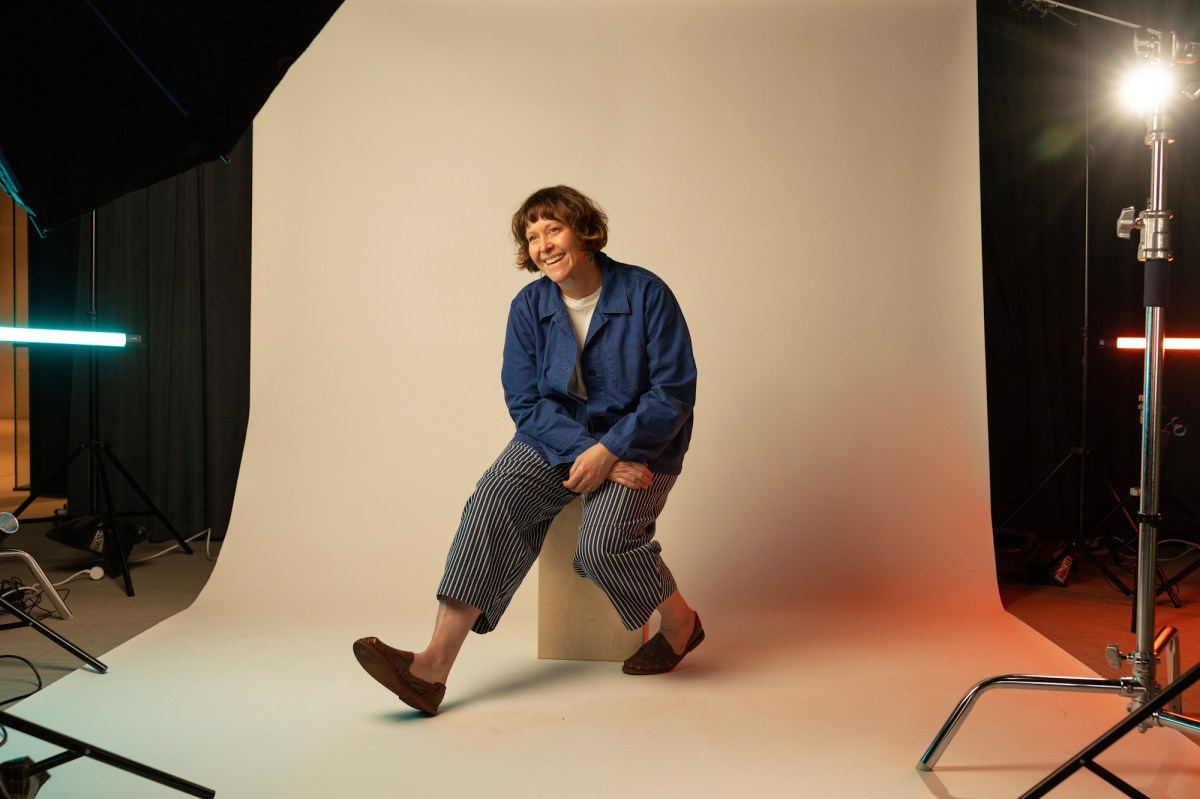
During her research, Gibbs found there were relatively few stories about younger people accessing VAD. She became increasingly interested in the parents left behind – the people who want to support their child but are desperately sad that this is their decision.
Surprisingly, she even found moments of humour. One mother told her that VAD needed better marketing for young people. ‘Call it “Tap & Go” she said to me. Even here, families managed to find a laugh,’ she says.
Given the complexity of the work, having the time to do research, think through the issues and embrace uncertainty and discovery was vitally important for Gibbs. But finding this space and time can be increasingly difficult for mid-career creatives with real life responsibilities, which just makes that freedom to experiment and go deeper even more valuable.
The Minderoo Artist Fund was established in 2020 to support mid-career artists in Western Australia. Applications are now open for the next round, with the fund supporting eight artists with either a $40,000 project grant or a six-week residency at Forrest Hall in Perth, valued at $25,000.
The scheme takes a broad view of artistic practice, and rather than being restricted to a particular medium or artform, it supports practitioners across many disciplines.
One of this year’s artists will also receive the prestigious Minderoo Artist Award, a $50,000 prize for an outstanding artist chosen by the judging panel.
One of the yearly cohort will also receive the $15,000 Georgia Malone Artist Prize. Named in honour of a highly respected member of the arts community and Minderoo team who passed away in 2025, this prize recognises resilience, innovation and artistic courage.
Recognising the challenges of a mid-career creative practice
Minderoo Foundation CEO John Hartman says Western Australia is home to an ‘extraordinary pool’ of artistic talent. ‘The Minderoo Artist Fund was established to support mid-career artists at that pivotal stage, enabling them to realise ambitious creative projects and build sustainable careers here in WA,’ he says.
‘Since 2020, the Minderoo Artist Fund has supported more than 60 artists, and we are proud to see their work continuing to enrich our communities.’
The program recognises that being an established creative practitioner doesn’t necessarily mean having security. Artists can reach a point where they have significant experience and a substantial body of work behind them, but opportunities to take genuine creative risks can become harder to find, especially when many programs appear designed for young or emerging artists.
Meakins describes being mid-career as ‘one of the most confusing moments’ of his career, particularly when he realised that the available opportunities didn’t always match up with his ambitions. For him, receiving the Minderoo residency was a moment of confirmation.
‘It made me feel like I was on the right path, that the hard work was being noticed, and that there was value in what I was doing,’ he says.
Forrest Hall didn’t just give him a place to work, it gave him a defined period of time to be fully focused on being creative. The combination of financial support, a dedicated environment and a hard deadline pushed him to a level of concentration and productivity he can’t always find at home.
‘You’re here to make, and you make as much as you can,’ he says.
The impact of the residency has continued beyond the exhibition. The ideas he developed for Laying Down and Looking Up have also fed into Made From Stone, a 224-page book he produced soon after.
Meakins says he also returned home with a different approach to his work, with less emphasis on finishing everything and a greater willingness to experiment and try new ideas. ‘It really made me feel unstoppable,’ he says emphatically.
The benefits of recharging and renewing
Gibbs describes a similar shift in her own work, gaining a renewed confidence to tackle difficult subjects in her writing. The grant has allowed her to keep developing her play, including working with a dramaturg, testing the script through table reads, and undertaking further research before saying it’s finished.
Receiving the grant ‘gave me the time and space to let the play become what it needs to be, rather than forcing it to remain with the first idea I had,’ she says.
That’s really at the heart of what mid-career arts funding can do. As Meakins and Gibbs have discovered, it’s not just about creating. It’s about stepping up and stepping back, and having the time, space and support to let the work discover itself.
They both encourage mid-career artists to apply for Minderoo Artist Fund’s next round of grants and residencies. ‘Back yourself and put the application in. Don’t wait until the idea is perfectly solved,’ says Gibbs. ‘The support gives you room to investigate – to take risks, to change your mind, to get it wrong and then get closer.’
Meakins is even more direct. ‘Please do it,’ he says. ‘It was the most successful six weeks of my career and potentially my life. I know some of my best work came out of the residency. I would absolutely do it every year if I could.’
For both artists, the value of the opportunity was not in knowing what the support would produce, but in finding out what was possible. As Gibbs says, ‘Sometimes the best thing a grant can give you isn’t certainty, it’s permission to go deeper’.