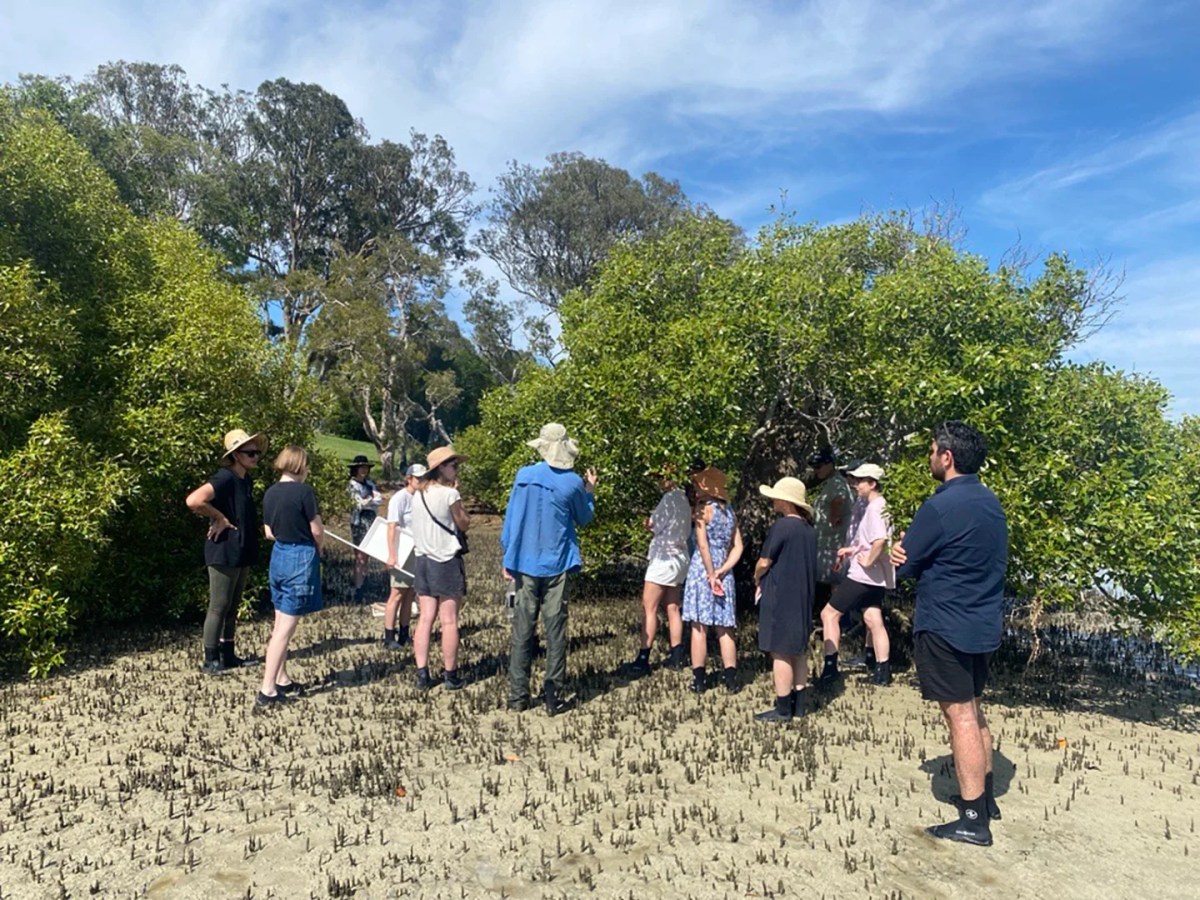
What might contemporary art practice look like if we begin by prioritising relationships to place, Country, climate and each another?
That is one of the questions behind a new online reading group being convened by Brisbane’s UQ Art Museum and the Climate Aware Creative Practices Network.
The reading group prefaces the event Reflective Motives: Two Days with the Climate Aware Creative Practices Network, which is set to take place at the museum in November.
UQ Art Museum reading group – quick links
Reflecting on Country, climate and creative practice
Reflective Motives will bring together artists, researchers, educators and curators for two days of practice-led climate thinking, drawing on Aunty Mary Graham’s articulation of the ‘reflective motive’ as a way of understanding and practising relationality.
Adjunct Associate Professor (Aunty) Mary Graham is widely recognised as Australia’s leading Aboriginal philosopher. She will be attending the two-day summit to take part in a keynote conversation with Tristen Harwood, an Indigenous writer, cultural critic and researcher from the Victorian College of the Arts.
Leading up to the gathering, the UQ Art Museum is leading an online reading group to explore the work of Aunty Mary Graham in more detail. For artist, writer and researcher Therese Keogh, the CACP representative on the project, the appeal of Graham’s work is partly its practicality.
‘Aunty Mary’s work includes really tangible and practical offerings of how to live well together on Aboriginal Land,’ says Keogh. ‘Her work centers relationality in an important way, and prompts readers to adopt and enact some of her theorisations in their daily practices.’
Helping artists find their place
That emphasis on relationships has particular resonance for creative practice. Graham’s work suggests that our creative, lived and collective practices all stem from place, including our relationships to Country and to each other.
‘This is pertinent to the work of creative practitioners, whose art practices are informed by their positionality, their environment, and the communities they participate in,’ says Keogh.
It is an important conversation that already has some momentum in contemporary art. Dr Jacqueline Chlanda, Education Manager and UQ Art Museum’s lead on the project, has noticed ‘a big uptick’ in interest in Graham’s work among artists and those working in contemporary art.
‘Her thinking is important in the framing of Earth Ethics, a publication put out by our colleagues at Monash University Museum of Art. Her thinking has also been key to some work we’ve done recently with both [artist] Megan Cope and Open Spatial Workshop. We’re lucky to have her as an adjunct at UQ,’ she says.
For Chlanda, those interdisciplinary conversations are fundamentally important. ‘We’re really interested in finding ways to support this through our programming,’ she says.
Creating a space for learning and thinking
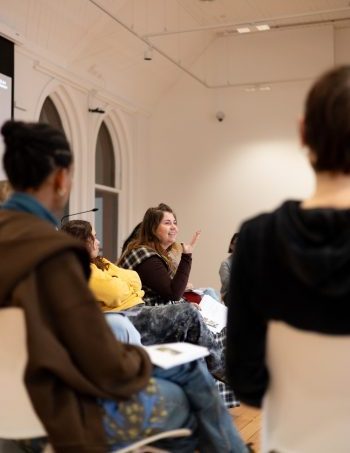
Importantly, the reading group is not just for people planning to attend Reflective Motives.
‘It is connected to the gathering but part of what we have in mind is offering a way to engage with some of the thinking that we’ll be doing in November for those who can’t travel,’ says Chlanda.
The group offers a space to explore Graham’s ideas in a collective and supportive online environment.
Participants will receive materials to read, including texts from Graham’s new book, Politics: Philosophical Ordering by Country, co-authored with Associate Professor Morgan Brigg, but there is no pressure to read everything.
Each session will offer shorter excerpts as synopses, alongside opportunities for discussion, live reading and written responses. It’s also fine to just listen and learn.
As Keogh says, ‘There are many entry points to this reading group, as well as modes of participation. All forms of participation are welcome, and everyone’s experience and knowledge sets are valued.’
That open and accessible approach draws on an earlier reading group hosted with Access Lab & Library. Through that experience, they ‘learnt so much about generous facilitation over Zoom,’ Chlanda says, adding that people will be welcome ‘to come as they are’.
A wide approach to creative practice
The reading group is aimed at creative practitioners, not just visual artists. ‘I think anyone working in creative practice can learn from Mary’s work, and different voices and practices are certainly welcome,’ says Chlanda.
Keogh says the reading group, and the Reflective Motives gathering, offer an entry point to thinking about the social, environmental and political dimensions of climate.
‘It’s about how climate crises play out through communities, lives and culture, and how to be “climate aware” means also to be responsive to one’s place and all of the complexities and responsibilities of that locatedness and connection,’ she explains.
The online reading group is both a valuable lead-up to Reflective Motives and a shared experience to be valued in its own right.