Staging a stream-of-consciousness literary classic is a notorious theatrical tightrope. Jessica Anderson’s 1978 Miles Franklin Award-winning novel Tirra Lirra by the River is a deeply internal, sprawling masterpiece of memory, shifting eras and unfulfilled female potential, and this ambitious world premiere adaptation for Byron Theatre Company plunges the audience directly into the kaleidoscopic mind of 77-year-old Nora as she returns to her childhood home.
Co-written and co-directed by Heather Fairbairn and Kate Wild for Fairbairn + Wild Productions and Byron Theatre Company, the adaptation is visually stunning and rich with texture but occasionally trips over its own formal busyness.
Tirra Lirra By the River review – quick links
The challenge of separating memory and reality on stage
The narrative follows an aging Nora as she sifts through a life lived against the grain: a suffocating, abusive Depression-era marriage in Sydney to Colin Porteous; a painful divorce; an affair at sea; a traumatic abortion; and her eventual flight to bohemian independence in London.
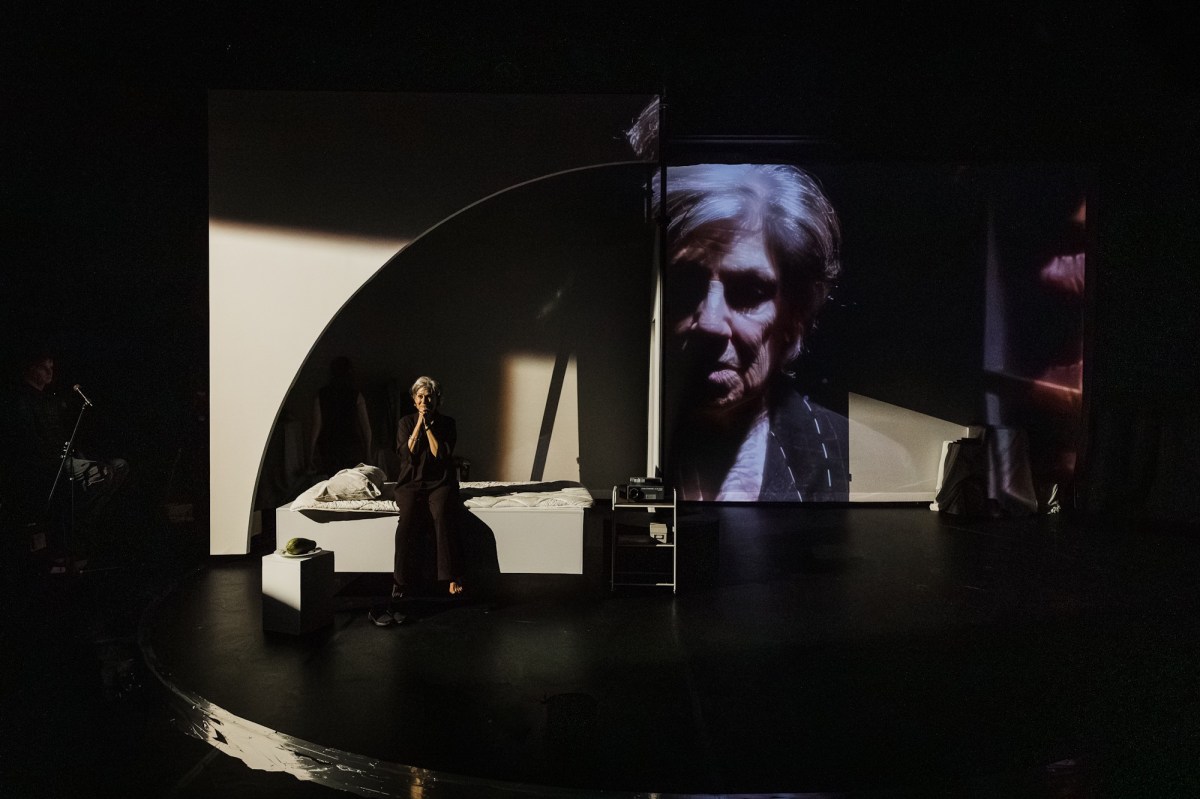
Formally, the production leans heavily into contemporary staging trends, deploying live video feeds that add interest and spectacle but don’t necessarily further or extend our connection to character or story.
Co-directors Fairbairn and Wild utilise live microphones for multi-layered narration, attempting to separate the memory from the telling of the memory. While this adds an evocative acoustic weight to Julian Starr’s beautifully sustained, drony ambient sound design, it frequently works the audience’s cognitive processing channels to exhaustion.
The constant jumping between real-time emotional suffering and external narration shared across multiple actors overlapping multiple parts sometimes clouds the story’s inherent clarity rather than sharpening it.
Bringing Nora to life
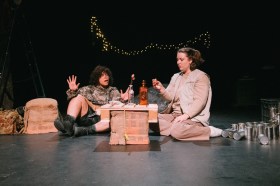
Performance wise, the production sits confidently in the hands of the connected cast of three. Industry veteran Toni Scanlan delivers a commanding, fiercely convicted and comically acerbic performance as the elder Nora, among other characters. She possesses the rare, heavy gravity of a master craftsperson; when she is on stage, the stakes are unassailable.
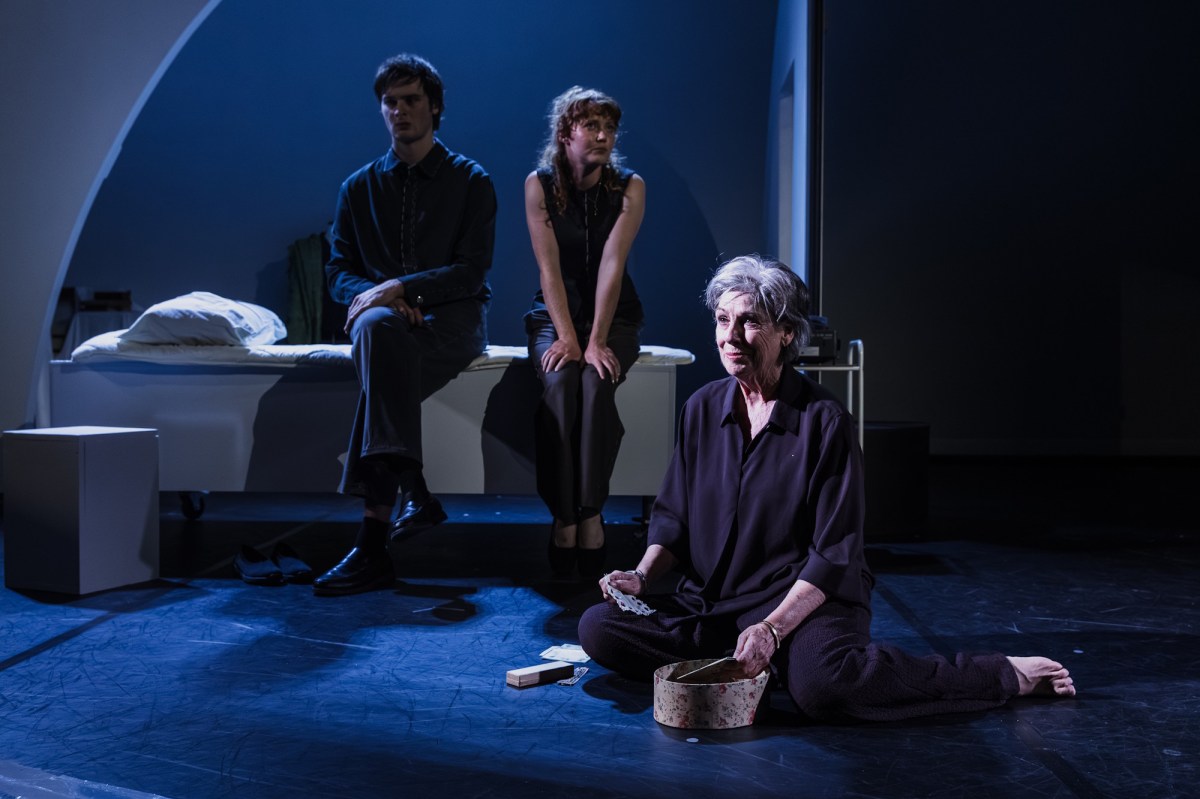
Pirie Outridge fluidly shifts between the younger Nora and neighbour Lyn and others with exquisite, highly physical grace. She has a striking and timeless presence that feels at home among Aron Murray’s soft-focus live camera close-ups.
Tom Anderson works well across multiple roles, shifting from the cruel husband Colin to the well-meaning modern-day Dr Rainbow and the dressmaker Frith, offering a pleasant and appropriately stiff anchor to Nora’s recollections.
An ingenious set
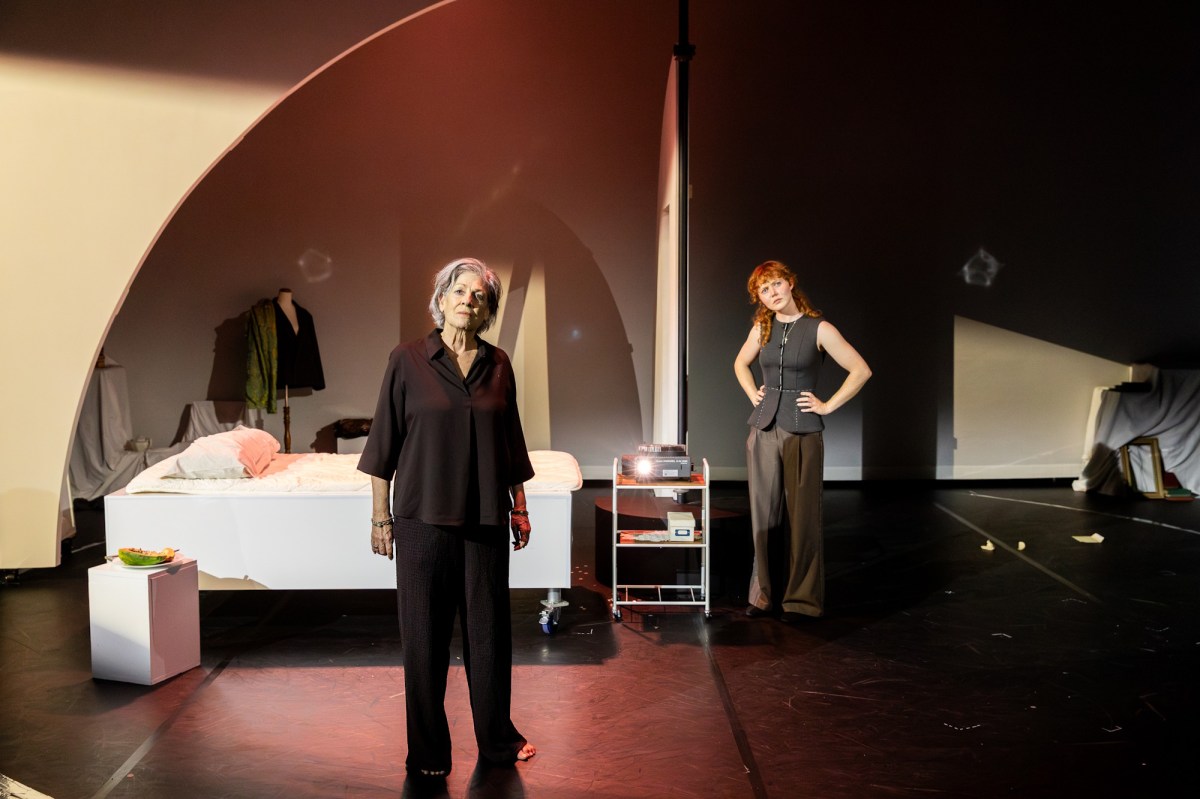
The visual language of the production is where the ambition truly sings, thanks to production designer Savanna Wegman. The set features an ingenious moving wall consisting of concentric archways rotating independently on a central axis, effortlessly carving out shifting domestic spaces. On the floor, a beautiful, reflective metallic coating snakes across the stage, evoking the titular, elusive river.
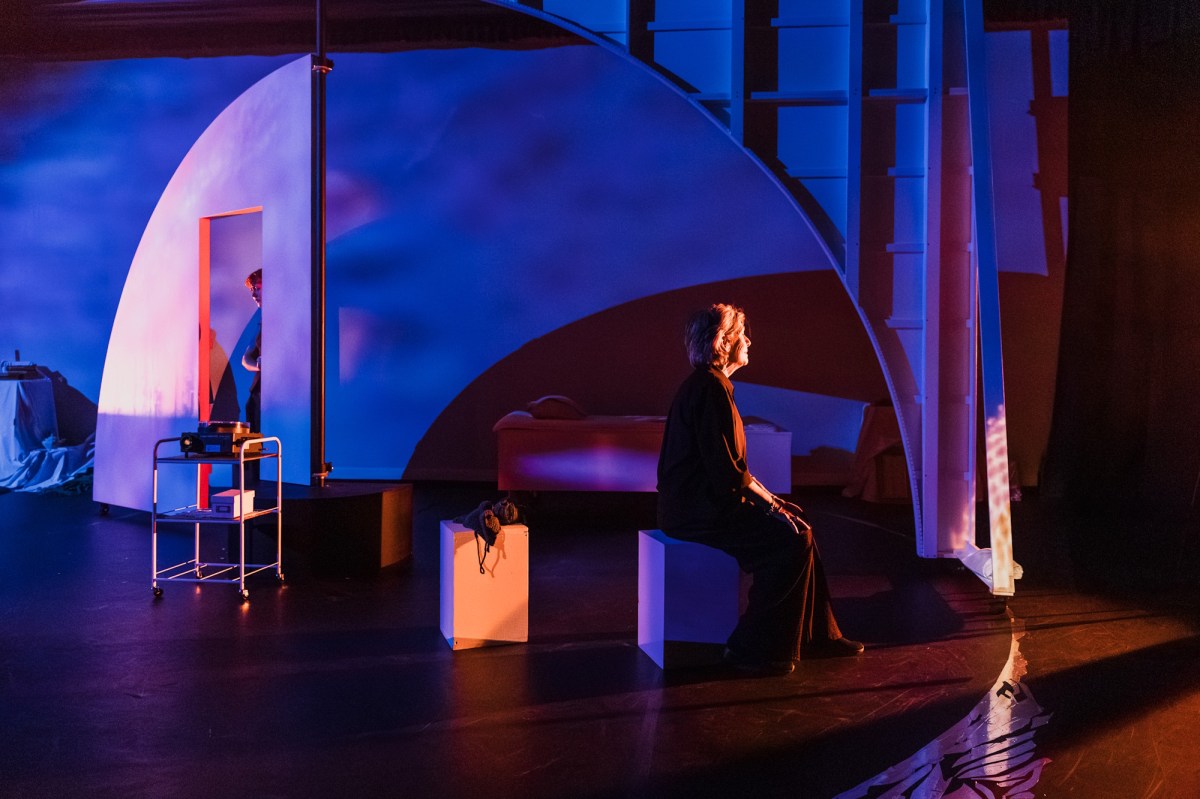
Murray’s lighting design handles this difficult geometry masterfully, notably during a stunning series of transitions where a slide projector’s beam slides across the stage, transforming a literal photo projection into a living stage picture.
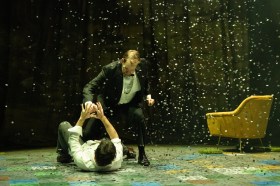
However, this production of Tirra Lirra by the River is prone to over-theatricalised clutter. It feels as though every opportunity has been sought for physical busyness, resulting in moments such as a confetti drop which results in prolonged sweeping that bogs down the production’s physical rhythm for the sake of empty acting business.
Some of the adaptation’s core conceptual shifts also fail to translate. In their notes, Fairbairn and Wild reveal their major departure was changing Nora’s lifelong artistic trade from textiles to photography. Yet, despite the presence of Murray’s video design, this change was so under-realised on stage that Nora’s identity as a dressmaker alongside her London friends still seemed to dominate.
Additionally, a clunky contemporary nod to the modern housing crisis via the neighbor Lyn Daniels feels tacked-on, adding little value to what is fundamentally a private psychic reckoning.
Ultimately, Tirra Lirra by the River is a dense, highly atmospheric companion piece to a classic novel. While the visual composition occasionally overrides narrative clarity, witnessing Scanlan’s formidable presence is worth the ticket price alone and the sheer aesthetic scale of this regional production make it a bold, worthy venture.
Tirra Lirra By the River plays at Byron Theatre in Byron Bay until 13 June.

This article is published as part of ArtsHub’s Creative Journalism Fellowship, an initiative supported by the NSW Government through Create NSW.