The late Larry Kramer, playwright of The Normal Heart, is a hero in the world of gay rights and HIV/AIDS activism – and rightly so.
The founder of the AIDS Coalition to Unleash Power (ACT UP) and co-founder of the Gay Men’s Health Crisis groups, Kramer was an important voice in the early years of the AIDS crisis. In the early to mid-1980s, he tackled the apathy of both the political establishment and the gay community itself to the threat posed by the virus.
His efforts helped change public health policy around what was seen as a ‘gay plague’, at a time when many viewed gay men as immoral degenerates unworthy of care.
But important political machinations don’t necessarily translate into great art and the tension between the artistic qualities of The Normal Heart and the play’s message are vital considerations for reviewers.
The Normal Heart review – quick links
A lesson in the theatre of witness
The Normal Heart premiered in New York City in 1985; the time and place formed the very epicentre of the HIV/AIDS epidemic. When it was first staged in Sydney, in 1989, the Harbour City was Australia’s own epicentre of the plague.
Almost four decades after its Australian debut, when Wayne Harrison directed The Normal Heart for the Sydney Theatre Company in 1989, the activist drama returns to STC with a ferocity that suggests the battle for human dignity is far from over.
With Sydney recently experiencing a heavy-handed police response to public dissent, the play’s central question – what does it take to be heard? – feels uncomfortably current.
Directed by Dean Bryant, this production transforms the Drama Theatre at the Sydney Opera House into the pressure cooker of 1980s New York City. Kramer’s script isn’t elegant – it’s didactic to the point of polemic – but it remains a masterful lesson in the theatre of witness.
Bryant leans into this, staging the work not as a museum piece but as a living, breathing indictment of institutional indifference.
A masterclass in fury
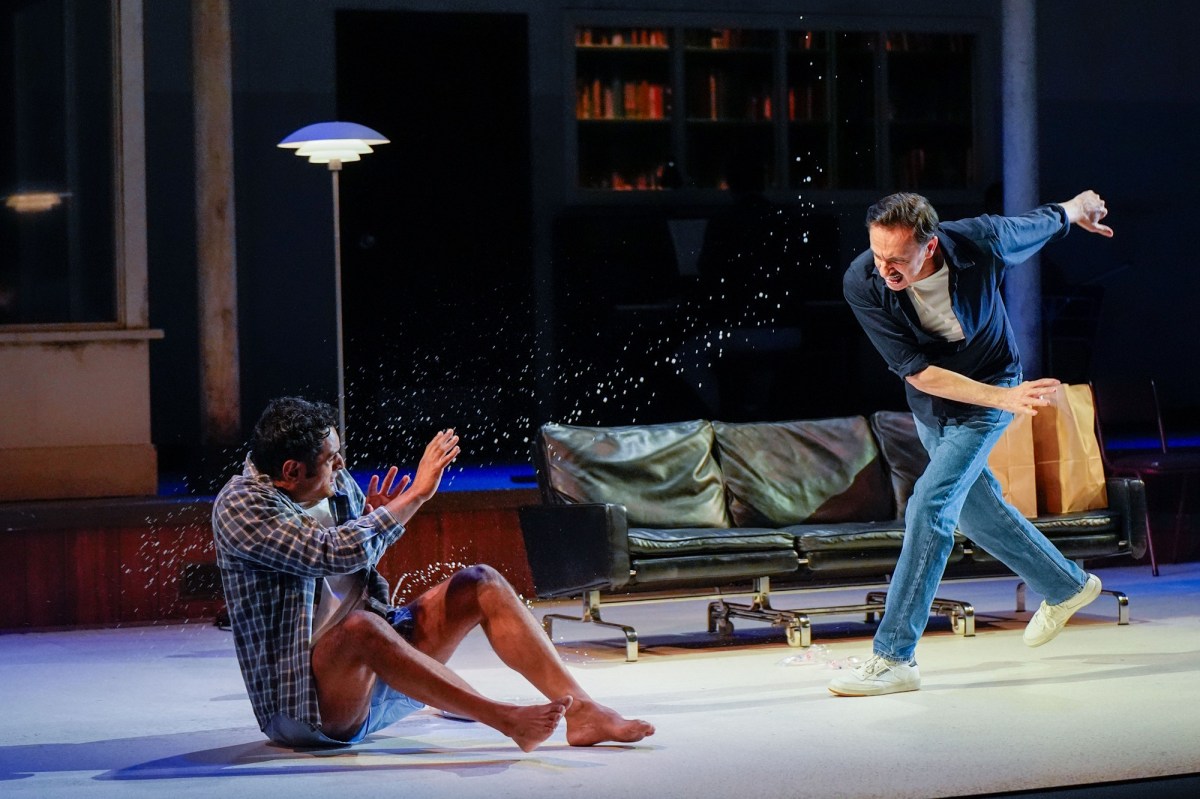
Mitchell Butel, STC’s Artistic Director and Co-CEO, is nothing short of spectacular in the role of abrasive, relentless Ned Weeks, a stand-in for Kramer himself. Butel captures the character’s intellectual desperation and wit with a performance that hits every chord, from snappy humour to visceral heartbreak.
Butel doesn’t ask the audience to like Ned; he demands they listen to him. It is an exhausting, exhilarating turn that anchors the production’s moral weight.
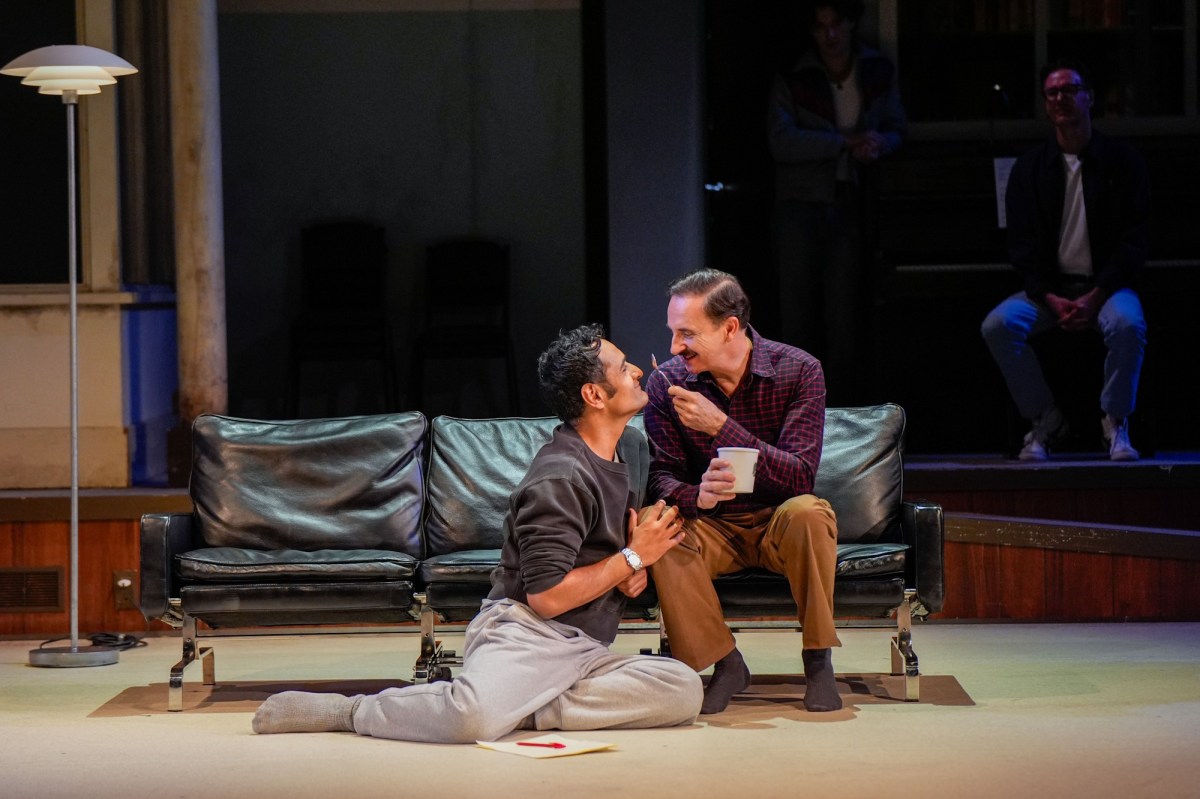
The ensemble provides the necessary friction to Butel’s fire. Nicholas Brown brings a sweetness to the character of Felix Turner (Ned’s lover), grounding the political chaos in a tender, doomed love story that provides the play’s emotional core.
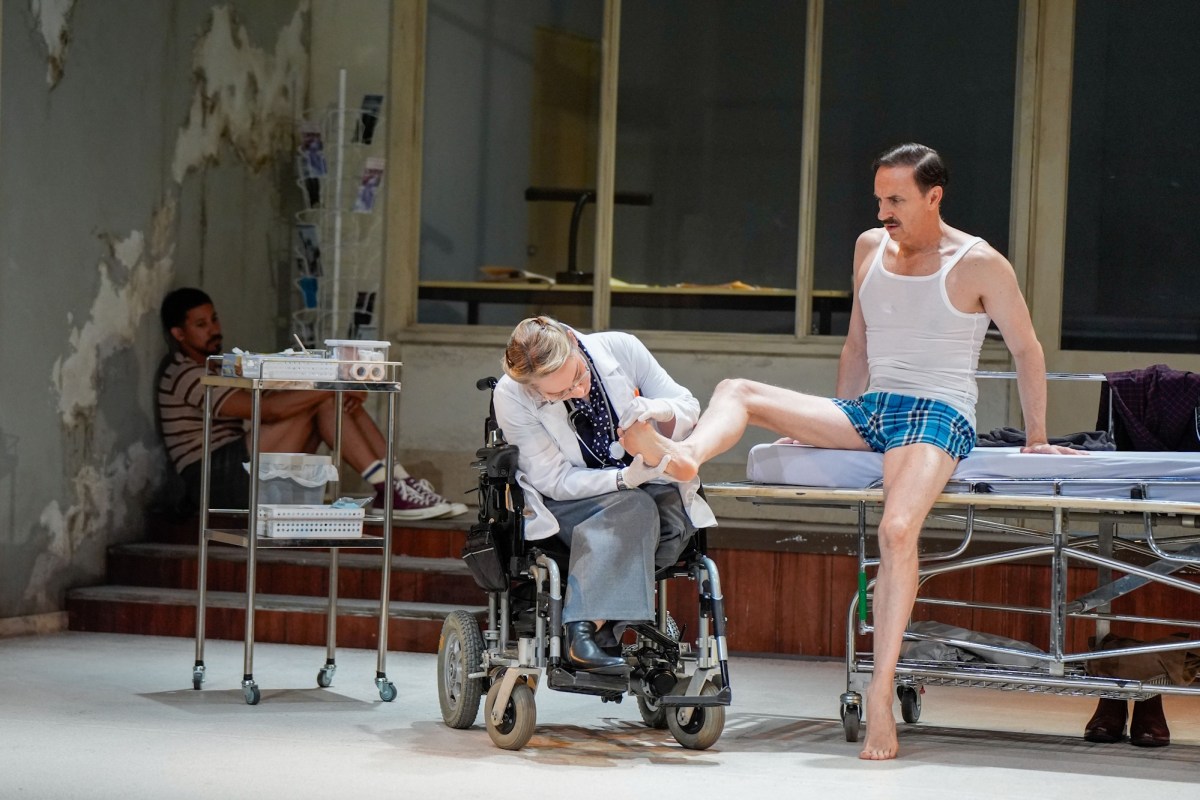
Meanwhile, Emma Jones, making her STC debut, is a standout as Dr Emma Brookner, the doctor fighting institutionalised homophobia to deliver care to the young men dying of AIDS. She delivers her lines with a controlled fury that eventually boils over in a fiery monologue that brings the house down.
Staging a story of survival
The production is underscored by live musical accompaniment from cellist Rowena Macneish and pianist Michael Griffiths. Their haunting arrangements, including a recurring, melancholic motif of New Order’s Bizarre Love Triangle, help bridge the gap between the frantic Gay Men’s Health Crisis meetings and the quiet tragedies unfolding in hospital wards.
The decision to have a live soundtrack is not without its risks, however, and at times the ebb and flow of the music seems melodramatic, even a little cringeworthy. The subject matter, the story and the performances are strong enough to stand on their own and the music sometimes seems redundant and even distracting.
ArtsHub: Sydney Mardi Gras 2026: culture highlights for artsy queers
Jeremy Allen’s set – a sprawling, decaying space filled with clinical debris – perfectly conveys the institutional neglect of the era.
It is a set that feels lived-in and dying all at once, mirroring the bodies of the men Ned is trying to save.
When paired with the pragmatism of characters such as Tommy Boatwright (played by Keiynan Lonsdale), as well as the stifled respectability of Bruce Niles (Tim Draxl), the visual and character dynamics portray a community fractured over the question of how to survive an unprecedented crisis.
A timely warning
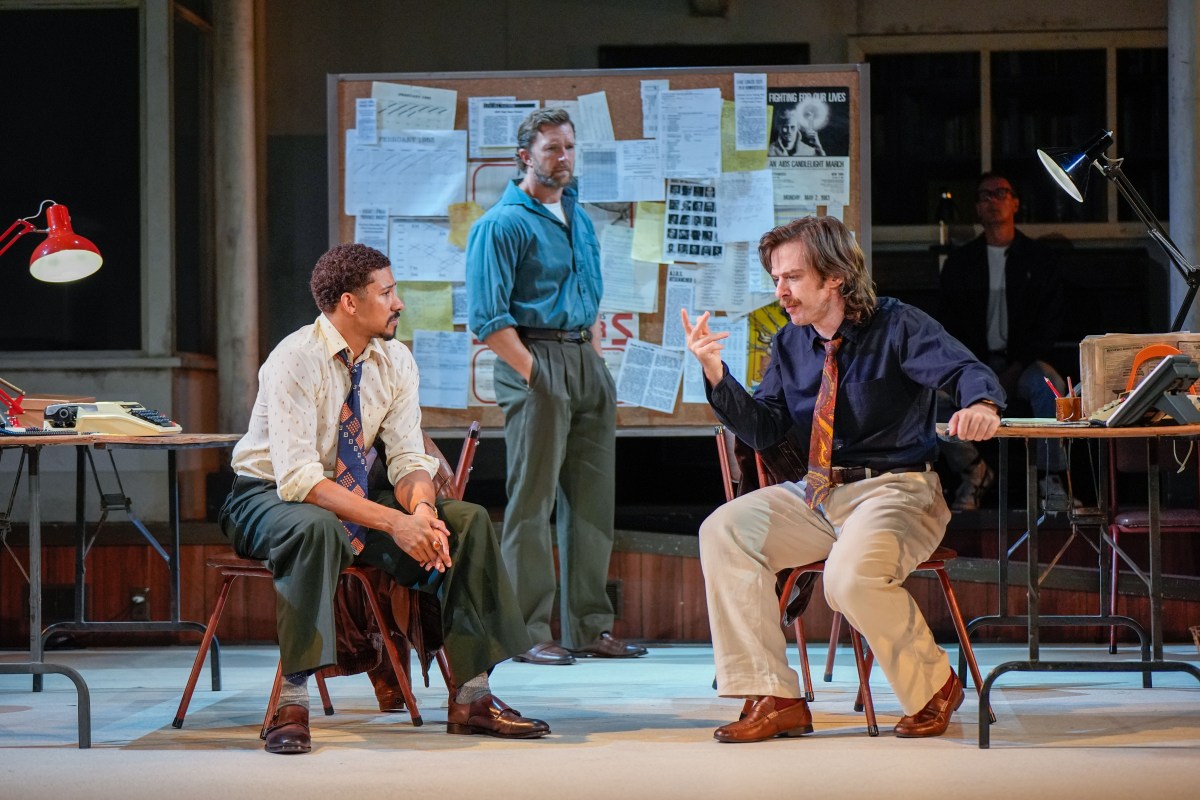
A question hung over The Normal Heart for this reviewer: Why now? Why stage a 1980s AIDS drama today, as part of the 2026 Sydney Gay and Lesbian Mardi Gras Festival?
The answer is, perhaps, that despite the play’s clunky polemics and Kramer’s penchant for settling old scores, the enduring ferocity of the script remains relevant. It captures a community struggling for recognition against a world that would rather look away – a struggle that has abated but not disappeared with the advent of PrEP and marriage equality.
And in 2026, as democratic institutions appear to be unravelling and minority rights are once again being reconsidered in the public space, The Normal Heart serves as a tribute to a movement that changed the world.
It is a stark reminder that ‘Silence = Death’ is a warning we ignore at our peril.