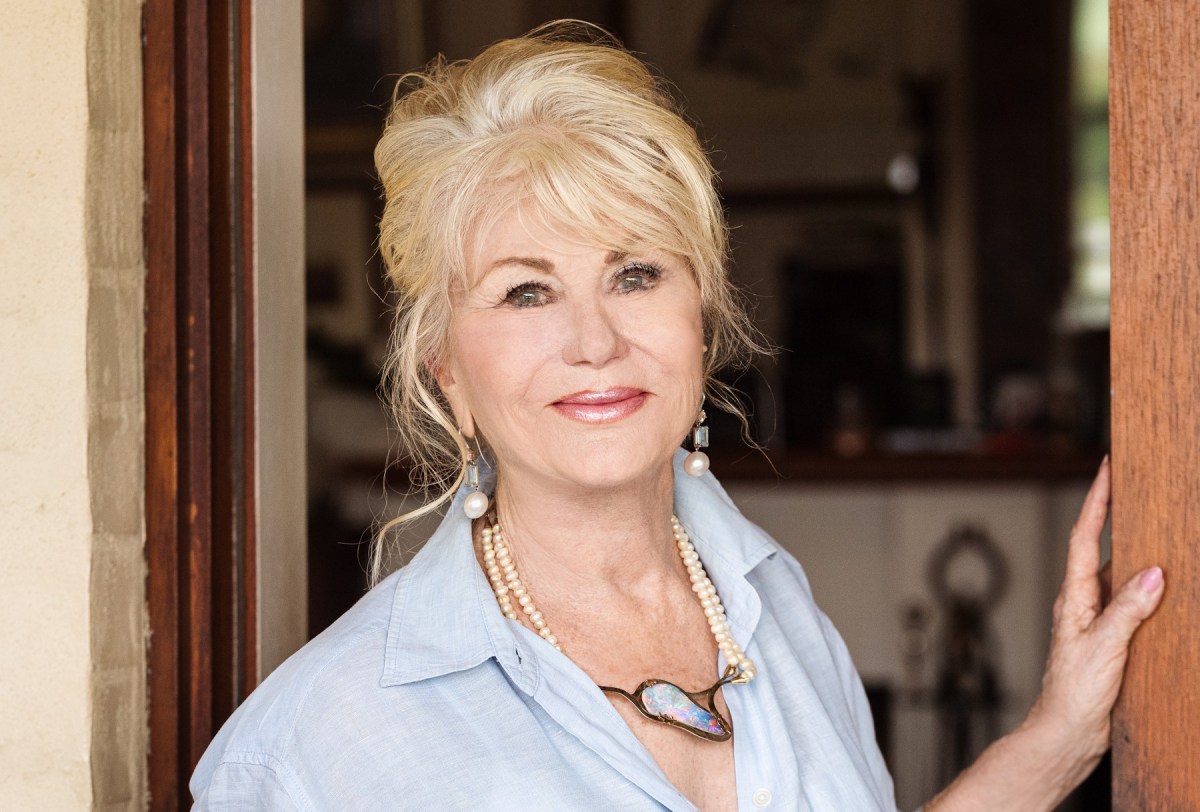
With more than half a century in journalism and television behind her – including stints on Good Morning Australia, Women’s Weekly and time in London’s Fleet Street – Di Morrissey knows a thing or two about the media world. That industry insight pulses right through her latest novel, The Endless Sky.
Barely a year after publishing her 30th bestseller, River Song, the 82-year-old master storyteller takes us to Queensland’s outback. The Endless Sky follows famed TV presenter Nicole Robertson and her savvy producer Stacie as they are tasked with delivering a new ratings winner in an increasingly unforgiving media landscape.
Under pressure from their hard-edged new boss, the pair head deep into red earth country in search of a story. What begins as a location scout soon turns into a fossil-hunting expedition, but as they meet locals and uncover relics with fascinating histories, they realise some discoveries carry secrets that refuse to stay buried.
The Endless Sky review – quick links
Landscape takes centre stage
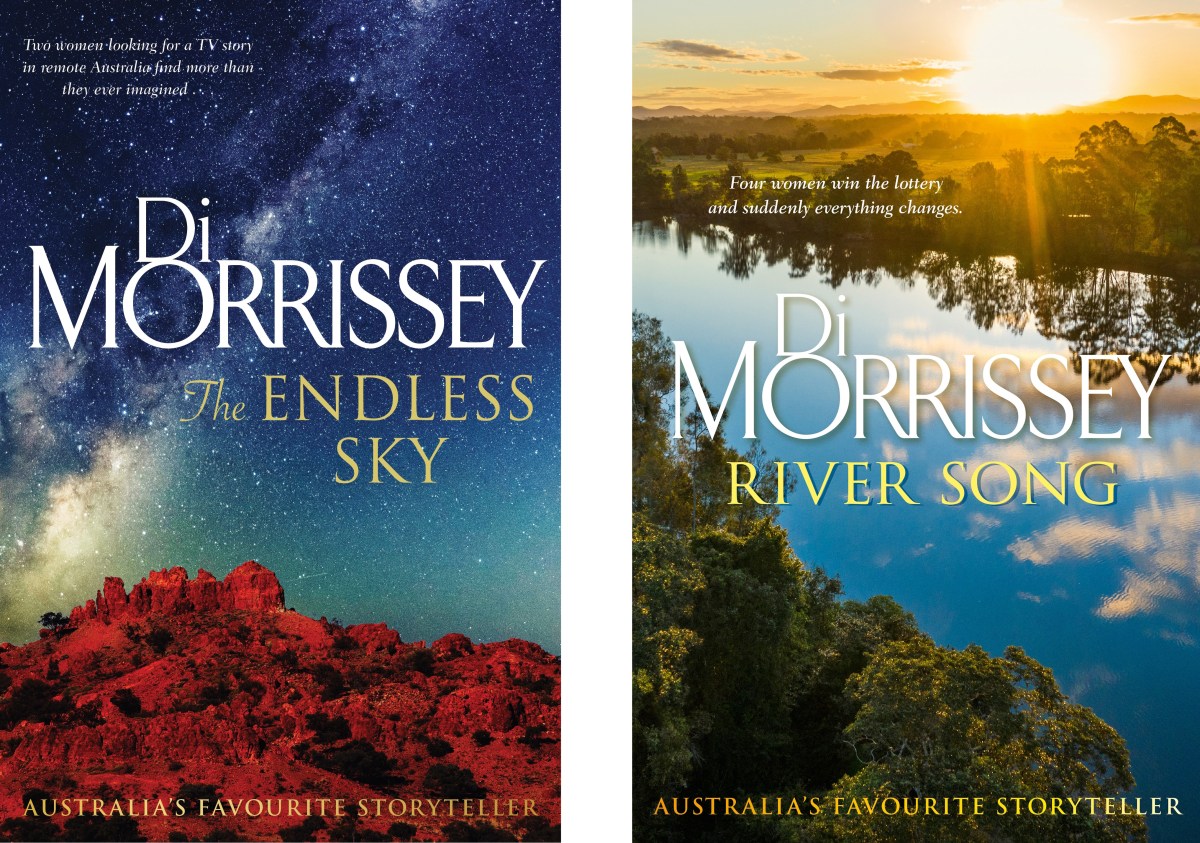
The novel’s greatest triumph lies in its evocation of outback Queensland. The Endless Sky is illuminated by Morrissey’s recent travels through the sunshine state and her description of the red desert invites readers to sit in its stillness and understand how the vast country shapes those who pass through it.
The fictional setting of Victoria Springs, inspired by Queensland’s expansive outback landscape, functions particularly well as a narrative device.
Nicole and Stacie’s search for hidden fossils beneath the earth mirrors Morrissey’s broader fascination with uncovering the layers of Australia’s past – demonstrating that the land itself holds stories waiting to be told.
In this sense, the novel succeeds not just as escapist fiction but as a subtle act of cultural preservation, promoting the red desert as something intrinsic to Australian identity and imagination.
Weaving past and present
The idea that the past actively shapes the present is constantly woven through the novel. This is articulated most clearly during a speech delivered by geologist Dr Phillip Bannister before Nicole and Stacie volunteer to dig up fossils. Describing their task as ‘detective work with clues spanning millennia,’ Bannister frames the excavation less as a scientific endeavour and more of a human one, uncovering the ‘mystery of how and who and what called this planet home’.
The maxim that to know our past is to know our future is a message Morissey conveys openly, but one that feels in keeping with the novel’s reflective tone. Rather than weighing the story down, the clarity of the theme gives it cohesion, gently connecting the landscape, mystery and characters’ journeys.
This sense of looking backward to move forward has long defined Morrissey’s storytelling, and here it feels intentional. The Endless Sky doesn’t ask readers to decode its meaning. Instead, it invites them to pause, reflect and consider how history, both personal and collective, continues to shape the present moment.
The novel’s narrative momentum is driven by a well-judged mystery that gives Nicole and Stacie a compelling reason to remain in the outback. When Felix, a French traveller drawn to the fossil site by rumours of buried riches, vanishes without explanation, the story shifts gears.
His disappearance unfolds with an eerie subtlety, lingering in unanswered questions and the disturbing reality that he leaves without a trace. Morrissey uses this mystery less as a puzzle to be solved and more as a narrative anchor, keeping her characters rooted in place and purpose.
And of course, it wouldn’t be a Di Morrissey novel without a touch of romance. Here, it’s handled with a lightness and warmth that feels genuinely endearing – never distracting from the narrative, but offering a gentle reminder that connection, like the landscape itself, has the power to mould us.
The Endless Sky by Di Morrissey is published by Macmillan Australia.

This article is published as part of ArtsHub’s Creative Journalism Fellowship, an initiative supported by the NSW Government through Create NSW.