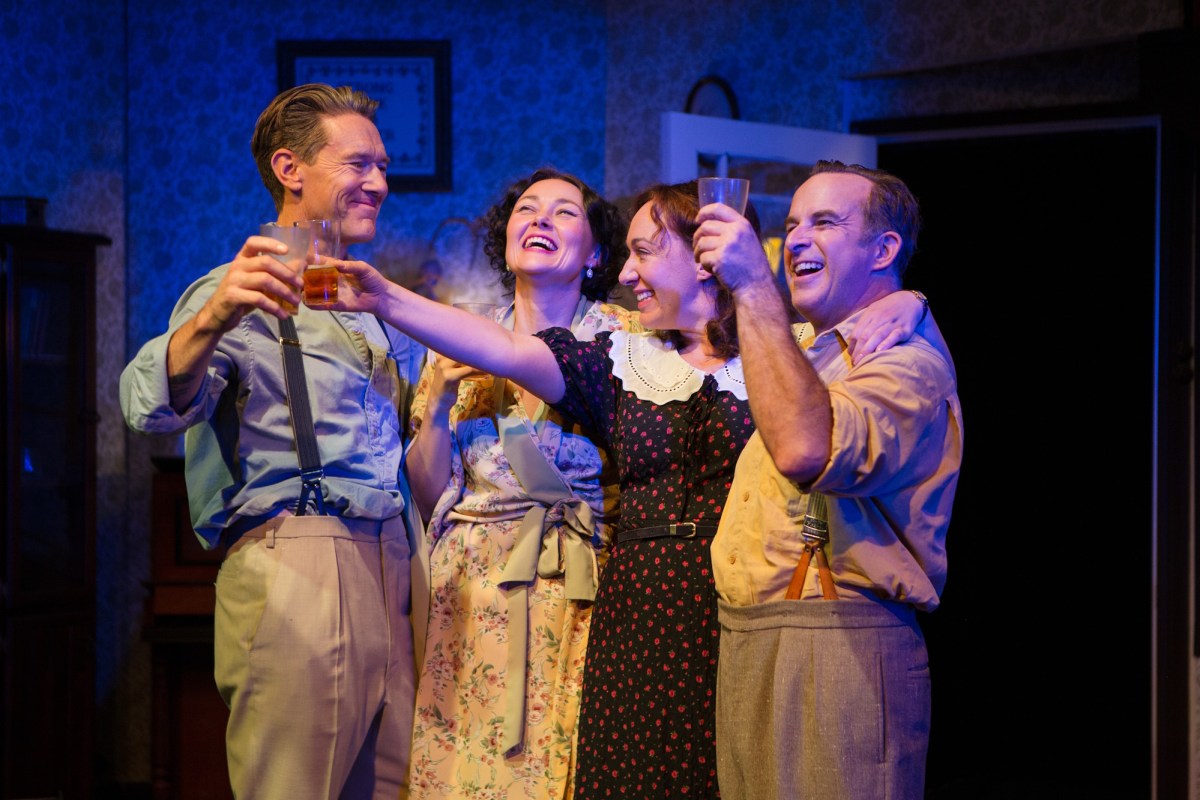
Melbourne’s Red Stitch Actors’ Theatre is celebrating its 25th anniversary this year and, to celebrate, the company’s artistic director and CEO Ella Caldwell has chosen to restage a groundbreaking work from 1955, along with its two prequels written some 20 years later – respectively Summer of the Seventeenth Doll, Kid Stakes and Other Times, also known as The Doll Trilogy.
The venerable Australian playwright Ray Lawler died only two years ago, at the very impressive age of 103. But seeing his most celebrated trilogy brought to the stage by Red Stitch you can’t help but suspect that, if he could have, he’d have held out for another couple of years.
Because, surely, he’d have relished the chance to see this version, and would have been grinning from ear to ear to witness a staging of his greatest legacy work that is as entertaining, as vibrant and as lovingly put together as this exuberant production.
With a reportedly complicated rights issue meaning the entire trilogy isn’t as often performed, or indeed well-known, as the landmark final piece of the pie – Summer of the Seventeenth Doll – Red Stitch has given Melbourne theatre goers a veritable gift.
The Doll Trilogy review – quick links
Different ways to see the plays in The Doll Trilogy
Red Stitch has also given us options when it comes to viewing the plays – either singly on separate occasions, or as a complete trilogy shown all in one day à la Sir Peter Hall’s production of Aeschylus’ Oresteia (Agamemnon, The Libation Bearers and Eumenides) staged at London’s National Theatre back in 1981. (Although, despite remembering this as being a long haul, it was in fact less than five hours long – chicken feed compared to what Red Stitch is doing here).
ArtsHub: Interview with Red Stitch’s Artistic Director Ella Caldwell on restaging The Doll Trilogy
Perhaps a more recent comparison is Guthrie Theatre in Minneapolis, which in 2024 staged a version of the Henriad (four of Shakespeare’s history plays), or around 11 hours of Shakespeare in a day, requiring a really serious commitment from those in the audience.
As does The Doll Trilogy, though it should be noted that the idea hasn’t put local audiences off one iota – the full trilogy days are already all sold out at the company’s St Kilda venue. But there will be at least two more opportunities to catch them in this format – at the Theatre Royal in Hobart in May and Her Majesty’s Theatre in Ballarat in June.
To see Kid Stakes, Other Times and Summer of the Seventeenth Doll in this order makes so much sense. The first two plays contextualise and prepare the audience for that familiar final bow, while also fleshing out the wider concerns of their respective periods – the optimism of the characters as youngsters in Kid Stakes and the conflicted postwar emotions of demobbed soldiers in Other Times.
Every summer, a new kewpie doll
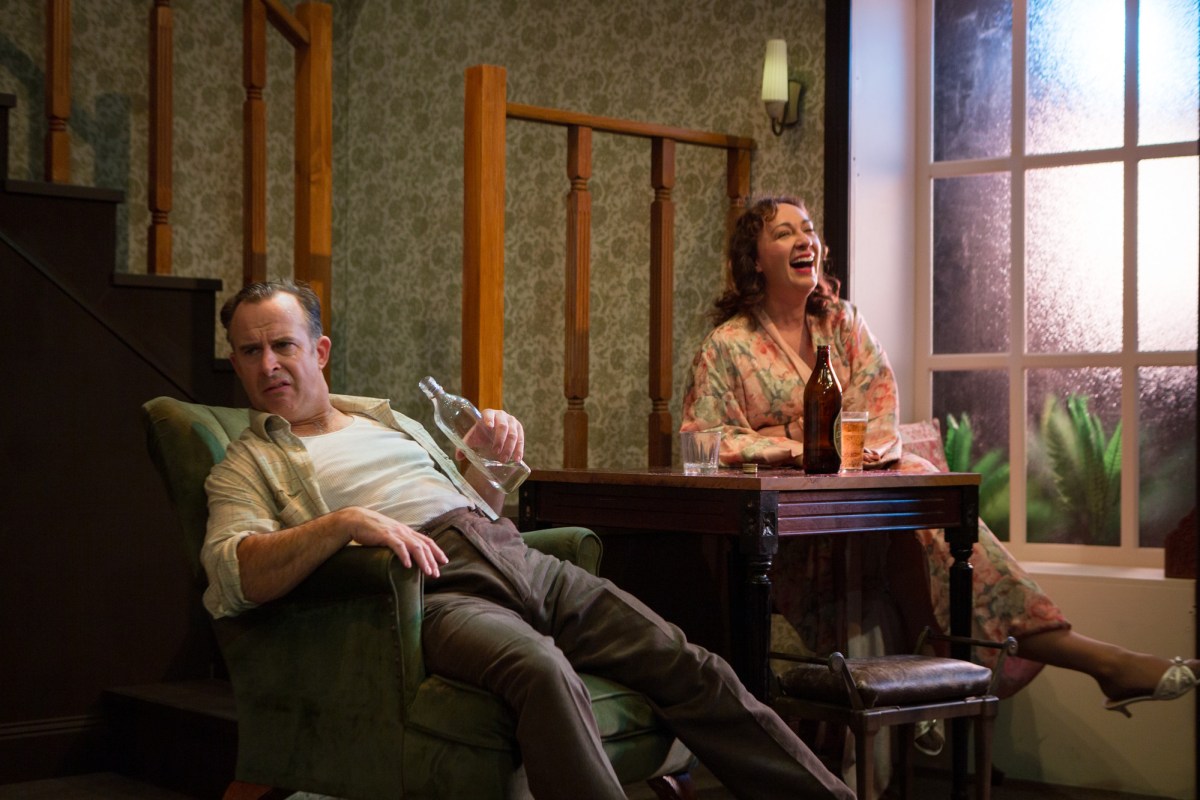
The third play is one of the most definitive in the Australian canon, and revolves around two Queensland-based cane cutters – Roo and Barney. Every year in the lay-off season they travel down to Melbourne and spend five months at a boarding house belonging to Emma Leech, where they form relationships with Emma’s daughter Olive and her close friend Nancy.
Each year Roo brings Olive a Kewpie doll as a gift, hence the title of the final play, which is the culmination of how these two central relationships play out over 17 years.
One pivotal element that Kid Stakes and Other Times add to a piece that, it has to be said, has always been perfectly strong enough to stand alone, is the way they feature and explain the character of Nancy.
In Seventeenth Doll she is solely an offstage catalyst – immensely important, but someone that we largely have to imagine for ourselves.
Practically perfect performances
In the hands of Emily Goddard, Nancy is a fully rounded, complex character who appears to be little more than a frivolous party girl when we first meet her, but both evolves and shows us more of her seemingly contradictory elements as the first two plays unfold.
Of all the cast members, Goddard has perhaps the most challenging task, playing Nancy in the first two plays and then Pearl, a barmaid friend of Olive’s invited into the fold as a potential Nancy replacement for Barney in the third.
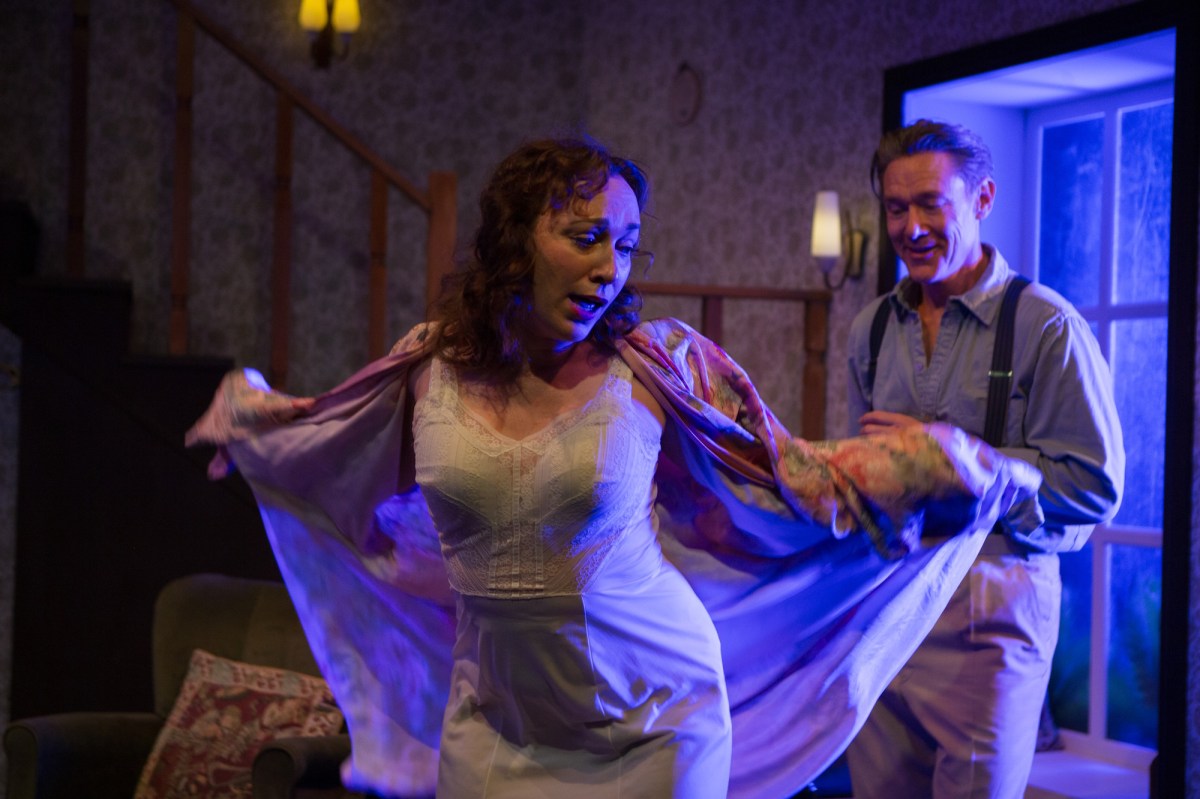
It’s a big ask, but Goddard carries it off in style, making Pearl every bit as nuanced and cleverly calibrated as Nancy – even if she too at first presents as somewhat larger than life, if not caricatured.
Other than this, it really isn’t fair to single out any one member of the cast. Just as with its hit production of Who’s Afraid of Virginia Woolf last year (which also featured Emily Goddard incidentally, and transferred to Melbourne’s Comedy Theatre before getting a Sydney run), this is ensemble work at its finest, with the same cast in all three plays.
And that is as Lawler recommended by the way. ‘I still believe that a well-chosen team of seven players serves it best,’ he wrote in the preface to the 2015 published edition of the three plays.
Ngaire Dawn Fair (Olive), John Leary (Barney), Ben Prendergast (Roo) and the stalwart Caroline Lee (Emma) are all terrific, while Khisraw Jones-Shukoor (in different roles in each play) and Lucinda Smith (as the young next-door neighbour, Bubba) offer fine support.
Staging a marathon performance
The three plays have been intelligently and very respectfully directed by Ella Caldwell. Sometimes it’s just really satisfying to see a seminal text presented naturalistically, with wit and vivacity, but without gimmicks or unnecessary bells and whistles.
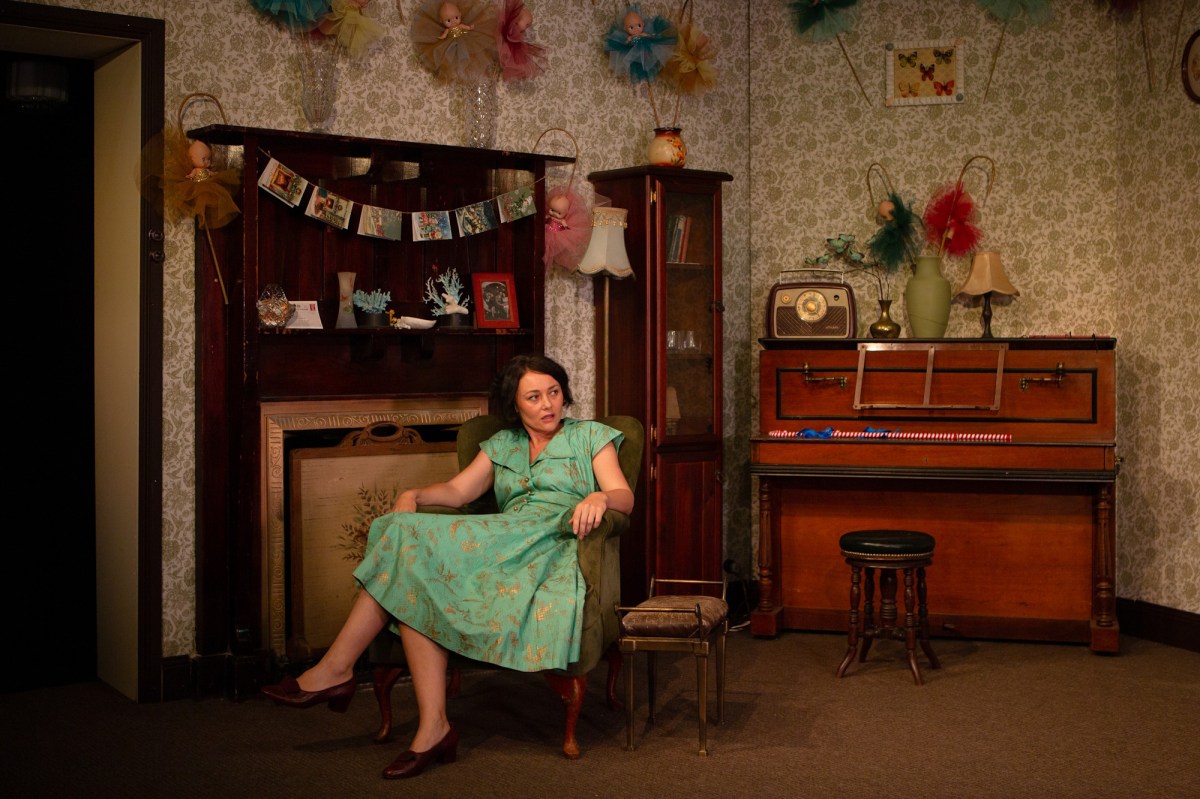
All the elements cohere well – from Jacob Battista and Sophie Woodward’s pleasingly detailed costume and set design (which absolutely makes the very best of the constricted space that is Red Stitch’s stage) to Rachel Burke’s excellent lighting plot. In particular, the offstage bonfire scene in Other Times, when Roo takes the kerosene to his army uniform, is really well done, and enhanced by Daniel Nixon’s sound effects.
It should be noted that entering a theatre at midday and leaving it over 10 hours later (with intermissions and meal breaks between plays), there are almost inevitably going to be some stretches that aren’t quite as compelling as others. Perhaps Other Times isn’t quite as engaging as the bookend plays, but that’s understandable – a middle is rarely as gripping as the beginning and end.
It still deserves its place in the trilogy, however, as the commentary on war and the after effects on those who have fought is undeniably an important and necessary strand of the overall arc of the works.
And this play also serves to show the evolution of Nancy’s disillusionment, setting us up nicely for the revelation of her actions before the final play.
Indefatigable ensemble cast brings the energy
There is a running gag that when you’re in the audience of a show you don’t really admire but have to say something to the performers afterwards, there are two defaults to choose from: ‘You must be exhausted’ or ‘How did you learn all those lines?’
Of course, what one should say, in classic Coward-esque is a simple and succinct ‘You were marvellous, darling’ and leave any other thoughts or critiques until at least the next day when the performers have had a chance to come down from the adrenaline.
The thing is, with this fantastic production, all three comments are for once perfectly valid. This indefatigable cast show levels of energy most of us could only dream of. The line recall is endlessly admirable.
And they were marvellous. Each and every one of them.