The Devil’s Violin is a lively and richly textured program by the Australian Chamber Orchestra that lives up to its highly evocative title. With eight works on offer, from Baroque to contemporary, guest violinist Ilya Gringolts and the 12 players of the ACO showcase a compelling blend of technical excellence, stylistic range and dramatic flair.
Built around the mythology and virtuosity of the violin at its most dazzling, the concert is both a display of instrumental mastery and a thoughtfully curated exploration of musical contrasts across time.
The Devil’s Violin review
Ilya Gringolts is the star of the performance
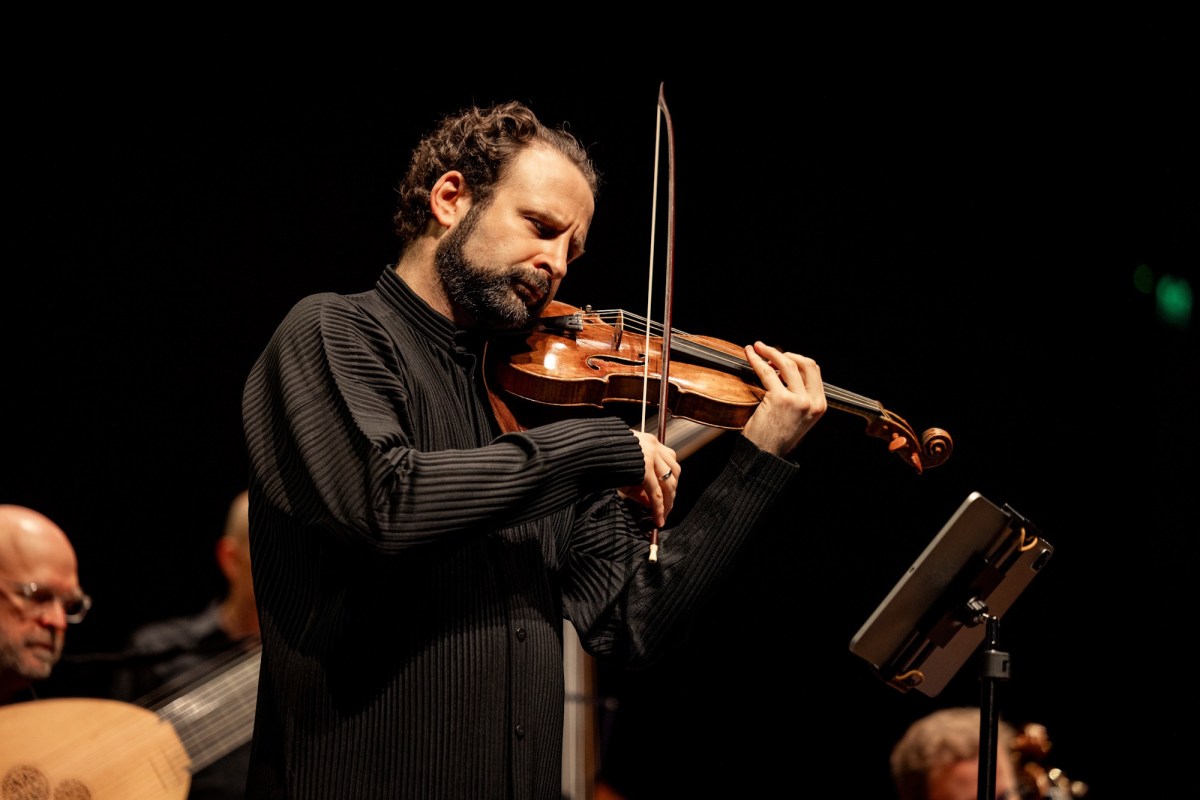
Guest violinist Ilya Gringolts is acclaimed worldwide for his virtuosity. For this series of concerts, he is directing the ACO as well as playing, and he was very much at the heart of the performance.
His playing really is extraordinary, absolutely captivating but without flourish or fanfare. From the very first notes to the last, he commands attention with playing that is both incisive and expressive, coaxing a whispering note from his instrument one moment and then firing away with blazing intensity the next.
He plays a remarkable ‘Golden Age’ Guarneri del Gesù violin from 1743, often described as a ‘muscular’ instrument, with a rich, deep timbre.
Gringolts’ technical control is formidable and the two most demanding pieces on the program – Tartini’s Devil’s Trill and Vivaldi’s Concerto for Two Violins – showed his mastery, especially in the daunting rapid passagework.
That he makes it look easy is just further proof of his technical control. But it’s not just about that level of technical excellence, he’s also able to tell a story and bring out the sense of narrative in the music. There is an intellectual clarity to his interpretation, shared here with the other players on stage, that shines a light on the theatricality of the music. The result is playing that feels alive, just a little unpredictable, and deeply engaging.
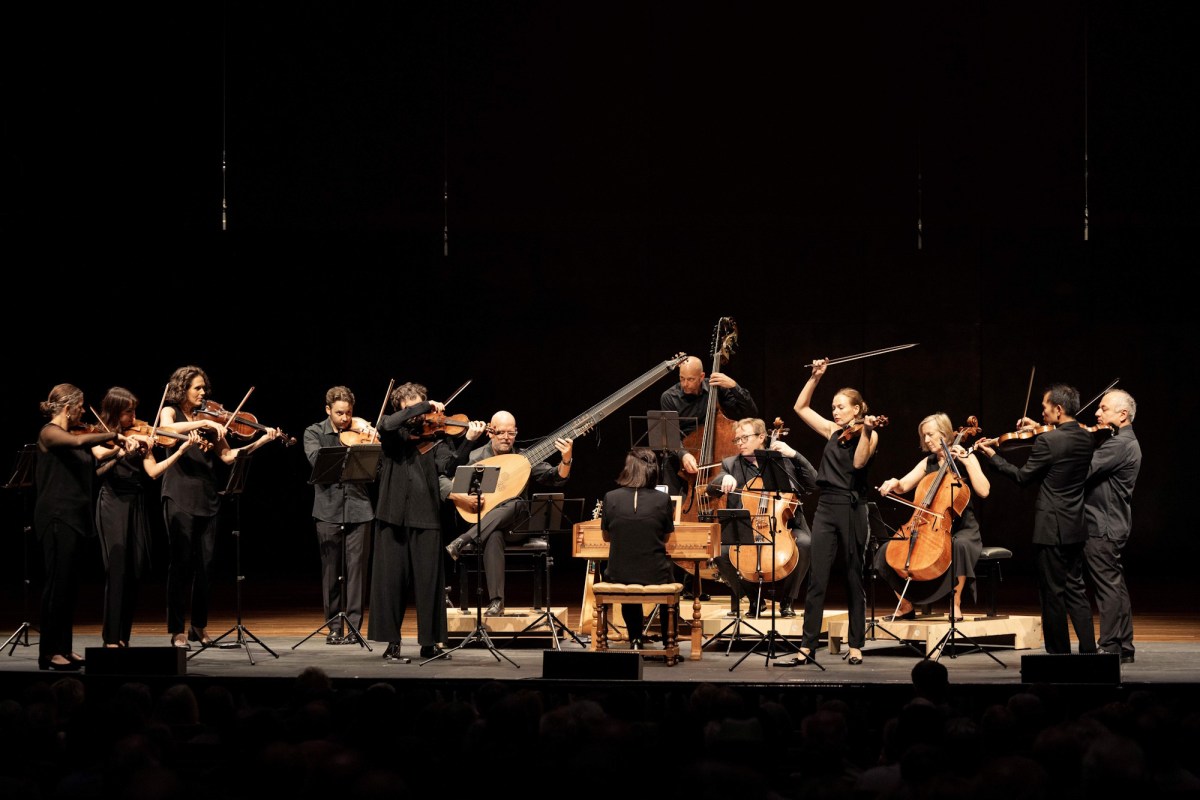
Equally impressive was the ACO’s own principal violin Satu Vänskä, whose presence on stage feels very centered. She shows a vibrant musical agility, giving strength to the ensemble but also standing out with individuality.
Vänskä plays a 1728/29 Stradivarius, part of the ACO Instrument Fund, that has a wonderfully warm, burnished tone. Her style is fluid and responsive, making an elegant contribution to the musical conversation on stage.
A journey through musical history
The program opened with a brief excerpt from the Violin Sonata No3 in D Minor by Johann Paul von Westhoff and written in 1694. This piece was considered daring in its day for its compositional style. It would be wonderful to hear the ACO play it in full.
From there, it was into one of the highlight pieces, Vivaldi’s Violin Concerto in D Minor that mirrors – some would say copies – the von Westhoff piece. Perhaps as Oscar Wilde said, ‘Imitation is the sincerest form of flattery’.
A very different piece followed with a modern work by Soviet composer Sofia Gubaidulina, her String Quartet No2. There is an unsettling other-worldliness about this 1987 work (which at the Adelaide performance, wasn’t helped by a phone ringing in the stalls during one its more quiet passages).
A pact with the devil
And then it was the star of the show, Giuseppe Tartini’s vivid Devil’s Trill, more formally known as the Violin Sonata in G Minor. There is a colourful, and highly mythologised, origin story to this piece about Tartini dreaming that he made a pact for his soul with the devil. Whatever the truth of that, the piece is superb, and remains one of the most demanding compositions in the repertoire. It’s no surprise that Ilya Gringolts was mopping his brow as he took his well-deserved bows.
Throughout the program, the ensemble was in good form, playing with the blend of precision and vitality that the ACO does so well. There is a clarity to their playing with the crisp articulation of fast movements and finely shaped phrasing of slower sections.
Many of these musicians have played together for years and that gives them a feeling of collective synergy on stage. Cellists Timo-Veikko Valve and Melissa Barnard are always great to watch and Stefanie Farrands plays the precious 1610 Maggini viola with flair and deep respect. It was also good to see guest artists Masumi Yamamoto on the petite harpsichord front of stage and Simon Martyn-Ellis on theorbo and Baroque guitar.
There were four more short pieces after interval, including the crowd-pleasing Concerto for Two Violins and the final piece, Francesco Geminiani’s Concerto Grosso No12 in D Minor, the Follia. This is a delightful work, and sent the audience home with a smile.