Men who use bolt cutters to break into a train depot aren’t typically the kinds of people you’d want your child to emulate. Yet this was the position artist and SEARCHERS co-curator Fiona Lowry eventually found herself in after her teenage son took a serious interest in the world of graffiti.
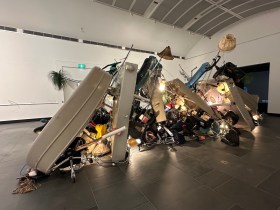
Co-curated with the National Art School’s Katrina Cashman, the exhibition brings together 39 contemporary artists, including nine graffiti writers who have created ephemeral works directly on the gallery’s walls. The works range across sculpture, video, installation and painting, and are united by an interest in graffiti culture and the medium of spray paint.
Driven initially by anxiety, Lowry’s own research into this world revealed the oft-criminalised culture her son had entered was in reality ‘a community built on mentorship, repetition, and the relentless refining of form’. SEARCHERS is shaped around these personal reflections, and the recognition of the role graffiti and spray paint have played in Australian art.
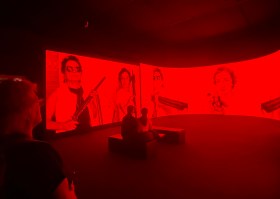
It includes works like Eddie Martin’s documentary film Jisoe (2005), which follows a Melbourne graffiti writer through what Lowry describes as ‘the turbulence of his daily life’. Through Martin’s shaky lens, exhibition viewers can enter a world of casual criminality and fraternity, witnessing the lifestyle and the mark-making behind graffiti that so often remains unseen.
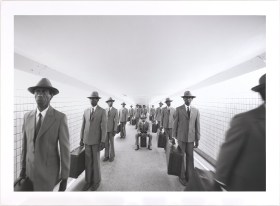
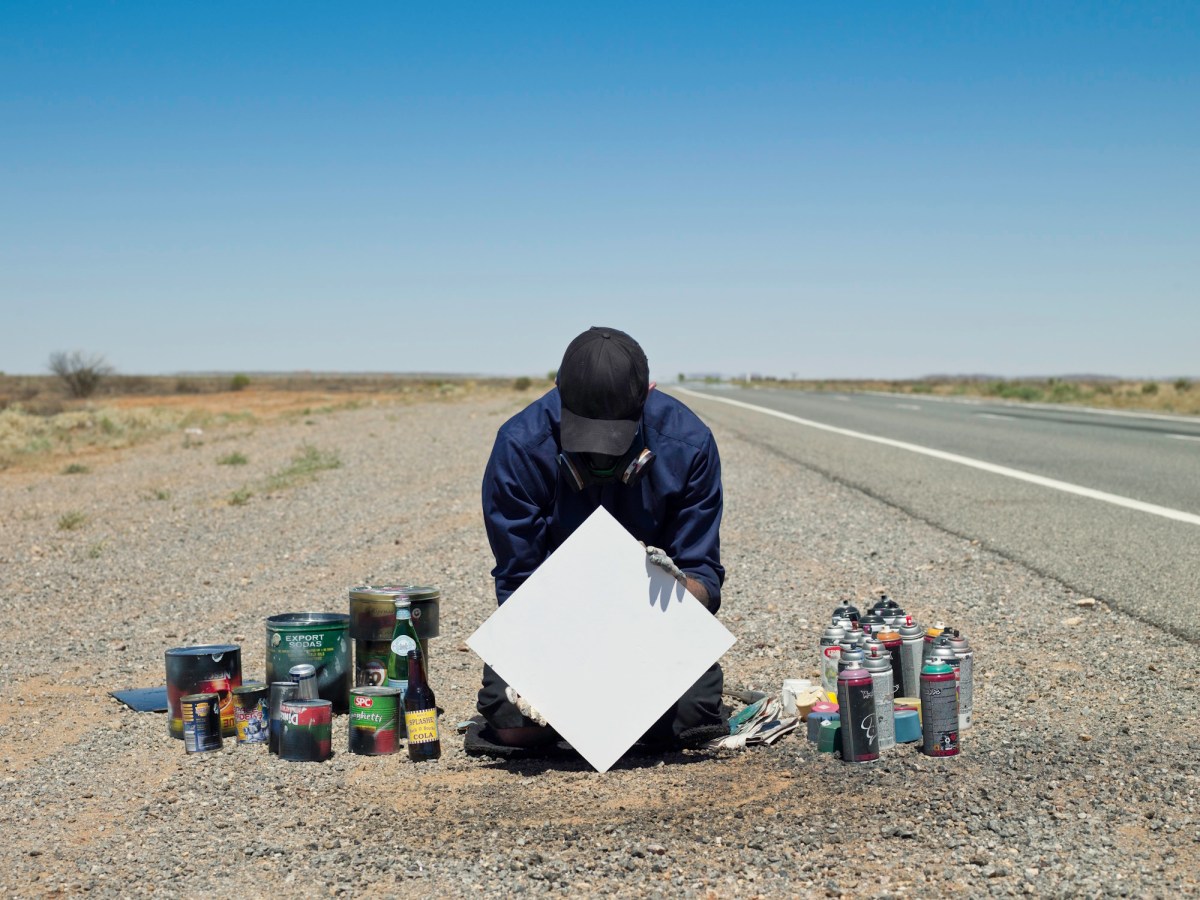
From experimental Sidney Nolan portraits to contemporary pieces from writers such as MACH and graffiti-inspired work by Reko Rennie, SEARCHERS explores both the immediacy of the medium and politics of the culture.
SEARCHERS exhibition review – quick links
The politics and poetics of spray
SEARCHERS is hosted over the two levels of the National Art School Galleries as part of Sydney Festival 2026. The institution’s site on the former Darlinghurst Gaol acts as a potent parallel to graffiti culture itself, straddling the shifting boundaries of criminality and institutional acceptance.
SEARCHERS’ biggest challenge is to reconcile the rough edges and untamed nature of graffiti with the polish that comes with being exhibited alongside contemporary fine art in an institutional show.
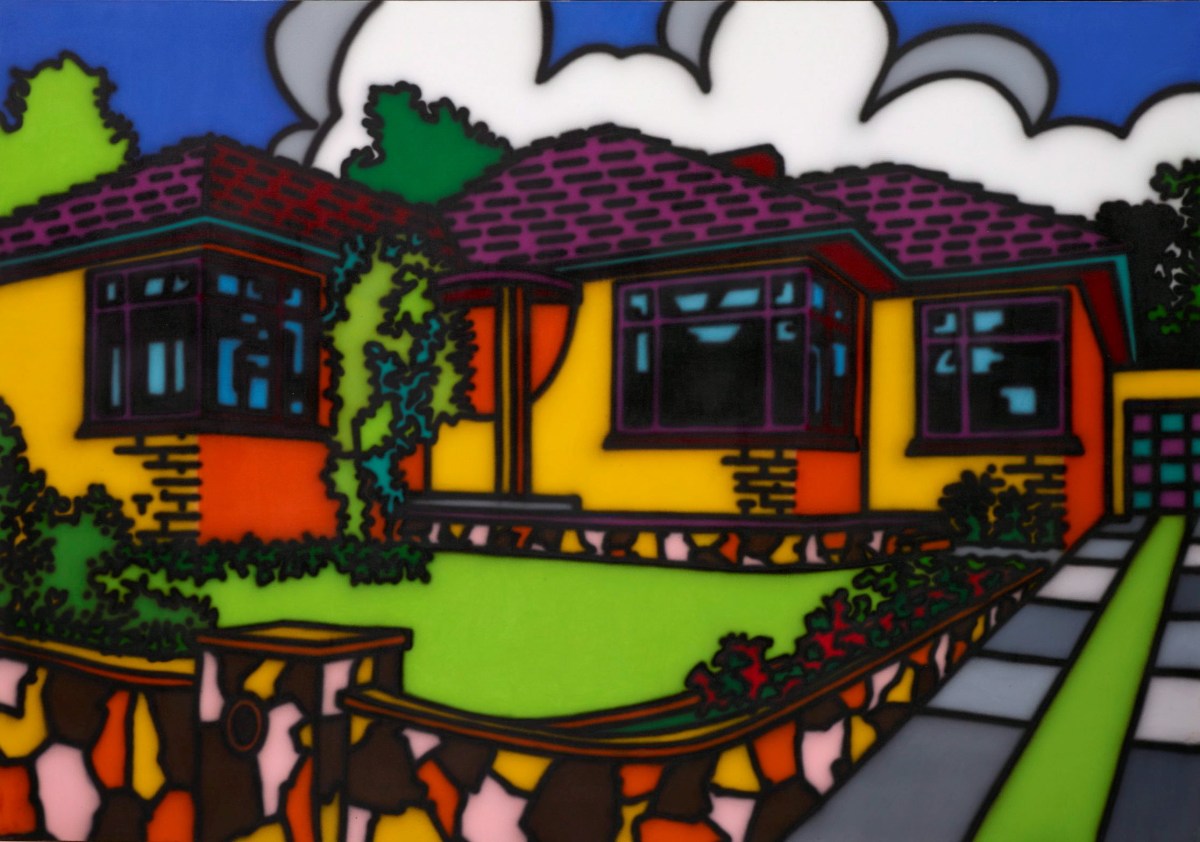
In an exhibition essay, artist Shaun Gladwell asks: ‘If graffiti speaks for itself, why interrupt it?’ It’s a potent question, one that seems to be answered by the show amplifying these voices for fresh audiences.
Gladwell considers graffiti outside institutions as ‘a free, immediate and unedited medium for the broadcast of ideas’. What happens to the outsider’s status when you bring them in?
Inviting graffiti writers such as TAVEN, SPICE and SNAIL into the institution to exhibit alongside established fine artists like Ben Quilty and Joan Ross feels respectful and exciting. But on the sanded white walls of the air-conditioned NAS Galleries, it also makes the work of the writers feel less free and immediate than on the street.
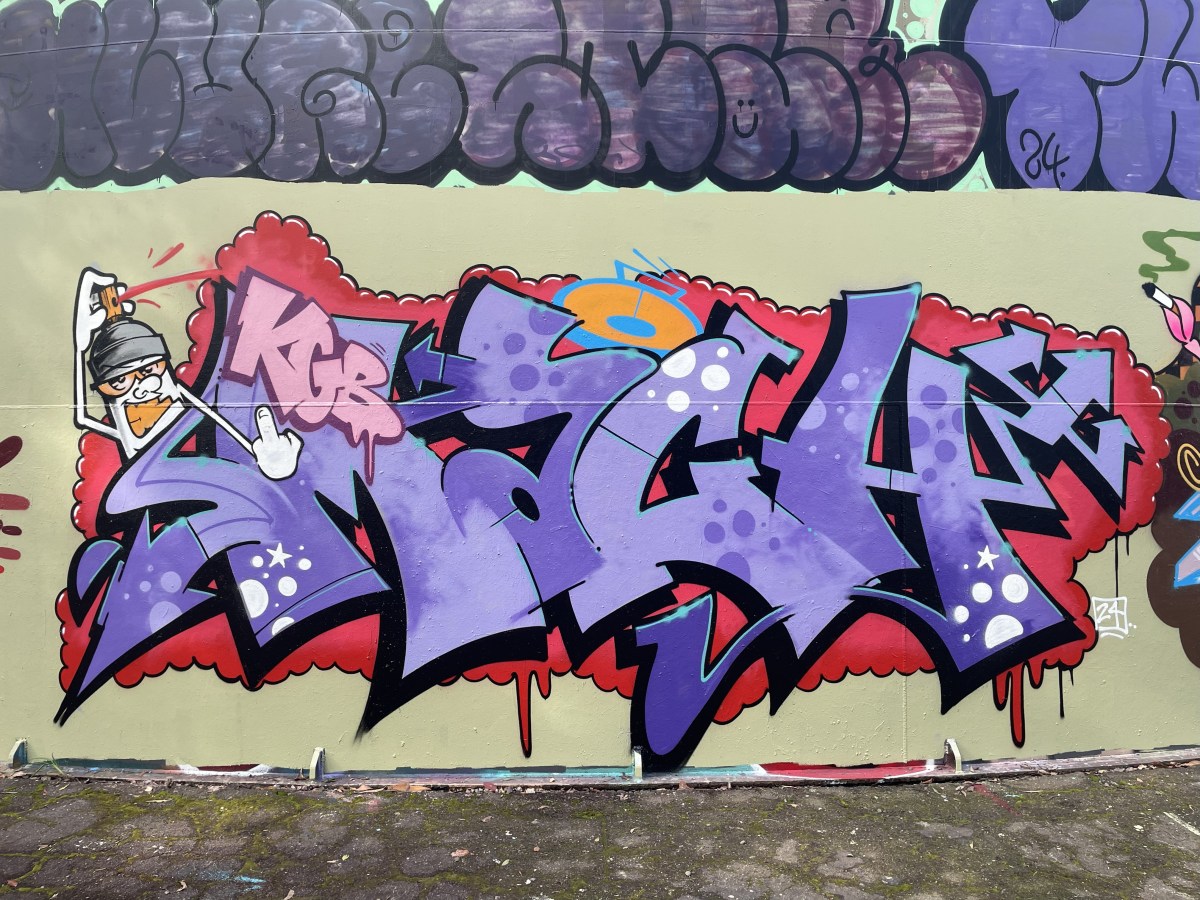
Much of graffiti’s power comes from its illicit nature, taking over unintended spaces and jostling for your attention alongside advertisements and signage. The commission of pieces for a gallery is a worthwhile endeavour, but some of their potency is lost in translation.
Graffiti and contemporary art
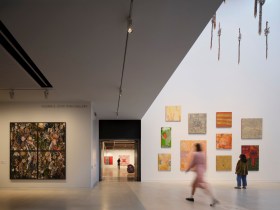
One work from a graffiti writer that does maintain its strength in the gallery setting is that of Sydney-based BAGL, whose large-scale text punches into the walls from high above eye-level with unapologetic presence.
The piece looms large over the upper level of the gallery, setting a tone of looseness and unrestricted exploration while further pieces from writers are intermingled with those of fine artists throughout the space.
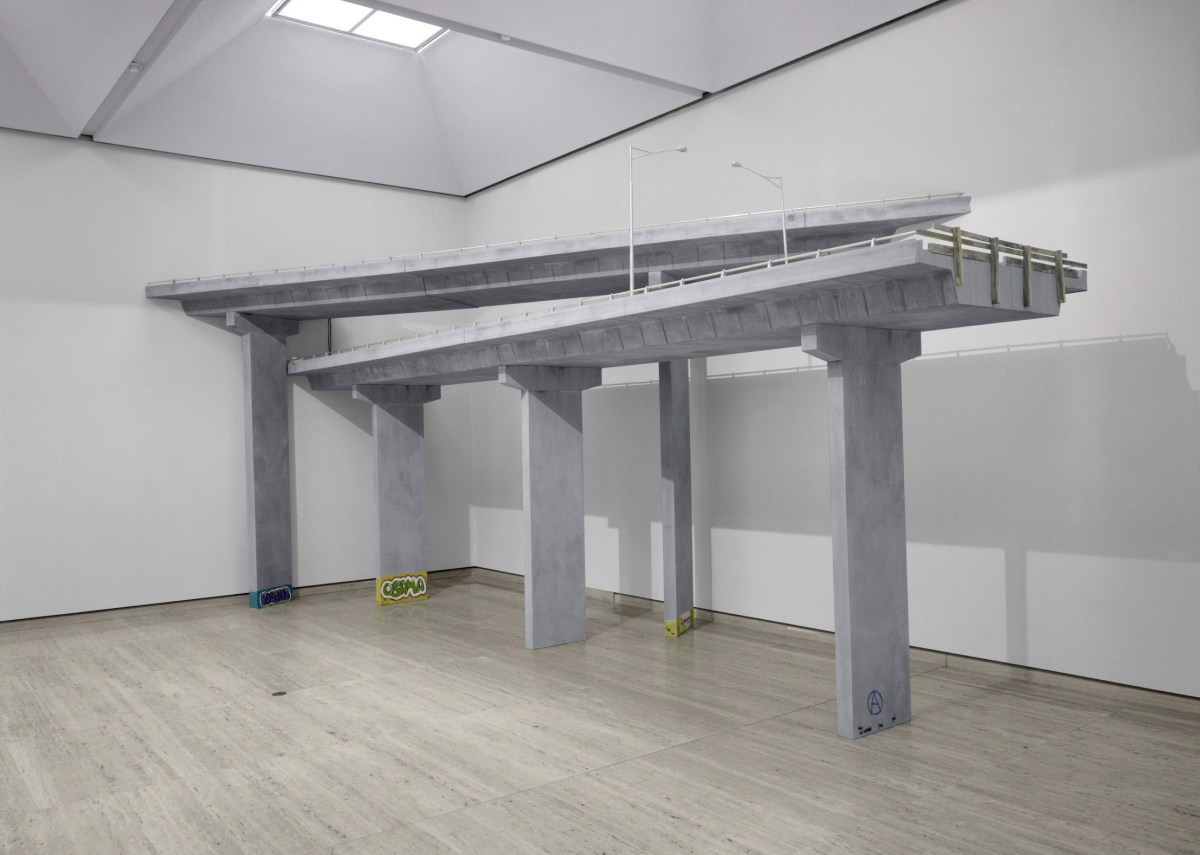
While some of the video works in the exhibition provide a window into graffiti culture, such as Eddie Martin’s Jisoe, Callum Morton’s installation Motormouth (2002) instead creates a portal. Standing in the shadow of a ceiling-height freeway peppered with tags, a soundscape brings you into the urban landscape while the scale leaves you dwarfed. Doesn’t it make you want to leave a mark?
Read: Observer, Observed review: public art about public surveillance for Sydney Festival
What feels like the most important work in SEARCHERS is by Lowry herself, an ethereal 2023 painting of her then 11-year-old son Vin, who inspired the show. Before the crossroads is a delicate portrait of a boy on the cusp of adolescence, when identity is still in freefall.
Through the portrait’s hazy blue lens, Vin searches for his place in the world before perhaps finding it in graffiti.
Lowry writes that all artists are searchers. In the sense of the street slang ‘earcher’, they all look for something of value and will borrow, steal and break into restricted spaces to do so. The portrait of Vin reminds us to keep our eyes open, that what we seek may be right in front of us or may require some breaking and entering.
SEARCHERS: Graffiti and Contemporary Art is at the National Art School Galleries in Sydney until 11 April as part of the 2026 Sydney Festival. Entry is free.
This article is published as part of ArtsHub’s Creative Journalism Fellowship, an initiative supported by the NSW Government through Create NSW.