We’re used to hearing about Bunjil, the wedge-tailed eagle spirit, as the benevolent creator of the Kulin Nations: the guardian who shaped clay into humans, forging the lands and its waterways so that his children could thrive. But as with all myths of ancestor gods, there is light and shade to these ancient stories, with their focus on observing rituals and paying due respect. The Gunawarra, or black swan, understands the consequences of straying too far from what’s allowed.
How you read the brutal story of how the black swan got its obsidian feathers – with a trace of white ochre remaining under its wings – is all in the telling, as gifted Taun Wurrung playwright Isobel Morphy-Walsh understands. Her mesmerising play Gunawarra Re-creation illuminates the nuance on multiple levels.
Gunawarra Re-creation review – quick links
You’re not alone
First staged in 2024 as part of the Blak in the Room triptych of new works by First Nations women, Gunawarra Re-creation was a co-production between Ilbijerri Theatre Company and Melbourne Theatre Company, then helmed by Yidinji and Meriam director Rachel Maza.
This new staging, stewarded by Yorta Yorta and Gunaikurnai director Andrea James (Sunshine Super Girl, The Black Woman of Gippsland), keeps the impactful story tight while layering even more depth through new movement work, guided by (Th)Dunghutti and Gomeroi choreographer Zoë Brown-Holten.
Badu and Kala Lagaw Ya actor Miela Anich plays Murrun (life), a headstrong but hurting young woman who is determined to take control of her own healing after a terrible incident and reconnect to Country, no matter the reluctance of her semi-estranged mum.
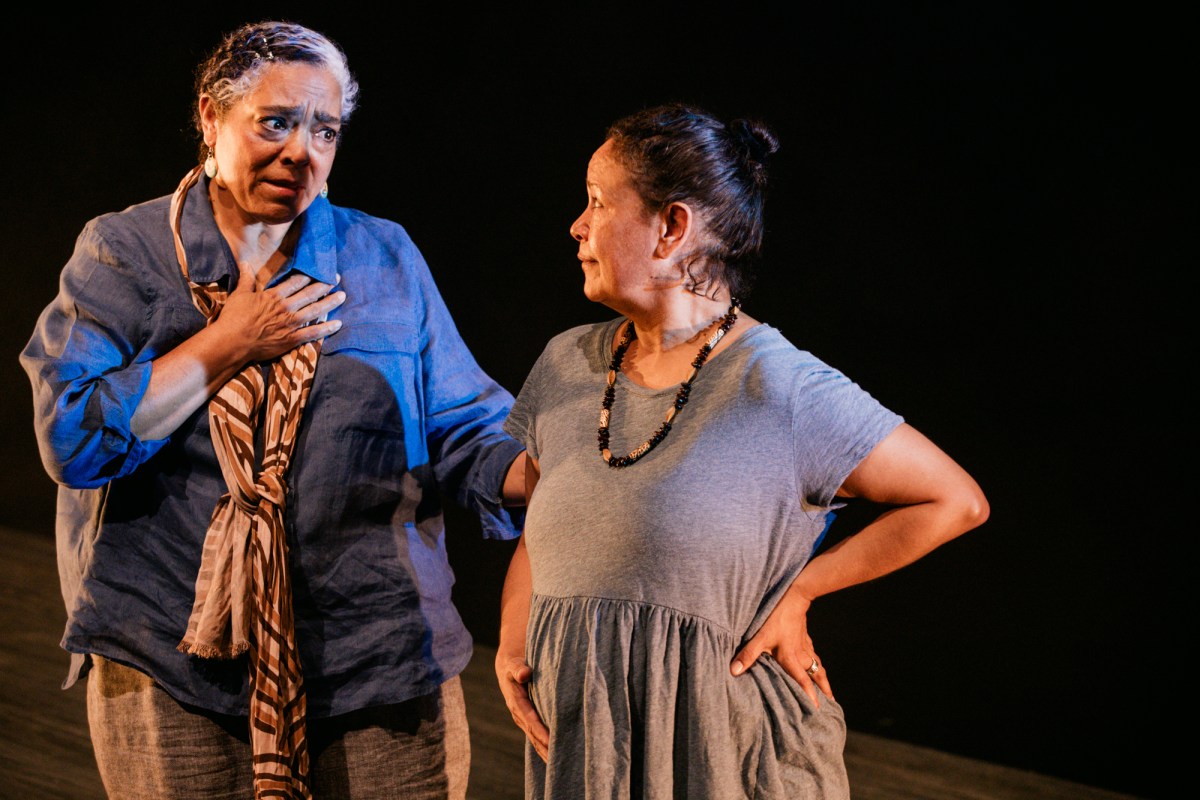
The latter, Roo, is played by Wongutha, Nadju and Mirning star Melodie Reynolds-Diarra, who shows a deft grip on exasperated physical comedy. The older woman, her legs aching, is too tired to accompany Murrun on the difficult riverbed walk to the sacred watering hole where her late sister, Aunty Aggie, used to take her young niece.
It’s a tap-out that infuriates Murrun all the more because she predicted it would happen, leaving her alone to greet her ancestors and pay her respects in the water’s bracing chill. But as her exasperation over half-remembered ceremony and her mother’s absence intensifies, it becomes clear that she is not alone.
As played by the legendary multi-hyphenate Lisa Maza, a Yidinji and Meriam woman, Aunt Aggie is a beloved force, never forgotten. She appears alongside Murrun and Roo in richly drawn flashbacks that tease out both the familial rift and stronger days together, and even more affectingly as a silent presence, watching on with quiet pride from the sidelines of the Lawler Theatre’s compact black box.
That Maza can convey so much in the glimmer of her eyes alone is a testament to her peerless talent. But Aunty Aggie is not the only spirit watching over Murrun and her grumbling mum.
Gunawarra rising
Taun Wurrung storyteller and disability activist Hannah Morphy-Walsh, a deaf woman and the writer’s sister, also captivates in a mostly silent turn as the Gunawarra. The black swan defied the gods to rest in this forbidden watering hole and paid a high price – one that left her broken, but rebuilt with help from the kindness of Waa, the crow.
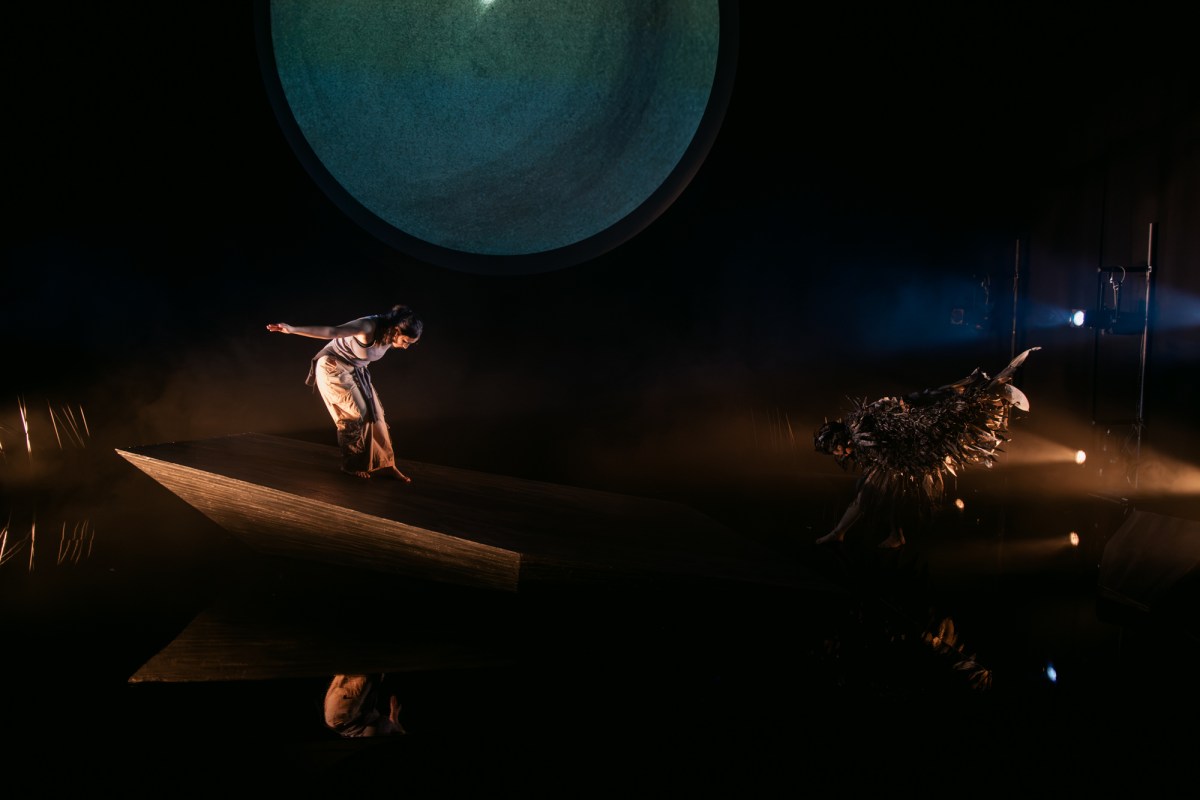
Hannah Morphy-Walsh’s movements are the most dance-like of the quartet, bringing an animalistic curiosity and territorial prowl to Gunawarra.
She also gets to rock fabulous black swan makeup and a feathered cape (from costume designer Dann Barber) and headdress (from Nyikina designer Emma Salmon) that’s even fiercer than the one donned by Natalie Portman in the Darren Aronofsky film.
Anyone who’s ever gotten near to one of these regal birds will be aware they can be hella scary when they feel threatened and flex those wings.
It’s fair to say that Murrun is equally on guard.
Ancestral worlds on stage
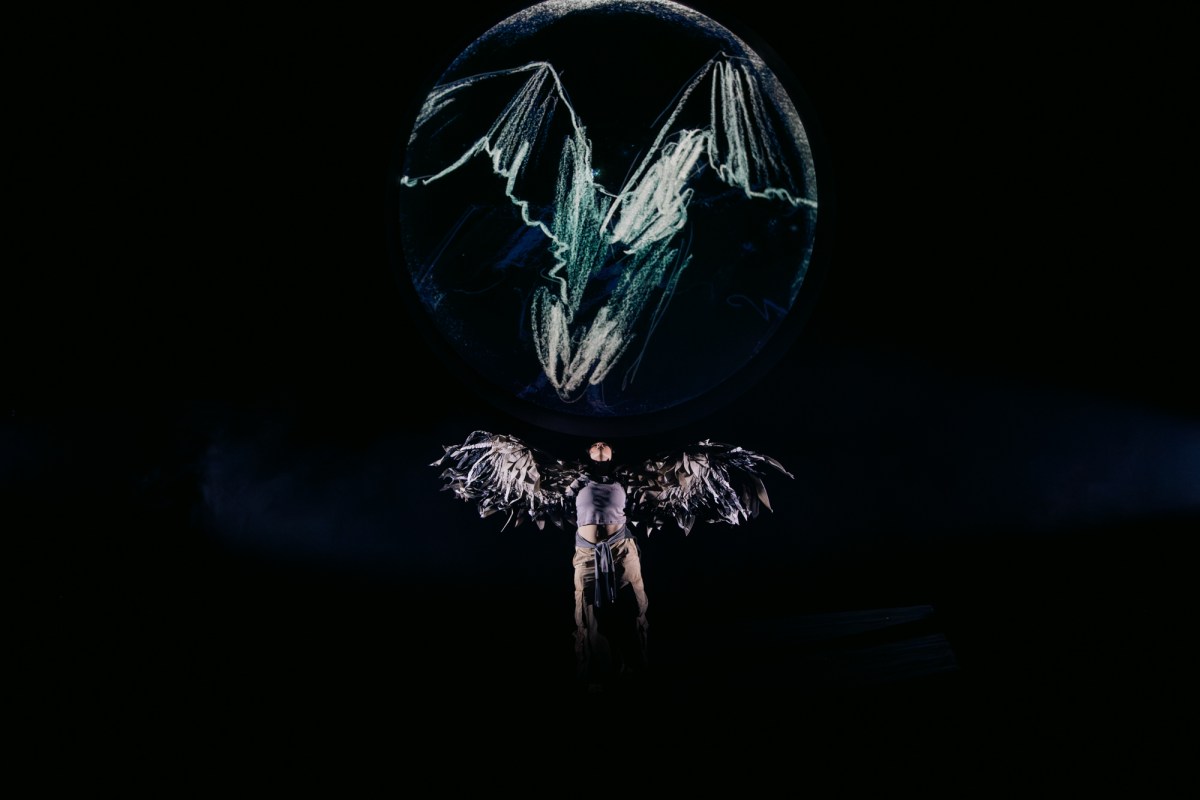
Barber also delivers Gunawarra Re-creation’s impressive set, with a revolving rock-like outcrop emerging from a black-polished floor, which sometimes also serves as the waters that reflect Gunawarra’s sable plumage as she spins slowly upon the stage.
Reed-like protrusions in bronze glimmer in stacks by the wings, sharply caught by lighting designer Katie Sfetkidis. A vast moon-like disc hangs over the stage, onto which hand-drawn charcoal animations of Waa, Bunjil and Gunawarra (also by Barber) are hauntingly projected.
A lushly sonorous score by composer and sound designer James Henry (a Yuwaalaraay, Gamilaraay, Yorta Yorta and Yuin man) wallows in the show’s deep-seated sadness and then soars, as if held aloft by Gunawarra herself.
Morphy-Walsh’s nimble writing expertly navigates the deep currents running below Murrun’s anger, encompassing both her steadfast resistance to rampant colonialism and a very specific wound that casts a long shadow over her family.
Intertwining this story of Murrun’s pain with the phoenix-like resurrection of Gunawarra is a brilliant theatrical move, wonderfully realised by James, that subtly reframes the origin story through an exhilaratingly contemporary, feminist lens – a reclamation of which Aunt Aggie approves. I’ve no doubt you will, too.