In Yiddish humour and vaudeville, the schlemiel is the classic clown who is both chronically inept and the author of their own misfortunes. The word itself is derived from the Hebrew word for useless, while the character was popularised by Adelbert von Chamisso’s 1814 novella The Wonderful Story Of Peter Schlemihl, which follows a man who sells his shadow to the Devil for a wallet that never runs out of cash but who is rejected by his girlfriend and shunned by society. The schlemiel can be distinguished from the schlimazel, who is chronically unlucky; the schmendrik, who is a pathetic sad sack; and the schmuck, who is (literally) a selfish prick.
Like Chamisso’s novel, Will O’Mahony’s new play Day (After Day) in the Life of the Useless is about a schlemiel named Pete – although in this case he is also chronically unlucky, a pathetic sad-sack and a jerk, who loses his fiancée, his job, his family, and finally his soul.
Debuting with the Black Swan State Theatre Company, O’Mahany’s new play is also a medieval morality tale like Everyman, in which a central character goes from scene to scene trying to escape his fate while making things progressively worse for himself, falling into a moral and spiritual predicament that becomes emblematic of an entire society. Suffice to say that Day (After Day) in the Life of the Useless is play of and about our times.
Day (After Day) in the Life of the Useless review – quick links
A demanding journey
Covering the rise of the inhuman in the age of AI and robotics, as well as our increasingly casual inhumanity to each other and perhaps the end of humanity itself, Day (After Day) in the Life of the Useless is a demanding journey for an audience – even if sprinkled with sugar along the way.
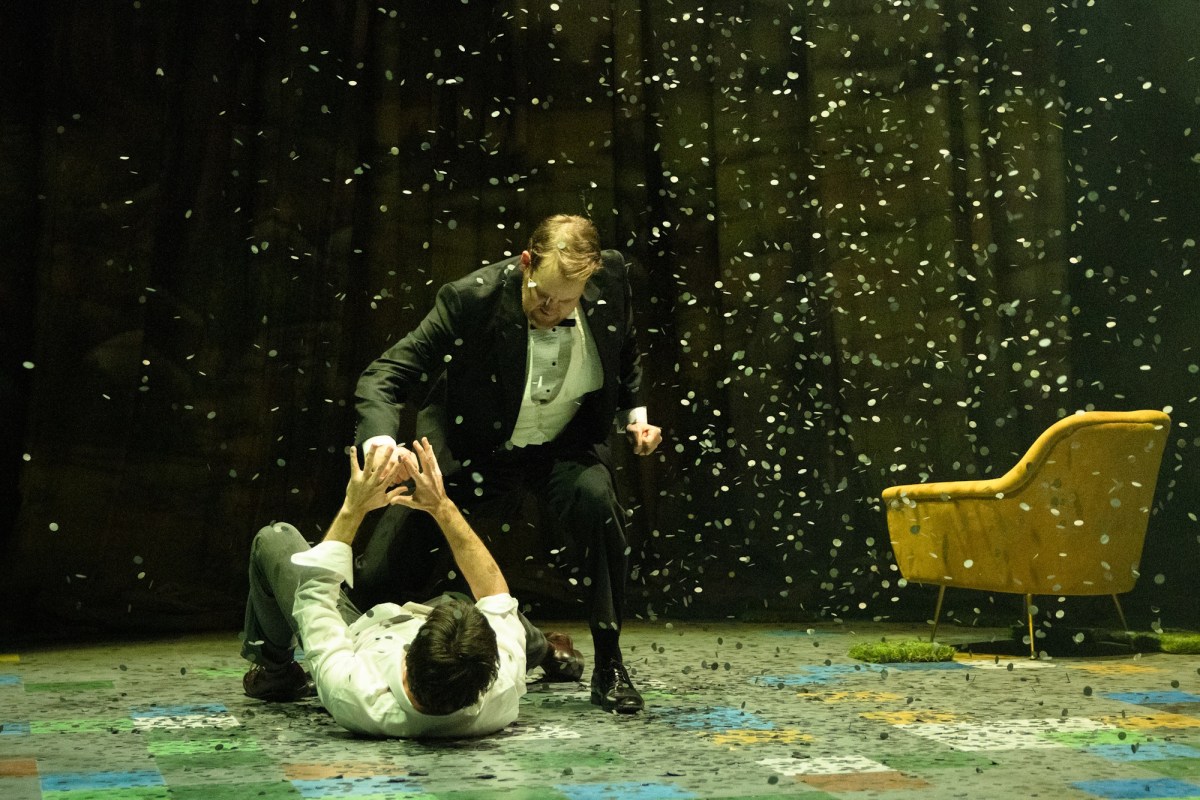
The play slides from comedy to satire, Absurdist farce and finally existential tragedy. Things become increasingly surreal as social and theatrical conventions break down and the façade of reality cracks open. What initially seems like a series of short episodes from a TV sitcom increasingly comes to resemble a social and political allegory like Ionesco’s Rhinoceros or The Truman Show.
Despite these non-naturalistic and highly stylised precursors, I wasn’t convinced by director Adam Mitchell’s decision (presumably made jointly with O’Mahony as associate director) to accentuate the comedy with larger-than-life, two-dimensional characterisations from everyone in the ensemble cast except O’Mahony himself as Pete.
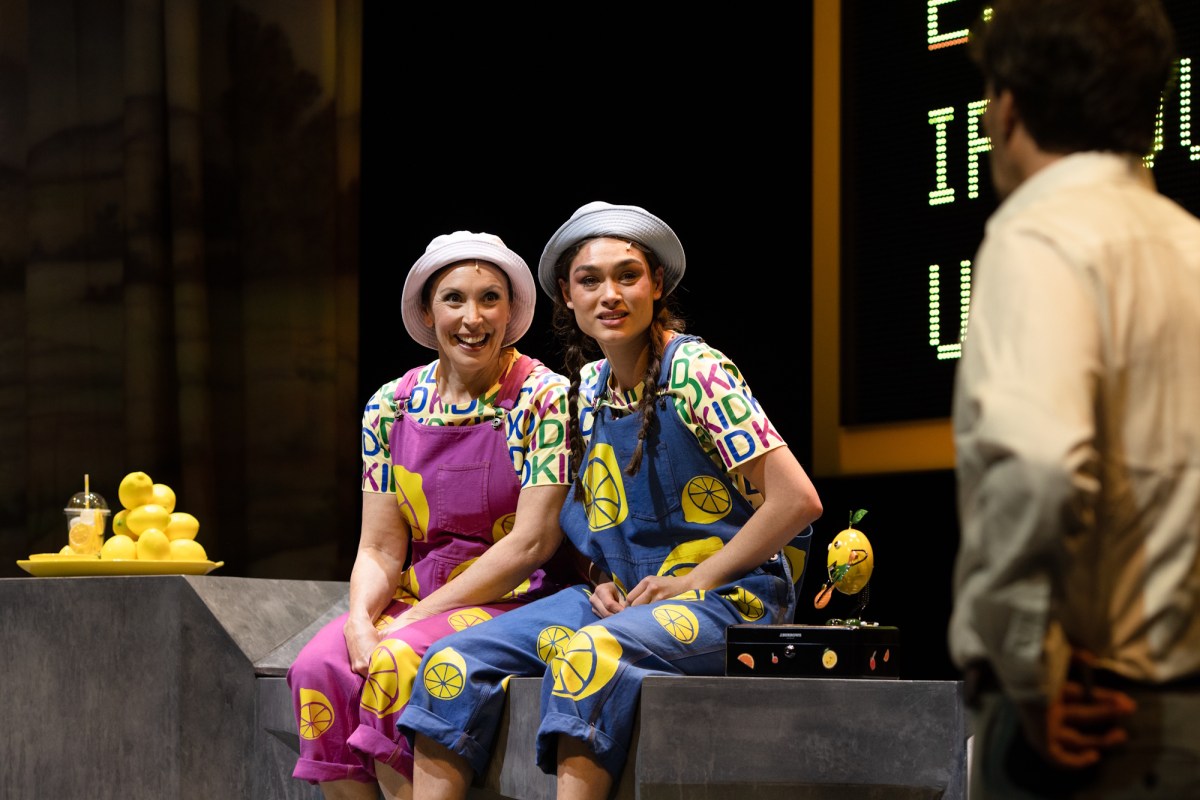
The performances were all amusing (and occasionally hilarious, with Catherine Moore outstanding in various roles, including as Pete’s sexually voracious and emotionally withholding mother). However, I felt like I was being asked to laugh at a robot army of schmucks ganging up on a single schmendrik, who himself showed increasingly schmuck-like tendencies.
All of this prevented me from believing that any of the other characters were real. That undermined the impact of the play’s central dramatic reveal, and I gradually stopped caring about Pete, which felt at odds with the play’s underlying message about dehumanisation and loss of empathy.
The challenge of representing our contemporary world
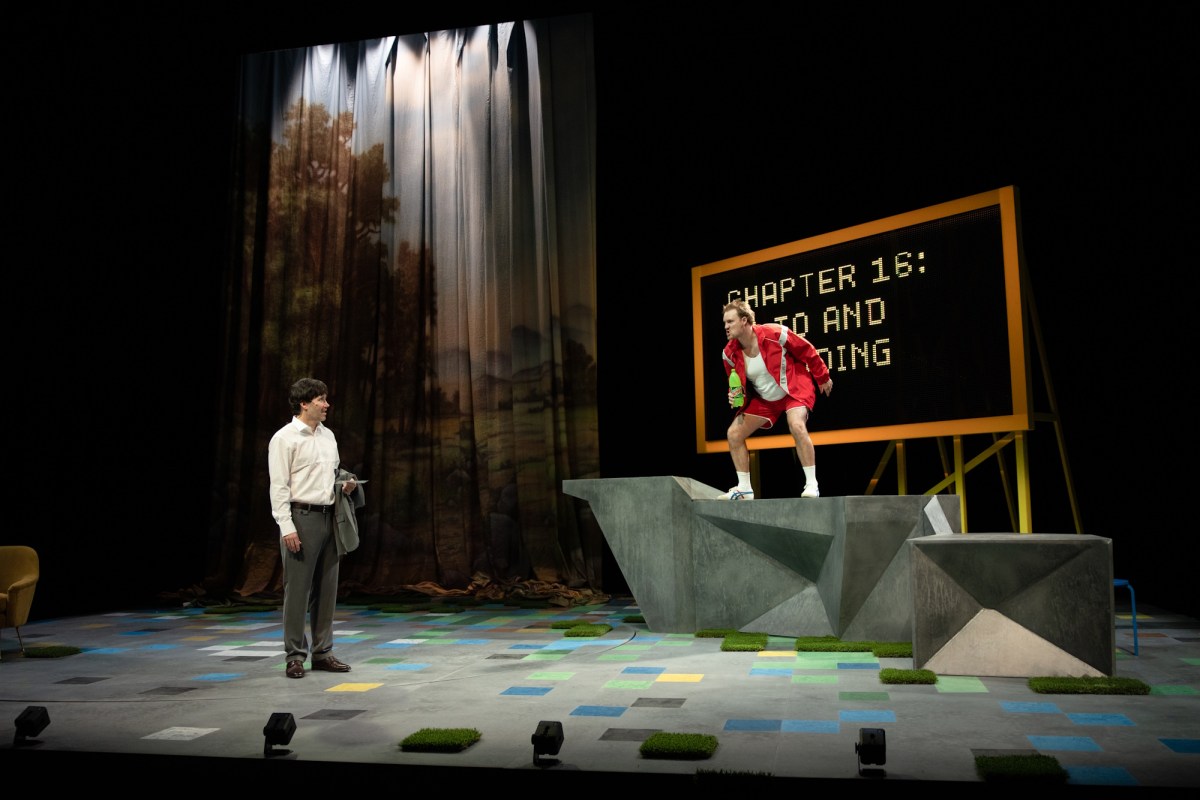
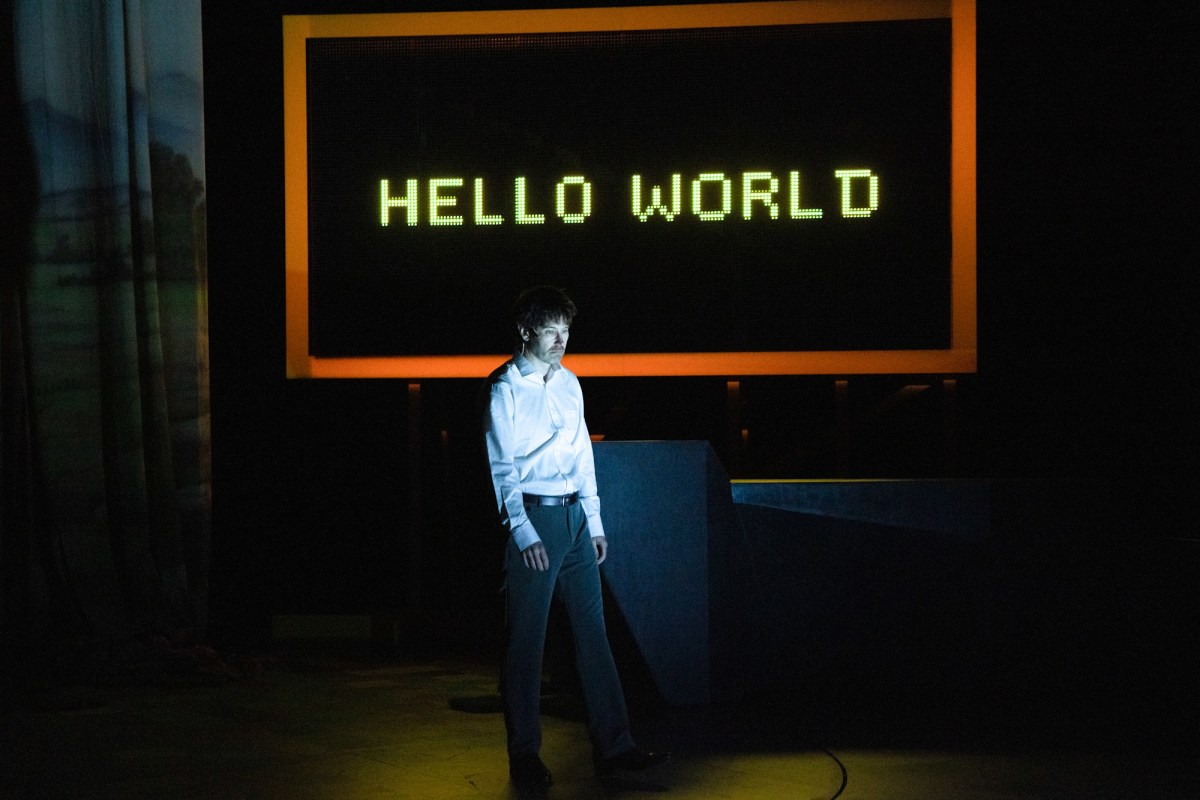
I felt the same way about the cartoonish style of Fiona Bruce and Riannon Walker’s set and costumes, which included LED-screen scene-titles, a curtain backdrop with an AI-style nature-scene, and an out-of-proportion supermarket fridge filled with identical products, costumes with missing sleeves, and outsized wigs.
I had similar reservations about Mark Haslem’s lighting design, which featured end-of-scene snap blackouts and stage fog when things got weird, and Ash Gibson Grieg’s music and sound cues, which punctuated each scene or mood change with an appropriately quirky sting or creepy industrial sound effect.
All of this was presumably intended to suggest the increasing ubiquity of AI-generated slop, but it made the world of the play seem fake from the start, which again pre-empted the central dramatic reveal.
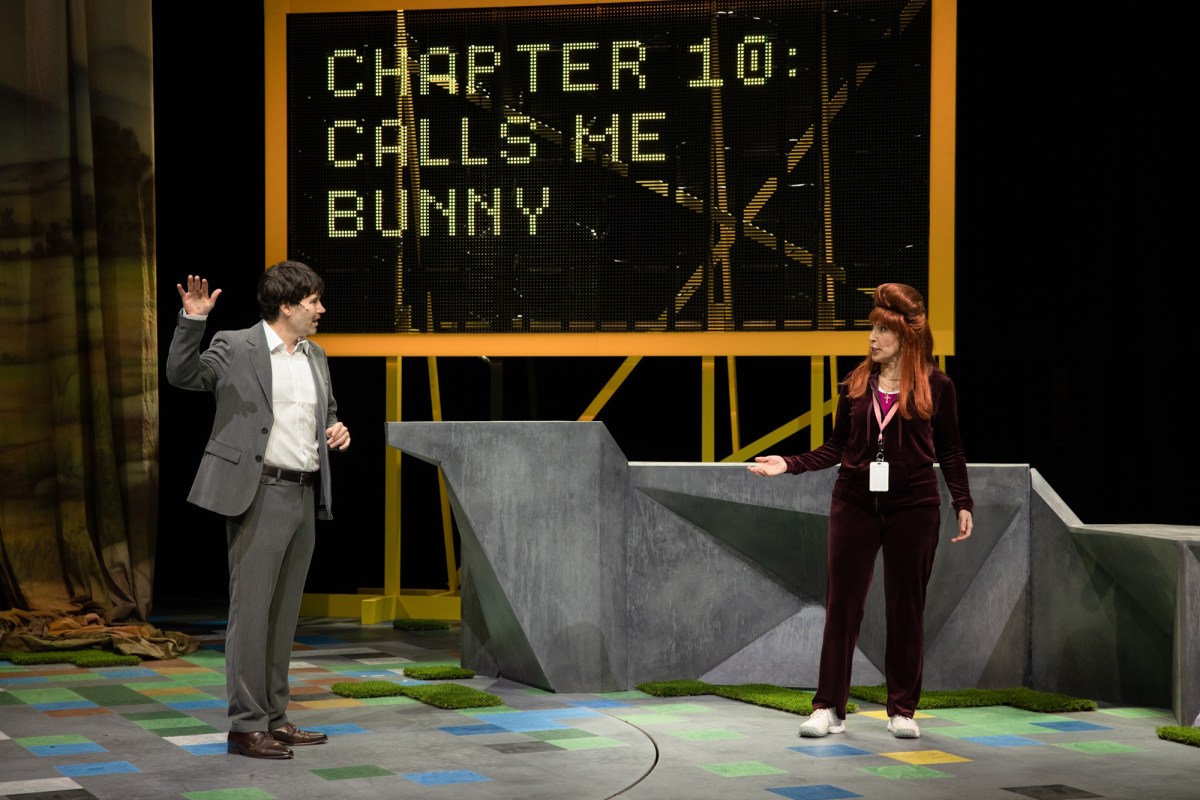
Conversely, the essential ambiguity of the play for me (and of O’Mahony’s performance) would have been better matched by a production that allowed the writing to speak for itself and the transition from comedy to horror to happen more gradually – in other words, more Kafka than Looney Tunes.
None of this would have detracted from the play’s humour – after all, Kafka loved Yiddish vaudeville, and his protagonists are mostly archetypal schlemiels and schlimazels – but would have enhanced the play’s creeping sense of being trapped in a nightmare, and better enabled the audience to connect with Pete’s predicament as being fundamentally the same as our own.
Emotional connection is arguably the social function of theatre as a form of communal reflection, as opposed to the sadistic spectator sport of gladiatorial combat or reality TV. In our own era, should we be laughing at people’s pain, stupidity and callousness, or thinking about what makes them behave and suffer the way they do? The play provides clues, but the production for the most part gleefully rides roughshod over them.
O’Mahony is a subtle writer with a unique voice as well as being a gifted actor. Like his earlier plays Great White, The Mars Project, Coma Land and Minneapolis, his new work Day (After Day) in the Life of the Useless is a fascinating thought experiment that speaks elusively but suggestively about our flawed attempts to connect with each other and repair our shared world, even if it is perhaps irretrievably damaged. I hope to see a future production of the play that allows that unique voice to be heard.