Written and directed by Jada Alberts, Black Light at first sight gives echoes of Louis Nowra’s play Radiance, which premiered at Belvoir Street in a 1993 production directed by Rosalba Clemente. Or, perhaps more pertinently, it may make you think back to Rachel Perkins’ memorable film version, released five years later. Rachael Maza is the key to all three productions – as Cressy in Radiance on stage and film, and now as Aunty in Black Light.
Black Light review – quick links
A poetic reflection on Black mothers
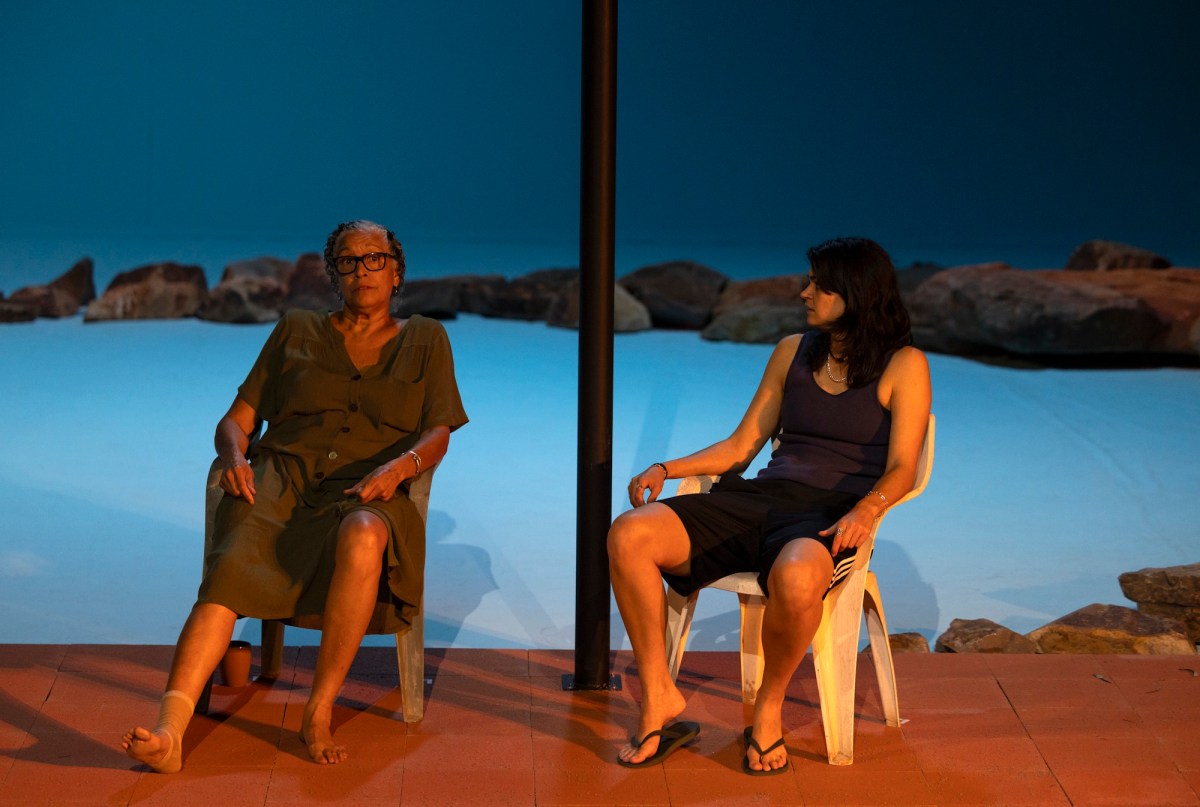
Compounding the Radiance resonances, though, is the presence of Trisha Morton-Thomas (who played Mae in the 1998 film). Then there is also the very image of a trio of Aboriginal people meeting at the beachfront home of their matriarch. It’s almost as if Lisa Maza (real life sister of Rachael, of course) has taken on Mae’s role now that Morton-Thomas has moved into matriarch territory and Tahlee Fereday is potentially Nona, Radiance’s youngest sister (played in the film by Deborah Mailman, in her feature film debut).
But, as Black Light begins, Alberts’ work is clearly a very different beast – eschewing straightforward narrative for a flowing, poetic approach that weaves and, at times, obfuscates before slowing revealing its truths and observations.
Set on Larrakia Country (around Darwin), the play was prompted by long trips made by Alberts to be with family and their ailing maternal grandmother in 2024 and the thoughts this evoked about Black mothers, their experiences and their wisdom.
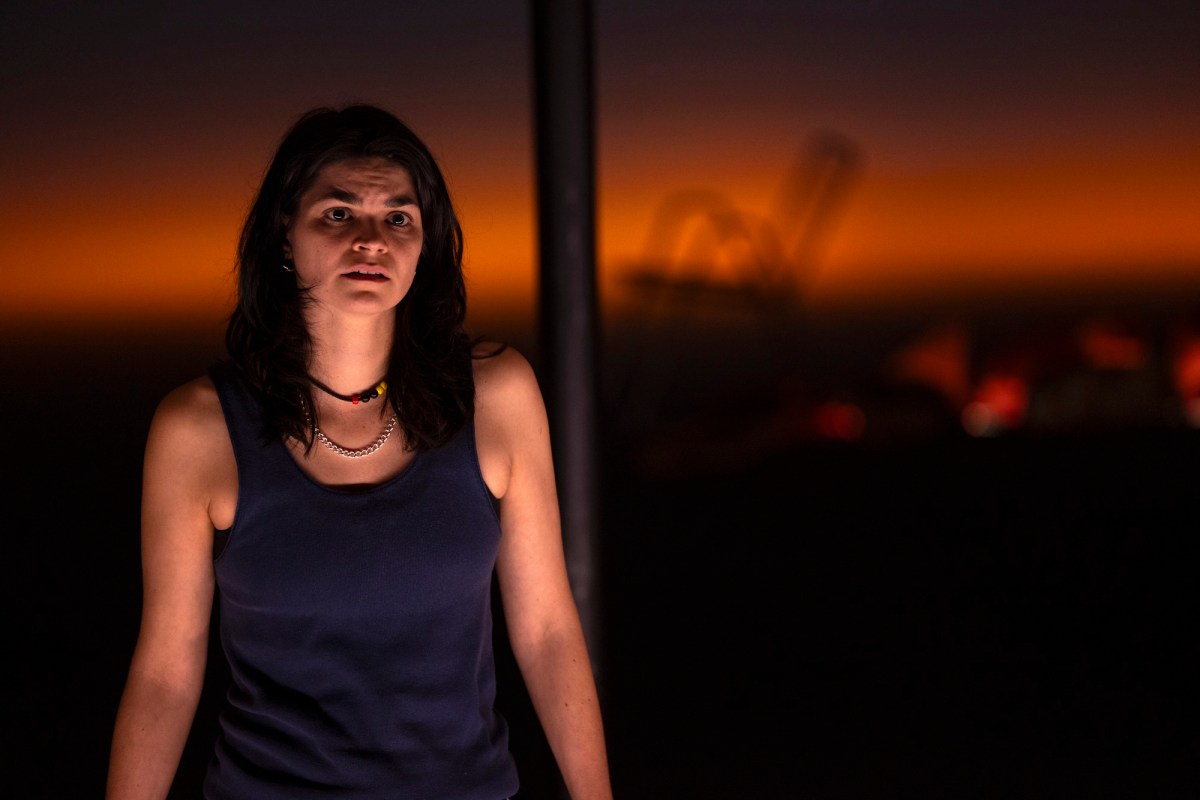
In Black Light, the characters have no names, but are defined by their roles and their relationships to each other. Morton-Thomas is Nan, Rachael Maza Aunty, Lisa Maza Mum and Fereday Bub. There are also the unseen grandchildren, who are forever sleeping in another room or playing outside.
The push and pull of family
Without spelling it out Alberts seems to be inferring that the play takes place during Covid – or it could equally be a not-too-distant dystopian future, where systems have fallen apart, the power is unreliable and confusion is reigning in the big cities.
Without the common purpose of a funeral as in Radiance, the women have different reasons for being at Nan’s house. Bub has taken their children and escaped the city and a fractured relationship, Mum is passing through, but always working – when she can get an internet connection. Only Aunty is a permanent resident, living with Nan and caring for her, but sometimes begrudgingly so.
However, the relationships are not as cut and dried as it first appears. Who has been doing the caring and who is really being cared for? Eventually, also, the true nature of the oft-mentioned characters of Evelyn and Steve is explained, in perhaps the clearest conventional narrative thrust of the play.
But this is not Alberts’ chief concern. Rather, the lion’s share of the dialogue and the black light, if you will, is shone on Nan – her musings, her insights and dream spaces (distinct from The Dreaming, as Alberts points out in the program notes).
A challenging script to bring to the stage
This can take time. This is not a play of rushed dialogue or dramatic confrontations, but the silences and longueurs do still engage. And this has as much to do with Alberts’ writing and direction as with the strength of the individual performances.
And here it’s unavoidable to note that one of the actors, presumably due to the huge, huge chunks of non-linear dialogue given to their character, relies on a book to remember some of their lines. In many productions, this could be an absolute distraction and it’s certainly noticeable here. But, I’ve yet to see any performer using a crutch in this manner and still being able to create such a fully-fledged and multifaceted character. Nan is wistful, playful, irked, heartbroken, furious and contemplative in turns. And the book becomes merely a prop on her lap.
ArtsHub: Ray Lawler’s The Doll Trilogy to be performed for first time since 1985
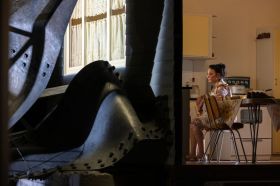
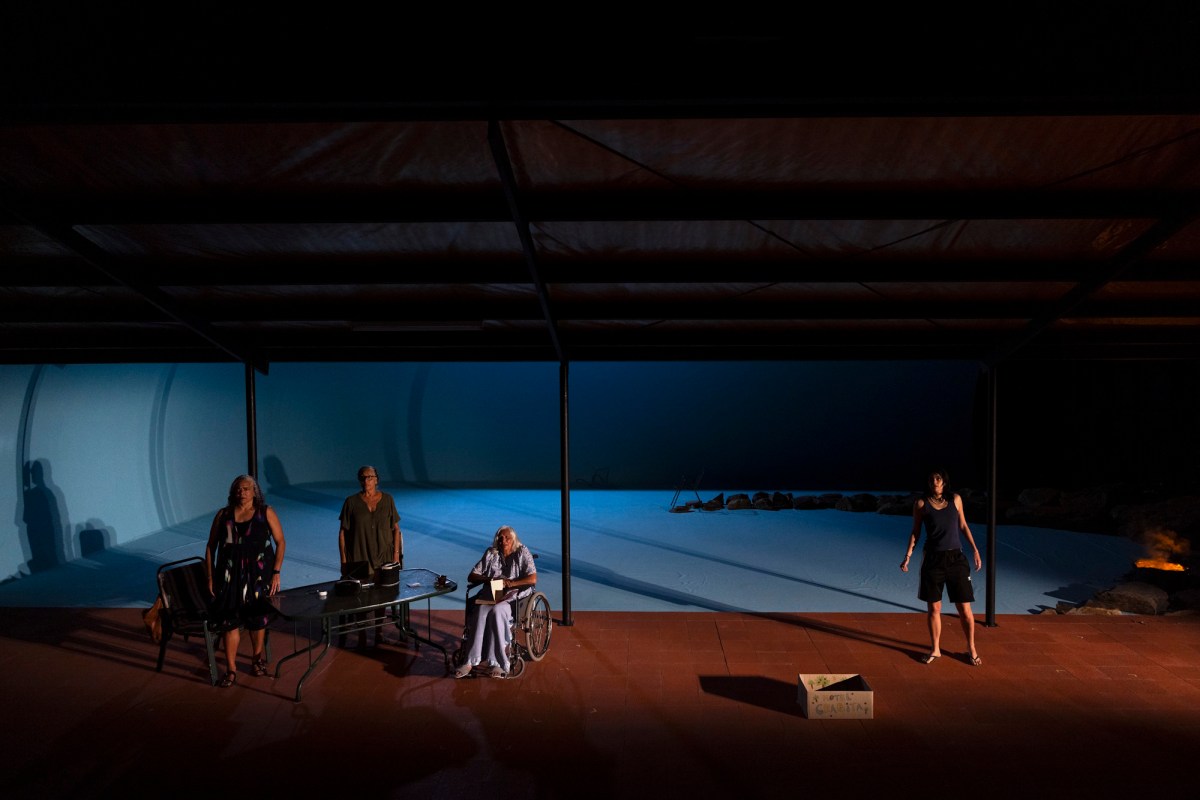
Mention should also be made of Dale Ferguson’s glorious set – sweeping from one side of the stage to the next, with a line of attention-grabbing rocks curling away from the house around the cove and a blue expanse filling the area behind the living space downstage. It looks wonderful and is enhanced by a fabulous sound design courtesy of Kelly Ryall that uses insect sounds, mechanical hums and thunderous rumblings to punctuate and enhance the drama on stage.
The impact of the setting on opening night was only lessened by a decided chill in the auditorium, unfortunately, and the fact that the physical demands it made of the actors were perhaps too onerous. Walking straight across the seascape may have been necessary in practicality or a directorial choice intended to imply an otherworld moment, but from an audience perspective you couldn’t help but wonder if their feet were getting wet.