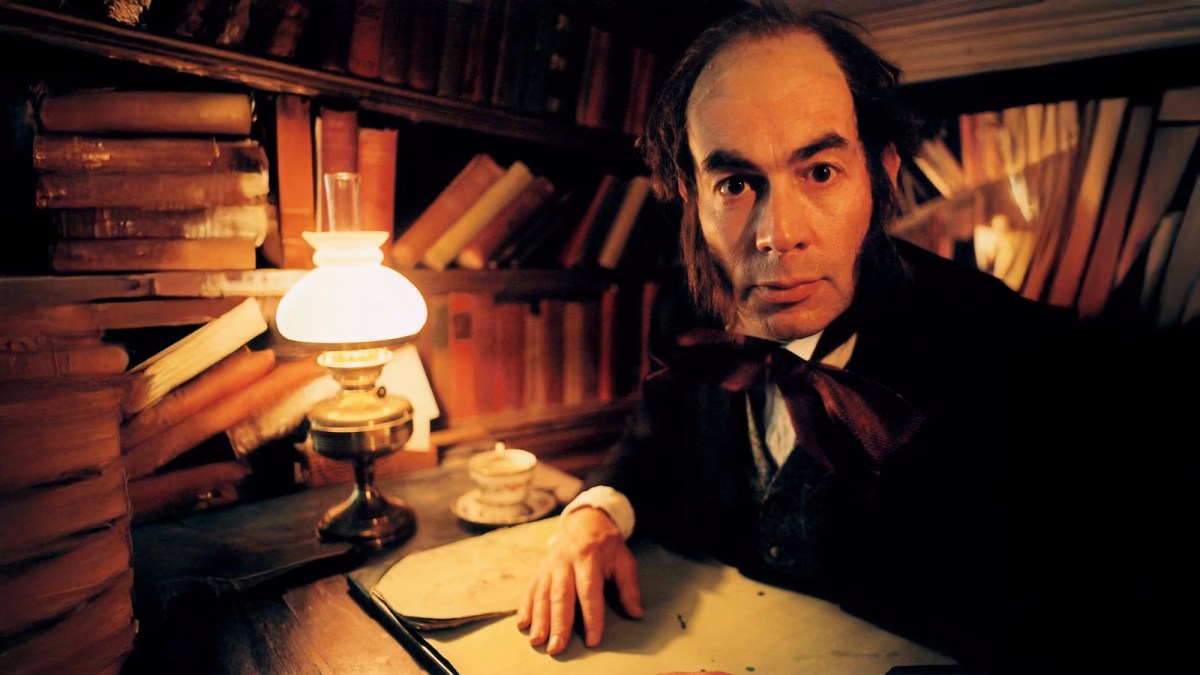
Brian Lipson’s A Large Attendance In The Antechamber is a meta-theatrical expedition into darkest England and the brilliant, repugnant mind of Sir Francis Galton (1822-1911) – the Victorian explorer, genius and polymath who analysed and rejected the ‘power of prayer’, devised the first weather map and invented the now thoroughly discredited pseudo-science of eugenics, which he defined as ‘the study of all agencies under human control which can improve or impair the racial quality of future generations’.
First staged in Melbourne in 2000 and remounted several times between 2001 to 2007, Lipson has returned for Rising, once again donning Galton’s mutton chop sideburns and heavy, period-appropriate garb to squeeze into the small, cluttered, box-like space – a scientist’s study in miniature – in which the majority of the performance takes place.
A Large Attendance In The Antechamber – quick links
Performance as lecture
As the audience enters A Large Attendance In The Antechamber, the actor is confined to his seat and already in character, his posture and position recalling the mechanical automata which unnerved and delighted 18th and 19th century audiences.
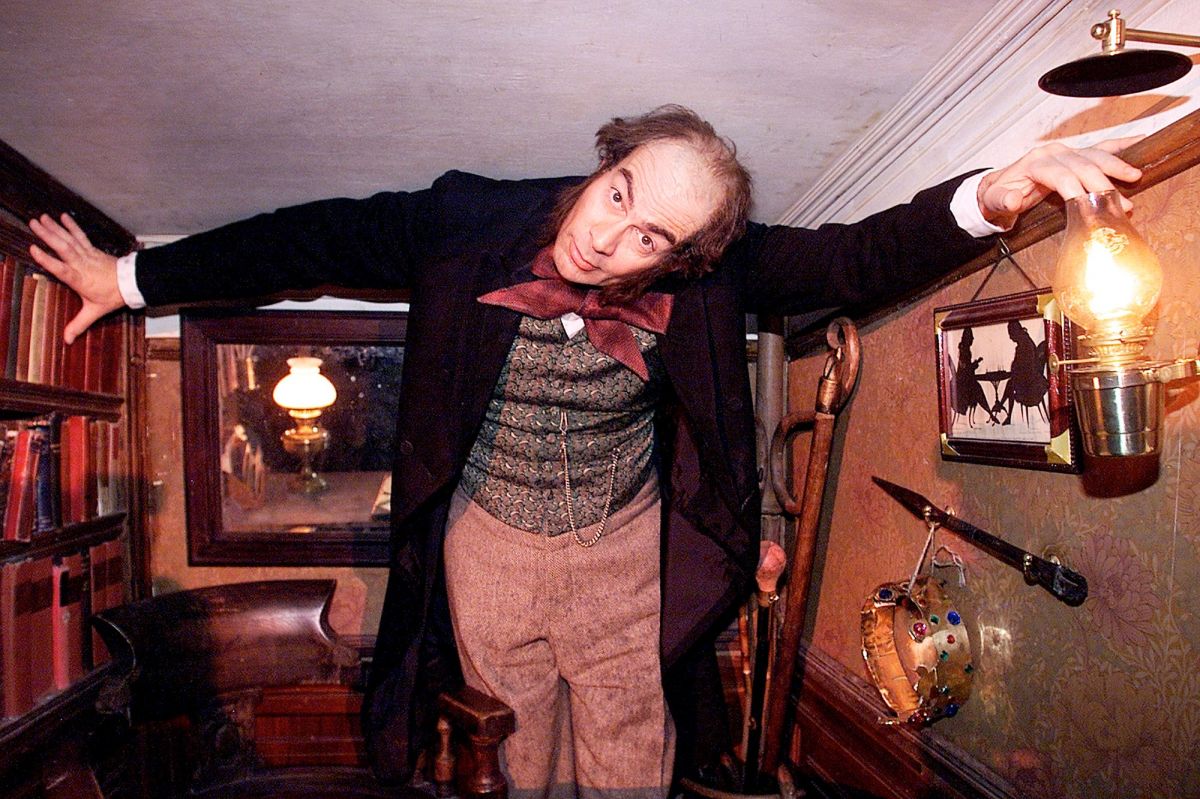
Galton addresses the audience directly, as if giving a lecture to students or at a public assembly. Initially, his voice is thin, reedy and affected, his precise movements exageratedly slow, as if still adjusting to the new body he discovers himself in. Deliciously, Galton is aware he is being impersonated by Lipson and makes his disdain for the actor and his craft quite plain as he settles into the body he now inhabits.
Lipson, in turn, makes his distaste of Galton’s views clear by subverting the performance, his actions becoming more overt as the play crescendos – though never breaking character to speak as himself.
Bigotry incrementally revealed
Galton’s bigotry – admirable and emulated in his day, now repugnant – is incrementally revealed throughout A Large Attendance In The Antechamber, first as he discourses on the perceived attractiveness of women, next in his mocking pronunciation of African placenames.
By the time he begins denigrating ‘the Jewish type’ (Lipson himself is Jewish), Galton’s bigotries are in full view; simultaneously, Lipson’s efforts to derail the presentation increase, to the point of ‘destroying his own theatrical conceit’, Galton claims.
ArtsHub: Melbourne theatre guide – 5 best shows to see in June 2026
As a character, Galton is charming, eccentric, insulting, rageful, even playful; Lipson is at pains to present the man’s complexity, rather than paint him as a monster. The performance as a whole incorporates slapstick, aspects of bouffon, Victorian-era technologies and audience interaction (and participation, to a small degree) as well as traditional theatrics. Susie Dee’s precise direction helps focus the work, as does the cluttered and constrictive set, designed by Lipson himself.
Lipson’s performance is quicksilver, nuanced and compelling throughout, both as Galton and also on those occasions when he allows his own personality to creep through the character’ guise.
A timely revival
At a time when the Opposition Leader is openly claiming that mass migration – including the arrival of migrants of ‘subversive intent’ – has changed ‘the character of [the] country’ and neo-Nazis are parading through our streets, this encore season of A Large Attendance In The Antechamber is a timely reminder of where Galton’s ‘science’ of eugenics can lead us.
That it simultaneously provides a new generation of theatregoers with the opportunity to see Lipson’s nuanced performance of his masterful 26-year-old production is an added bonus.