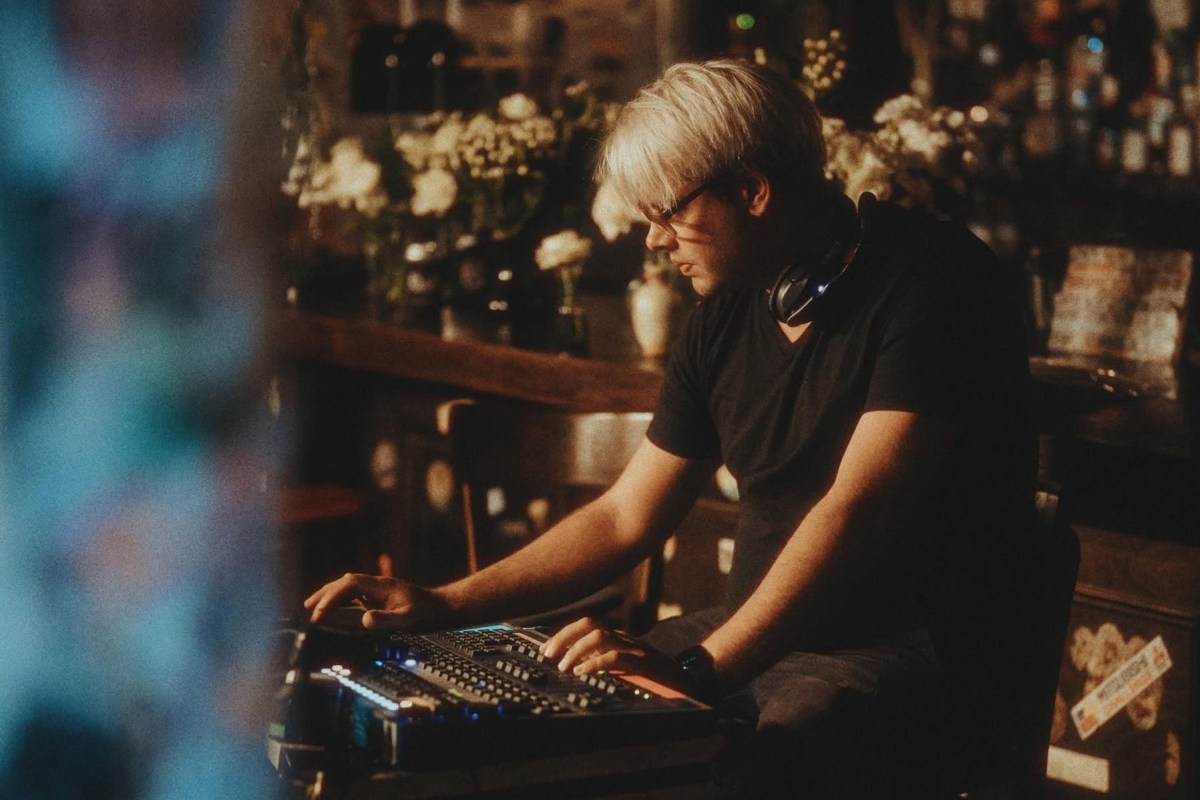
I’ve been working in theatre and live entertainment for most of my adult life. Since finishing school in 2011, I’ve worked across the industry in a range of roles: technical manager, lighting designer, programmer and production technician.
I’ve designed lighting for touring acts such as Chocolate Starfish, worked across countless independent theatre productions, and operated lighting systems at major venues across Sydney. I’ve also worked internationally as a gaffer in film and television, with projects that have appeared on Netflix.
Across all of these fields, one thing has become increasingly difficult to ignore: the slow disappearance of design from theatre.
Lighting design. Sound design. Set design. Projection design. These job titles still exist. They still appear on contracts. Occasionally they even make it onto posters. But design as a process – as a craft and a storytelling discipline – seems to be quietly fading away, particularly within Australian independent theatre.
The disappearance of theatre design – quick links
The bare minimum
More and more often, technical production is reduced to two simple questions: can the actors be seen, and can the actors be heard?
If the answer is yes, then the job is considered done.
But theatre design has never simply been about visibility. It has always been about shaping the emotional world of the production.
Lighting can define memory. Sound can transform space. Design can guide the audience through time and perspective. Without those elements working together, theatre risks becoming little more than actors standing under a wash of light.
Budget exists – but time doesn’t
Recently I worked on two productions in Sydney – an independent play and a small-scale musical – where there was, for once, at least some budget allocated to technical design.
But something else quickly became apparent. While budget had been allocated, time had not.
In one small independent play staged in a venue in Sydney’s Darlinghurst, we were given a single day to bump in the set, install lighting and sound, plot the design, run technical cues and complete a dress rehearsal.
The following night, we opened to a paying audience.
The show itself moved through multiple emotional memories shared between two characters in a single room. My proposal involved around 28 lighting states and three spotlight positions to help define these shifts in time and emotional tone.
Technically, this was achievable.
But the set construction ran late, and by the time I was able to begin plotting the design it was already evening. Weeks earlier I had flagged that this schedule would not allow enough time to properly build the show.
When the time pressure hit, the response wasn’t to adjust the schedule. It was simply: ‘We’re running out of time.’
The design process became rushed, compressed, and ultimately compromised.
And yet this approach is increasingly being treated as normal.
When design becomes an afterthought
The underlying issue is not purely financial. In my experience, it’s more about attitude.
There was a time when theatre was built around immersing the audience in the world of the story. Technical departments were considered part of that creative process.
Today, design is often treated as something that should simply ‘work itself out’.
Directors will describe ambitious visions for their productions, but when the conversation turns to the resources needed to achieve those ideas, the response is often something like: ‘So $600 is enough for the lighting, right?’
That fee is sometimes expected to cover design, programming, equipment, installation and operation across an entire run.
Even when designers bring their own equipment, they are often effectively subsidising the production themselves. Lamps burn out. Equipment requires maintenance. Transport costs money.
Designers are absorbing those costs simply to allow the show to happen.
The disappearing technical rehearsal
Technical rehearsal used to be the point where the production truly came together. Actors would spend weeks rehearsing the script, but the final stage of the process was integrating performance with lighting, sound and staging.
A typical production schedule would look something like this:
Day 1 – Bump In
Day 2 – Lighting Plot
Day 3 – Cue-to-Cue
Day 4 – Full Technical Runs
Day 5 – Preview
This process provides time for the performers and the technical elements to become one cohesive piece.
Increasingly, that process has been compressed into one or two days – sometimes less. Actors rehearse for months, yet technical departments are expected to integrate an entire production in a fraction of the time.
And yet lighting cues, sound transitions and staging are not separate from performance. They are part of it.
Recently I timed a lighting transition to slowly fade over the length of an actor’s monologue. Because we never had the opportunity to rehearse the cue properly, the actor had no idea the lighting was designed to follow the rhythm of their speech.
It only became obvious when an understudy stepped into the role. Their timing changed completely, and suddenly the lighting cue no longer matched the performance.
That isn’t the actor’s fault.
It’s what happens when performers and technical elements are never given the chance to work together.
The cost of production
There is also a growing disconnect between the expectations of production and the reality of its cost. Some independent productions expect to mount a three- or four-week season with a technical budget of around $1000.
That figure is expected to cover design, equipment, installation and operation. To put that in perspective, a single moving-head lighting fixture might hire for around $120 per day, and a radio microphone can cost around $90 per day. Even at heavily discounted ‘mates rates’, those numbers add up quickly.
For a modest independent production, a realistic technical budget of around $8000 could provide:
- A small but effective lighting and sound package
- A designer with adequate preparation time
- An experienced operator
- Several days of proper technical rehearsal
That level of support can dramatically enhance the audience’s experience.
Instead, the technical budget is often the first thing to be cut.
The economics of independent theatre
Of course, the financial pressures facing independent theatre are real. If a theatre seats 80 people and tickets cost between $35 and $45, even a sold-out three-week season may struggle to cover costs once venue hire, marketing and performer payments are included.
Something inevitably gets sacrificed.
And more often than not, that something is technical production.
The solution becomes minimalism.
Minimal set.
Minimal lighting.
Minimal sound.
Minimal design.
Is theatre design dead?
Design itself is not dead. There are still extraordinary designers working across Australia, often producing remarkable work with very limited resources. But the respect for the design process is fading.
Design requires time. It requires collaboration. It requires rehearsal. Without those things, technical production becomes little more than illumination and amplification. And theatre loses something essential in the process.
When actors rehearse for months, writers spend years developing scripts, and directors shape performances across countless rehearsals, all designers ask for is a few days to integrate the world of the show.
Is that really too much?
Because if we continue removing time, resources and respect from technical production, we may eventually discover something uncomfortable: design isn’t dead, we simply stopped making space for it.