Australian screen funding body Screen Australia is currently grappling with a significant generational divide that influences how audiences view entertainment media. Its recent Screen Currency 2026 report uncovered challenges for the local screen industry, as young people are increasingly turning to social media and algorithm-driven platforms to engage with direct-to-audience content, rather than traditional media.
In an attempt to bridge that generational gap and diversify support for a wider range of projects, Screen Australia has broadened its goals and criteria for funding, with renewed attention on projects with creator-led and direct-to-audience approaches.
One of the beneficiaries of this modernised outlook is the Perth-based team at MaxFoo Studios, which recently obtained production funding through Screen Australia and in association with Screenwest to develop its latest project.
As the team tells us, the funding is supporting them in creating an entire vertical video-first series, Suzie Q, that will be one of the biggest animation projects of its kind to come out of Western Australia.
MaxFoo Studios on Suzie Q – quick links
The story of MaxFoo Studios
MaxFoo Studios is an independent animation studio currently operating in a small pond. As producer Michael John Long tells us, there aren’t plentiful opportunities to work on animation projects within Perth, as much of the local industry is centralised on the East Coast, in Sydney and Melbourne.
But backed by a love for animation – born in childhood and carrying into adulthood, inspired by shows like Angela Anaconda, Rick and Morty, and the work of Olan Rogers on YouTube – Long says the team founded their studio and worked hard to develop their skills and ‘weird but beautiful’ tone of voice.


The studio’s goal is to create fresh opportunities and career pathways in Western Australia, with support from Screen Australia and Screenwest helping to solidify their aims. There’s really a twofold ambition here: to tell their own stories, and to push WA forward as a state with talented animators and great storytellers, working sustainably.
‘If we play our cards and we’re really smart, we can build a studio here in which there’s a pathway for other people like us 10 years ago,’ Long says. ‘Who can graduate from university and go, “I can get a job” … and then hopefully other people also look at us and go, “I can also open a studio.”‘
As Long says, MaxFoo Studios currently works on a range of projects, with offsets and direct funding allowing them to offer creative services while working on new, original projects. The team has contributed animation work to projects like Grouse House’s Hug the Sun, as well as Student Council, Christmas Johnson and Larry the Lightbulb.
Its latest project, Suzie Q, is different beast entirely.
The birth of Suzie Q
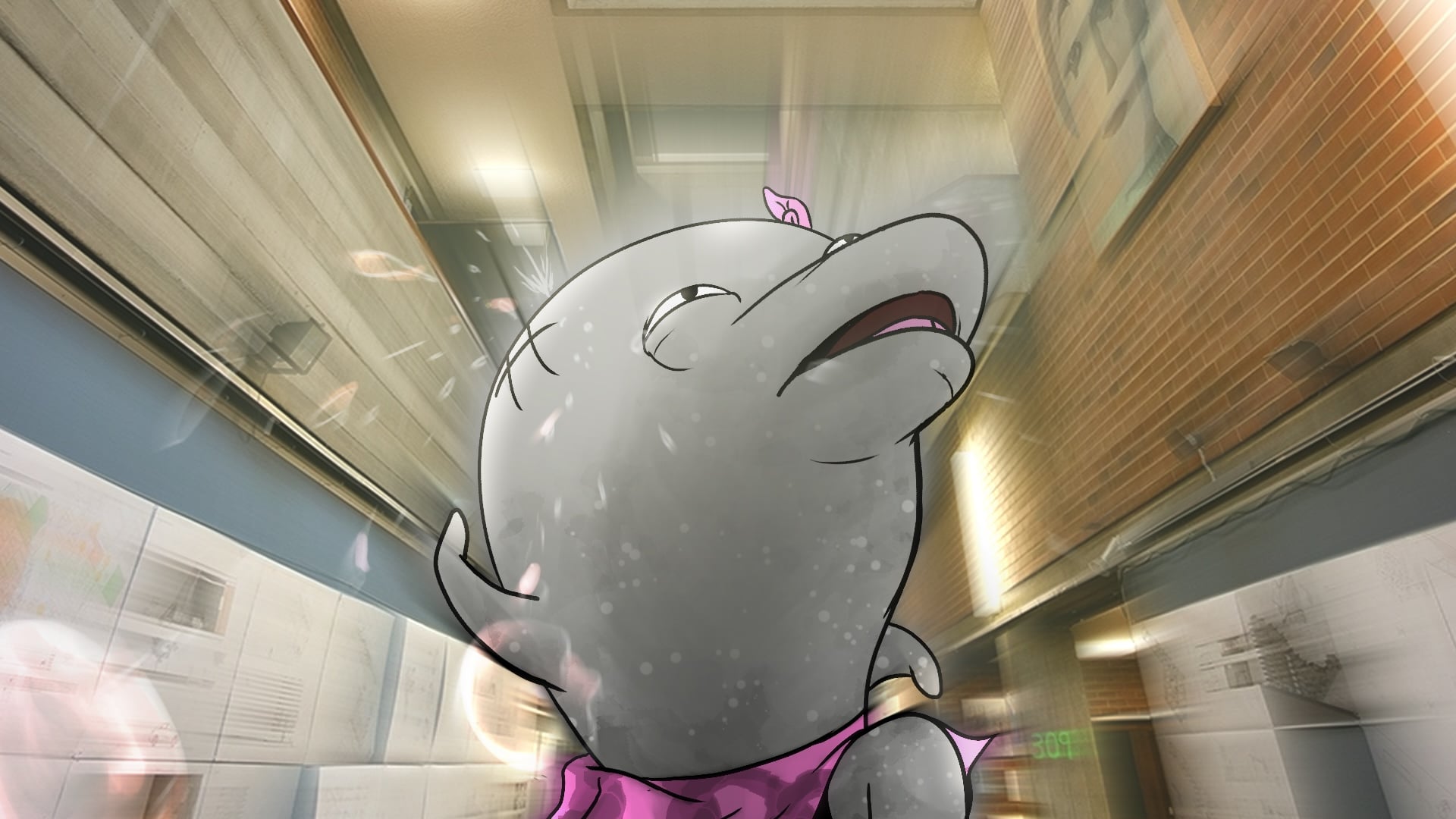
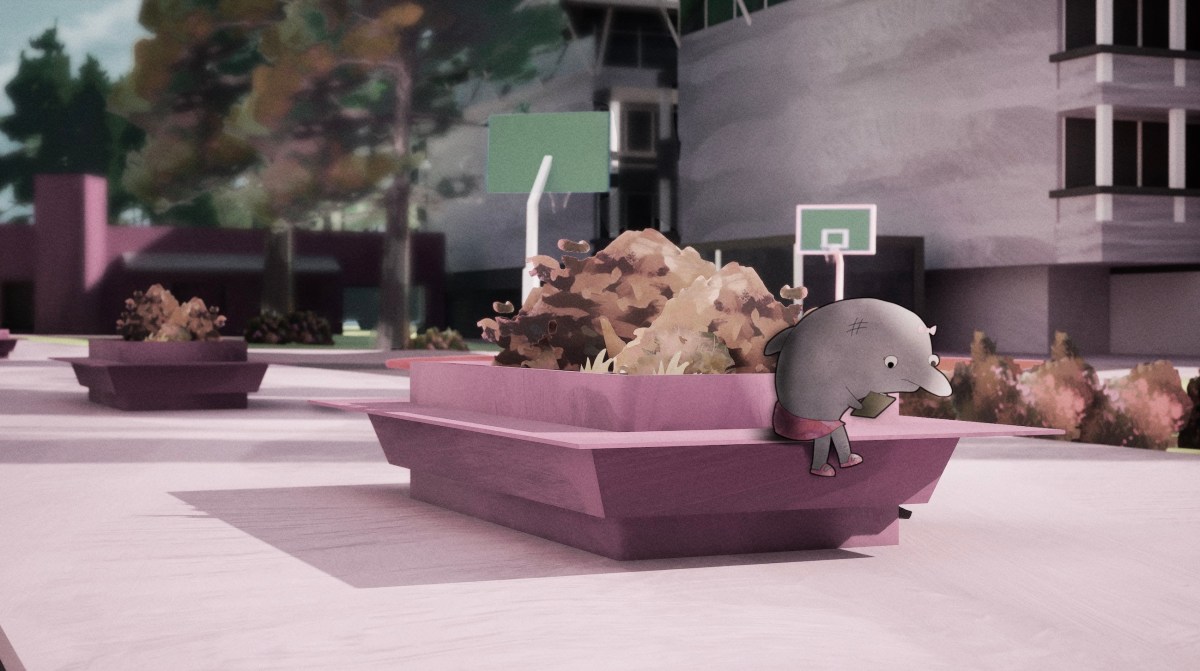
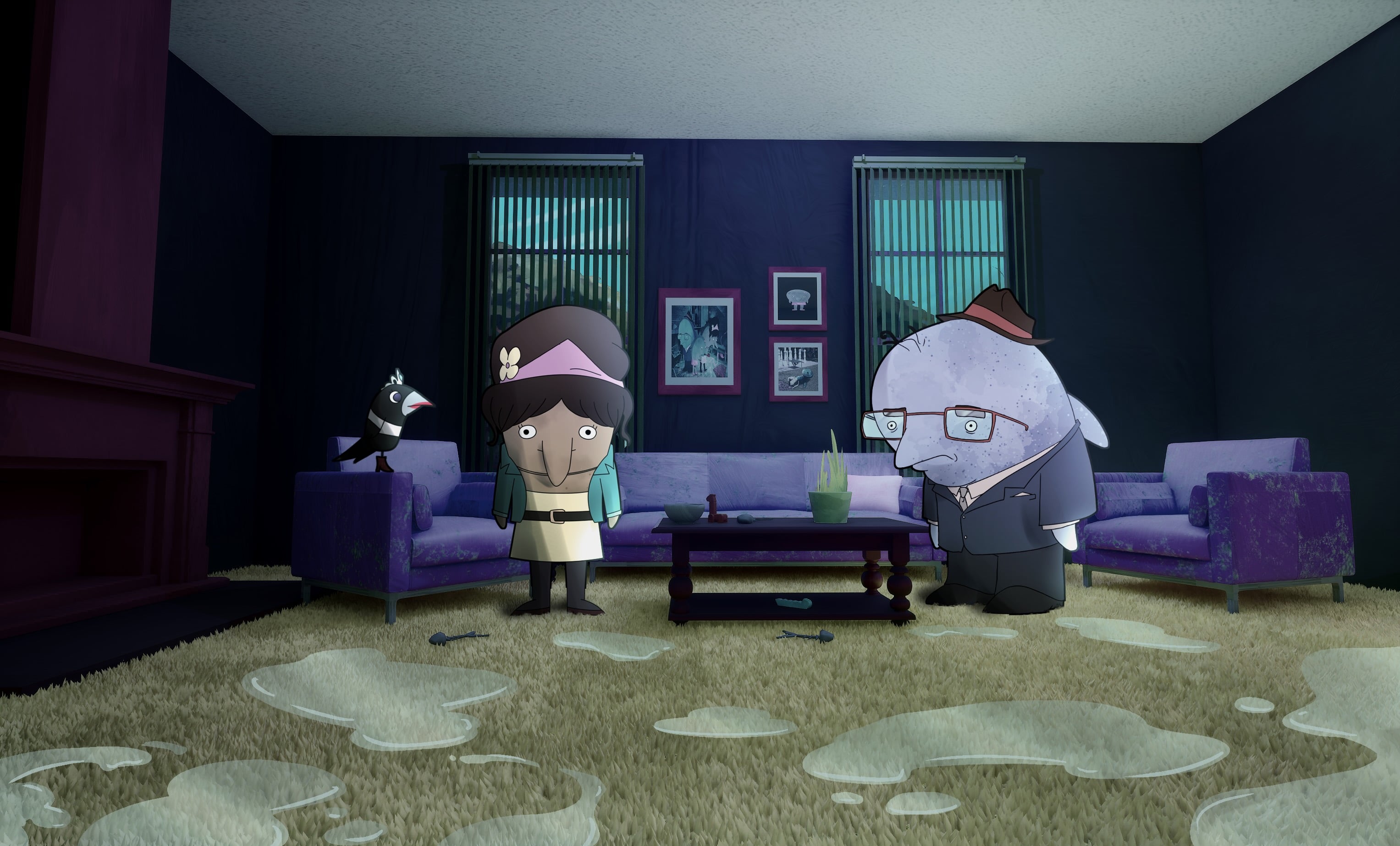
Suzie Q is the story of a young and ambitious but slightly mediocre art student who attempts to chase her dreams while facing the expectations of a family that does not value art. It’s an animated series set to be delivered in a unique format: 31 one-minute episodes shared across social video platforms, for vertical viewing.
It’s a familiar situation for writer, animator and director, Dung Nguyen. ‘I know lots of stories like this, and I went through this [family experience] when I was going on to study art,’ he says.
‘It’s a coming of age story, but it’s also I think a modern day thing, especially in terms of art because it’s quite difficult to get into, in the entry-level way. It’s becoming more expensive. So, it’s sort of an ode to that classic struggle of studying art, especially in a state that prioritises mining.’
Across its multi-episode story, Suzie Q will contend with the struggle of wanting to practice art while being expected to be a financial contributor. As Nguyen says, much of this tension is built from personal experience, although the show explores these concepts in ‘a very anachronistic, elevated’ kind of way.
That’s the benefit of the format, says Nguyen. Animation allows you to exaggerate and emphasise the comedy of situations, while still telling those deeper stories. Having the titular Suzie Q depicted as a dolphin creates a separation from reality that allows for audiences to connect more deeply with the character – she’s particularly cute and loveable – while also inviting the show’s important themes of love and acceptance to shine.
‘You can tap into the comedy and the exaggeration that animation gives you, but also have this underlying heart that really is about all of our collective struggles trying to get into the art industry,’ Nguyen says.
Even with personal experience reflected in Suzie Q, there is a universality to its core themes.
‘A lot of people we talk to the show about, they really connect with it,’ Long says. ‘Especially within the industry and people wanting to do art … from external thoughts, to their parents, or even internal thoughts about whether studying art is really the right option and a good decision in life.’
The one-minute vertical format of the show will lend itself well to this intended target audience: busy teenagers and young adults who may only have time to view screen media on their phones, or who may discover the story of Suzie Q while casually scrolling.
The benefits and challenges of developing a series for vertical video
As Nguyen tell us, the biggest challenges for developing Suzie Q so far has been adapting his animation style for a vertical format, while also packing in the level of visual storytelling necessary to create a real connection to audiences.
‘It’s so hard,’ Nguyen says. ‘It’s hard to figure it out because we’re so used to widescreen. Now, it’s 16:9, trying to work out how it fits on a phone … You have to always move the camera.’
To fit this vertical format, Nguyen and the MaxFoo Studios team worked on impactful storyboards, adapting the narrative with the knowledge of how each character moves and speaks, and how to fit them within the frame. There was also a focus on ensuring enough height for scenes and additional bleed to cover any challenges with social video ratios or phone screen sizes.
‘That’s honestly been one of the hardest parts of the process,’ Nguyen says. ‘But it’s very rewarding because you get a unique, almost intimate experience with the phone. That was the thing that we wanted to capitalise on. You can go all the way into a character and have them take up the whole frame, which is something you can’t really do on wide [format].’
An additional challenge in adapting the narrative, as Long explains, is that social media presents an entirely new way for audiences to engage with screen content. They won’t necessarily discover Suzie Q in the intended order, so episodes must stand in their own right.
‘We really had to address the thing of … there’s an overarching story,’ Long says. ‘But at any point somebody jumps in, they can get into the story and connect with it. Someone might jump into episode 18 and they might go back and watch episode one. We have to make sure that every episode allows an entirely new person to come in and connect with it, and not feel like they’ve been left behind 17 episodes ago.’
That’s part of the nature of releasing on social video platforms and acknowledging the alternative ways that audiences may now discover screen media.
An added layer for the team is the nature of social video platforms, with audiences able to directly engage with the work and provide immediate feedback.
Helping audiences discover Suzie Q
As Long says, the series will be completed prior to its arrival on social video platforms, which means audience reactions won’t be guiding the direction of the series or changing its creative vision – something he says is both positive for the team, and challenging for any plans for adaptation. But audience reactions will allow the team to see what people are responding to, with those lessons informing marketing, as well as future projects.
‘There’s an integrity to that vision that people, I think particularly in today’s day and age, with everything that goes on with AI … I think there’s going to be a respect for the fact that we had that vision and we stuck to it,’ Long says. ‘You look at your own viewing habits and you can tell when people are trying to hook you in a plastic, fake way and you instantly don’t want that.’
Leaning into skills from his digital marketing specialisation, Long plans to use the series’ social engagement to inform cutdowns and clips to share in shorter form on social media, to better server Suzie Q‘s audience and help it reach new eyes.
‘If you get a piece of content that’s working, you can refeed it and that’s the part that I’m looking forward to,’ Long says. ‘Finding episodes and scenes, so that you can repackage that scene or that character or whatever it is, in particular that people engage with, and you can put it out as a new piece of content entirely.’
‘You’re just allowing new audiences to find it easier.’
‘That’s how you can leverage that data and those metrics to help it find the audience that it was intended for. [As the] Screen Currency report says, that’s the hardest thing with Australian content right now, allowing audiences [to find that content].’
Suzie Q remains in development with this key research in mind. As the show progresses, the team is looking to refine its approach to content discovery, and create new marketing techniques based on their own reactive audience engagement and analytics.
As Screen Australia continues to finesse its approach to funding online screen projects, and investigating how a creator-led approach can inform more engaging, dynamic stories, Suzie Q is shaping up as an essential new release to watch.