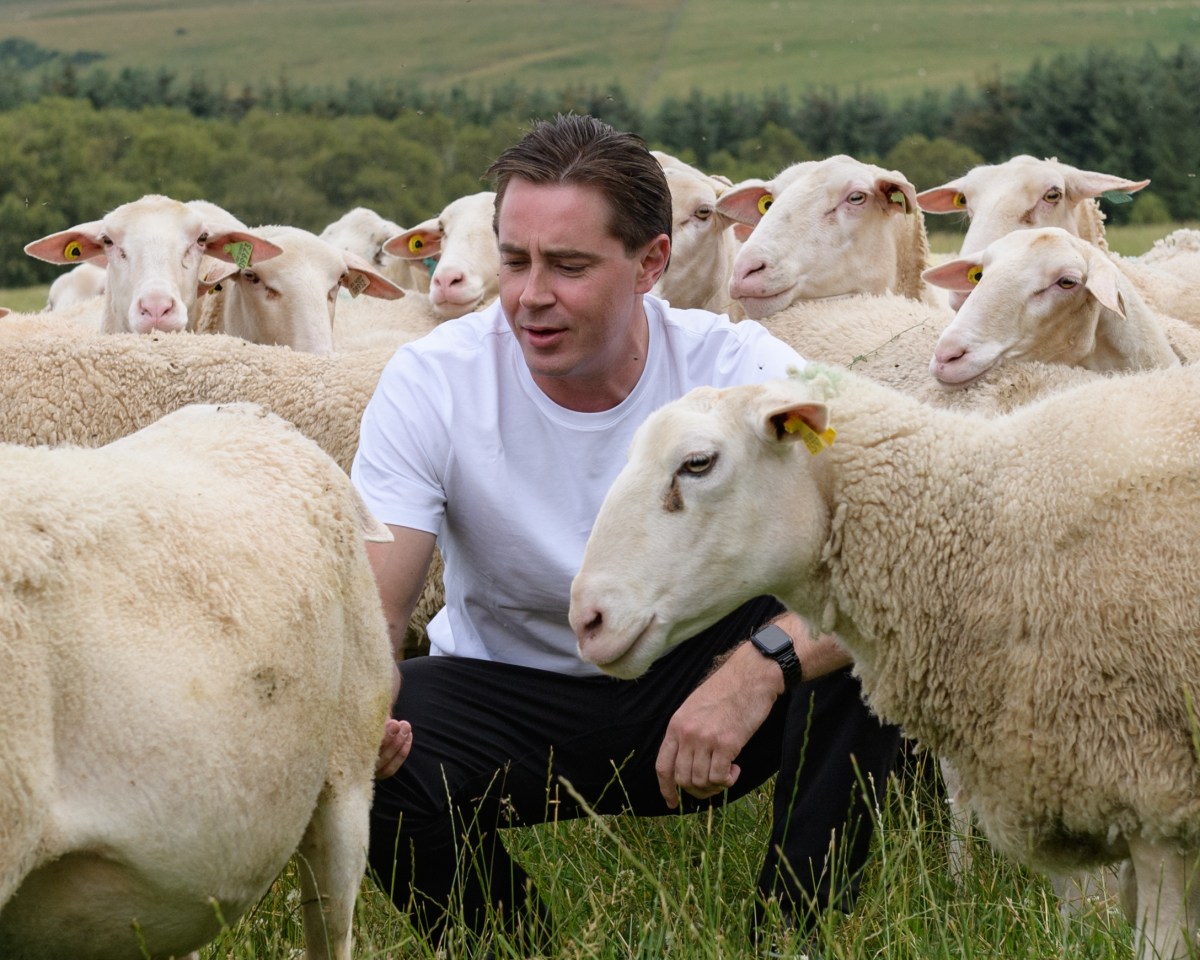
From growing up on a sheep farm in the deep south of regional South Australia to touring the world as the Artistic Director of his own company, Lewis Major’s route into contemporary dance was anything but conventional.
Pitching in to help with the shearing from an early age, Major was expected to take over the family farm. Instead, a chance encounter with dance towards the end of high school set him on a path that would take him to Adelaide, New Zealand, Vienna, and beyond.
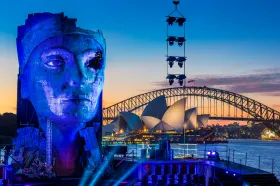
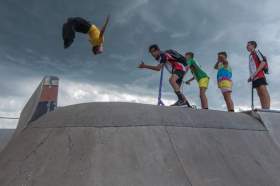
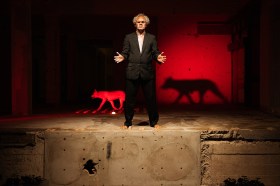
Now, after years of international touring, the Bungandidj and Ngarrindjeri choreographer is bringing his work home. Triptych, a triple bill of luminous and award-winning short works from Lewis Major Projects, soon arrives at the Sydney Opera House, running from 16 to 19 September before its Victorian premiere at Arts Centre Melbourne from 22 to 26 September.
The work has toured to 12 countries and been performed more than 100 times, picking up more than a dozen awards including Edinburgh Fringe Festival’s Spirit of the Fringe Award in 2024 and Best Dance at Adelaide Fringe 2025.
For Major, though,Triptych is also an opportunity to reconnect with Australian audiences – including those who might not immediately consider contemporary dance to be for them.
Choreographer Lewis Major – quick links
‘I didn’t know dance was a career choice’
Major initially imagined becoming an actor. It was only when he encountered contemporary dance that he began to see its possibilities.
When he was 16 years old, Australian Dance Theatre, then led by visionary Artistic Director Garry Stewart, toured to Mount Gambier. Stewart’s intensely physical style – featuring dancers throwing themselves through the air, rolling across the floor and moving at speed to techno beats – immediately appealed to the teenager, who had grown up playing football and was drawn to physical activity.
It also challenged his preconceptions about what dance could be. ‘This is something I could get into,’ he recalls thinking at the time. ‘It wasn’t as pretty as what I thought dance theatre was.’

He took his first dance class towards the end of school before moving to Adelaide for full-time training and later studying at the New Zealand School of Dance. He secured his first professional job in Vienna midway through his second year, and went on to spend a decade working in Europe.
During that time he performed and collaborated with internationally renowned choreographers including Akram Khan, Sidi Larbi Cherkaoui, Russell Maliphant and Hofesh Shechter.
But even as a dancer, Major was thinking like a choreographer.
A formative experience came while working with Cherkaoui, who improvised a scene with two chairs that became characters who fell in love, built a life together, and experienced loss. For Major, it demonstrated how contemporary dance could communicate directly with audiences without requiring specialist knowledge.
‘I was so touched by this little improv… about these IKEA stools falling in love,’ he recalls. ‘I was like, “Oh my goodness, this is what dance can be!”’
That accessibility remains central to his own work.
Making dance for people who think they don’t like dance
Major is conscious that contemporary dance can feel inaccessible to audiences who are unfamiliar with the form. Rather than simplifying his work, however, he wants to create ambitious dance works that give audiences an entry point.
His goal is to make work that could resonate with an audience of friends gathered in the shearing shed back home, but still impress ‘the hoity-toity arts critics around the world’.
‘When you’re talking authentically about things that actually matter to people, I don’t think you can dumb it down,’ he says.
It is an approach that also underpins Lewis Major Projects, the independent company he founded in 2015.
The business of touring art
Running an independent arts company, however, brings its own challenges.
Working with a core group of five dancers, Lewis Major Projects operates without the security of a permanently subsidised company, relying instead on project funding, presenting partnerships and touring opportunities. Major describes the experience as a constant process of looking for the next opportunity.
International touring has made the company’s model viable, helped by Major’s previously established professional connections. (He also has a personal incentive to spend a lot of time in Europe: to be close to his two daughters, who live in France with their mother.)

Australia’s geography presents its own difficulties. A tour between Australian cities can require significant travel, while touring between European cities can be considerably more straightforward. For Major, this is one reason Australian artists need to think internationally.
‘We did an 11-city tour of the UK between March and April this year, and that’s just like getting in a car and driving an hour and a half each day, rather than in Australia where it’s a full day of travel [or more],’ he says.
‘It’s the tyranny of geography. It’s a real shame, because I’d often much prefer to be in Australia.’
Balancing art, business and integrity
These experiences also prompted Major to investigate the relationship between artistic practice and entrepreneurship.
In 2020, he received a Churchill Fellowship to investigate entrepreneurialism, knowledge and capacity in the Australian arts sector, travelling to the UK, Belgium and the Netherlands.
The research grew from a practical question: how can artists and arts organisations become more financially sustainable without sacrificing artistic integrity?
Major is now turning that research into a book, combining his own experiences with international case studies and ideas for developing more sustainable arts businesses.

He sees the challenge as existing at the level of individual artists, organisations and government policy.
‘How do we take these best entrepreneurial business models and apply them to what we’re doing in a way that’s going to be more sustainable, so that we’re not going to burn out?’ he asks.
The research is also informing the future structure of Lewis Major Projects, which he plans to reshape over the coming year.
Looking beyond choreography
After years of constantly moving from one project and opportunity to the next, Major is increasingly interested in building something more sustainable.
His ambitions extend beyond creating his own work. He would like to eventually lead a larger arts organisation as an artistic director, supporting other artists and creative teams.
‘I love supporting whole teams,’ he says. ‘I love being able to … support other people to do what they also love doing.’
It is a natural evolution for someone whose career has already encompassed performance, choreography, producing and entrepreneurship.

For now, Triptych offers Major the chance to bring the fruits of that unconventional journey back to Australian audiences.
And perhaps the best measure of its success is whether the work can speak as readily to someone who has never been to a contemporary dance performance as it does to an experienced international dance audience.
‘I think people take from the work what they need,’ Major says. ‘You bring yourself to the theatre, and you take away from the work what you need. It’s as simple as that, and as complex as that.’
‘If I can make work that can leave the world in a better place, or make you look at the world and go, “I don’t like what I see, but I want to change that,” that’s what I want to do through my art.’