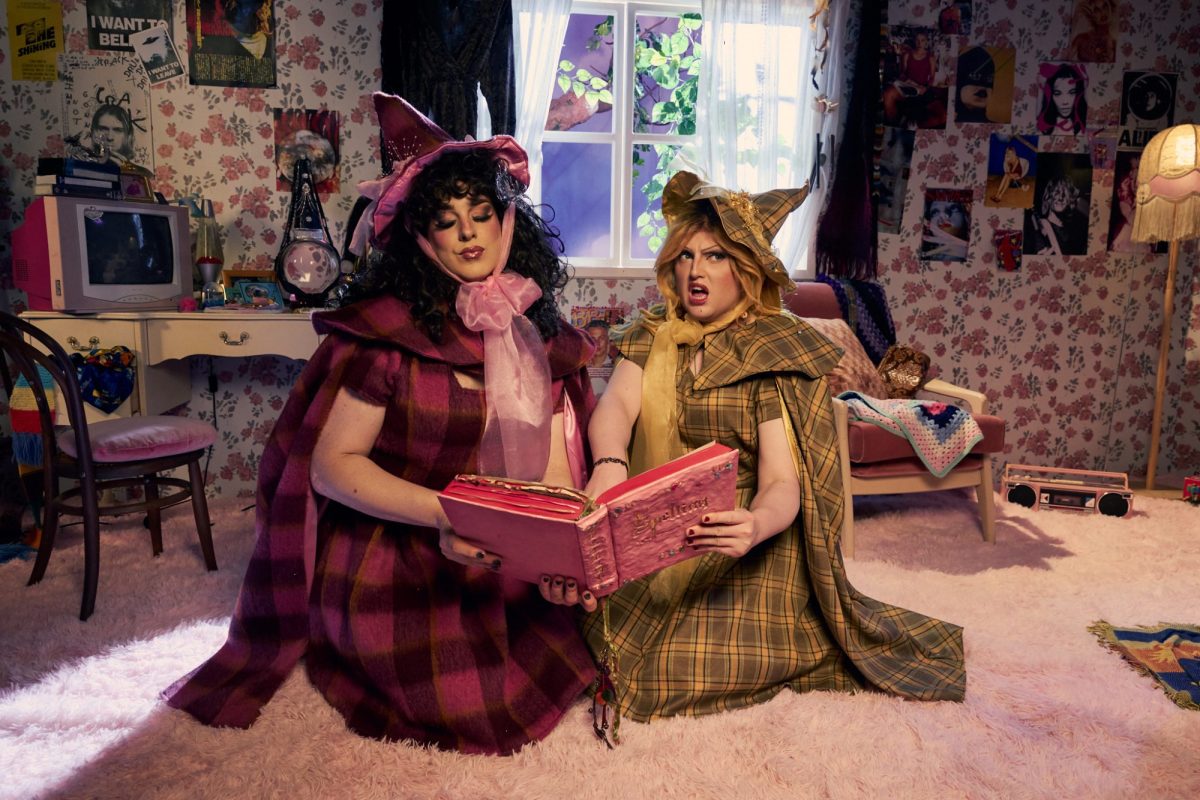
When Aussie drag artists Lazy Susan (aka Robbie Sinclair Ten Eyck) and Zelda Moon (Kane Bonato) first dreamed up The Witchy Girls, it was just a fun, throwaway idea between friends.
Years later, the project has evolved into something much bigger: a supernatural drag-comedy web series imbued with 90s nostalgia, zany humour and queer joy – and now, they’re gearing up to launch a series of fabulous live shows this May.
And with the recent revelation that Hulu has gone and cancelled its planned Buffy reboot, this camp homage to the supernatural entertainment that millennials were weaned on could be just what’s needed to scratch the itch.
Produced by Melbourne-based Iris Arc Pictures in partnership with Comedy Republic, the series follows two chaotic teenage witches who are stumbling their way through high school. Our scrappy best friend duo (played by Ten Eyck and Bonato) face enemies ranging from the Millennium Bug to sexually transmitted infections – all while never learning a single lesson.
The creators describe the show as ‘deeply unserious’ and about ‘awful teens with magic’. But the story behind the production is far from frivolous – and their unconventional live tour premiere model aims to fund the show through audiences, rather than relying on traditional broadcasters.
‘Every person who came on board was like, “That sounds really stupid – let’s do it”,’ Ten Eyck tells ArtsHub.
The result is a cult classic in the making – a heady brew with airs of niche comedies like Garth Marenghi’s Darkplace and The Mighty Boosh, plus the outrageous queer qualities of John Waters films like Pink Flamingos, a distinctly Aussie point of view and, at the heart of it, a friendship that could rival the bond of drag icons Trixie Mattel and Katya Zamolodchikova.
The magic behind The Witchy Girls – quick links
From grant rejections to grassroots production
The idea for The Witchy Girls dates back several years, when Ten Eyck and Bonato were performing together in a drag trio called the Beastie Girls. ‘We conceived this idea of: what would it look like if we made a show about the things we love, set in that time period that we love?’ Bonato says.
Like many independent screen projects, the creators initially pursued the traditional funding route. The script was pitched to development programs and submitted for television grants. But it was a struggle to find the right support – as drag queens, they felt a sense of imposter syndrome in the more conventional comedy space, and as queer artists, they got the impression that funding boards were only looking to support a certain type of ‘sad queer narrative’.
‘There was absolutely no response to us pitching this,’ Ten Eyck recalls.
After multiple rejections, the pair almost abandoned the project entirely. But instead, their growing creative network helped to resurrect it – boosted, of course, by the publicity harvested from Lazy Susan’s reign as the crowned winner of Season 4 of RuPaul’s Drag Race Down Under.
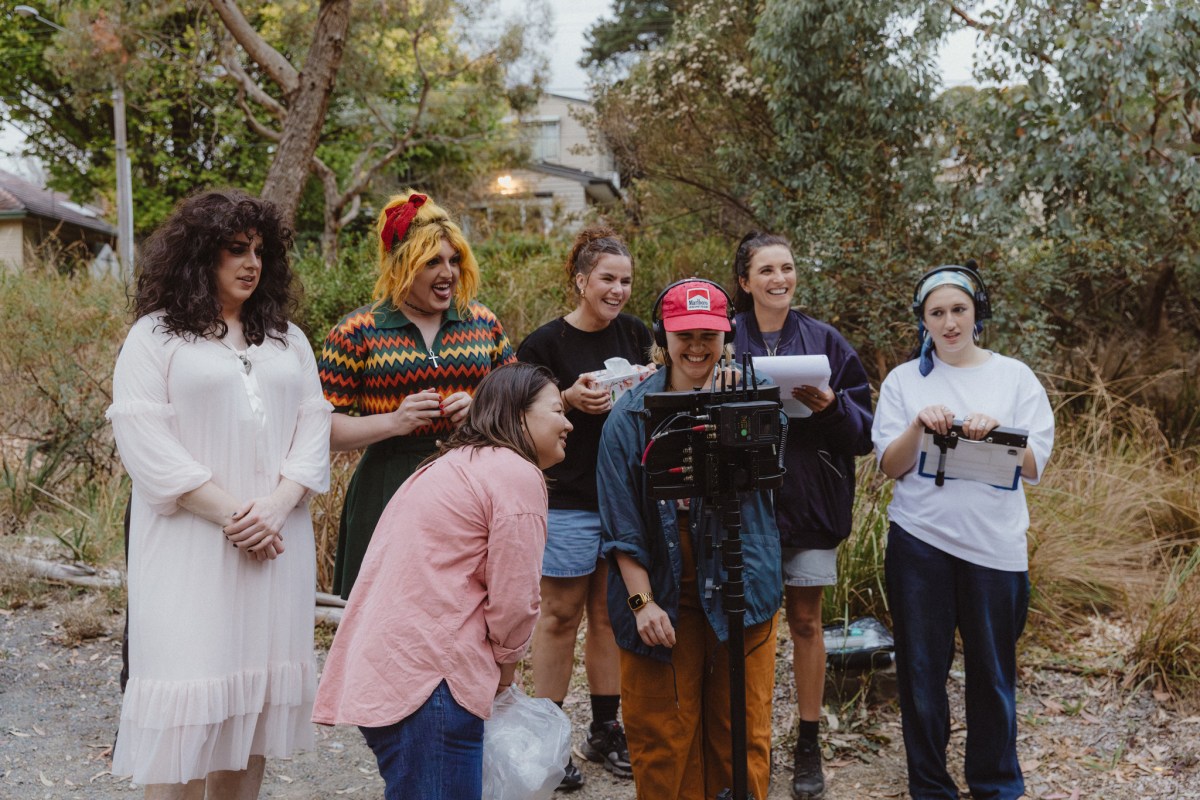
Through their work with Iris Arc Pictures on a separate feature film project – Skin Side Up, an elevated drag queen horror that won the Frontières ‘Proof of Concept’ Platform at Cannes 2025 – producers Lauren Simpson and Annie Thiele encouraged the team to revisit the script and explore ways of making it independently. That spirit of collaboration quickly snowballed.
‘And suddenly we were surrounded by all these incredible creatives offering their time and support,’ Ten Eyck says.
The show’s cast now includes an eclectic mix of Australian comedy talent and international drag icons – including Hannah Gadsby, Geraldine Hickey, Rhys Nicholson, Ella Hooper, Nina Oyama, Genevieve Morris and American drag superstar Alaska Thunderf*ck (winner of RuPaul’s Drag Race All Stars Season 2).
Watch the trailer
Funding television through live audiences
The idea for the series’ unconventional funding model was sparked in an unlikely setting: a car ride.
Ten Eyck was away filming the forthcoming series Drag Race Down Under vs The World – a new addition to the ever-growing Drag Race franchise, which sees Ten Eyck/Lazy Susan return as a host and judge – when they received yet another funding rejection.
‘I happened to be bitching about it in the car with Rhys Nicholson [comedian and fellow Drag Race Down Under judge] and their husband, Kyran Nicholson,’ says Ten Eyck.
The couple just happen to be co-founders of Melbourne’s Comedy Republic. An independent theatre built by and for comedians, Comedy Republic also has a growing an online presence through the likes of comedy specials and live stand-up recordings – and a narrative series spearheaded by drag queens? That was certainly one way to take things to the next level.
Kyran proposed a simple question: if funding bodies weren’t backing the project, why not fund it the way drag and comedy artists traditionally have – by putting audiences in a room first? That conversation became the basis for The Witchy Girls’ ‘live-first’ launch model.
The series will premiere through a season of live screening events at Comedy Republic, where audiences will watch two episodes before a staged performance that expands the world of the show. The hope is that ticket sales and merchandise revenue will then subsidise the production budget before the full series is released online via Comedy Republic’s YouTube channel.
Building a cult show in real time
For Bonato, the model feels like a natural extension of their performance careers. ‘Being performers, we’ve run fringe shows and queer events for years. People already understand paying for a live experience.’
The pair also have first-hand experience hosting hugely popular viewing parties for Drag Race and films like Wicked – gatherings that have grown larger each year.
‘People kept saying, “How can we support you?”’ Bonato says. ‘We didn’t want to just start a GoFundMe and say, “Give us money and trust us.” This way, people get a full show. Even if you didn’t like the series – which seems impossible – you still got an hour of entertainment.’
The live events are designed to be more than simple screenings. The creators plan to stage performances that extend the fictional universe of the show, turning each screening into an interactive experience.
‘We always say what we do is “stupidity at scale”,’ Ten Eyck says. ‘Taking a really dumb idea and making it big and ridiculous.’
‘The whole conceit is that it’s as if this show has been around for 20 years and everyone already loves it,’ Ten Eyck says. ‘So we’re throwing audiences into this massive lore and pretending it’s already a cult classic.’
Queer stories beyond tragedy
At the heart of The Witchy Girls is a theme that Ten Eyck and Bonato say is rarely centred in the queer storytelling that gets funding: queer joy and queer friendship, unshackled by persecution and trauma.
‘I think what we’ve witnessed is a deep hunger for people to see queer friendship,’ Ten Eyck says.
While LGBTQIA+ narratives on screen have historically focused on romance, coming out or tragedy, the duo wanted to explore something different.
‘A lot of queer media is built around heartbreak or explaining queerness to straight audiences,’ Ten Eyck says. ‘But in our day-to-day lives, we don’t experience ourselves that way. We’re not the “other” in our own stories.’
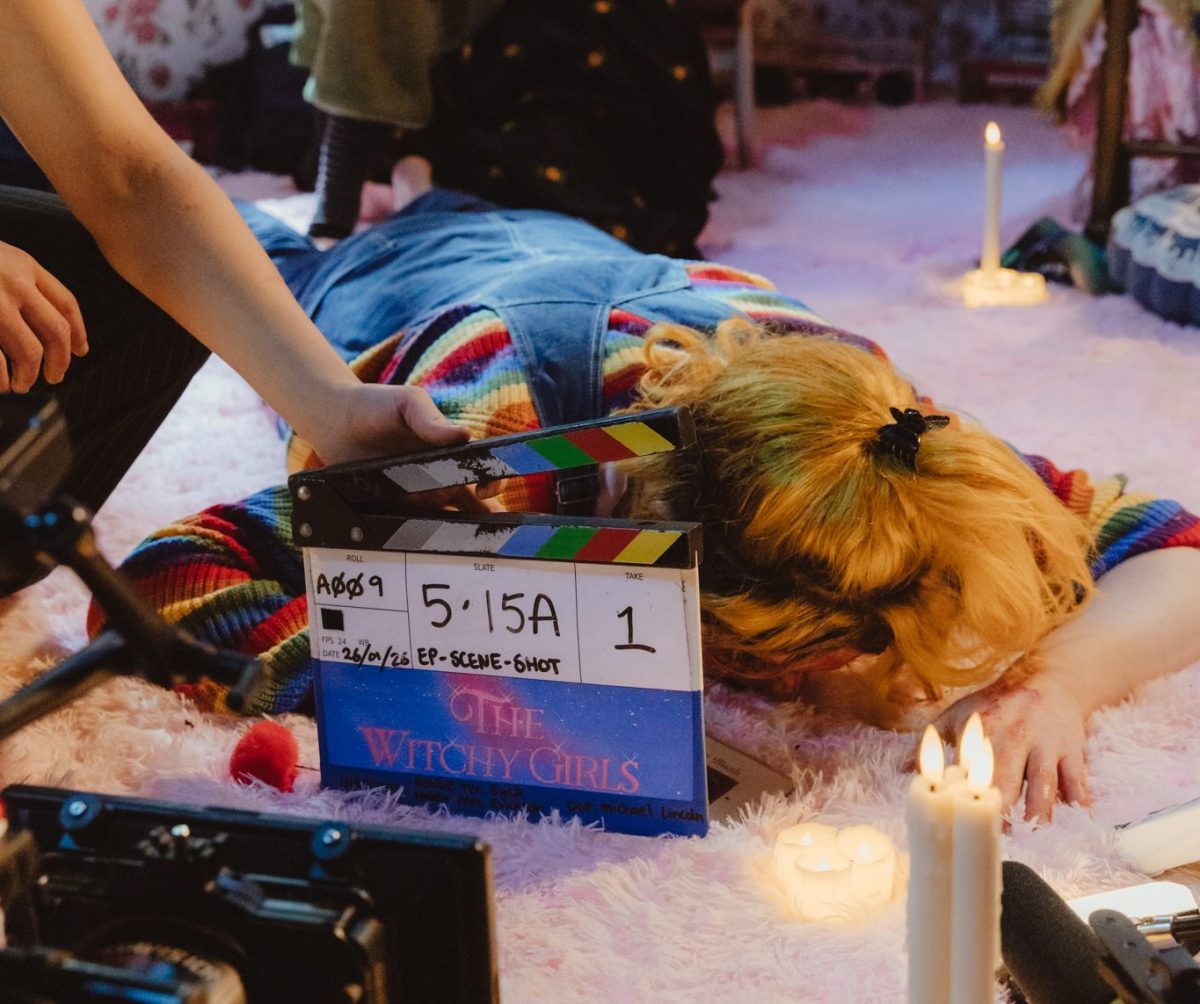
‘As queer people, I think sometimes you feel like people want you to tell a quote-unquote “queer story” but it can only sound one way. It is usually predicated on telling your story that for a straight person to understand. A lot of queer media is built around tragedy and heartbreak and “Oh, isn’t it so sad?” I think that it can be really hard to tell a unique, queer story that isn’t about those things.’
Instead, the show celebrates chaotic camaraderie and shared humour between friends.
‘It’s queerness that isn’t about romance or trauma,’ Ten Eyck says. ‘It’s just about two people who like each other being ridiculous together.’
Nostalgia, witches and queer iconography
The series also draws heavily on the pop culture that shaped its creators’ childhoods. Influences range from Buffy the Vampire Slayer and Charmed to Sabrina the Teenage Witch and Goosebumps – the glossy supernatural shows that dominated 90s television.
For Ten Eyck, those stories offered coded reflections of queer experience long before explicit representation was common. ‘If you’re looking for stories about people who have a secret they’re hiding from the world, but they’re secretly powerful, witches are the perfect metaphor,’ they say.
The show leans into that lineage while subverting the moral lessons typical of teen supernatural dramas. As Bonato puts it: ‘Teenagers are kind of monsters. They’re selfish and self-involved – so what happens if those teenagers also have magical powers?’
The allure of handmade spectacle in an AI age
Despite its fantasy setting, The Witchy Girls is also notable for its deliberately DIY aesthetic. Inspired by independent films such as 2016’s The Love Witch – a breathtaking, painstakingly recreated homage to 60s exploitation cinema – the production team built many of the sets, props and costumes themselves. ‘We wanted everything to have our stamp on it,’ says Bonato.
For Ten Eyck, the handmade quality of the show feels increasingly important in an era of AI-generated imagery and glossy digital production. ‘The human “mistakes” are becoming more valuable. There’s something really exciting about knowing that a set was physically built or a prop was handmade.’
A cult classic in the making
Ultimately, the creators hope The Witchy Girls finds its audience in the same way many cult queer works have: through word of mouth.
‘High praise would be if someone brings it up at 3am after a party,’ Bonato says. ‘Like, “Wait, have you seen this weird show these drag queens from Melbourne made?”’
If that happens, they’ll consider the experiment a success.
‘For years we were waiting for someone to give us permission to make something,’ Ten Eyck says. ‘This time we just gave ourselves permission – and people showed up to help.’