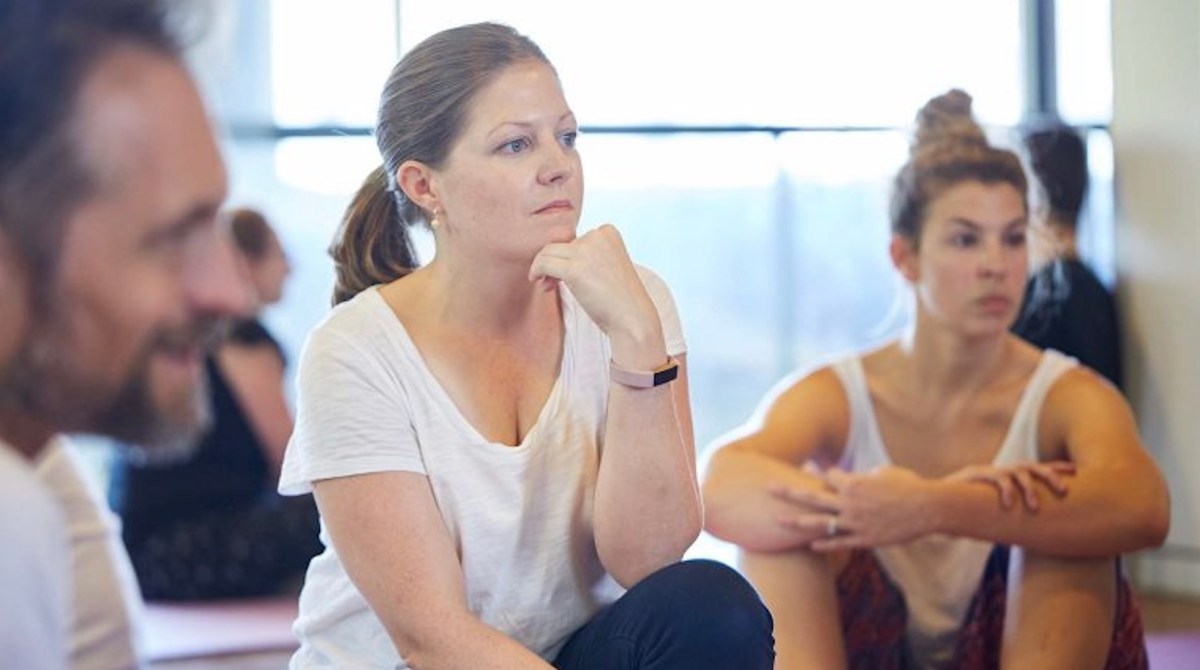
Amy Hume is an internationally trained voice and dialect coach who helps corporate professionals and actors become inspired communicators, by reconnecting them with the power of their voices.
Currently located in Melbourne, Amy works across Australia and beyond.
You can connect with Amy on Instagram, LinkedIn and Facebook.
Would you like to be profiled for ArtsHub‘s What I’ve Learned series? Email us with ‘What I’ve Learned’ in the subject line.
Amy Hume: video transcript
I’m Amy Hume, and I’m a voice and dialect coach.
In a nutshell, that means I teach actors to sound like someone else.
A lot of people think that dialect coaching is about teaching funny voices or sounding funny, but it’s a lot deeper than that, the work. And it really is about storytelling – helping actors inhabit a character more fully. And it’s always, always about supporting the director’s vision for the performance.
We would look at, OK, what age is the French person? What part of France are they from? What do we know about their background?
And then we’d look for what we call a primary source – so, someone who’s got similar circumstances or a similar background to the character that they’re playing. And we’d listen to their voice and then take that as a model for the dialect.

You might find this model of a person or speaker who is exactly like the character, and then everyone listens to their accent and goes, ‘Nah, that’s not what we were imagining’. And they want something a little bit different. So there’s always this balance of authenticity, and then what is most believable for the audience.
Amy Hume: dialect coaching in practice
For theatre, with dialect, we usually have the rehearsal process for the actor to learn the accent.
They might have some pre-production work and then they enter rehearsals and we keep refining the accent over time, and then they go on and they do the show for a whole season, which could be weeks or it could be months.
Whereas in film, you would use your pre-production time to teach the accent because then they might get maybe a week of rehearsals, sometimes only a day or so, and then arrive on set and the accent has to be good to go.
There are challenges in both, but the types of challenges we see when there’s a shoot are a bit more complex because often the actor has to, say, do the accent at the same time as carving a chair or riding a horse.
And so they’re trying to think of all these other things. They have to know the accent well enough so that they can do the accent and ride a horse at the same time.
Amy Hume: my advice
If you’re interested in dialect coaching, become a great listener. Start really listening to the voices around you and see, if you had to break them down and describe the way someone speaks, what descriptors would you use and how would you maybe teach it to someone else?
And I think as well, it’s really important to have a sense of play. Like you have to give yourself permission to make mistakes because you’re not going to nail the accent the first time.
I say that to actors in any dialect session and it’s as much a reminder for them as it is for me.
We’re going to go on a wriggly road until we land on the right path to the accent.
Amy Hume: there’s always room for good people
Also, it’s a specialised field, so you’ll probably have to do some further study. And for Australians, that might involve study overseas or online workshops.
It’s very helpful to have a diverse range of knowledge. So, a lot of dialect coaches have a background in voice or linguistics or languages or performance. And you don’t have to be an expert at all of those things, but knowing a bit about each of them will take you a long way.
Just keep in mind that the industry is not huge in Australia and it’s a competitive field, but there’s always room for good people.