

The judges of the Miles Franklin Literary Award have cut four longlisted titles and settled on a shortlist of six books, ranging from a spare, gem-like novella (sorry, ‘a slender novel’ according to the judges) through to a moving investigation into the impact of dementia.
One shortlisted author, Randa Abdel-Fattah, has cut ties with her publisher, the University of Queensland Press, after the highly-publicised decision to pulp a children’s book by Jazz Money and Matt Chun.
Each of the shortlisted authors now receives $5000. The winner, who will be announced in August, will receive $60,000.
The celebrated literary prize, which recognises novels that grapple with ‘Australian life’, is named for the author of the 1901 novel My Brilliant Career. While attitudes to Franklin herself have changed over the years, the long-running prize endures, and has played a role in the careers of many writers, from first winner Patrick White through to Peter Carey, Tim Winton, Alexis Wright, Tara June Winch, Michelle de Kretser and Jennifer Down.
Here are the six shortlisted works, a selection the judging panel have described as ‘grand and intimate,’ adding ‘these novels sing the Australian experience into new shapes’.
Miles Franklin 2026 shortlist – quick links
Little World
Josephine Rowe
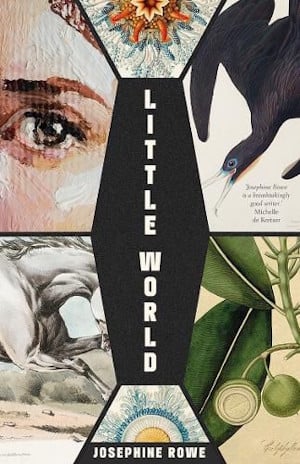
Judges’ comments: ‘Josephine Rowe’s Little World is a slender novel, but its concise and eloquent prose evokes a vaster and more mysterious world. It begins with the arrival of a girl’s body in a horse float in the Kimberley region of Western Australia in the 1950s.
‘Her uncorrupted body has made its circuitous way from the Panama Canal via Nauru to arrive at the house of Orrin. He is uncertain of what to make of this bequest but the child enters his dreams. In the 1970s, a young woman Matti finds the child, still miraculously preserved, in Orin’s crumbling home. Closer to the present, in the time of Covid, the now aged Matti has been moved to a nursing home, and others are left to comprehend her legacy.
‘These small lives are each part of much larger networks they can scarcely conceive. This is a novel about desire, loss and loneliness, but also about grace and the meanings of faith. Beautifully compressed, Little World gestures to something beyond itself.’
You Must Remember This
Sean Wilson
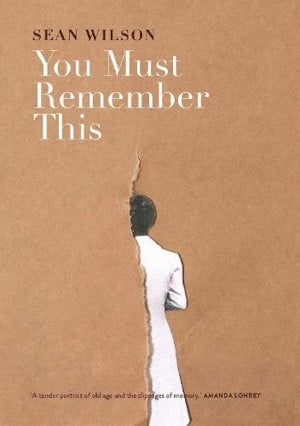
Judges’ comments: ‘Ingeniously narrated in the first-person, Sean Wilson’s You Must Remember This takes us to the point in life where memory and selfhood lose their accepted coherence. Early on we understand that Grace, who is telling us about her life, has been steadily losing her memory. Her daughter is facing the difficult decision to place Grace into care. But while the reliability of the narrator falls into question, the novel does not allow us to be seduced by the dissolution metaphor. As Grace’s functional memory erodes, its deeper strata become more pronounced and profound. Stripped of the insignia of social competence, Grace keeps talking and her life’s meaning emerges in the cracks and fissures of her story.
‘Without romanticising its real losses, You Must Remember This shows us that dementia is a process still fully situated in the tissue of significance.’
Discipline
Randa Abdel-Fattah
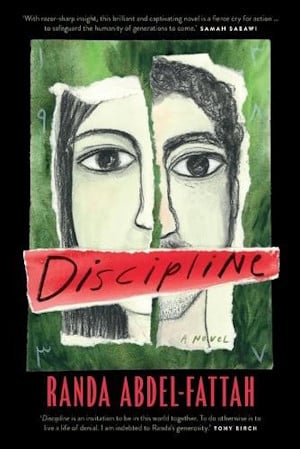
Judges’ comments: ‘Randa Abdel-Fattah’s novel Discipline personalises the political faultlines that have opened up in Australia in the wake of the October 7 attacks in Israel in 2023 and the war in Palestine. Though set in 2021, Discipline addresses the complexity of these ongoing events. In the novel, the institutions that underpin our democratic fabric, such as schools and universities and a free media, all find themselves caught in dilemmas that test their principles to the limit.
‘Discipline is both a taut political thriller and a humane meditation on the way that Australia must continue to find ways of working through agonising conflicts that may seem far away but in which Australia and Australians are intimately entangled.’
First Name Second Name
Steve MinOn
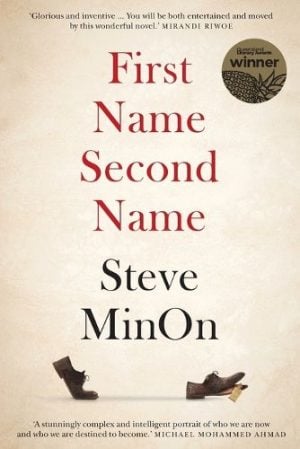
Judges’ comments: ‘Steve MinOn’s debut novel, First Name Second Name, opens with the death of Stephen Bolin, and then follows his corpse – the mythical Chinese Jiāngshī – home from Brisbane to Innisfail. In so doing, it evokes a changing geographic panorama and emotional landscape which frames the multi-generational and multi-racial family history it narrates. The novel asks complex and timely questions about who gets to be a settler and who remains a migrant in Australia.
‘First Name Second Name explores how these larger national questions intersect with the forces of desire and belonging that shape us. This queer and deeply human novel offers a new perspective on what it means to be Australian.’
Fierceland
Omar Musa
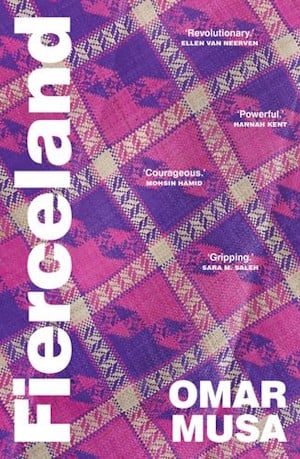
Judges’ comments: ‘It all begins and ends with a bead, a shard of sand polished into artistry that circumnavigates three centuries and three continents. Omar Musa’s ambitious novel narrates the trauma and triumph of siblings, Harun and Rozana, grappling with the burden of their violent patrimonial inheritance. Transmuting into lyrical English the Malay hikayat form of verse and prose that chronicles their transnational histories, Fierceland is a paean singing the dividends and depletions that emerge as the nation of Malaysia comes into being.
‘Musa’s song of Borneo’s rivers and forests disappearing into the viscous business of palm oil is also a cautionary modern tale of ecological devastation that goes hand-in-hand with vanishing languages and the tongues that speak them. Populated with crazy aunties, feral cousins, missionaries, rajahs, Japanese soldiers and keepers of owls, Fierceland is a psychologically layered and storied reckoning with the world we have inherited.’
My Heart at Evening
Konrad Muller
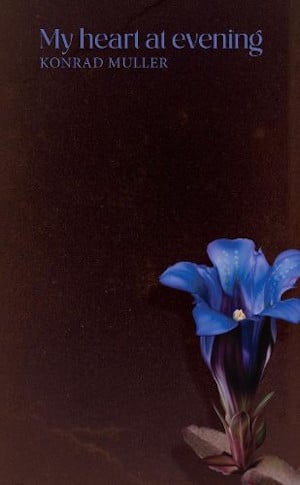
Judges’ comments: ‘While Konrad Muller’s, My Heart at Evening, is a historical novel set in 1832 Tasmania, the story that unfolds could not be more prescient. At the centre of this powerful debut is a mystery, the suicide of the Surveyor-General of the Van Diemen’s Land Company, a chartered company set up in the colony with its headquarters in the Imperial metropole. Readers are led through the story by Jorgensen, who is despatched to investigate the suicide at the request of the Governor Arthur.
‘This complex novel draws from Joseph Conrad’s Heart of Darkness, a defining text of imperial-colonial relations. Muller crafts a compendious narrative that is pertinent to the Australian continent, where the murder of First Peoples and the theft of their lands, the brutality of the convict system and the ravages of capitalism, continue to haunt our present. My Heart at Evening reveals the power of literature to centre the discomfort of this settler colony’s past and present, and its multiple layers of suffering.’