
Everyone has a book inside them, it’s often said, but whether that’s a novel or a memoir – or whether it’s a book you’d rather help usher into the world through editing rather than writing it from scratch – are specifics which are rarely discussed.
Similarly, the creative challenges of copywriting or of writing with exacting veracity in journalism and creative non-fiction, are not often talked about – except in industry-recognised programs like The University of Queensland’s (UQ) Master of Writing, Editing and Publishing, where such discussions receive the attention they deserve.
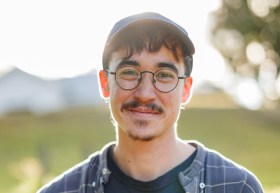
‘Everyone who comes into the Writing, Editing and Publishing program here at UQ comes with a degree of creativity. So whilst [creativity] can’t be taught, I do think it can be nudged or enhanced, and tools provided to help bring out the natural creativity that people bring with them to the program along with their curiosity and their desire to hone their craft,’ explains Dr Richard Newsome, the current Director of UQ’s Master of Writing, Editing and Publishing (WEP) program.
‘And it’s not just novels and short stories and screenplays. We also offer professional editing, we look at creative non-fiction, we look at workplace writing and editing – all sorts of avenues … We want to provide students and graduates with the toolkit of skills they need to pursue their ambition for the written word in whatever format is their natural medium,’ he tells ArtsHub.
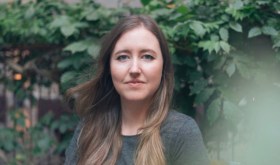
The WEP program, which can be taken full-time over 18 months or part-time over approximately five years, is taught by award-winning authors and arts industry professionals. One such lecturer is Bigambul and Wakka Wakka woman Dr Melanie Saward, an essayist, short story writer and author of several novels, who will soon be stepping into Newsome’s shoes as Director of UQ’s WEP program.
‘I’m a romance writer and romance scholar, so you’ve got someone who works in that genre – and we’ve got lots of spec fic and fantasy [lecturers], so there’s a lot of respect for different genres across the board, as well as lots of literature,’ Saward tells ArtsHub, adding, ‘It’s definitely one of the best post grad degrees that I’ve ever taught.’
When she takes over UQ’s Writing, Editing and Publishing program in 2026, Saward will be the first ever Aboriginal woman in the role. Her priority, she says, ‘aside from continuing the excellent work that Richard has done’, will be to bring a greater focus on Indigenous perspectives in the classroom.
This will be ‘good for all communication students, because the way we speak [about First Peoples] is adapting all the time, and having someone who can give you firsthand knowledge of that is really important,’ says Saward.
‘I would also love to see more Indigenous folks coming through the program. So whatever support mechanisms that I can put in to support Mob, in particular, coming through the course will be a big priority of mine,’ she explains.
Providing practical knowledge of the publishing landscape
UQ’s WEP program covers all stages of the writing and publishing process, and provides participants – who range in age from 21 years old to 70 – with the skills needed to adapt to the ever-changing publishing landscape and meet industry demands. The program’s only pre-requisite is a successfully completed degree in a relevant discipline.
Newsome says the program ‘comes with a level of practicality at its core’ and notes, ‘There’s only one compulsory course within the Masters, after the end of program dissertation, and that’s a course about the Australian publishing industry. All students are given a grounding in the reality of contemporary publishing – they get a sense of how the commercial side of the business works.’
By the time WEP students graduate, ‘they understand that creativity doesn’t exist in a vacuum’ he continues. ‘And if their aim is to get a work published in a commercial sense, they know the practicalities that underlie that – they get a good sense of the market and how it works.’
The opportunity to gain practical, real world experience through internships is another integral part of the program, Saward says.
‘The one that the majority of students get excited about is the highly competitive internship with The University of Queensland Press, one of the oldest publishing houses in Australia. It’s probably the best cultural institution in Queensland, and we have such a good relationship with them because they are part of our University,’ she explains.
‘There are also internships in many, many other different places … like Avid Reader in West End. It’s not just working in a bookstore, although that is one of the most wonderful parts about it, but you can work with their events team – they have events every night of the week, pretty much. It’s a community space and students love it … We also have professional writing, technical writing and academic writing [internships], practical opportunities for people who want to work in those areas too.’
Adapting to challenges and building a cohort
One of the greatest disruptions to the publishing landscape at present is caused by Artificial Intelligence (AI), though as Saward notes, ‘AI is never going to have the human touch – there’s always something a bit off about it. And it’s not great at writing business communications, it doesn’t understand nuance and subtlety.
‘There’s also ways to use AI as a tool, which I am not against our students doing. There are some practical applications for it. And I’d love to see our students graduating and then going into their workplaces and being able to tell their bosses, “AI can save us time here, but here is the difference between saving time and communicating effectively”. I think that the more armed we are about that sort of thing, the fewer jobs we’re going to lose,’ she tells ArtsHub.
‘We do often talk, perhaps too much, about how terrible AI is and why we shouldn’t use it. The reality is, it’s here and so many people are using it, so working out how to work with it is important. And I’m saying this as someone whose books have been stolen by AI,’ Saward adds.
In addition to equipping writers with essential skills and practical experience, UQ’s WEP program also equips graduates with an arsenal of valuable industry contacts – including a close-knit cohort of colleagues and peers, many of whom will remain friends for life.
As Newsome says: ‘We encourage students to form writers’ groups, and there are groups that were formed a decade ago that are still going strong. The relationships that are built within each of the cohorts are incredibly valuable … The WEP graduate Facebook page has about 500-600 members and is constantly posting writing opportunities and job opportunities for previous graduates, people they know, they trust, to fulfil those tasks. An ongoing circle of creativity has sprouted out of this program.’
Cohort members often assist friends and colleagues – including those from other cohorts – with queries outside an individual’s own area of expertise, Saward notes: ‘Say you work in corporate communications and you have a question about something that maybe wasn’t covered, or was a year or two ago in your degree – there’s usually a WEP student working in that area, or a former WEP person working there that can help.’