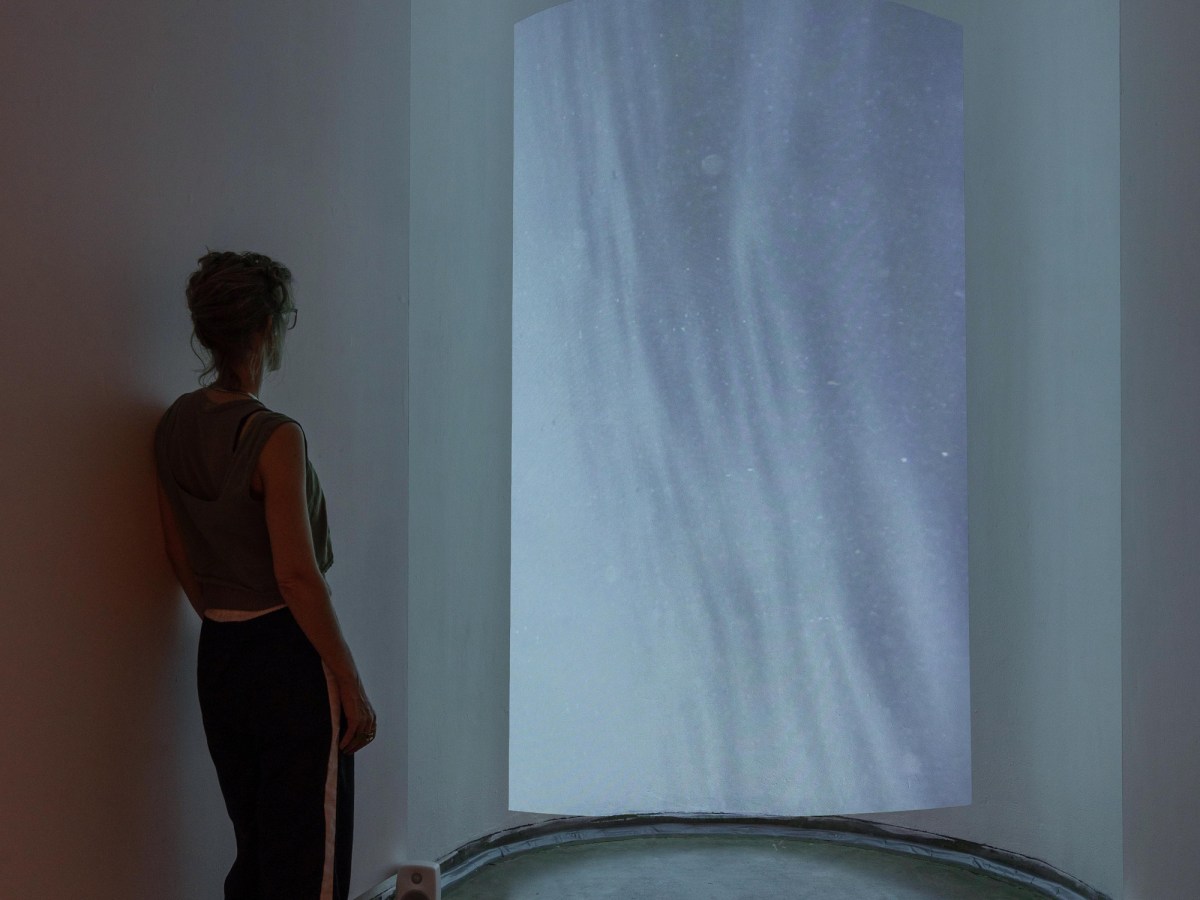
It’s compelling when a work of art speaks not only to the space it inhabits but also reaches quietly into the consciousness of its audience. Such is the experience of encountering Isabella Kennedy’s installation Ballast at Firstdraft in Sydney.
A warm glow emanates from within delicate paper sculptures, the gentle sound of splashing water fills the room and there is the suggestion of a slow, inevitable submersion. The work envelops you.
Isabella Kennedy’s Ballast review – quick links
Investigating personal and national histories
Kennedy is an emerging multidisciplinary artist and educator of Dagoman, Yanyuwa and Anglo-Australian descent, who works across printmaking, sculpture, book arts and installation to explore familial grief and the acts of remembrance across personal and national histories.
In Ballast, Kennedy traces intimate familial lines, drawing on the unfinished research of her father, journalist Les Kennedy, into the fate of the HMAS Sydney II, lost in 1941 and discovered 67 years later, 290 nautical miles off the coast of Carnarvon.
Kennedy’s engagement with the ship’s disappearance, and its long-delayed recovery, becomes both an act of inheritance and an act of immersion, pulling viewers into the layered depths of unresolved grief.
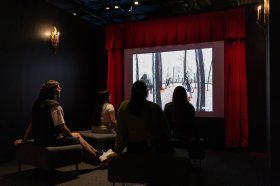
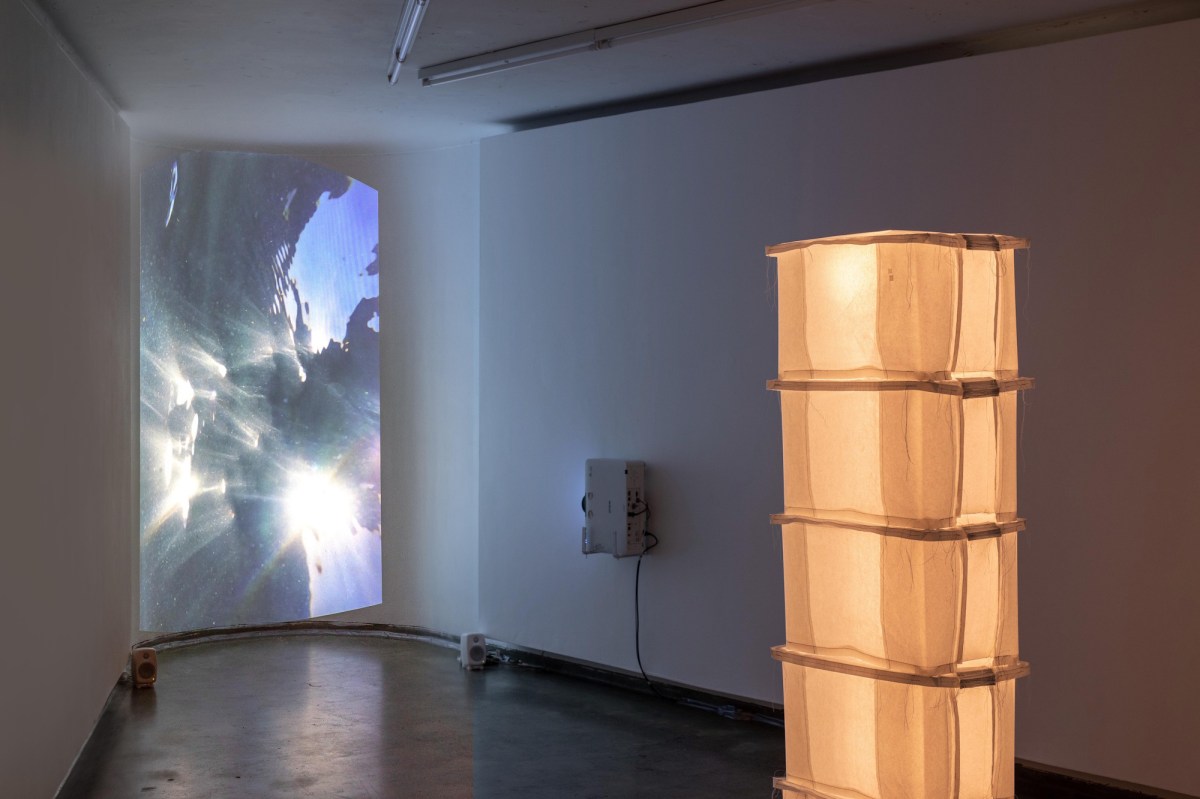
Upon entering the gallery, the audience is drawn toward a single-channel looped projection: a camera gently bobbing on the surface before dipping beneath the water, bubbles rising in its wake.
The narrow architecture of the space quietly amplifies the work, evoking the bow of a ship and subtly compelling the viewer to descend with it. As the sound of water fills the room and a blue glow washes across the walls, the looping image enacts a continual return, creating a sense of being pulled under, resurfacing, and drawn back again.
Material acts of remembrance in Ballast
At the centre of the room stands the stitched paper sculpture, titled buoy. True to its name, it provides an anchoring point within the installation. Kennedy references the plastic storage tubs that once held her father’s research, yet the work reaches beyond simple replication. It reads as a mast or axis, a quiet centre carrying the emotional weight of labour and remembrance.
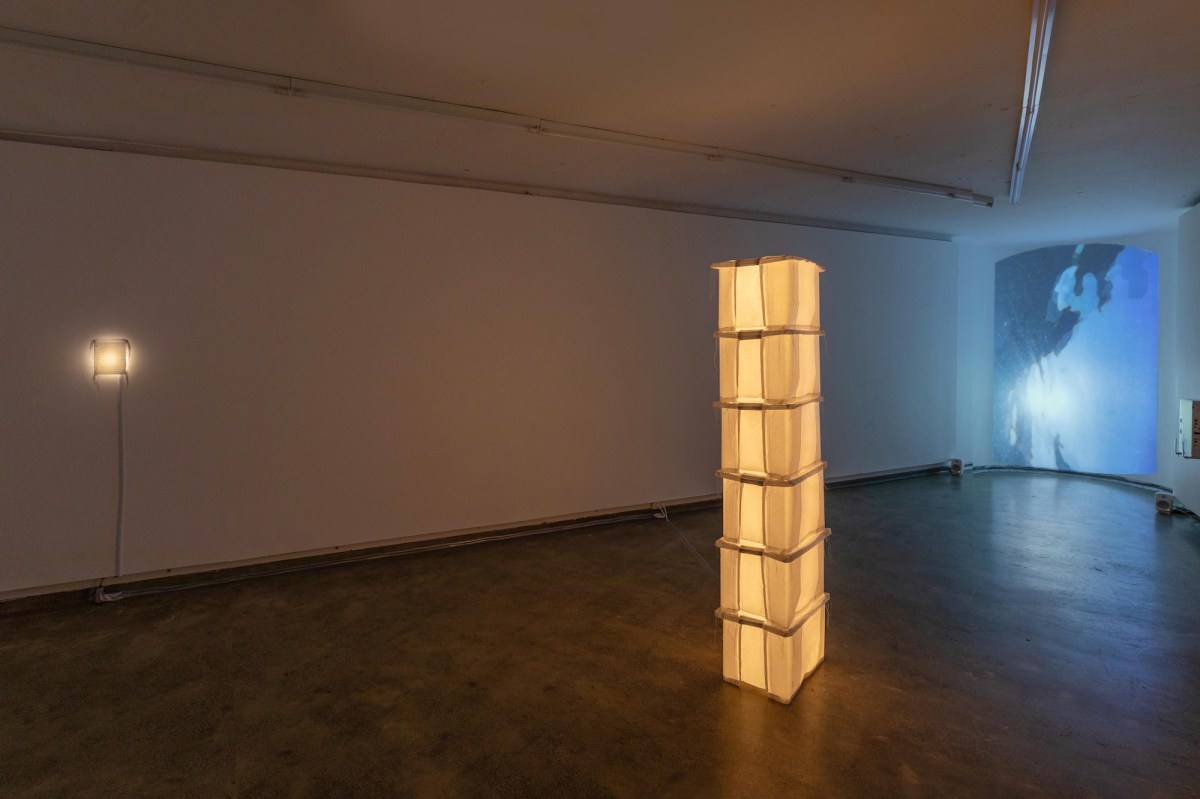
Loose threads hang and stitches remain visible, making the painstaking act of sewing paper palpable; the delicacy of the process suggests a meditative, sustained gesture of care that keeps connection with the deceased gently alive.
On the wall nearby, a smaller companion work titled hull shifts the register. Traditionally the watertight body that keeps a vessel afloat, here the hull is a softly glowing notepad, its faint stitched lines echoing ruled paper, with the excess thread pooling at either side.
There is a subtle poignancy in this inversion: what should contain and protect instead feels intimate and exposed. The paper holds a quiet tension, rigid yet tender, while the warm internal light casts a subdued glow, suggestive of inward reflection and lingering thought.
Family connections run beneath the surface
Almost hidden on the back wall, a large white vinyl decal reads Always, transposed from the original handwriting of Kennedy’s uncle and Les’ identical twin brother, Stephen Kennedy. Its stark whiteness nearly dissolves into the wall, only revealing itself in passing, caught in the warmth radiating from buoy or in fleeting washes of blue and green from the video projection across the room. The word emerges and recedes, as though participating in the work’s quiet tide of appearance and disappearance.
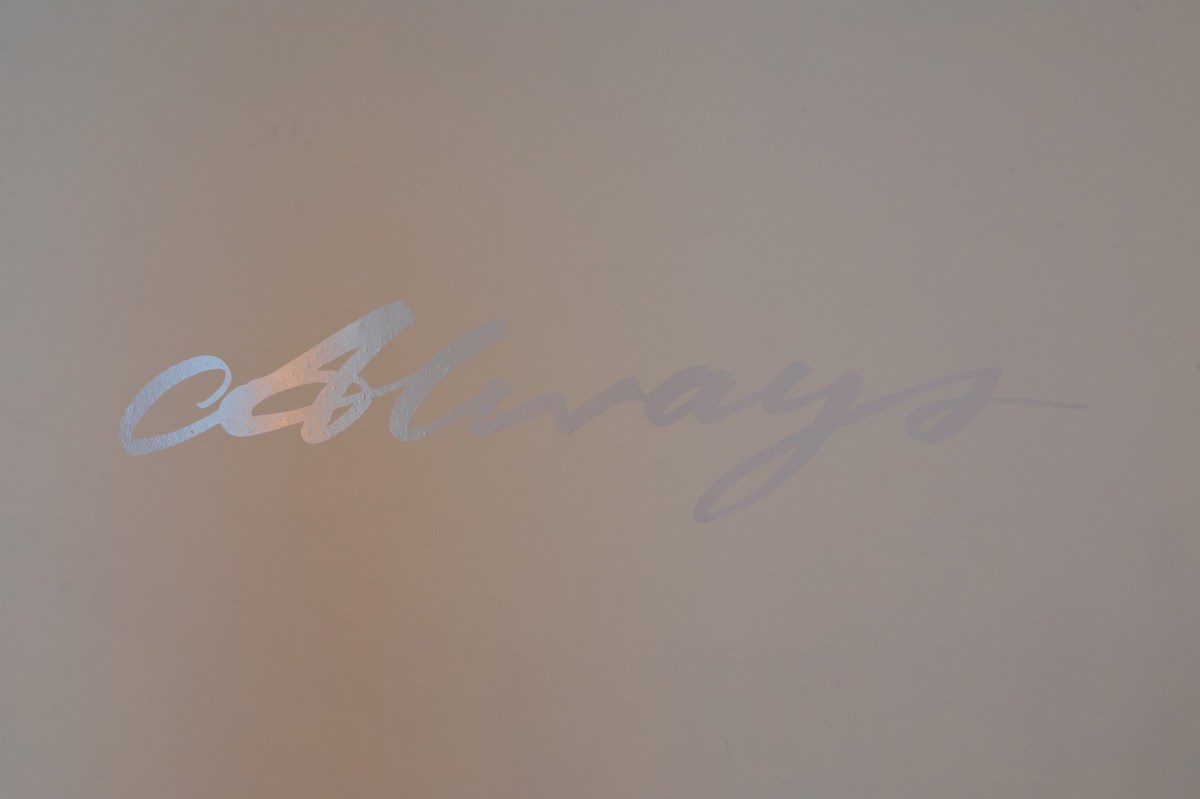
With it, another strand of familial connection surfaces. Does Always gesture toward a letter exchanged between brothers, or between uncle and niece? Is it a devotion to the ship itself, or to the uncle who served as a stoker aboard the vessel Les spent years researching? If buoy acts as an anchor, this single word loosens something deeper – stirring questions of inherited mourning and the uneasy tension between holding on and being urged, by time, to let go.
I found myself lingering on the reflections within the decal, where the swirling blue light became almost rhythmic, churning in time with the soundscape. Kennedy’s installation carefully constructs an atmosphere of descent: the warmth of the paper sculptures glows behind you, while the video draws your gaze upward into the corner, its sound filling the room. At moments, the sheer volume of the speakers makes it feel as though you are aboard the HMAS Sydney II itself, suspended in the act of sinking.
From this immersion, water begins to register as another sculpture within the space, shapeless yet insistently present. Kennedy imagines it as a dissolving field in which she, her father, and his uncle might reunite, bound by coastal tides and the currents between them.
Here, water operates as both threshold and conduit: a medium of displacement and return, where the absent are not monumentalised, but softly, sensorially felt.
Isabella Kennedy’s solo exhibition Ballast continues at First Draft Gallery, Sydney until 22 March.

This article is published as part of ArtsHub’s Creative Journalism Fellowship, an initiative supported by the NSW Government through Create NSW.