
When I was in Year 9, my class got the chance to do a writing workshop with John Marsden, the much-loved Australian children’s author who passed away in December 2024. The one thing I remember from this session was Marsden asking us to shout out as many adjectives as we could to describe the ocean: ‘cold,’ ‘wet,’ ‘blue,’ ‘salty,’ ‘heaving,’ ‘wavy’ and so on. We built up quite a big list.
‘Now,’ he said, ‘write me a one-paragraph description of the sea, without using any of these words.’
This sort of constrained writing can be a useful discipline for writers trying to avoid sounding unimaginative or unoriginal (and if you think Marsden’s challenge was rough, spare a thought for Earnest Vincent Wright, who in 1939 published a 50,000 word novel called Gadsby that did not contain a single letter ‘e’).
But increasingly, both professional writers and everyone else is facing a new, unwelcome constrained writing challenge: don’t sound like AI.
You write like AI: telltale signs
Spotting AI writing is an increasingly necessary skill for people in all walks of life – just ask any teacher or academic. Unsurprisingly, then, many people have started to look for supposed ‘tells,’ the little clues that let you know you’re reading something written by a bot rather than a human.
One apparent giveaway is the use of the em-dash. AI really, really seems to like em-dashes. But, it’s said, humans just don’t use them anymore, so if you drop one of these bad boys—you’re automatically suspect.
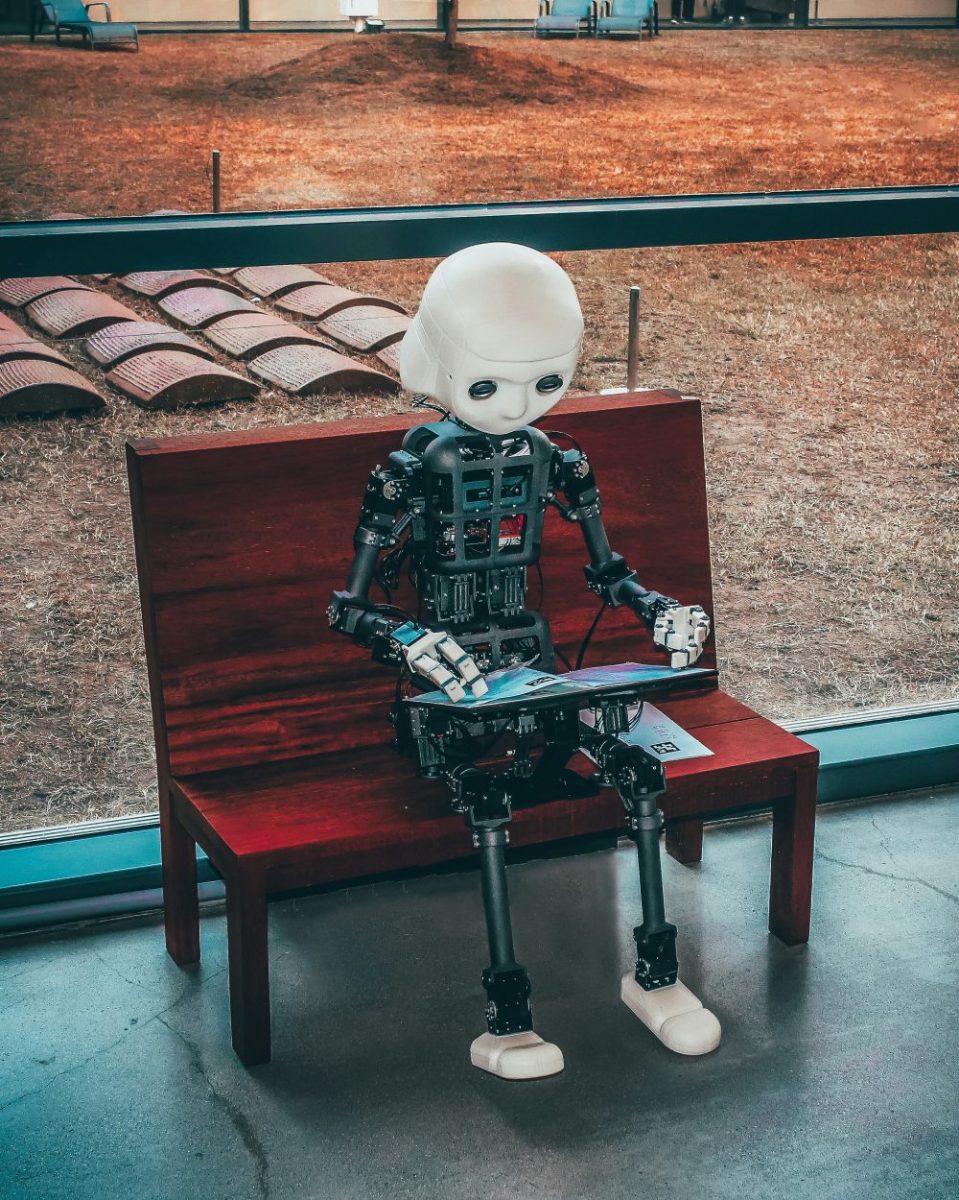
Another of AI’s tells is the use of triples, a habit that it adores, cherishes, and delights in. It also seems to really like phrases of the form ‘It’s not just a holiday – it’s an adventure.’
Above all, the biggest tell in AI writing—and the one that academics are suddenly all on the lookout for—is the word ‘delve.’ The word is so uncommon in everyday speech those of us who mark student work are immediately on our guard whenever an essay intro promises to ‘delve into the topic’.
Teachers aren’t the only ones, either. Writing in the New York Times recently, Sam Kriss argues the weird tone and overused phrasing that characterise AI writing has made everyone hyper-suspicious: ‘Entirely ordinary words, like “tapestry,” which has been innocently describing a kind of vertical carpet for more than 500 years, make me suddenly tense.’
But as Kriss notes, these words and phrases didn’t come from nowhere. Generative AI is nothing but a prediction machine, guessing what the next word in a sentence will be based on what has happened in the past. It uses em-dashes because that’s how people write in the data it’s been trained upon. Even ‘delve’ has a very human origin: it’s used in Nigerian English, which accounts for about 6.7% of all English speakers globally.
You write like AI: sounding human
For writers, this creates a conundrum. Nobody wants to be accused of getting AI to write their work, and a good way to avoid such accusations is to steer well clear of the tropes AI likes to use. Thankfully, it only takes a couple of minutes or a half-decent thesaurus to come up with a pleasing synonym for ‘delve.’
But lots of people seem outraged that they should have to give up their em-dashes, and other little writerly tics, lest they be accused of being fake. This has been bugging me while working on a literary non-fiction work I’ve been chipping away at writing for the last few years. I’m a big user of em-dashes—in fact, arguably an over-user. (Ditto the semi-colon; they’re just so darn useful).
So: should writers try to avoid things that might be mistaken for AI? What does ‘authenticity’ demand in this case: writing in a way that sounds ‘human’ even if it means compromising your own authorial voice? Or should you insist on writing the way you want to, even if people will think a bot did it?
You write like AI: authenticity and performance
The obvious, and satisfying, answer is that writers should just write however they think best, and tune out anyone who wrongly accuses them of using GenAI. It does seem unfair to expect writers to change their style simply because robots like the same phrasing.
It also seems to violate cherished ideas about authenticity and creativity. Part of the reason AI writing offends our sensibilities is the thought that there’s no consciousness on the other side of the words. We want to use language to connect with another mind, not just to transfer information.
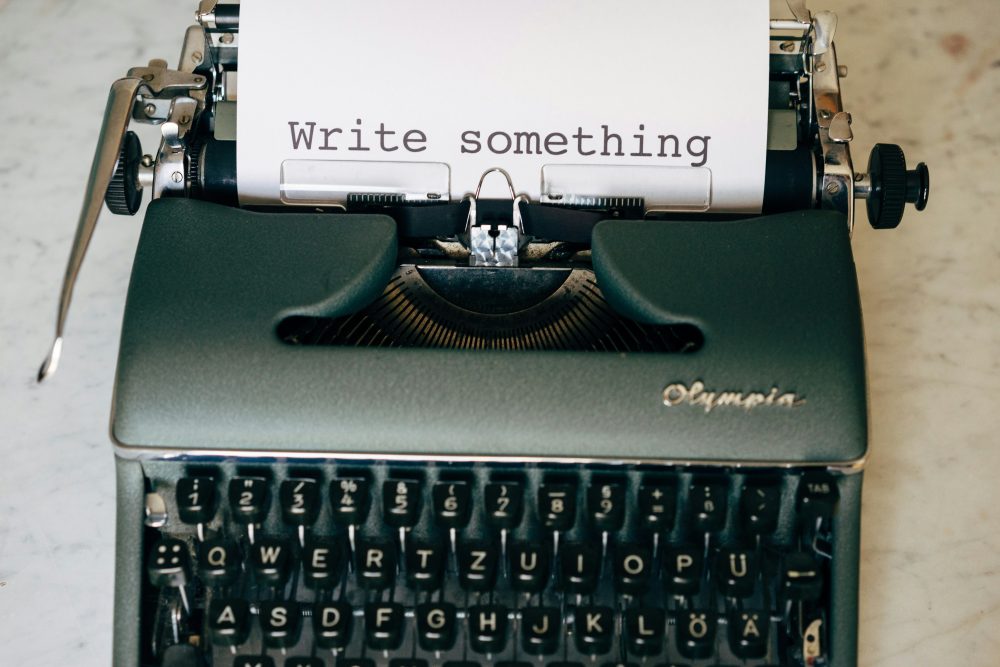
Yet writers change their word choice, style, and tone to fit changing circumstances all the time; a condolence card from Stephen King isn’t going to be terrifying. Good writers also instinctively avoid words that have become overused, or empty buzzwords. Given the ubiquity of AI writing, it seems reasonable to think we’ll start avoiding phrasing that sounds devoid of humanity in the way AI writing is.
Moreover, the whole reason AI uses the phrasing it does is because humans used it first. If it sees a phrase often enough, it will come to predict that that’s what a writer would use next.
In other words, the reason AI uses tropes like ‘It’s not just x, it’s y’ is that they are already cliches. Writers, famously, are taught to avoid cliches like the plague (see what I did there?!?). That’s the whole point of that exercise Marsden put a room full of 15-year-olds through that time: trying to teach writers to eschew the obvious and reach for the surprising.
In that sense, AI might, in fact, be modelling for us how not to write, precisely because it shows us how lots of people do write. Ezra Pound enjoined us to ‘Make it new‘. That’s one thing AI, for all its novelty, cannot do. Only we can truly surprise ourselves, by drawing upon the collective past of language without being algorithmically governed by it.
But I won’t be giving up my em-dashes anytime soon—and anyone who says we should can go delve.