As the Creative Director of Juddy Roller – a public art and placemaking studio specialising in largescale mural artworks – I work on a wide array of public art projects throughout the year, but I have been heavily involved in Australia’s silo art movement for a long time.
I founded Australia’s first curated Silo Art Trail in 2015, which ran through five regional towns in Victoria. I have now curated and produced more than 45 silo artwork projects across the country and witnessed how the movement has grown from attracting trickles of curiosity to securing waves of interest and tourist activity for regional Australia.
But these developments, like so many other cultural movements, have engendered both positive and negative outcomes.
Reassessing the silo art movement – quick links
A swelling art movement with shrinking ambition
One of my most pressing concerns about the movement right now, as I see it, is that while it continues to grow larger in size, it is also becoming smaller in conceptual ambition.
At the heart of this problem is what I believe to be a lack of appropriate curatorial processes around many new silo art commissions. This lack of curatorial oversight is both lowering the standard of the new mural art being produced and shrinking the diversity and ingenuity of the subject matter chosen for display.
That said, I acknowledge the importance of consensus-led decision-making in what are often hugely important new public art commissions for regional Australian communities.
Community-led decision making feels like a responsibility and a sign of good governance. But unfortunately, what I am witnessing in practice is that this is rarely the way valuable silo art is being created.
For me, this subject is deeply personal. I grew up in the bush – in Benalla in regional Victoria – but as a young person interested in art, I often felt culturally isolated. That sparse creative environment was one of the reasons I left my hometown for Melbourne in search of a broader artistic culture.
ArtsHub: When public art is led by accessibility, the results are transformative
When we first conceived the idea of the Silo Art Trail (a working title at the time but a tag that has clearly stuck), our ambition was to bring something new to people’s visual frame of reference, while also celebrating what has come before.
High in our minds was the need to introduce more contemporary art into regional landscapes – as a place where historically, many people rarely get to encounter it. The Silo Art Trail was intended to create moments of surprise, curiosity and inspiration.
Yet over time, I have seen the movement drawn to more familiar, nostalgic Australiana style imagery that belongs more to previous generations than to the future leaders of these towns.
The commissioned artworks frequently fall into a narrow visual language that aligns with historic depictions of the ‘Lucky Country’. The imagery tends to reinforce a sentimental version of that ‘Australian’ story, and often features motifs of native birds, livestock, historic trains and farm machinery.
These are familiar symbols of a rural past. While there is nothing inherently wrong with these subjects, when they start to dominate the entire movement, the cultural language of silo art becomes narrow and repetitive.
Having said that, my views are not intended as a criticism of the volunteers and community groups who make these projects possible. They work incredibly hard, often with very little support, to raise funds, complete grant applications and negotiate with landowners and silo owners to see these projects through.
Their intentions are entirely genuine and well-meaning. But good intentions alone do not produce strong cultural outcomes. If regional towns want to remain vibrant places for future generations, the artistic language of these projects needs to evolve.
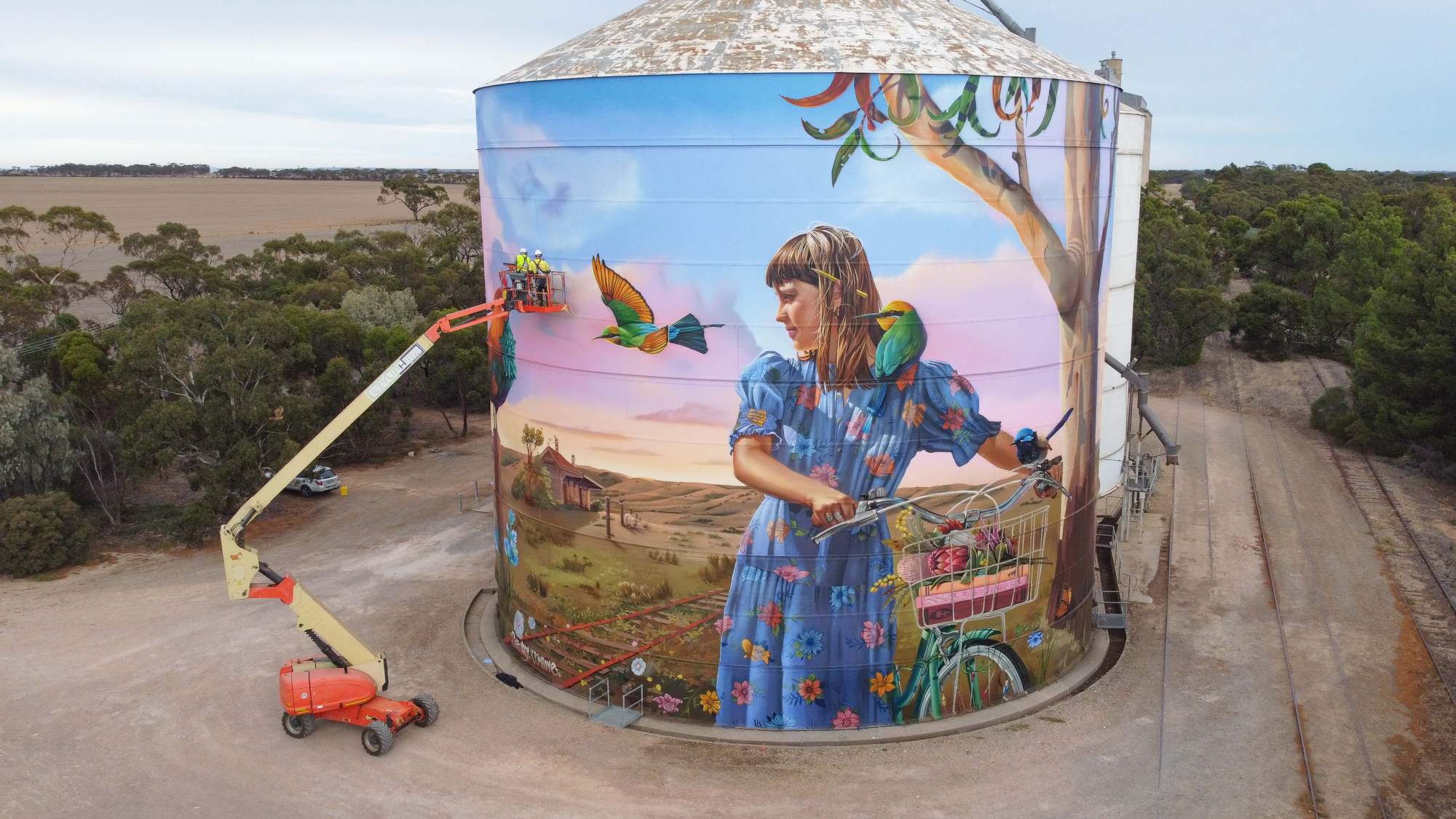
Janne Birkner (Krimsone) and Scott Nagy, Bute silo, South Australia, 2022. Project curated by Juddy Roller. Photo: Supplied. 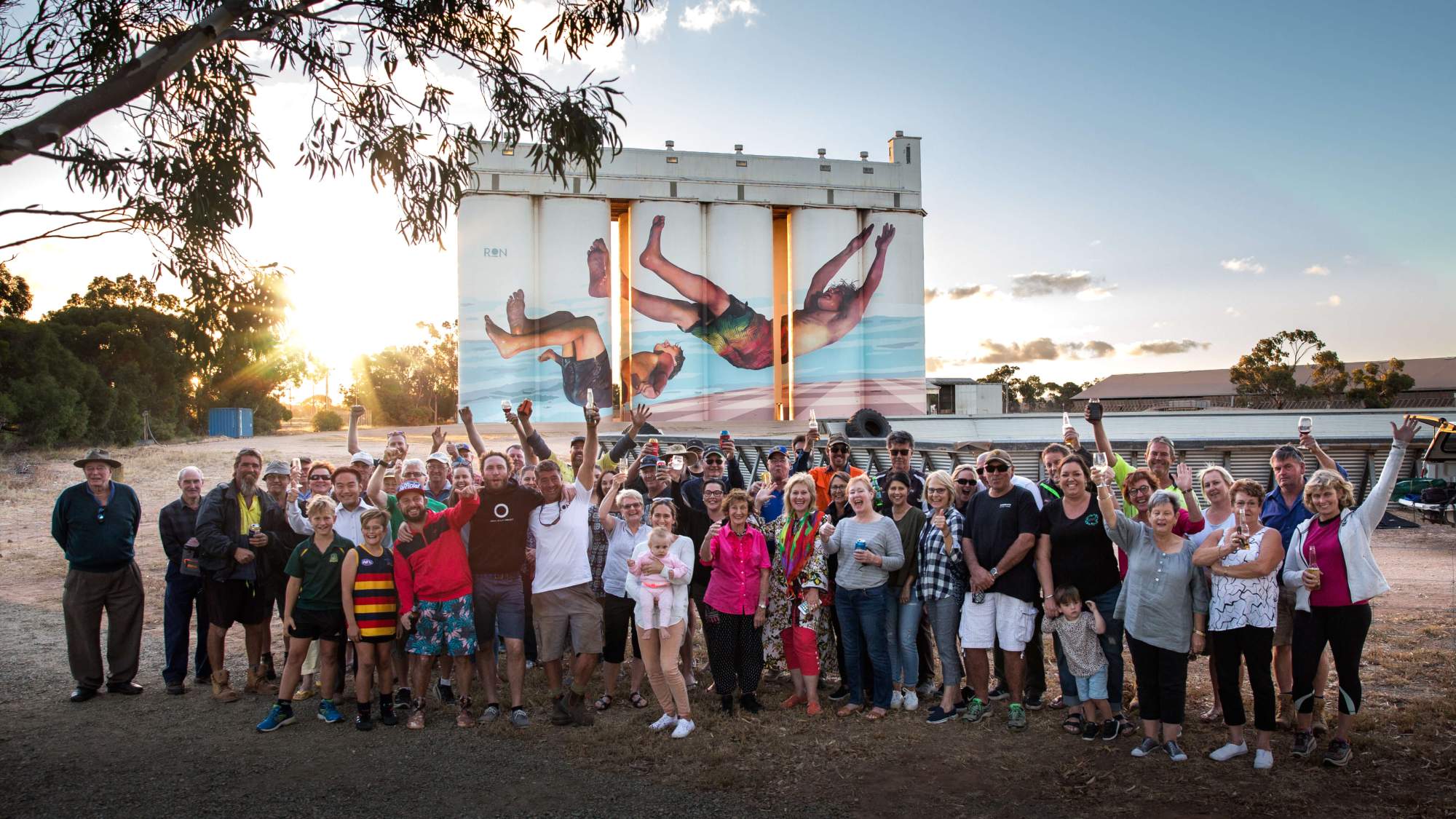
Martin Ron (assisted by Matt Gorrick), Tumby Bay silo, South Australia, 2018. Project curated by Juddy Roller. Photo: Supplied. 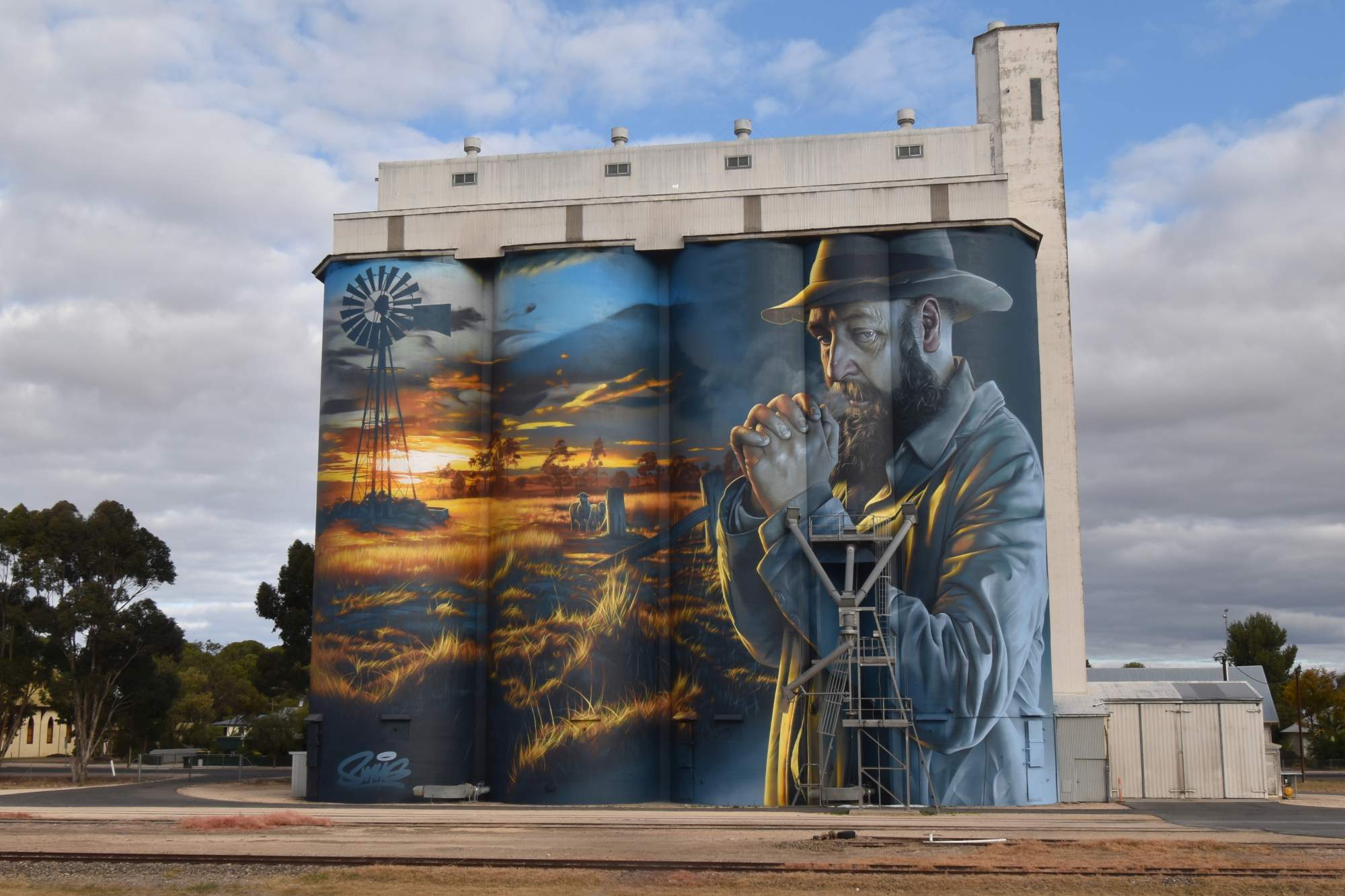
Sam Bates (Smug), Lameroo silo, South Australia, 2025. Project curated by Juddy Roller. Photo: Supplied. 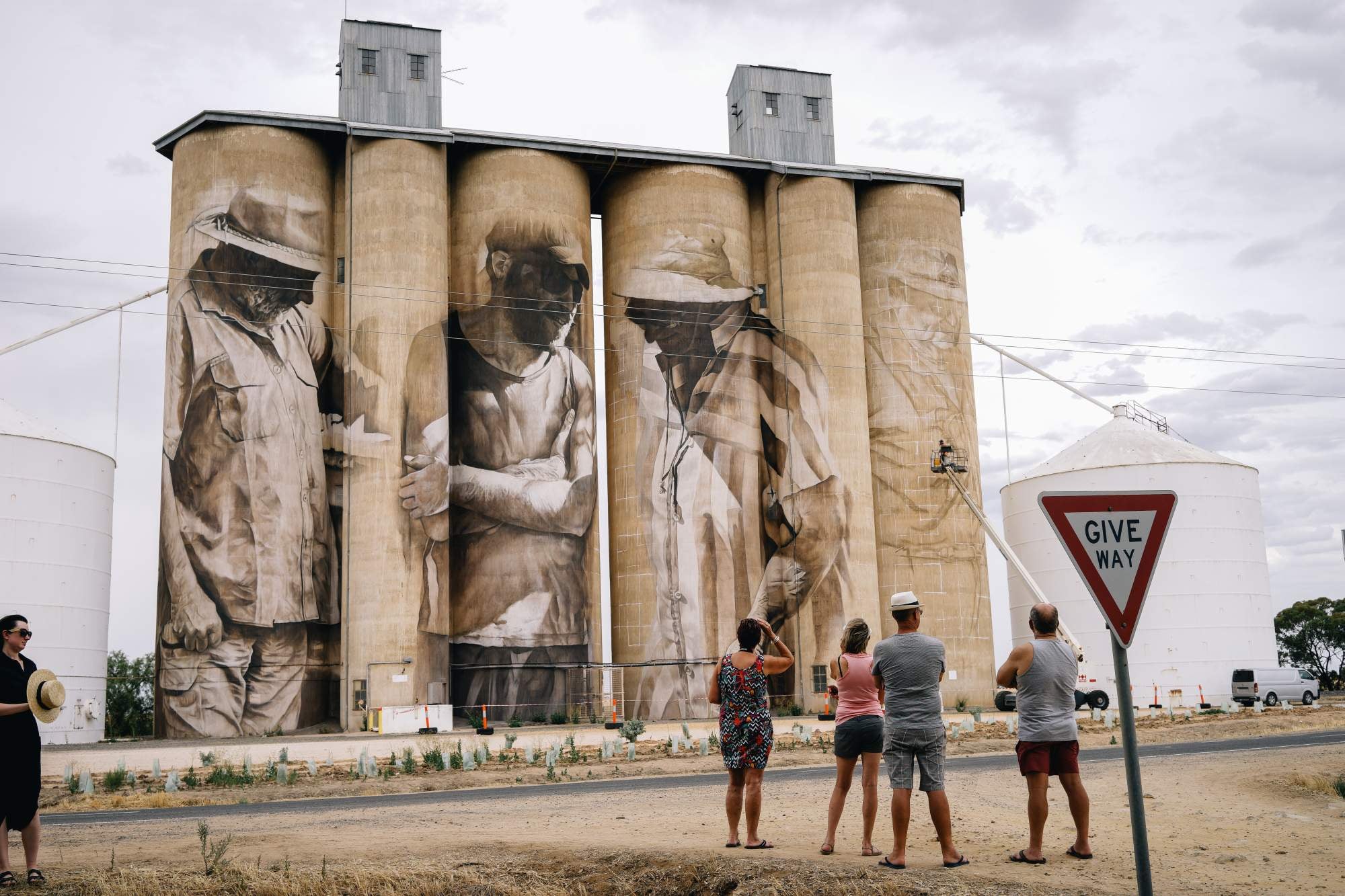
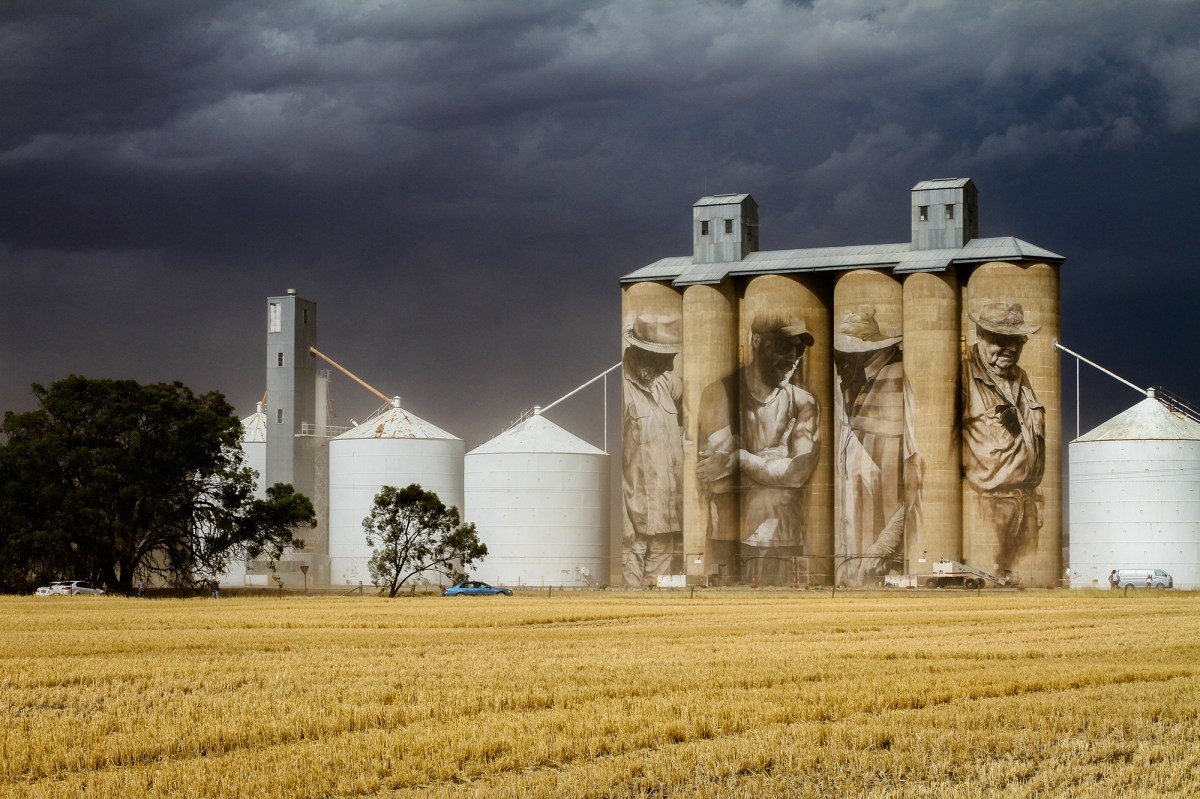
Guido van Helten, Brim silo, Victoria, 2016. Project curated by Juddy Roller. Photo: Supplied.
Where to next for silo art?
Growing up in regional Victoria, the style of art I saw around me was essentially limited to romanticised depictions of farm life and a colonial-style rural identity. But this imagery had very little relevance to me as a young person who was born in the bush.
It’s confronting for me now to see that same visual language proliferating across regional Australia through some of the regional silo art projects that are being commissioned. To also know that I played a role in starting the movement that made this trend possible is an uncomfortable personal realisation.
As I reflect on what might be next for the movement, I’m struck by the notion that the most successful public art projects I’ve worked on have been when a commissioner or governing body has allowed us to work within a broad conceptual framework – giving us, and the artists involved, the freedom to do our best work.
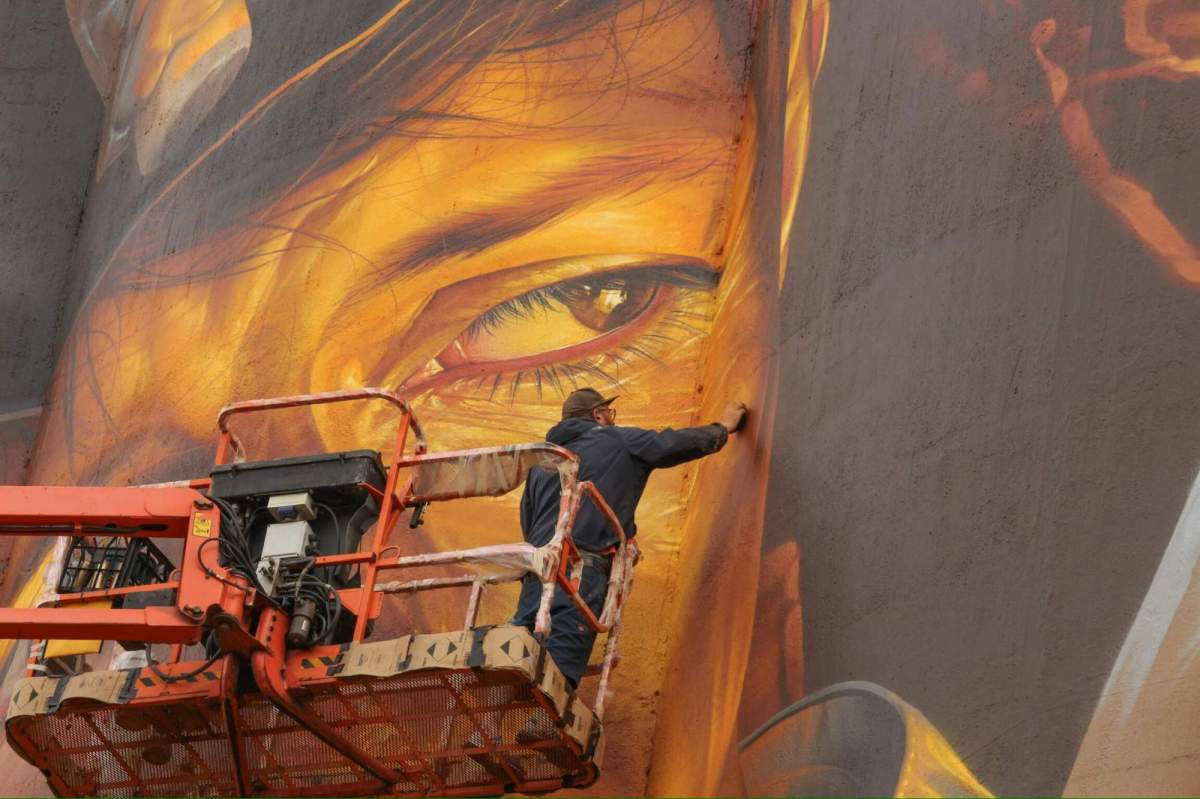
Abstract works, bold colours, geometric systems and large-scale patterns could create powerful contrasts against the muted tones of the Australian landscape.
First Nations artists could lead entirely new silo programs, sharing contemporary cultural perspectives that connect deeply to Country.
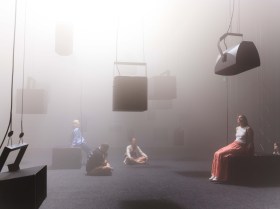
Conceptual works could transform silos into spatial experiences rather than simply large illustrations.
These approaches would not erase local stories. They would expand the possibilities of how those stories can be told and interpreted.
Art and tourism shouldn’t be competing forces
Of course, the current conceptual direction of silo art has clear benefits. Its trails bring visitors into towns that would otherwise be bypassed. Grey nomads stop in droves. They share photos on Facebook. Local businesses benefit. That impact should not be dismissed. But tourism alone should not be the only measure of a cultural success story.
Public art has the potential to – and should always – do something far deeper. It should challenge old assumptions and introduce new ways of seeing the world. It should inspire young people growing up in the very communities these artworks are meant to serve.
This brings me back to the idea of consensus. Community consultation in these projects is essential. Meaningful public art cannot be designed by a committee with little to no experience in public art curation. Landmark works require strong vision and expertise, and this often requires a sense of trust in an idea before it’s been fully endorsed or supported by the whole community or council.
Art sometimes needs to be challenging. It can spark debate and be decisive and I believe that’s when you know public art is doing its job properly. That friction is part of how culture moves forward.
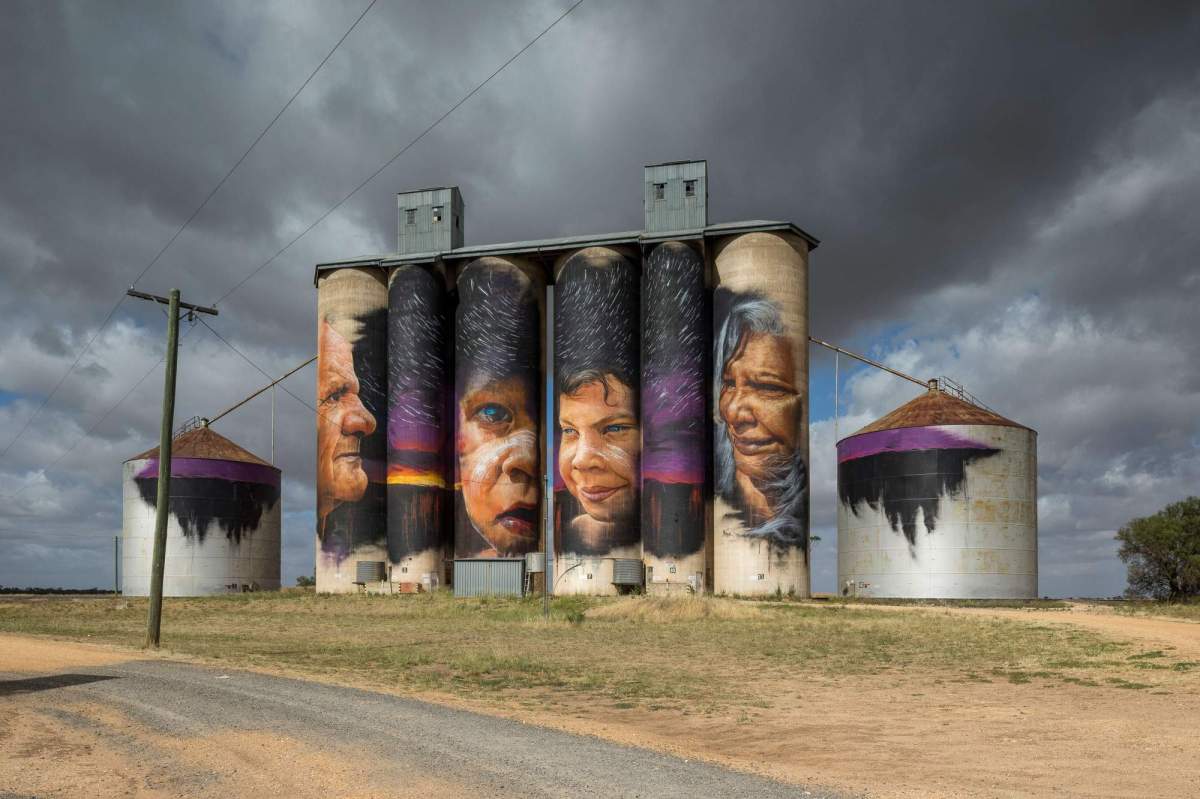
So, for communities and local governments considering how they might transform silos into valued pieces of public art, this is my plea to please consider finding a curator or artist who can potentially challenge the first idea that is put on the table for these projects, and to please then trust their vision, which may include surprising and unexpected ideas.
Ultimately, at this stage in the movement’s evolution, I think we all need to willingly embrace these potentially uncomfortable processes, and acknowledge that unfamiliarity doesn’t represent failure. Rather, it’s often just a sign you are heading into unknown territory, and this is where the fun can begin.