Aboriginal and Torres Strait Islander readers are advised that this article contains the names of people who have died.
It’s hard to imagine a time when nobody was making TikToks about their morning matcha, when MySpace was cutting edge, flip phones passed for advanced technology and politicians were still casually sidestepping climate change. However, it was in this context that a new space for artists in Melbourne quietly launched 20 years ago.
Established in 2006, Arts House today stands as one of the city’s most fertile laboratories for contemporary performance, live art and experimental practice. Its origin story is about curatorial intention, cultural necessity and an unwavering commitment to artists working beyond conventional forms.
Looking back at 20 years of Arts House – quick links
Enter Arts House
At the turn of the century, Melbourne boasted world class institutions for music, visual art and mainstream theatre, but there was comparatively little sustained support of experimental performance, live art or contemporary physical practice.
Durational, interdisciplinary and hybrid works had no enduring home, and the collapse of organisations such as Anthill, The Church, Handspan Theatre and Danceworks left further gaps in the infrastructure and ecology. Independent companies and freelance artists continued to innovate, but they struggled for consistent presentation opportunities, production support and spaces that foregrounded non-textual performance practices.
Arts House entered this landscape with a clear vision: to create a multidimensional resource hub for artists, one that would both cultivate new work and connect local practice to global conversations.
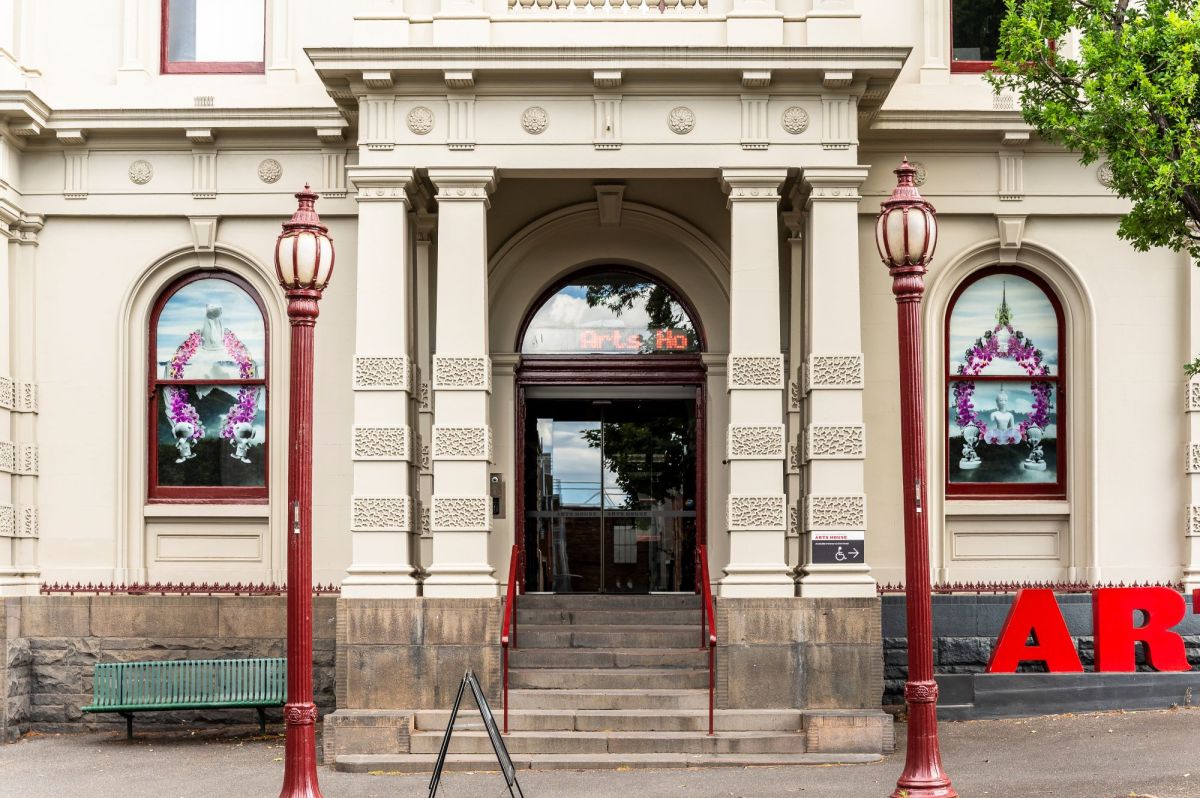
Using two old buildings – the North Melbourne Town Hall and the Meat Market – to present a unified, year-round program, the initiative signalled a bold civic commitment to forms not rooted in the Western classical canon. (The Meat Market now operates as a separate venue to Arts House.) In 2006, these 19th-century buildings became engines for 21st century ideas.
My role as founding Artistic Director during these initial phases from 2006 to 2012 drew on a deliberate curatorial approach with a strong appetite for risk and change. The vision was simple yet ambitious: to answer the needs of artists and tap into the potential of the buildings to create a multi-campus program that acted simultaneously as presenter, producer, commissioner and international bridge.
In a relatively short time we launched CultureLab – still thriving today – as a space for artists to develop new work. We also established studio residencies and administrative supports, joined the Mobile States national touring consortium, and formed partnerships with the Melbourne International Festival of the Arts and international cultural agencies. These relationships enabled Australian work to sit confidently alongside boundary-pushing international projects.
Valuable precedents were offered by global peers, such as Tramway in Glasgow, Trafo in Budapest, Roundhouse and Battersea Arts Centre in London and Carriageworks in Sydney. In turn, Arts House provided a blueprint for venues that would follow, including The Substation and Collingwood Yards in Melbourne.
Though the decoupling of Meat Market from the Arts House program has reduced some opportunities for interdisciplinary practice, its earlier integration as a high volume flexible space remains a critical chapter in Melbourne’s cultural evolution.
Creating space for international and local conversations
From the outset, Arts House positioned itself at the confluence of global shifts in performance-making. Across the world, artists were dissolving boundaries between dance, theatre, ritual and visual art; experimenting with endurance, spatial dramaturgy and scenographic intervention; and also privileging the body and the site over text.
By foregrounding contemporary and physical performance, Arts House aligned itself with these impulses and provided a platform where they could flourish.
The list of artists who presented work during this period includes many who are now mainstays of Australian contemporary performance, including Circa, Chunky Move, Lucy Guerin Inc, Back to Back Theatre, Ranters, pvi collective, Australian Art Orchestra, Branch Nebula, Anthony Hamilton, Jo Lloyd, Helen Sky, the late Gurrumul, Marregeku, Jenny Kemp, Fleur Elise Noble, Force Majeure, the late Tanya Liedtke, Rosalind Oades, Ros Warby, Callum Morton, David Pledger, Ilbijerri Theatre Company, The Fondue Set and many more.
The interplay between international and local work became one of Arts House’s most distinctive virtues. International artists – such as Forced Entertainment, Peter Greenaway, Ontroerend Goed, Merce Cunningham Company, Gob Squad, Stans Café, Wim Vandekeybus, The Tiger Lillies, Ursula Martinez and others – were invited not as exotic programming but as catalysts.
Their presence challenged assumptions, introduced new methodologies and supported co-productions that left lasting impressions on the local scene. Crucially, Australian artists were not relegated to supporting roles; they shared the stage as peers.
This deliberate choreography of international exchange expanded the city’s cultural imagination, strengthened local practice and nurtured a dynamic two-way flow of ideas.
Seeding national initiatives
Arts House also became a seedbed for major national initiatives. Among the most significant was the biennial contemporary dance festival Dance Massive, launched in 2009 through a partnership between Arts House (City of Melbourne), Malthouse Theatre and Dancehouse.
Dance Massive filled the vacuum left by the end of the Green Mill project in 1998, and established Australia’s first large-scale festival dedicated solely to contemporary dance.
Over multiple editions until 2019 – the 2021 edition was another Covid fatality and Dance Massive did not return – the festival became a magnet for international presenters and a transformative showcase for Australian choreography.
Dance Massive strengthened the national dance ecology, expanded touring opportunities and positioned Melbourne as a global destination for cutting-edge movement practice. Its absence is still felt today, though recent announcements connected to Rising offer hope that the gap may again be addressed.
Read: RISING 2026 names global street-dance legends as first stars of festival line-up
Another defining initiative to emerge from Arts House was The Black Arm Band. It was conceived in the mid-2000s after a conversation with the late Ruby Hunter, who told me, “What Australia needs is an Aboriginal orchestra and you are the one to pull it together.”
The project grew to be an independent company and then became one of Australia’s most powerful contemporary music collectives. Reclaiming a term used dismissively in Howard-era political discourse, the ensemble transformed it into a declaration of pride, cultural sovereignty, reconciliation and truth telling.
Featuring artists such as Archie Roach, Ruby Hunter, Gurrumul, Emma Donovan, Bart Willoughby, Shellie Morris AO and many others, The Black Arm Band created landmark works including Murundak, Hidden Republic and Dirtsong.
Their work was presented in every major festival in Australia as well as in remote communities, and toured internationally for a decade, shifting national conversations about identity, history and reconciliation. Black Arm Band, which was wound up in in 2017, remains a case study in how contemporary arts institutions can support cultural justice and amplify First Nations leadership.
The legacy of Arts House
Across its first two decades, Arts House has modelled how civic cultural institutions can nurture ambitious ideas. Its commissioning programs, studio access, residencies and partnerships provided artists with developmental time and production scaffolding – resources still urgently needed today.
Importantly, the City of Melbourne’s civic model allowed Arts House to prioritise long-term sectoral impact over short-term box office figures, enabling work that was experimental, niche or resistant to mainstream categorisation.
Looking back, the impact of this work can be seen not just in Arts House programs, but also through the ripples they sent across the city. Artists who developed work with Arts House went on to tour nationally and internationally; audiences embraced durational, participatory and non-textual forms; and Melbourne’s cultural policy now regards contemporary performance as essential, not peripheral. The ecology that formed around Arts House has proven resilient, adaptive and creatively ambitious.
Arts House’s founding was a deliberate cultural intervention. It filled a clear gap in the infrastructure, reimagined civic heritage buildings as engines of contemporary creation, and championed practices that privilege the body, the site and the event.
As we acknowledge 20 years, it is worth remembering that what now appears an established part of Melbourne’s cultural fabric was built piece by piece – deliberately imagined, argued for and fought into existence through the collective determination of artists, curators and a local government authority willing to take risks.
Arts House’s curatorial intention continues to evolve but its foundational purpose endures: to support artists bravely, to nurture experimentation and to expand what performance can be.
Learn more about ArtsHouse and its 2026 program.
Steven Richardson was founding Artistic Director of Arts House from 2006 to 2012 and currently works for Creative Australia. This piece is part of The House We’ve Built, a series by Arts House celebrating 20 years of curated programming, to be published in three instalments across December and January.