
Omar Musa wins the 2026 Miles Franklin Literary Award

Omar Musa has won the 2026 Miles Franklin Literary Award for his novel Fierceland.
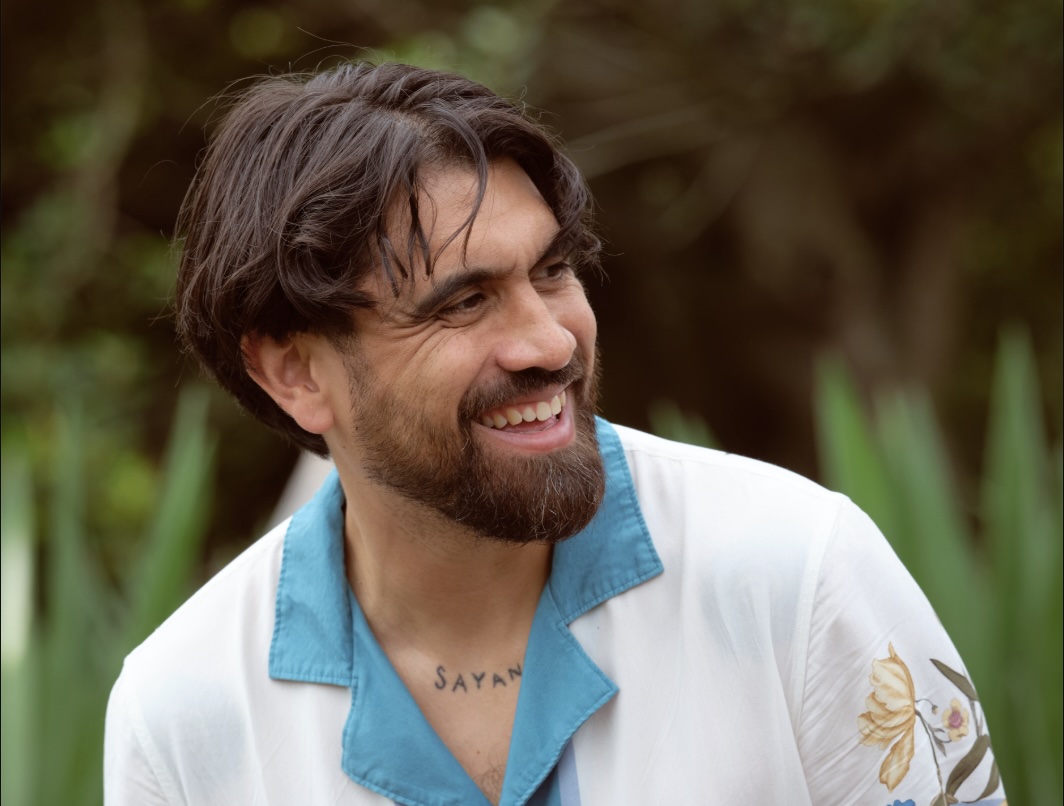
Omar Musa, winner of the 2026 Miles Franklin Literary Award. Image: Penguin Books Australia.

First-time shortlistee Omar Musa has won the 2026 Miles Franklin Literary Award for his novel, Fierceland.

On winning the award, Musa said: ‘I am honoured, grateful and completely blown away to have won the Miles Franklin Award. It feels strange and wonderful.

‘I worked very hard on Fierceland over many years, but it’s also the culmination of many other people’s feedback and advice. I’d like to thank my family in Malaysian Borneo, my mother Helen, my wife Mariel, my editors Jojo and Jo, my agent Tara, my publisher Nikki and the team at Penguin Random House Australia, my friend Nam, the rivers, the jungle in Borneo with its many faces, and the countless others who enriched me with conversations and spirit.’

Established through the will of My Brilliant Career author Stella Miles Franklin, for the ‘advancement, improvement and betterment of Australian literature,’ the Miles Franklin Literary Award recognises a novel of ‘the highest literary merit’ that presents ‘Australian life in any of its phases’. Perpetual serves as Trustee for the Award.

Omar Musa, winner of the 2026 Miles Franklin Literary Award. Image: Supplied.


Perpetual Wealth’s Managing Partner, Community, Social and ESG Investment Caitriona Fay, said: ‘The Miles Franklin Literary Award recognises novels that share the richness of Australian life. In Fierceland, Omar Musa brings a distinct perspective and literary vision that reflects the cultural depth, complexity, and interconnectedness of contemporary Australia.

‘His win affirms the continuing evolution of Australian literature, and the literary tradition that Miles Franklin sought to celebrate, one that embraces new voices, broadens our understanding of Australian experience, and continues to grow in bold and exciting ways.’

Musa will receive $60,000 in prize money.

Describing this year’s winning novel, the judges said: ‘Omar Musa’s Fierceland is a tour de force set against the backdrop of the destruction of Borneo’s rainforests. Cleared to make way for palm oil plantations, this pulsing forest world is the moral centre of Fierceland and Musa’s rhythmic prose hums its defiance.

‘In the human drama, siblings Harun and Rozana gradually realise that even in Sydney and Los Angeles, they cannot outrun the fraught legacy of their father, a palm-oil baron in Sabah.

‘As it charts a journey of personal and planetary redemption, Fierceland refashions the venerable, vernacular hikayat traditions of Malay storytelling into new Australian idioms.’

The 2026 judging panel comprised Richard Neville, Mitchell Librarian of the State Library of NSW and Chair; literary scholar, A/Prof Jumana Bayeh; literary scholar and translator, Dr Mridula Nath Chakraborty; literary scholar and author, Prof Tony Hughes-d’Aeth; and literary scholar and Director of AustLit, A/Prof Maggie Nolan.

The award was announced at a ceremony in Sydney on 5 August 2026.

The 2026 Miles Franklin Literary Award shortlisted books:

Little World
Josephine Rowe

Judges’ comments: ‘Josephine Rowe’s Little World is a slender novel, but its concise and eloquent prose evokes a vaster and more mysterious world. It begins with the arrival of a girl’s body in a horse float in the Kimberley region of Western Australia in the 1950s.

‘Her uncorrupted body has made its circuitous way from the Panama Canal via Nauru to arrive at the house of Orrin. He is uncertain of what to make of this bequest but the child enters his dreams. In the 1970s, a young woman Matti finds the child, still miraculously preserved, in Orin’s crumbling home. Closer to the present, in the time of Covid, the now aged Matti has been moved to a nursing home, and others are left to comprehend her legacy.

‘These small lives are each part of much larger networks they can scarcely conceive. This is a novel about desire, loss and loneliness, but also about grace and the meanings of faith. Beautifully compressed, Little World gestures to something beyond itself.’

You Must Remember This
Sean Wilson

Judges’ comments: ‘Ingeniously narrated in the first-person, Sean Wilson’s You Must Remember This takes us to the point in life where memory and selfhood lose their accepted coherence. Early on we understand that Grace, who is telling us about her life, has been steadily losing her memory. Her daughter is facing the difficult decision to place Grace into care. But while the reliability of the narrator falls into question, the novel does not allow us to be seduced by the dissolution metaphor. As Grace’s functional memory erodes, its deeper strata become more pronounced and profound. Stripped of the insignia of social competence, Grace keeps talking and her life’s meaning emerges in the cracks and fissures of her story.

‘Without romanticising its real losses, You Must Remember This shows us that dementia is a process still fully situated in the tissue of significance.’

Discipline
Randa Abdel-Fattah

Judges’ comments: ‘Randa Abdel-Fattah’s novel Discipline personalises the political faultlines that have opened up in Australia in the wake of the October 7 attacks in Israel in 2023 and the war in Palestine. Though set in 2021, Discipline addresses the complexity of these ongoing events. In the novel, the institutions that underpin our democratic fabric, such as schools and universities and a free media, all find themselves caught in dilemmas that test their principles to the limit.

Discipline is both a taut political thriller and a humane meditation on the way that Australia must continue to find ways of working through agonising conflicts that may seem far away but in which Australia and Australians are intimately entangled.’

First Name Second Name
Steve MinOn

Judges’ comments: ‘Steve MinOn’s debut novel, First Name Second Name, opens with the death of Stephen Bolin, and then follows his corpse – the mythical Chinese Jiāngshī – home from Brisbane to Innisfail. In so doing, it evokes a changing geographic panorama and emotional landscape which frames the multi-generational and multi-racial family history it narrates. The novel asks complex and timely questions about who gets to be a settler and who remains a migrant in Australia.

First Name Second Name explores how these larger national questions intersect with the forces of desire and belonging that shape us. This queer and deeply human novel offers a new perspective on what it means to be Australian.’

Fierceland
Omar Musa

Judges’ comments: ‘It all begins and ends with a bead, a shard of sand polished into artistry that circumnavigates three centuries and three continents. Omar Musa’s ambitious novel narrates the trauma and triumph of siblings, Harun and Rozana, grappling with the burden of their violent patrimonial inheritance. Transmuting into lyrical English the Malay hikayat form of verse and prose that chronicles their transnational histories, Fierceland is a paean singing the dividends and depletions that emerge as the nation of Malaysia comes into being.

‘Musa’s song of Borneo’s rivers and forests disappearing into the viscous business of palm oil is also a cautionary modern tale of ecological devastation that goes hand-in-hand with vanishing languages and the tongues that speak them. Populated with crazy aunties, feral cousins, missionaries, rajahs, Japanese soldiers and keepers of owls, Fierceland is a psychologically layered and storied reckoning with the world we have inherited.’

My Heart at Evening
Konrad Muller

Judges’ comments: ‘While Konrad Muller’s, My Heart at Evening, is a historical novel set in 1832 Tasmania, the story that unfolds could not be more prescient. At the centre of this powerful debut is a mystery, the suicide of the Surveyor-General of the Van Diemen’s Land Company, a chartered company set up in the colony with its headquarters in the Imperial metropole. Readers are led through the story by Jorgensen, who is despatched to investigate the suicide at the request of the Governor Arthur.

‘This complex novel draws from Joseph Conrad’s Heart of Darkness, a defining text of imperial-colonial relations. Muller crafts a compendious narrative that is pertinent to the Australian continent, where the murder of First Peoples and the theft of their lands, the brutality of the convict system and the ravages of capitalism, continue to haunt our present. My Heart at Evening reveals the power of literature to centre the discomfort of this settler colony’s past and present, and its multiple layers of suffering.’

Discover more screen, games & arts news and reviews on ScreenHub and ArtsHub. Sign up for our free ArtsHub and ScreenHub newsletters.


Paul Dalgarno is author of the novels A Country of Eternal Light (2023) and Poly (2020); the memoir And You May Find Yourself (2015); and the creative non-fiction book Prudish Nation (2023). He is Head of Content at ArtsHub & ScreenHub. Insta: @dalgarnowrites