
Work.
Run.
Smoke.
Bike.
Wake up.
Again.
Life in Cannon – the latest graphic novel by the celebrated Australian cartoonist Lee Lai – moves in gentle, unbroken cycles.
For the protagonist Cannon, a young queer woman in her late twenties, duty shapes each day, slowly wearing down her resilience. Work shifts blur into family obligations. The weight of emotional labour settles quietly, almost unnoticed, beneath everything.
Cannon stands at the centre, navigating the heat and pressure of the restaurant kitchen in which she works, holding together the fragile threads of friendship, and carrying the silent responsibility of being the eldest daughter in an Asian family. As the days repeat and demands pile up, small cracks begin to show. Her composure slips. The search for relief, for understanding, begins quietly, almost in secret.
Lai gained international attention with her debut graphic novel Stone Fruit (2021), a deeply intimate story about a queer couple navigating separation while maintaining a close bond with a young child.
The book was shortlisted for the Stella Prize and selected for the National Book Foundation’s 5 Under 25. It went on to win several major awards, including the Lambda Literary Award, the Cartoonist Studio Prize, the Lynd Ward Graphic Novel Prize, and two publications such as The New Yorker, The New York Times, Granta, and the Museum of Modern Arts magazine
Now based in Tiohtià:ke (Montreal, Canada), Lai continues to explore the quiet emotional landscapes of everyday life. With Cannon, she turns her attention to burnout, caregiving and the invisible expectations placed upon those that appear most capable.
Cannon: rhythm and breath
Cannon’s story unfolds with a deliberate, measured rhythm, each page moving like a breath held just beneath the surface, the quiet tension of someone trying not to break.
Her world is built on routines that offer little space for her own feelings to surface. At home, she tends to her ageing grandfather, absorbing his sharp words and unpredictable moods. Her mother, unable to challenge him, leaves Cannon to shoulder the responsibility in silence.
In the kitchen, Cannon is expected to remain composed and steady under pressure. Praise comes easily; she is reliable, admired for her calm, but support is scarce, and the admiration does little to lighten the load she carries.
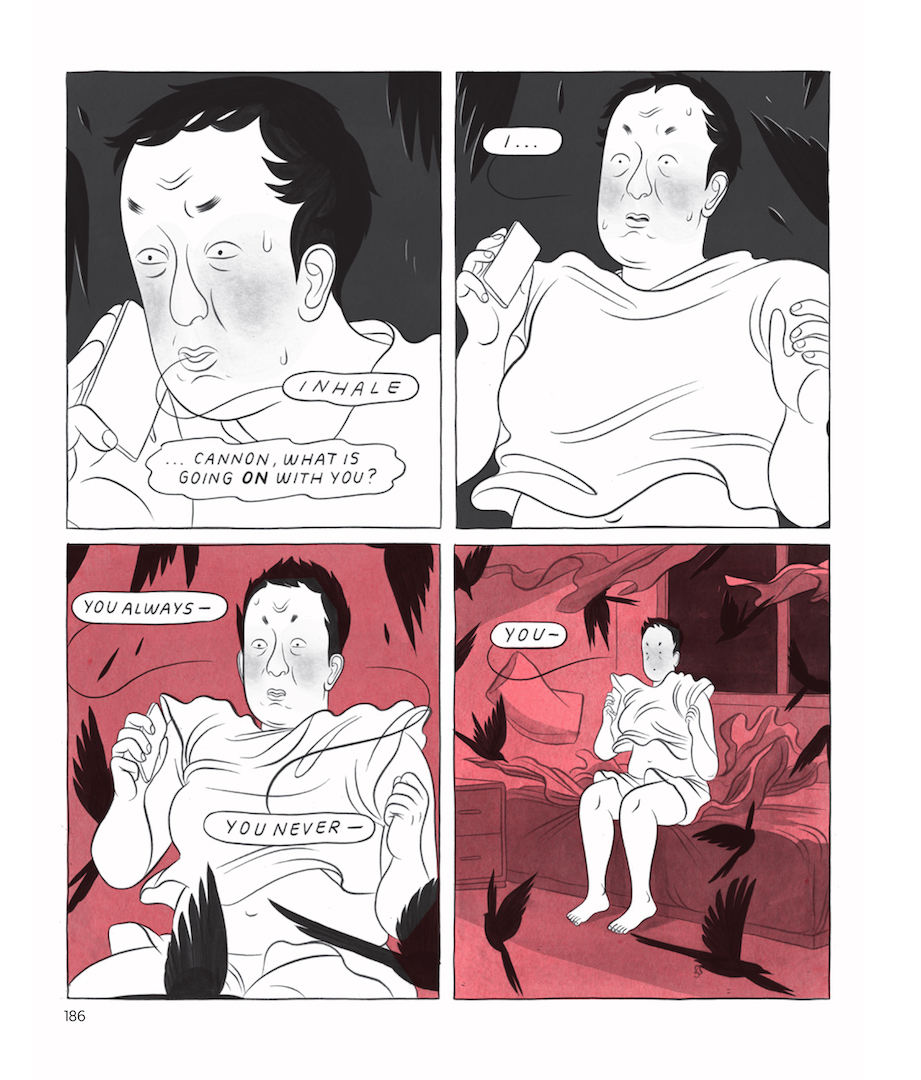
Between these spaces, Cannon runs. And during those runs, she listens to a mindfulness podcast centred on breathing exercises. A calm voice guides her through slow inhales and measured exhales, offering a fragile sense of control.
The podcast becomes something of an anchor, a gentle reminder to breathe. But it also weighs her down, never letting her truly express her emotions.
Eventually, the calm she tries to hold onto begins to crack, eventually exploding.
Cannon: visual storytelling
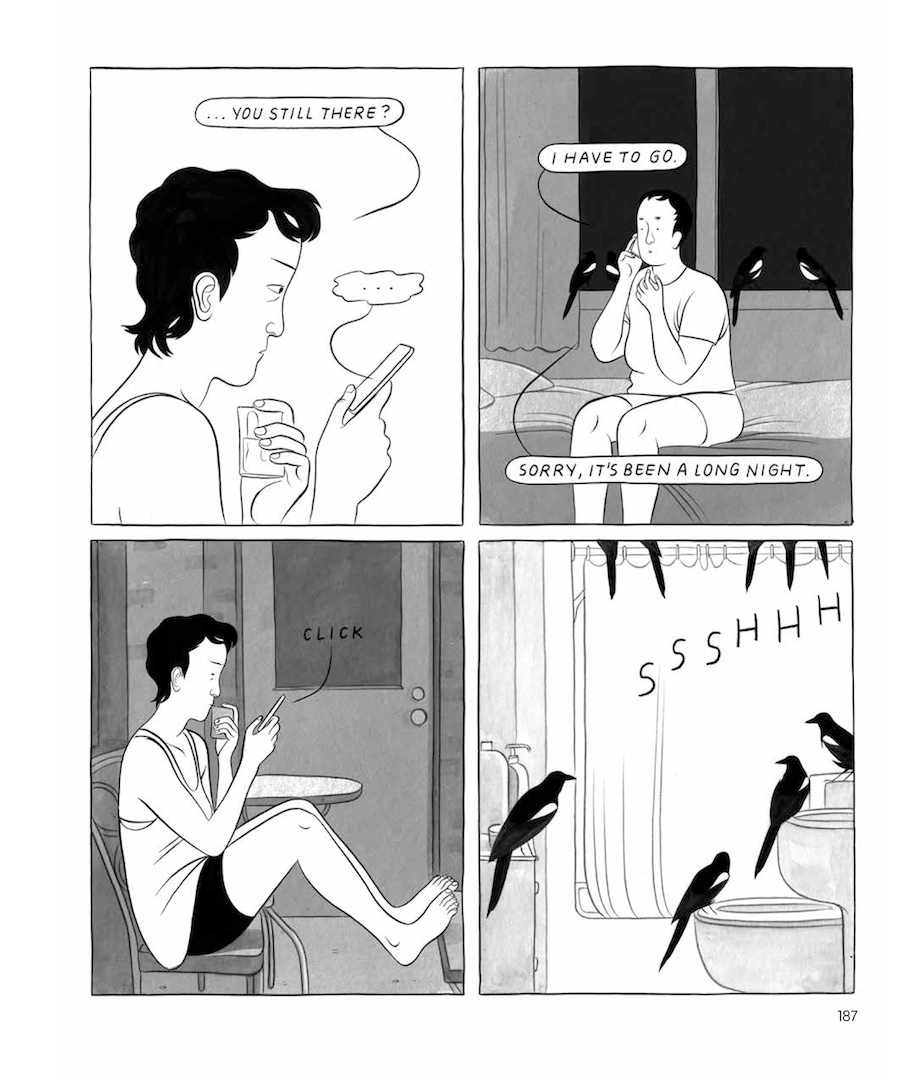
Lai’s visual storytelling is all restraint. Each line and shadow is chosen with care, letting emotion settle quietly in the spaces between panels.
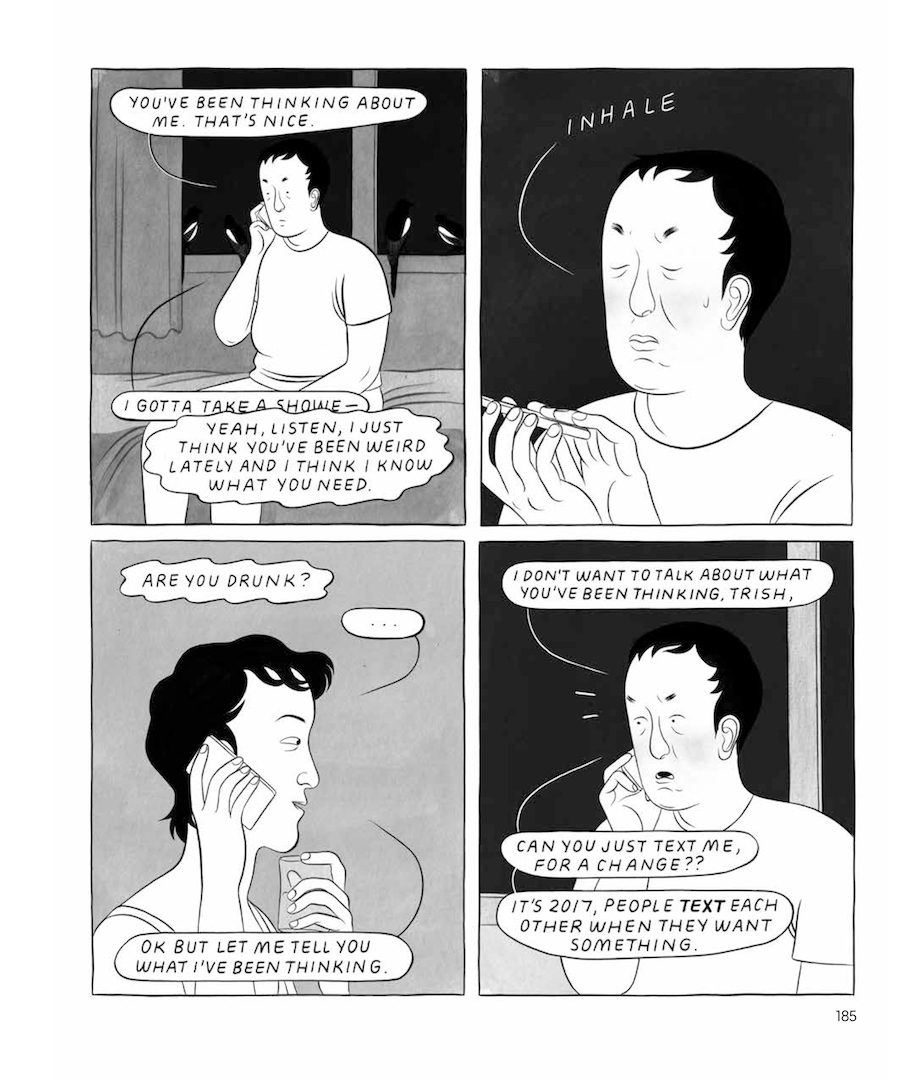
Cannon is rendered in black and white. The minimalist style allows the audience to concentrate on the emotional core of the scene. Without colour, monotony and exhaustion seep into every page. The quiet repetition of daily life is caught in stark lines and empty spaces.
Days blur into one another.
Spaces repeat.
Responsibilities accumulate.
Panels move quickly from one space to another, kitchens, streets, unfamiliar rooms. We glimpse a world Cannon inhabits but never quite belongs to. There are places where she is met with silence. Conversations where she slips into the background, almost invisible.
The world continues expanding around her.
Even as she moves through these shifting spaces, Cannon remains alone, her solitude deepening with each step.
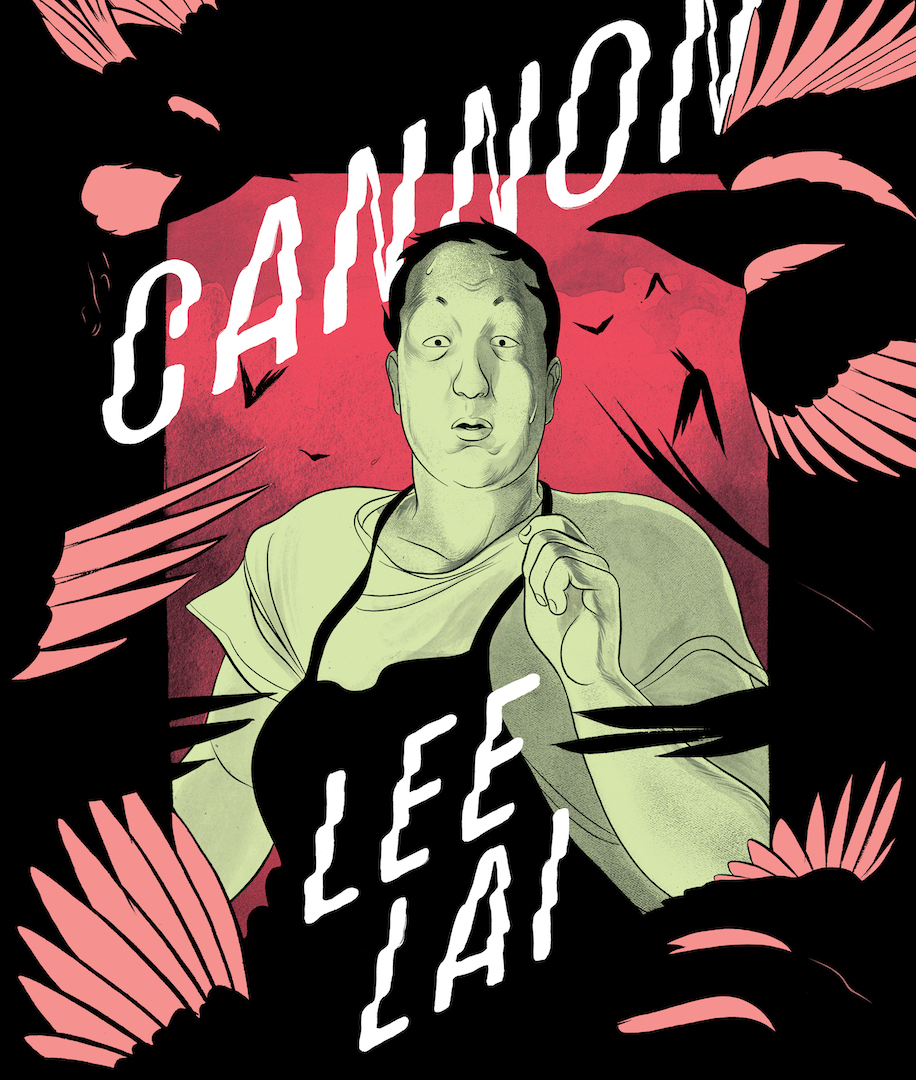
Some of the most powerful moments in the novel arrive in silence. After difficult news or tense exchanges, Cannon is left staring into space, her face unreadable, the weight of what has passed settling quietly around her.
She says nothing.
The reader understands everything.
Cannon: isolation and responsibility
Much of Cannon’s tension sits in the silent expectations that come with being the eldest daughter. She must hold everything together, even as it threatens to fall apart.
Her elderly sick grandfather’s cruelty is exhausting, but Cannon still shows up.
Not because she wants to.
Because someone has to.
At work, Cannon is the steady force that keeps the kitchen moving. She absorbs chaos, smooths over cracks. People notice her resilience, even praise it. But few stop to ask how she is really coping underneath it all.
She becomes the person who holds everything together.
Until she cannot.
The novel opens with Cannon smashing kitchen equipment. At first, it looks reckless. We judge her for this emotional expression. But soon it becomes clear: this is the release of stress that has been building quietly for too long.
What starts as a shock slowly becomes cathartic. It is a necessary break in the silence she has carried.
The outburst is not simply anger. It is release.
Cannon: the language of crows
Throughout the novel, symbolism is vital, especially in moments of high stress.
Perhaps the crows represent misfortune or dark omens, or maybe they are a reflection of the character’s intrusive thoughts.
Lee Lai allows their meaning to remain partially unresolved. Not everything is explained outright. Instead, the crows linger in the margins of the story, inviting readers to draw their own conclusions.
Their meaning shifts quietly over time.
What these symbols means is something the reader must discover or interpret for themselves.
Cannon: catharsis and connection
As the story unfolds, Cannon tentatively reaches for connection instead of silent suffering.
There is quiet catharsis in these moments, not because everything suddenly becomes easier, but because the emotional pressure finally finds a place to go. The result is bittersweet.
Healing, Lee Lai suggests, is rarely dramatic.
It happens in small, almost invisible adjustments
Cannon is a quiet, powerful work that shows how relentless cycles of obligation can silently shape, isolate and exhaust us, even as we keep moving forward.
Lee Lai does not rely on spectacle or dramatic twists. Instead, the novel unfolds through small, intimate moments: a cigarette in the alley behind a restaurant, the steady rhythm of running shoes on pavement, the slow inhale and exhale of guided breath.
These moments gather, until the emotional weight becomes impossible to ignore.
Work.
Run.
Smoke.
Beneath these routines, something deeper pulses in a young woman trying to hold her life together, even as she quietly unravels.
And in that struggle, Lee Lai captures something painfully real: the exhaustion of responsibility, the complexity of family, and the fragile hope that connection, even in small moments, might still be possible.
Cannon, written and illustrated by Lee Lai, is published by Giramondo Publishing.

This article is published as part of ArtsHub’s Creative Journalism Fellowship, an initiative supported by the NSW Government through Create NSW.