So you want my arts job: Audio Describer

Description Victoria’s Will McRostie talks to ArtsHub about interpreting and presenting theatre and exhibitions for blind and low-vision audiences.
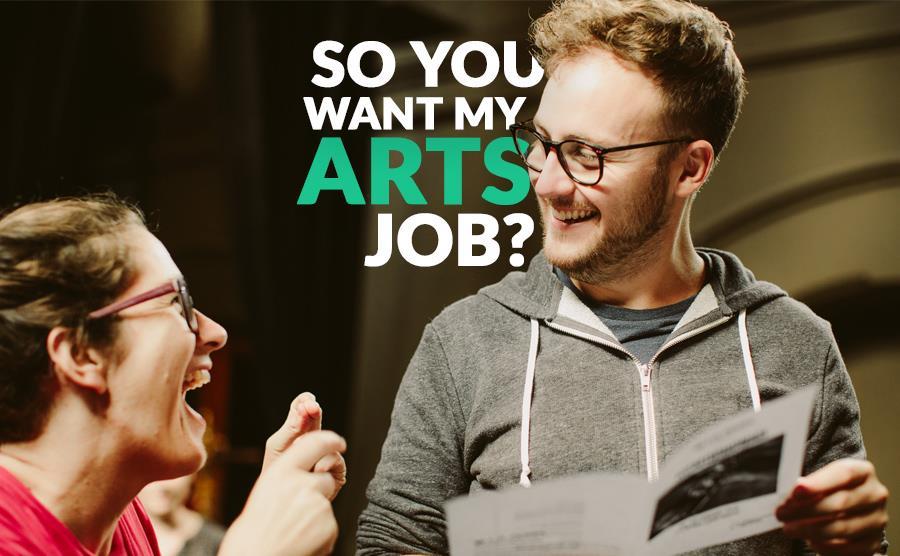
So you want my arts job: Audio Describer Description Victoria founder Will McRostie at work. Photo: Kate Pardey.
No image supplied

Jinghua Qian

Thursday 20 February, 2020

Will McRostie is the founder and lead describer at Description Victoria, a not-for-profit organisation that provides professional audio description services for blind and low-vision audiences.

In 2019, Description Victoria worked on 45 experiences across myriad art forms, including exhibition tours, special events, panels and conferences, circus and dance, and 16 theatre shows. McRostie spoke to ArtsHub about what the job entails.
How would you describe what you do?

ADVERTISEMENT

An audio describer is a media access professional who translates visual imagery into verbal information for the benefit of people who are blind or have low vision.

Audio describers work across all kinds of visual media, but my field of practice is mostly in performing arts and visual arts. So for a theatre show, for example, I’ll go see a show, then set about creating a bunch of resources that people who are blind or have low vision can use to better engage with that show. We’ll write a script that fills in gaps in the dialogue, scene changes and any other available pauses with a verbal description of the visual things that are happening on stage. We’ll produce pre-show notes with detailed descriptions of the set, characters and costumes. And we’ll run a tactile tour, inviting audio description users up onto the stage with the stage manager and hopefully some of the cast to have a walk around, orient themselves, touch the sets and costumes and props, so people have a deeper understanding of the layout of the stage and some of the visual effects used in the show.


Will McRostie providing a tour for the Wallace & Gromit exhibition at ACMI. Photo: Kate Pardey.

How did you become an audio describer?

I’m a theatre kid, I grew in theatre, and I’ve always worked in the arts. When I was still living in South Australia where I grew up, I got a tap on the shoulder from my friend Lara Torr who was the lead describer at the time for Access2Arts which is the peak arts and disability body in South Australia. I trained with them and became a describer and one of their co-trainers.

Then I moved to Melbourne, because every 25-year-old in Adelaide moves to Melbourne, and I had my eye on what was being offered in terms of audio description in Victoria, which was only a narrow slice of what was out there – mostly the commercial musicals and Melbourne Theatre Company. I started looking for opportunities, which came when I met a guy named Ross de Vent, who is blind, at a theatre show. It wasn’t described – I saw his partner whispering in his ear and I thought, gee, you must really love theatre. We had coffee and decided maybe we wanted to start a professional audio description service.

We ran a pilot with the Malthouse, and from there we launched the service, and we’ve had a wonderful response. Ross continues with Description Victoria as a member of the Committee of Management, and we’re now an incorporated not-for-profit governed by a committee that’s majority people with lived experience of blindness or low vision.

What’s an average week like?

It’s wonderfully varied. Last night I was at the Comedy Theatre describing Come From Away, the musical. There’s a couple of days doing the admin and setting up for gigs, then we might go into a show on a Tuesday and do a tactile tour, rehearse another show on a Thursday in a different venue, then deliver that show on a Saturday. You might be doing an exhibition tour on a Wednesday morning and then Circus Oz on Friday night. So you’re constantly kind of jumping between different places, different environments and different art forms as well.

How do you decide what work to describe?

It’s a mixture. We work on a fee-for-service basis so we get approached by institutions and artists, whether for a one-off or we might look at the upcoming season and think about what’s most appropriate. For example, a text-heavy show is great because then our audience has a lot to get from the show itself rather than relying on the describer, whereas a more visual or abstract show might be a more niche flavour in terms of popularity for our audience. But we’re always more than happy for people to request as well, and I love hearing from members of the blind community about what they want to attend and trying to make that happen.


Tactile tours are part of the services that Description Victoria provides. Photo: Kate Pardey.

What’s the most common misconception about audio description?

Often people get it confused with Auslan interpreting. Another one is that people think it’s just sitting down and babbling about what you see. They don’t realise that it’s prepared, rehearsed and made as precise as possible. You know if you’ve ever tried to narrate or describe something in real time, it’s very difficult to be efficient and lyrical and evocative when you’re not rehearsing

What do you look for when you’re recruiting new audio describers?

A background in an art form is very helpful, professionally or just as a passion. But you also have to be humble enough to let go of the depth of your knowledge, to think from the perspective of a general audience who don’t come with a lifetime of experience. So I like working in between those two kind of competing tensions.

I’d also look for a proficiency with language and a comfort in performance. It is kind of a performance practice, you have to be okay with standing up and talking in front of people. And finally, a sense of hospitality. Are you able to look around a particular environment and very quickly figure out what you need to adjust or reconfigure to better suit the needs of your audience?

How would someone get started in this career?

We’ve just closed our EOI round but anyone interested can register online for the next round. In South Australia, Access2Arts offers training for audio describers and The SubStation does audio description for film, otherwise there are in-house services at some arts organisations and volunteer services but it’s a pretty fragmented landscape.

If you’re interested in audio description, have a listen on Netflix, there’s a lot of audio described content there so you can get an understanding for how it works. Read about the experience of blindness from blind writers: Georgina Kleege is an incredible academic from the US who’s written a number of really interesting books on art and aesthetics from this perspective of blind folks.

More generally, learn about the social model of disability, disability theory, disability history. They’re really fascinating and radical, and if you are interested in working in inclusion and inclusive practice, especially for people with disability, then having a grounding in the social model and the political frameworks of disability is going to be essential for whatever inclusive practice you do in the future.

More in this series:

So you want my arts jobs: General Manager

So you want my arts job: Google Arts and Culture lead

So you want my arts job: Madman Marketing Manager

So You Want My arts job: Mona Curator

So you want my arts job: Fight Director

So you want my arts job: Circus Rigger

So you want my arts job: Circus Trainer

About the author

Jinghua Qian (they/them) is a Shanghainese writer, poet and provocateur living in the Kulin nations. Their work has appeared on stages, pages and airwaves including Melbourne Writers’ Festival, SBS, Popula, Overland and The Guardian. Formerly the Head of News at Sixth Tone, an English-language media outlet based in Shanghai, and a broadcaster with 3CR Community Radio’s Queering the Air, Jinghua currently serves on the board of Asian-Australian arts and culture magazine, Peril.
Twitter: @qianjinghua
LinkedIn: qianjinghua