Artists of the Romantic era captured the majesty of high mountains and stormy seas, and the sense of awe that vast landscapes inspired. In Europe during the first half of the nineteenth century, Caspar David Friedrich and JMW Turner expressed ‘The Sublime’ in their paintings, while across the Atlantic, Thomas Cole depicted the picturesque qualities of expansive American landscapes. Such views of grandeur required a new and ambitious mode of painting: a panoramic scale. New technologies today easily capture wide-angle views and video pans.
In his painting, The cutting, contemporary artist Danie Mellor reinterprets a historic photograph to unearth profound themes about the relationship between First Nations People, culture and Country. Mellor’s research revealed that the monumental stone of his image was originally a male/female pair of stones known as Mayula in the Djabugay language, but this was partially destroyed in the construction of the Kuranda railway. Rail tracks were cut and laid alongside Mayula, then renamed Robb’s Monument, after the contractor who built the Kuranda Scenic Railway. Mellor said,
“I wanted to do a kind of historical work that referenced progress and acknowledged the consequence of that.”
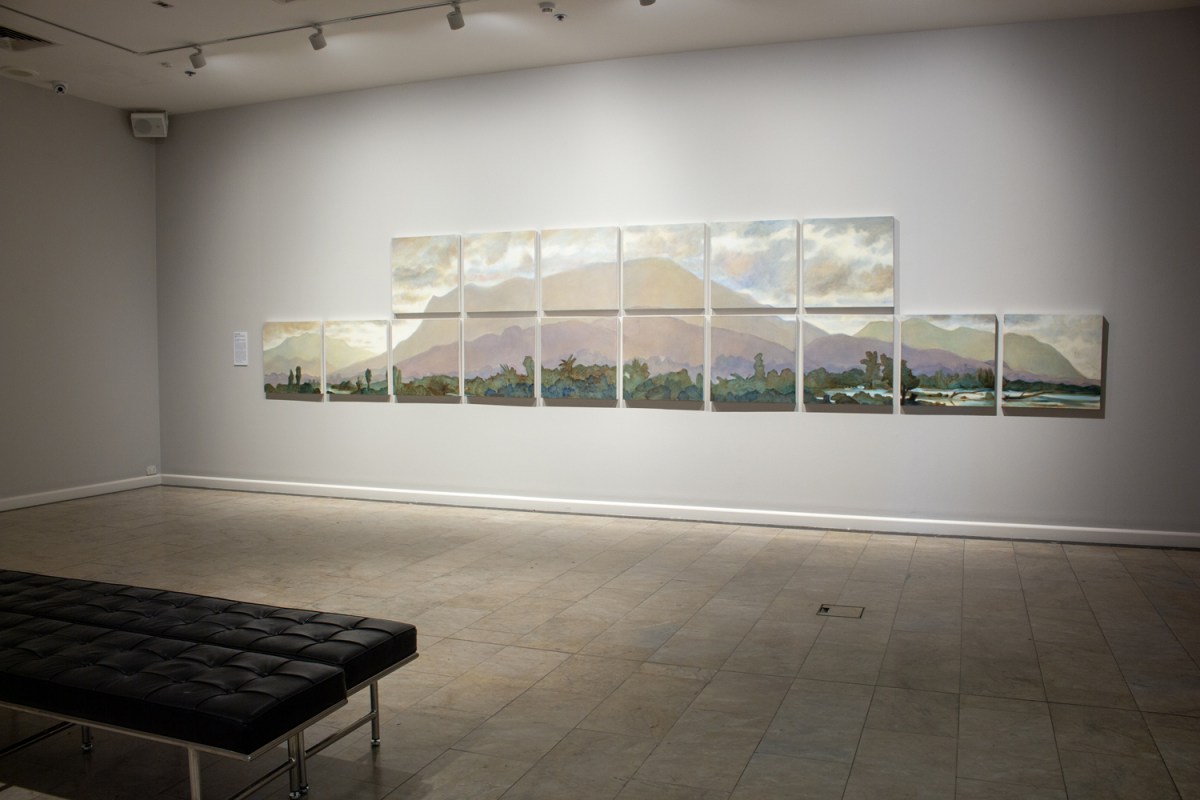
A panoramic evocation of Mount Bartle Frere, 51 kilometres south of Cairns, is achieved by Townsville-based artist, Dr Anneke Silver in her work, Bartle Frere and friends (Air). Through the convention of a grid that was historically used to decentralise the picture surface, Silver’s closely similar landscape views produce a uniform block, and a clear grid remains between her square canvases. This all-over expansiveness echoes other artworks from the Romantic era characterised by their grandeur and scale. Romantic panoramas were intended to evoke feelings of wonder before nature’s complexity.
Cairns Art Gallery, Public Curators Building
Opening Hours
Mon-Fri // 9:00am–5:00pm
Sat // 10:00am–5:00pm
Sun // 10:00am–2:00pm
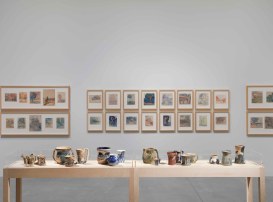
Image: Cairns Art Gallery Installation Image
For more information click here