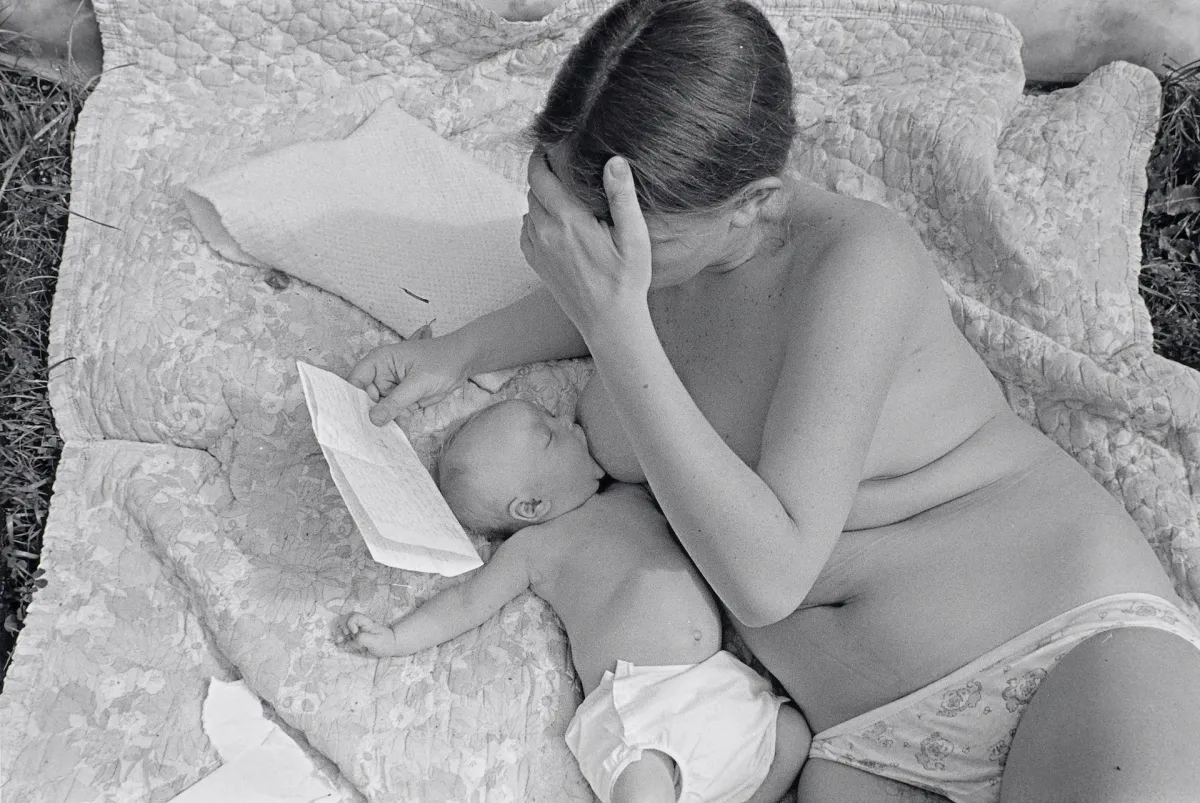
Featuring more than 200 historical and contemporary works from the National Gallery of Victoria Collection, MOTHER has been announced by the NGV today as ‘the most comprehensive thematic exhibition exploring motherhood ever mounted in an Australian art institution’.
Opening 27 March 2026 at the Ian Potter Centre: NGV Australia, the exhibition explores how the experiences of being and having a mother continue to fascinate artists across cultures and generations, including Louise Bourgeois, Tracey Emin, Camille Henrot, David Hockney, Tracey Moffat, Iluwanti Ken, Käthe Kollwitz, Patricia Piccinini, Rembrandt van Rijn and more.
From the walls of caves to ancient Egyptian tombs, Renaissance frescoes and beyond, the depiction of mother and child stands as one of the oldest and most enduring themes in art history.
Traversing geographies, cultures and mediums, the exhibition unpacks both universal and culturally specific experiences of motherhood, such as transformation and joy; societal expectations and invisible labour; mythology and religious iconography; as well as the deep connection between motherhood, nature and Country for First Nations communities.
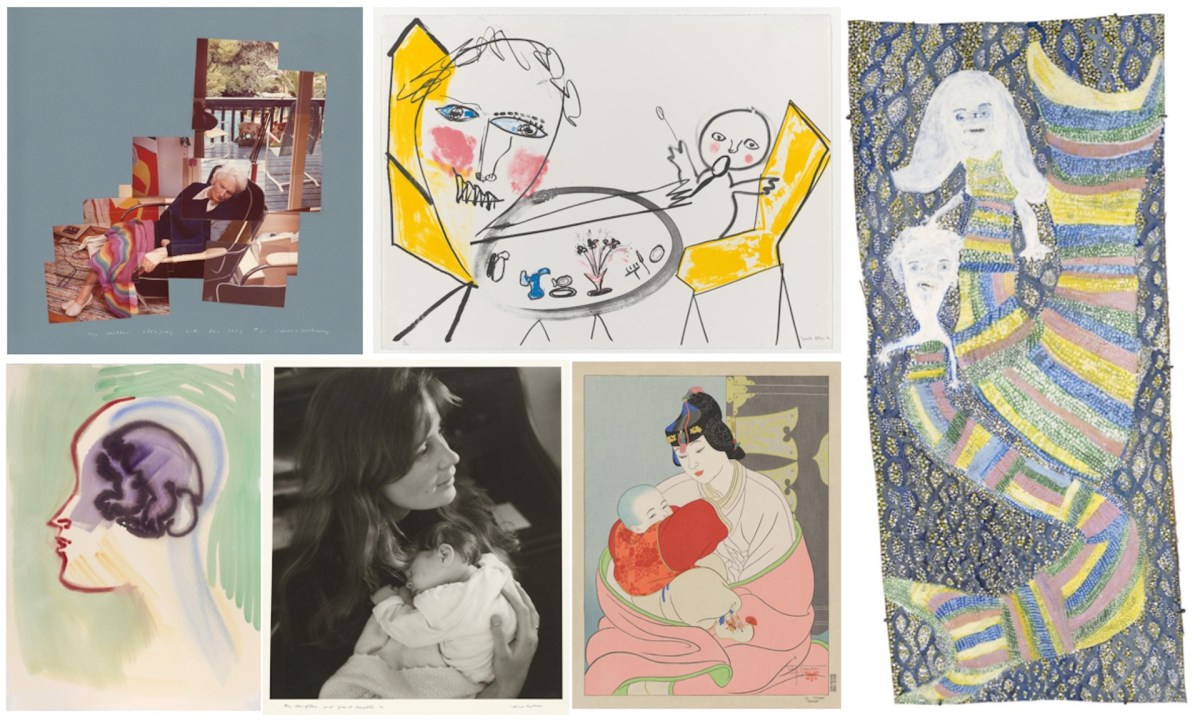
The exhibition features works by contemporary and historical Australian, First Nations and international artists that celebrate and challenge ideas of motherhood, including works by Hannah Brontë, Davida Allen, Sophie Calle, Karla Dickens, Christine Godden, Francisco Goya y Lucientes, Yvonne Koolmatrie, Tala Madani, Hayley Millar Baker, Ann Newmarch, Judith Wright and Djerrkŋu Yunupiŋu – in mediums from painting to weaving, decorative arts to moving image.
Newly collected works making their NGV debut in MOTHER include Ruth O’Leary’s Flinders Street (2017), which was created by transforming the black and white photobooth at Flinders Street station into a makeshift studio.
After the birth of her first child, O’Leary could no longer stage traditional, equipment-heavy photoshoots, so she took her baby, costumes and backdrops to a public photobooth. The works from this series mark a turning point in O’Leary’s practice – where motherhood and artmaking are no longer in conflict, but rather, in dialogue.
Also making their NGV debut are two works by Kate Just that explore knitting’s metaphoric equivalency to skin. An Armour of Hope (2012) takes the form of a knitted chain-mail armour for her adopted child Harper; while The Arms of Mother (2012) are arm-length gloves embroidered with scars. The works materialise Kate and her child’s own past losses, and their resilience, renewal and hope for the future.
Two new acquisitions by David Hockney, one of the most celebrated living British artists, also premiere. My mother sleeping (1982) is a collage in which Hockney assembled photographs of his mother asleep in a chair. The photographs are taken from different angles and arranged to create a fractured, almost cubist composition in which the subject is defamiliarised.
The etching My mother with a parrot (1973–74), also on display, is characteristic of Hockney’s distinctive linear graphic style.
Hayley Millar Baker’s moving image work Entr’acte (2023) is also on display at NGV Australia for the first time. Taking its title from the French word for an interlude performed between two acts of a play, Entr’acte honours the monumental strength, focus and determination of Indigenous women as matriarchs.
The film’s subject, the curator Clothilde Bullen, acts as a representative for the weight of expectation and demands that exist for First Nations women in contemporary society.
MOTHER: intergenerational knowledge
As part of the exhibition’s focus on intergenerational knowledge sharing, MOTHER includes works by Teju Jogi and Soni Jogi, a mother and daughter who use a distinct art style invented by their family. Soni Jogi produces drawings highlighting the shifting gender dynamics of contemporary life in India.
Empowered mother (2020) shows a rural scene with a mother and son travelling to school on an off-road motorbike, revealing the increasing empowerment of women – and, by extension, families – as a result of increasing physical mobility through access to new modes of personal transport.
Highlights also include one of the most surprising finds: a 19th century Staffordshire feeding bottle. Reflecting the evolution of infant care and product design, this functional yet decorative feeding bottle illustrates how motherhood has long been entwined with commerce, marketing and the aesthetics of domestic life.
The exhibition journey, said a representative of the NGV, ‘mirrors a life cycle, from the very first notion of motherhood to the enduring legacies of maternal figures. There are three overarching chapters within the exhibition: the first, Creating, covers stories about conception, birth and nurturing of the infant.
‘Giving, the second chapter, explores life as a mother and care giver, including invisible labour, the energy that goes into creating magical moments and memories for our children, as well as the myths and tropes of being characterised a bad mother versus a supermum.
‘The final chapter, Leaving, highlights powerful stories of families affected by tragedies and loss, with a dedicated focus on the Stolen Generations. This section also looks to bridge past and future through artworks depicting the knowledge exchange between mother and child, as well as artists paying tribute to their own mothers.