It’s time: why you should enter the 2026 Environmental Art & Design Prize

Winning the prestigious Environmental Art & Design Prize marked a pivotal moment for radical artist/architect duo, the artHITects.
The artHITects with their winning artwork Wambuul (Proclamation Park Bathurst), winner of the 2025 Environmental Art & Design Prize – Art category. Photo: Shane Rozario/Manly Art Gallery & Museum.

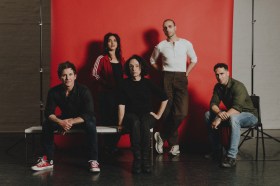
From Singapore to Wollongong, artistic duo Gary Carsley and Renjie Teoh – aka the artHITects – have transformed numerous galleries right across the Asia Pacific with their immersive installations since they began ‘colluding’ together in 2018. 

However, it wasn’t until last year that the pair dared to throw their hat in the ring and enter an art prize for the first time – Australia’s leading national prize for environmentally engaged art and design, the Environmental Art & Design Prize. Their work was awarded the top $20,000 prize in the Art category.

‘It actually saved our studio. So we’re very, very grateful,’ says Carsley, speaking on the impact of the prize – which, in Teoh’s words, the pair ‘never expected to win’.

With Manly Art Gallery & Museum accepting entries for the 2026 Environmental Art & Design Prize from 18 March, the artHITects are encouraging other artists and designers to take a chance. ArtsHub spoke with the pair about the work ethic behind their win, and what other practitioners can learn from their approach.

Prize winners takes fine art to the compost 

Combining Teoh’s expertise as an architect and Carsley’s more than two-decade-long career as a working artist, the artHITects are cross-continental, intergenerational ‘colluders’ on a mission to disrupt the ‘white cube’ of the gallery space and create active, immersive worlds that challenge expectations and institutional norms. 

At the core of their methodology: a standard photocopier. Often taking references from a museum or gallery’s collection or local histories, in addition to Carsley and Teoh’s own ‘artefacts’ or designs, their site-specific installations are made up of hundreds of overlapping sheets of wet, recycled A4 paper. Rather than relying on a team of art installers, the pages are painstakingly applied directly to the gallery wall by the artists themselves. 

At the end of the exhibition, the artwork can simply be peeled off from the wall and composted – quite possibly making this the most materially sustainable art you’ll see showcased in any gallery.

Carsley postulates that, ‘at a lavish estimate’, their prize-winning artwork Wambuul (Proclamation Park Bathurst) cost about $6 to make – and that’s counting the starch-based glue but not including public transport. ‘It was more expensive to travel there [to Manly Art Gallery & Museum for the installation] by ferry than it was to produce the work,’ he adds. 

Beyond material sustainability, the winning artwork also engages with environmental themes on a conceptual level. By depicting the site where Governor Macquarie dispossessed the Wiradyuri of their country in 1815, the work connects environmental degradation to colonialism’s enduring impacts on the Australian landscape. 

How winning the Environmental Art & Design Prize boosted the artHITects 

Carsley says winning the Environmental Art & Design Prize ‘made us more confident in the choices that we’ve made, and about the values we want to embed in the dialogue that is evolving between us as artist and architect … The impact was also that we were given recognition by our peers.’

The duo values the way that the Prize acknowledges the intersectionality between art and design.

‘If you look in history, art and design, art and architecture, were actually all tied together. In fact, these distinctions didn’t actually exist in ancient times,’ says Teoh. 

Carsley adds: ‘This [prize] is a vessel for an entanglement between art and design that speaks to the present and the relationship that, progressively, is positioning art more and more within the field of lived experience. We value that very greatly.’ 

Advice for artists entering the Environmental Art & Design Prize

The number one piece of advice that Carsley and Teoh have for any artists considering applying for the 2026 Environmental Art & Design Prize is simple: ‘Don’t be afraid.’ 

Don’t hold back because you think your idea might be ‘not good enough’ or ‘too challenging’. Because in their experience, the gallery is receptive and willing to work with unconventional and provocative ideas. As part of their artistic DNA, the artHITects are critical of the state of the arts industry and its institutions, and their winning artwork doesn’t hold back on this. 

As Carsley elaborates: ‘The image [Wambuul] is torn, and what’s revealed underneath is the white wall of the gallery, and to a degree it incriminates our own economic system, one based on art as a luxury good, art as a rare commodity.’

Now entering its sixth year, the Environmental Art & Design Prize continues to build its reputation as a key national platform for environmental discourse, attracting entries from artists and designers across Australia.

Key dates for the 2026 Environmental Art & Design Prize

  • Entries open: 18 March 2026
  • Entries close: 5pm 18 May 2026
  • Finalists announced: 28 May 2026
  • Exhibition: 7 August to 20 September 2026
  • Award winners announced: 7 August 2026
  • People’s Choice Awards announced: 11 September 2026

Find out more about the 2026 Environmental Art & Design Prize and how to enter.

Discover more screen, games & arts news and reviews on ScreenHub and ArtsHub. Sign up for our free ArtsHub and ScreenHub newsletters.

Alannah Sue is a writer, editor, theatre critic and content creator with a passion for arts and culture and all that glitters. She relocated to Melbourne in 2025 after spending over a decade embedded in the Sydney arts landscape and finishing up her tenure as Arts & Culture Editor at Time Out. In addition to contributing to ArtsHub and ScreenHub, her freelance portfolio also expands to editorial and copywriting for lifestyle and arts publications such as Limelight and Urban List, cultural institutions like the Sydney Opera House, and marketing and publicity services for independent artists. She is always keen to take a chance on weird performance art, theatre of all kinds, out-of-the-box exhibitions, queer venues, and cheap Prosecco. Give her half a chance, and she will get on a soapbox when it comes to topics like the magic of musical theatre, the importance of rigorous arts criticism, and the global cultural implications of the RuPaul’s Drag Race franchise. Connect with Alannah on Instagram: @alannurgh.